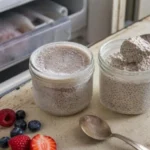
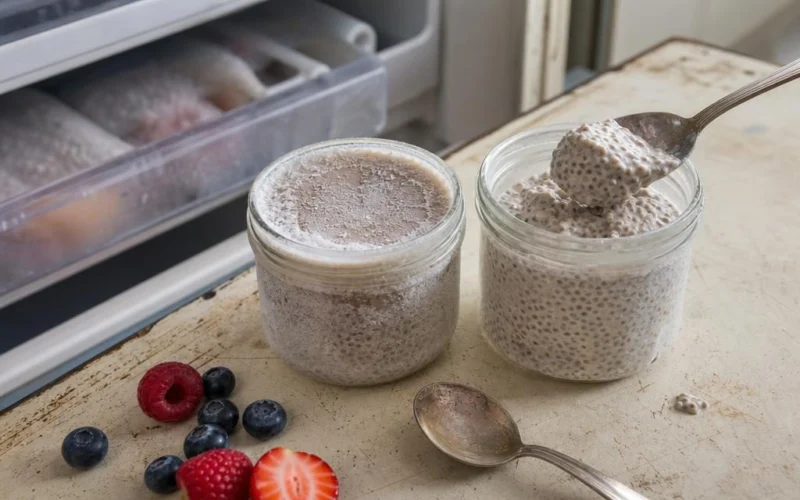
Yes, you can freeze chia pudding, but thawing may make it less creamy and cause watery separation, graininess, or a softer gel texture. For the most reliable result, fully thicken the pudding in the refrigerator, freeze plain or lightly flavored individual portions without crunchy toppings, thaw them covered overnight in the refrigerator, then stir and adjust with a little milk if needed.
Freeze or Refrigerate? Choose Based on When You’ll Eat It
Refrigerate chia pudding if you expect to eat it within about 4–5 days and its original creamy texture matters most. Freeze it when you want extra meal-prep flexibility, are preparing portions for later, or need to avoid wasting a batch you will not finish soon.
Simple decision:
- Eating it within about 4–5 days and want the best texture? Refrigerate it.
- Saving portions for later or reducing waste? Freeze the fully thickened, untopped base.
Freezing slows microbial growth, but it does not lock in the exact original texture. Ice formation, ingredient separation, and moisture released by fruit can change how chia pudding feels after thawing. According to the USDA Food Safety and Inspection Service, packaging, freezing speed, and time in storage can all affect frozen food quality.
There is no universal best-quality freezer timeline for every chia pudding recipe. Milk type, yogurt, fruit, sweeteners, and container size all matter. Label portions with the freezing date and try freezing one serving first if you are making a new recipe or using a yogurt-heavy base.
Which Chia Pudding Ingredients Freeze Best?
| Ingredient or component | Likely thawed result | Recommended approach |
|---|---|---|
| Dairy or plant milk | Usually workable; some separation is possible | Freeze after full hydration and stir after thawing |
| Yogurt | May become watery, thick, or slightly grainy | Freeze a test portion; stir or blend after thawing if needed |
| Protein powder | Can become thicker or grainier | Use a small amount of milk to loosen the thawed pudding |
| Thin coconut-milk beverage | Often similar to other plant milks | Freeze as part of a plain base |
| Canned coconut milk | Fat may separate or form a less smooth texture | Stir firmly or blend if smoothness matters |
| Fruit purée | Usually more uniform than fruit chunks, but may loosen the pudding | Mix it into the base and expect some moisture release |
| Fresh fruit pieces | Often softer and wetter after thawing | Add after thawing when possible |
| Frozen berries | Can release juice and soften substantially | Use if a fruitier, softer result is acceptable |
| Nuts | May lose some crispness | Add after thawing for better crunch |
| Granola | Usually becomes soft | Keep separate until serving |
Milk-Based Chia Pudding
Chia pudding made with unsweetened dairy milk or plant-based beverages is generally a straightforward candidate for freezing. The chia gel may still soften or separate slightly, but a good stir usually restores an acceptable texture.
Plant milks are not interchangeable. Their fat, protein, and stabilizer content differs by product, so almond, oat, soy, and other beverages may thaw somewhat differently. Fully thickening the pudding before freezing makes the final consistency easier to judge and portion.
Yogurt and Protein-Powder Mixtures
Greek yogurt, regular yogurt, and protein powder can make chia pudding more prone to separation, graininess, or an overly thick texture after thawing. This is a quality issue rather than an automatic sign that the food is unsafe, provided it was stored and thawed properly.
Recipe-based guidance suggests yogurt-containing chia pudding can thaw watery or grainy in some cases, though results vary by recipe. If you prefer a very smooth pudding, freeze a small test serving before committing an entire batch.
Coconut Milk and Fruit
Thin, carton-style coconut milk beverages usually behave more like other plant milks. Thick canned coconut milk contains much more fat, and that fat may separate during freezing and thawing. Stirring can help, but blending is the better option if you want a smoother texture.
Blended fruit or fruit purée tends to give a more even result than fresh fruit chunks. Fresh berries, banana slices, and other fruit pieces can soften and release liquid. Frozen berries also release juice as they thaw, which can make the pudding look watery even when the chia gel itself is intact.
Toppings
Freeze the base without granola, toasted coconut, nuts, seeds meant to stay crunchy, or delicate fresh fruit. These toppings are usually much better added after thawing, when they can provide contrast instead of turning soft.
How to Freeze Chia Pudding for Meal Prep
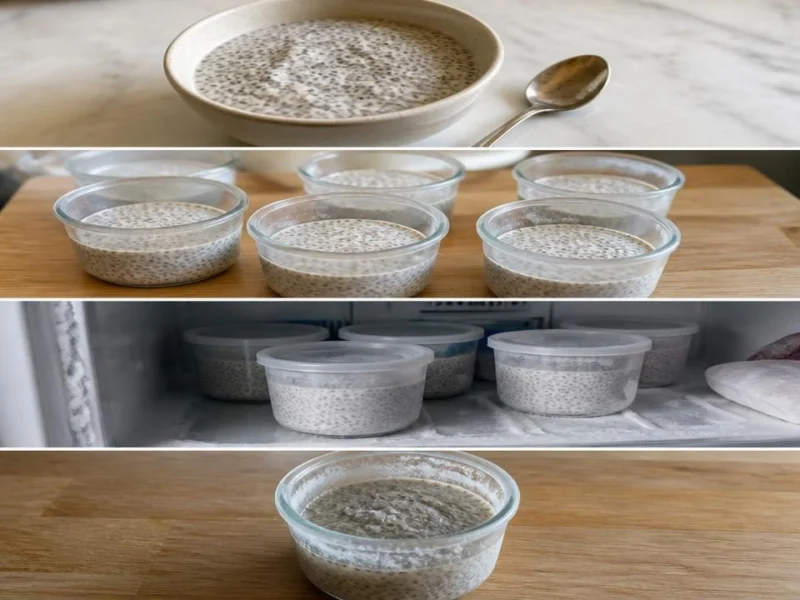
- Mix the chia pudding, then refrigerate it until the seeds have fully hydrated and the mixture is thick.
- Stir thoroughly so the chia seeds and liquid are evenly distributed.
- Portion the pudding into individual, leak-resistant, freezer-safe containers.
- Leave some space at the top rather than filling each container to the rim, since food can expand as it freezes.
- Freeze the base without granola, crunchy toppings, or delicate fresh fruit.
- Seal each portion, then label it with the freezing date.
- Place the cold portions in the freezer promptly.
Freezer-rated plastic containers are practical for single servings. Glass can work only if it is specifically labeled freezer-safe and has enough headspace; ordinary glass jars or overfilled containers can crack. A secure lid matters because thin liquids can leak as containers shift in the freezer.
For long-term frozen storage, the USDA recommends maintaining a freezer at 0°F (-18°C) or below. That temperature supports food safety, while texture and flavor still gradually depend on the recipe and storage conditions.
How to Thaw Chia Pudding
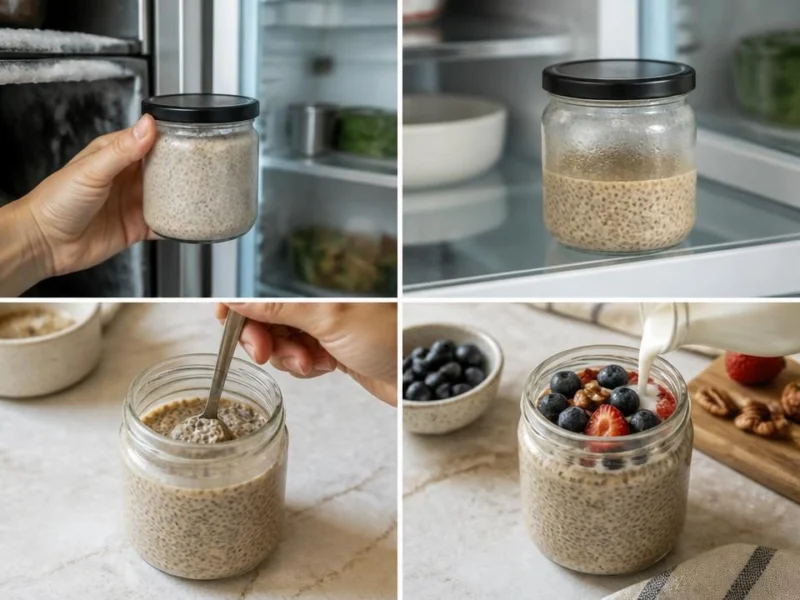
- Move one sealed portion from the freezer to the refrigerator.
- Thaw it covered overnight, or until fully softened.
- Stir from the bottom upward to redistribute the liquid and chia gel.
- If the texture is still uneven, let it rest briefly in the refrigerator, then stir again.
- Add a small splash of milk gradually if the pudding is too thick.
- Add fresh toppings only after the texture is where you want it.
Refrigerator thawing is the practical standard for chia pudding made with milk or yogurt because it keeps the portion cold throughout thawing. The USDA advises using thawed leftovers within 3–4 days as general guidance; this is not a chia-pudding-specific shelf-life study, but it is a sensible handling window for thawed perishable pudding.
Do not thaw milk- or yogurt-based chia pudding on the counter. The USDA recognizes cold-water and microwave thawing as safe methods for leftovers, but refrigerator thawing is the preferred and simplest method for this ready-to-eat pudding.
How to Fix Watery, Thick or Separated Chia Pudding
Texture repair is useful only when the pudding has been stored and thawed safely. These fixes improve quality; they do not reverse unsafe handling.
| Problem | Likely quality cause | What to try | When to discard instead |
|---|---|---|---|
| Watery liquid around the edges | Separation or moisture released during thawing | Stir well; refrigerate briefly; add a small amount of chia only if needed, then allow it to hydrate | If it was left warm too long or otherwise mishandled |
| Too thick | Chia continued absorbing moisture | Stir in a small splash of milk at a time | If safety is uncertain |
| Yogurt or coconut-fat separation | Protein or fat structure changed during freezing | Stir thoroughly; blend if you prefer a smoother pudding | If there was prolonged warming or unsafe storage |
| Grainy texture | Yogurt, protein powder, or frozen dairy-style ingredients changed texture | Blend if the ingredients and flavor suit it; otherwise accept it as a quality change | If there is a handling concern |
| Fruit released juice | Frozen or fresh fruit softened during thawing | Stir; add fruit after thawing next time; use purée for a more uniform batch | If the portion was thawed unsafely |
| Icy or freezer-burned surface | Air exposure or slow moisture loss in storage | Remove a minor affected surface if the food was safely handled | If safety is questionable or the portion warmed for too long |
| Bland flavor | Cold storage muted flavor or diluted fruit notes | Add cinnamon, vanilla, toppings, or a small amount of sweetener after thawing | Only if there is a separate safety concern |
When Not to Freeze or Refreeze Chia Pudding
Skip freezing if crunch is central to the pudding: granola, toasted nuts, and coconut flakes will soften. Refrigeration is also the better choice for fully assembled portions when yogurt separation or softened fresh fruit would be disappointing.
Do not routinely refreeze a completely thawed portion. Repeated freeze-thaw cycles can worsen separation, iciness, and softness. If a portion was left at room temperature too long or thawed improperly, discard it rather than refreezing it.
Freezing does not make food that was unsafe before freezing safe again. Keep perishable ingredients cold before freezing and follow general refrigeration practices from the USDA’s refrigeration guidance.
Frequently Asked Questions
Can you freeze chia pudding with Greek yogurt?
Yes, but yogurt-based mixtures may separate or become grainy after thawing. Freeze a small test portion first, thaw it in the refrigerator, and stir or blend it if needed.
Can you freeze chia pudding with fruit?
Yes, though fruit pieces may soften and release liquid. Blended fruit or purée is more likely to produce a uniform result, while fresh fruit toppings are usually best added after thawing.
Can you refreeze thawed chia pudding?
It is not recommended as a routine quality practice because repeated freezing and thawing can worsen separation and texture. If it was handled unsafely or left warm too long, discard it rather than refreezing it.
Refrigerate chia pudding when it will be eaten soon and texture matters most. Freeze fully thickened, untopped individual portions when meal-prep flexibility matters more; thaw them in the refrigerator, stir well, and adjust with milk or blend if needed.