

A calorie deficit means your average energy intake is lower than the energy your body uses over time: maintenance calories − average intake = estimated deficit. For example, if you expend about 2,300 calories and eat 1,900, the estimated deficit is 400 calories—not 1,900 calories.
The most sensible starting point is usually the smallest deficit that produces a tolerable downward weight trend. A 300–500-calorie daily reduction is a common estimate, but it isn’t a universal prescription, and no single intake such as 1,200 or 1,500 calories is appropriate for every adult. A deficit does not automatically mean constant hunger or a very-low-calorie diet; the goal is a modest, sustainable reduction.
The three numbers that define a calorie deficit
Maintenance calories are the estimated amount needed to keep body weight relatively stable. Your intake target is what you plan to eat, while the actual deficit is the gap between intake and real energy expenditure. Calculators can estimate these numbers, but your weight trend helps test whether the estimate matches reality.
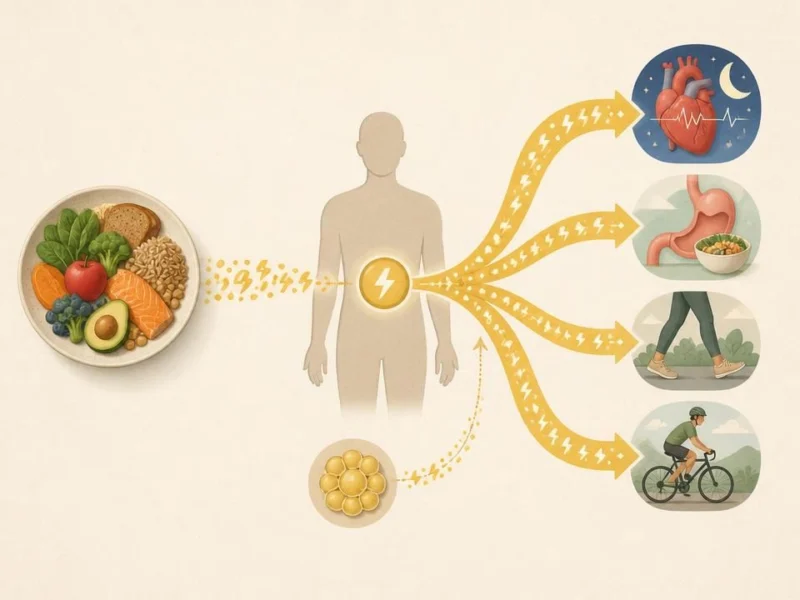
Food composition affects how easy the target feels. Protein and carbohydrate provide about 4 calories per gram, fat provides about 9, and alcohol provides about 7. Fat-rich foods can fit, but oils, dressings, nuts, alcohol, and restaurant sauces concentrate substantial energy into small portions.
| Energy source | Calories and main macro | Satiety or tracking issue | Practical use |
|---|---|---|---|
| Lean protein foods | Varies; mostly protein | Higher digestion cost | Supports muscle retention |
| Whole grains | Varies; mostly carbohydrate | Fiber adds fullness | Supports training fuel |
| Fruit and vegetables | Usually low density | Water increases volume | Builds larger meals |
| Cooking oils | About 120 per tablespoon | Easy to overlook | Measure before cooking |
| Sauces and dressings | Highly brand-dependent | Portions often guessed | Check serving size |
| Alcohol | 7 calories per gram | Low satiety | Include every drink |
| Restaurant meals | Often difficult to estimate | Hidden oil and sauce | Use a reasonable range |
| Exercise estimates | Not food intake | Wearables may overestimate | Avoid full calorie credit |
The calories on a packaged-food label apply to its stated serving size. If a bottle contains two servings and you drink the whole bottle, both calories and nutrients must be doubled. The FDA’s Nutrition Facts guidance explains how servings per container change the calculation.
| Goal | Main priority |
|---|---|
| Preserve muscle | Protein and resistance training |
| Control frequent hunger | Smaller initial deficit |
| Maintain training quality | Adequate meals and carbohydrates |
| Reduce tracking burden | Repeatable meal portions |
What happens after intake drops below expenditure
Your body still needs energy for resting functions, digestion, movement, and exercise. When dietary energy does not cover total expenditure, stored energy contributes to the difference. The resulting weight loss can include fat, glycogen, associated water, and some fat-free tissue—not fat alone.
Hunger can rise as weight comes down
Calorie restriction and weight loss can change hunger-related signals, including ghrelin, and aggressive targets may become difficult to maintain. Meals that combine protein, fiber-rich foods, and some dietary fat can support fullness; include enough carbohydrate to meet the demands of your activity and training.
Weight loss and fat loss are not identical
Dietary restriction alone can reduce both fat mass and lean tissue. Resistance training supports strength and gives the body a reason to retain muscle, although it cannot prevent every loss of fat-free mass.
A systematic review and meta-analysis of adults with overweight or obesity found that adding resistance exercise during dietary weight loss helped protect fat-free mass and improve strength compared with diet alone. These findings apply most directly to the population studied.
Why the scale can rise during a real deficit
Body fat can decrease while scale weight temporarily holds steady or rises. Glycogen stores bind water, and unfamiliar resistance training can cause short-term fluid retention during recovery.
Other sources of scale noise include:
- Menstrual-cycle changes that alter fluid retention.
- Higher sodium intake after restaurant or packaged meals.
- More carbohydrate and replenished glycogen stores.
- Constipation or greater digestive-tract contents.
- Alcohol and travel affecting hydration and meal patterns.
One weigh-in therefore cannot confirm or disprove a deficit. The often-quoted “3,500 calories equals one pound” rule is also only a rough approximation. Body composition and energy expenditure change during weight loss, so actual trajectories are dynamic rather than linear, as described in research on the energy content of weight loss.
How to verify your deficit without cutting food too far
Start with an estimated maintenance intake from a reputable calculator such as the NIDDK Body Weight Planner. Treat the result as a starting estimate, not a measured metabolic rate or individualized prescription.
Estimated maintenance − average daily intake = estimated deficit.
- Choose a modest intake reduction you can sustain.
- Keep your eating pattern and activity reasonably consistent.
- Weigh under similar morning conditions when practical.
- Calculate seven-day average weights rather than comparing individual weigh-ins.
- Assess the trend after 10–14 days.
If the average is moving downward at a tolerable rate, keep the plan steady. If it is unchanged, first inspect logging accuracy, activity, and routine. A flat short-term average is inconclusive when water variability is high because menstrual-cycle changes, sodium, carbohydrate intake, constipation, travel, alcohol, or new training can obscure the trend. After checking the inputs, continue observing for another week or two if necessary. Make only a small adjustment if the longer trend still does not match the goal.
A two-week example using average weight
Consider someone whose calculator estimates maintenance at 2,300 calories. They set a 1,900-calorie target, implying an estimated 400-calorie daily deficit, but their seven-day average changes only from 176.8 to 176.7 pounds over two weeks.
An audit finds omitted cooking oil, salad dressing, and a weekend drink. Adding them raises recorded intake by an average of about 180 calories per day, suggesting that the planned gap was smaller than the log showed. It does not prove the person’s actual maintenance needs or fully explain the flat scale trend.
They then record portions more accurately without making a large calorie cut and keep their routine stable. Over the next two weeks, the average declines. That result supports continuing the plan, but it cannot isolate the effects of intake, expenditure, and changing water weight. The lesson is to improve the evidence before imposing a harsher target.
The tracking errors that matter most
| Tracking mistake | Likely effect | Practical fix |
|---|---|---|
| Raw/cooked mismatch | Incorrect calorie estimate | Match the entry to the food’s weighed state |
| Unmeasured oil or sauce | Intake undercounted | Measure the portion |
| Default app entry | Incorrect nutrition data | Check it against the label |
| Multiple package servings | Intake undercounted | Multiply by servings consumed |
| Weekend drift | Weekly deficit reduced | Review the full seven-day average |
| Eating back wearable calories | Deficit overestimated | Do not assume full credit |
Raw and cooked weights are not interchangeable: rice gains water during cooking, while meat may lose moisture. Restaurant meals also remain uncertain even with careful estimates. If detailed logging feels burdensome, prioritize high-energy items such as oil, butter, cheese, dressings, nut butter, alcohol, and caloric drinks.
Use meal timing to support consistency
Meal timing does not create a deficit independently of total intake. Arrange meals around hunger, schedule, and training in whatever pattern makes the target easier to sustain; neither frequent meals nor intermittent fasting is required.
Get medical or dietetic guidance before pursuing a standard weight-loss deficit if you are pregnant or recently postpartum, are an adolescent, have a current or prior eating disorder, are an older adult at risk of muscle loss, or perform high-volume endurance training. Guidance is also appropriate for people using diabetes medications or managing kidney disease or blood-pressure treatment, because these circumstances can change the safety considerations.
Questions that come up after setting a calorie target
Is my calorie deficit the number of calories I eat?
No. Your intake is the amount consumed; the deficit is the gap below actual expenditure. Eating 1,700 calories could represent no deficit, a small deficit, or a large one depending on the person’s energy needs.
Should I eat back every calorie my watch reports?
Usually not on a one-for-one basis. Wearables estimate exercise expenditure, and people may compensate by moving less later or eating more than expected. If exercise volume rises substantially, adjust intake based on recovery, performance, hunger, and the multiweek weight trend rather than the watch number alone.
Why did my weight increase after I started lifting?
New or harder resistance training can increase water retention during muscle repair. More carbohydrate intake can also restore glycogen and its associated water. Compare weekly averages for at least 10–14 days before assuming that a few higher readings represent fat gain.
Can intermittent fasting work without a calorie deficit?
Intermittent fasting can simplify eating schedules, but it doesn’t produce sustained weight loss independently of energy balance. A systematic review of isocaloric intermittent fasting trials found broadly similar outcomes to continuous calorie restriction when energy intake was matched, with mixed short-term differences.
What are the safe calorie deficit basics for preserving muscle?
Use a moderate, verified deficit; include protein-rich foods across the day; continue resistance training when appropriate; and avoid reducing calories every time the scale pauses. Adequate sleep and recovery matter because a target that repeatedly damages training quality or triggers uncontrolled hunger is probably too aggressive.
This content is based on nutritional physiology and energy metabolism research. It is for informational purposes only and does not constitute medical advice. Consult a qualified healthcare professional before making significant alterations to your caloric or macronutrient intake.