

On a U.S. Nutrition Facts label, added sugars are already included in Total Sugars—they are not an extra amount to add. If a food lists 15 g Total Sugars and “Includes 7 g Added Sugars,” it contains 15 g of sugar: 7 g added and about 8 g from non-added sources. For everyday choices, compare added sugar within similar foods, then check serving size, fiber or protein, calories, ingredients, and whether the food is liquid or solid.
How Total Sugars and Added Sugars Fit Together
The label math: added sugar is a subset, not a second total
Total Sugars includes both naturally occurring and added sugars. Naturally occurring sugars include lactose in milk and fructose, glucose, and sucrose in fruit. Added sugars include sugars, syrups, and other caloric sweeteners introduced during processing or preparation.
The word Includes is the critical label instruction. The indented added-sugar line tells you how much of the total came from added sources, as explained in the FDA’s guidance on added sugars.
Subtracting added sugars from total sugars gives a useful estimate of the remaining non-added sugar. It does not identify the exact source of that remainder. Eight grams of non-added sugar could come from milk, fruit, juice, or another ingredient, and the calculation says nothing by itself about fiber or overall nutrient density.
Why Total Sugars has no % Daily Value
The FDA has not established a Daily Value for Total Sugars, so that line has no percentage beside it. Total sugar can come from foods as different as berries, plain milk, juice, and soda; one universal percentage would not distinguish their different nutritional contexts.
Added Sugars does have a Daily Value. On the standard 2,000-calorie label, 50 g of added sugars equals 100% Daily Value. That is a reference used to interpret labels, not a personalized daily allowance or a recommendation to consume 50 g.
The 2025–2030 Dietary Guidelines are the current federal guidelines in 2026 and emphasize reducing highly processed foods that include added sugars. That broader guidance should be kept separate from the FDA’s fixed label reference. The current Dietary Guidelines page provides the latest federal material.
What “Natural Sugar” Usually Means—and Why Food Form Matters More
“Natural sugar” is everyday language, not one of the two sugar categories printed on the Nutrition Facts panel. It usually refers to sugar naturally present in an intact food, but the label’s non-added amount does not prove that a product contains whole fruit or is nutritionally rich.
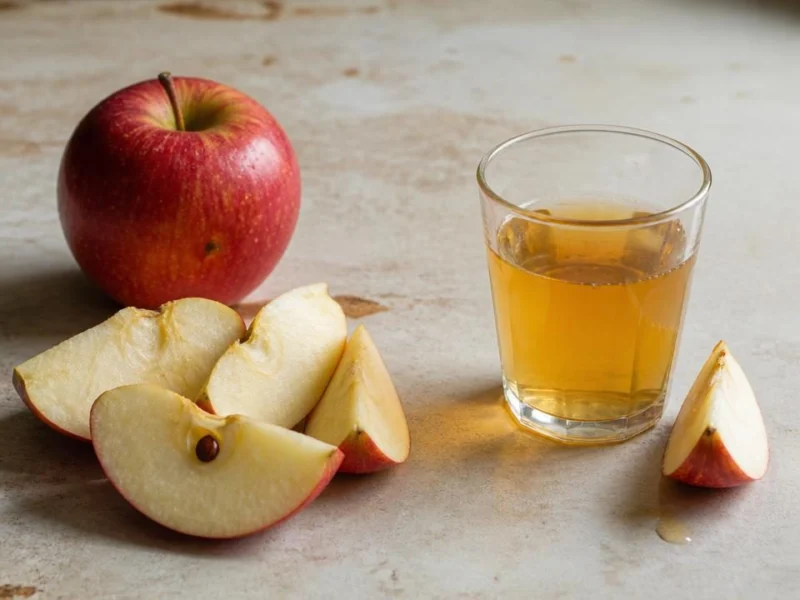
The body uses the same basic carbohydrate-processing pathways regardless of whether a sugar molecule originated in an apple or a sweetener. What often changes the practical effect is the surrounding food: its fiber, water, protein, texture, portion size, and liquid or solid form.
Whole fruit: sugar packaged with water, fiber, and volume
A whole apple contains naturally occurring sugars, yet it also has intact plant structure, water, and fiber. It requires chewing and takes longer to eat than an equivalent volume of juice. Those physical features can affect eating speed and fullness without making the sugar chemically harmless.
This is the useful distinction in the fruit sugar vs added sugar debate: whole fruit is generally the better routine choice, but not because fruit sugar follows a completely separate metabolic route. The advantage comes from the complete food package.
Milk and plain yogurt: lactose with protein and minerals
Plain milk and unsweetened yogurt can list several grams of Total Sugars while showing 0 g Added Sugars. That sugar is primarily lactose, the sugar naturally present in milk.
A nonzero Total Sugars number is therefore not a good reason by itself to reject plain dairy. Compare serving size, protein, calories, ingredients, and any nutrients relevant to your needs. Sweetened yogurt is different because it can contain its original lactose plus sugar added during manufacturing.
Juice: no added sugar can still mean concentrated sugar
One hundred percent fruit juice may show 0 g Added Sugars because its sugar was present in the fruit juice rather than introduced as a separate sweetener. That does not make juice nutritionally interchangeable with an intact orange or apple.
Juicing removes much of the fruit’s intact structure and often leaves less fiber. Drinking is also faster than chewing, making it easy to consume the juice equivalent of several pieces of fruit in a short period. Whole fruit is usually the more useful everyday option; juice should not receive an automatic health pass because its sugar is non-added.
Health-outcome research comparing juice and whole fruit is largely observational. A recent systematic review and meta-analysis of fruit juice and type 2 diabetes risk supports treating different juice categories carefully, but it cannot prove that juice itself caused an outcome.
Honey, maple syrup, agave, and similar sweeteners
Honey, maple syrup, agave, coconut sugar, and table sugar have compositional differences, but none gains a meaningful metabolic exemption because it sounds natural. When these ingredients sweeten another food or drink, their sugars count as added sugars.
FDA label treatment becomes more technical for certain single-ingredient sweeteners and some juice concentrates. For example, the presentation of added-sugar information on a package of pure honey may differ from its treatment as an ingredient in another product. Manufacturers should follow the FDA’s Nutrition Facts compliance guidance rather than relying on a broad rule of thumb.
A Better Way to Compare Common High-Sugar Foods
The useful question is not simply “Is this sugar natural?” Consider what the food is, how much you will consume, and what comes with the sugar. Observational research suggests added sugar may identify poorer overall diet quality more usefully than total sugar, although the association does not establish causation, according to a systematic review of total and added sugar.
| Food or product | What the label may show | What the sugar number means | What to compare next |
|---|---|---|---|
| Whole apple | Generally no Nutrition Facts label | Judge it as intact fruit, not as a packaged-label entry | Portion, fiber, water, and eating form |
| 100% fruit juice | Total Sugars; often 0 g Added Sugars | Sugar naturally present in juice | Portion, fiber, and liquid form |
| Plain yogurt or milk | Total Sugars; often 0 g Added Sugars | Primarily naturally occurring lactose | Protein, calories, ingredients, and serving size |
| Sweetened yogurt | Total Sugars and Added Sugars | Lactose plus added sweetener | Added sugar, protein, and serving size |
| Soda | Total and Added Sugars may be the same | Most or all sugar comes from added sweeteners | Serving size and unsweetened alternatives |
| Honey or maple syrup | Technical added-sugar labeling exceptions may apply to single-ingredient products | These count as added sugars when used to sweeten foods or drinks | Amount used and frequency |
Compare foods within the same category first
Match serving sizes, then compare added sugar and the most relevant context: protein in plain versus flavored yogurt, fiber in unsweetened versus sweetened oatmeal, and liquid form in sparkling water versus soda or whole fruit versus 100% juice.
The Five-Second Check for Packaged Foods
- Check serving size. Make sure it reflects your likely portion.
- Read Total Sugars. This is all sugar in one labeled serving.
- Read “Includes Added Sugars.” It is part of Total Sugars, not an additional amount.
- Compare similar products. Use comparable serving sizes and favor the lower-added-sugar option when the products are otherwise similar.
- Check the broader context. Review protein or fiber, calories, ingredients, and whether the food is liquid or solid. Because ingredients are listed by weight, a sweetener near the beginning usually makes up a larger share of the product.
A plain-versus-flavored yogurt example
As an illustrative comparison—not universal brand data—a 6-ounce plain yogurt might list 8 g Total Sugars, 0 g Added Sugars, and 15 g protein. A 6-ounce flavored yogurt might list 17 g Total Sugars, including 9 g Added Sugars, with the same 15 g protein.
The flavored yogurt contains about 8 g of naturally occurring lactose plus 9 g of added sugar. Compare serving size and protein rather than choosing automatically based on sugar alone.
What “No Added Sugar” and Similar Claims Do Not Mean
| Claim | What it can mean | What it does not prove |
|---|---|---|
| No added sugar | No added caloric sugars | Sugar-free or low-carb |
| Sugar-free | Very little sugar | Calorie-free or carb-free |
| Reduced sugar | Less than reference food | Low sugar overall |
| Lightly sweetened | Marketing description | Standard sugar threshold |
“No added sugar” is not the same as sugar-free
A no-added-sugar applesauce, juice, or dairy product may still contain sugar from fruit or milk. The claim does not establish that the food is low in calories, low in total carbohydrate, high in fiber, or appropriate for a particular blood-glucose plan.
It can still be a useful claim when comparing otherwise similar products. The Nutrition Facts panel provides the numbers needed to determine whether the difference is meaningful.
“Reduced sugar” only makes sense against its comparison product
“Reduced sugar” describes a reduction relative to a specified reference food. A reduced-sugar product can still contain a substantial amount per serving, especially if the original version was heavily sweetened.
Check the serving size and grams rather than treating the front-of-package wording as a final judgment. The replacement ingredients matter too: reducing sugar can change calories, fiber, fat, or the use of non-sugar sweeteners.
“Lightly sweetened” is marketing language, not a Nutrition Facts verdict
“Lightly sweetened” does not give you a standardized added-sugar threshold. One manufacturer’s lightly sweetened cereal may contain more added sugar than another product without that phrase.
Use the added-sugar line for the quantity and the ingredient list for the source. The CDC’s label-reading guidance also recommends using both parts of the package rather than relying on marketing claims.
If You Monitor Blood Glucose, Added Sugar Is Not the Only Number That Matters
For someone counting carbohydrates or dosing insulin, Total Carbohydrate and serving size are generally more actionable than Added Sugars alone. Total Carbohydrate includes sugars, starches, and fiber, although the way these affect post-meal glucose can differ.
Food form, fiber, protein, fat, preparation, and individual response can shape glucose patterns. A juice with 0 g Added Sugars can still supply substantial total carbohydrate quickly, while plain yogurt may contain lactose alongside protein.
Questions That Come Up at the Grocery Shelf
Does “Includes 8 g Added Sugars” mean there are 8 g or 15 g of sugar?
If the label says 15 g Total Sugars and includes 8 g Added Sugars, the product contains 15 g total. Eight grams of that total are added, leaving about 7 g from non-added sources by label accounting.
Is sugar in plain yogurt considered natural sugar?
Generally, yes. It is primarily lactose, the naturally occurring sugar in milk, unless sweeteners or sugar-containing ingredients were added. Confirm this by checking both the Added Sugars line and ingredient list.
Why can 100% fruit juice have 0 g added sugars but still have a lot of sugar?
Its sugar can come entirely from the fruit used to make the juice. Juice has less intact fiber and structure than whole fruit and is easier to consume quickly, so 0 g Added Sugars does not make the two forms equivalent.
Are honey and maple syrup healthier than table sugar because they are natural?
They have minor compositional differences, but those differences do not make them metabolically special. When honey or maple syrup is used to sweeten another food or drink, its sugar counts as added sugar, subject to technical FDA labeling rules for certain products.
This content is based on nutritional physiology and energy metabolism research. It is for informational purposes only and does not constitute medical advice. Consult a qualified healthcare professional before making significant alterations to your caloric or macronutrient intake.