

For most people age 14 and older in the United States, the current population recommendation is to consume less than 2,300 mg of sodium per day. This is a public-health guideline—not a physiological requirement or a universal clinical maximum. Roughly 1 teaspoon of table salt contains about 2,300–2,400 mg of sodium, although most dietary sodium comes from packaged, prepared, and restaurant foods.
People with heart failure, kidney disease, liver disease, difficult-to-control blood pressure, or medications that affect potassium should follow individualized advice from their healthcare team.
Your daily sodium numbers—and where they come from
Sodium is an essential mineral used for fluid balance, nerve signaling, and muscle function. It provides no calories and is not a carbohydrate, protein, or fat, so calorie density does not tell you whether a food is low in sodium.
The current 2025–2030 Dietary Guidelines for Americans recommend less than 2,300 mg a day for the general population age 14 and older. Three different numbers often appear in sodium guidance, but they do not mean the same thing.
| Number | What it means | How to use it |
|---|---|---|
| 1,500 mg | Adult Adequate Intake | Not a universal prescription |
| Under 2,300 mg | U.S. population guidance | General daily ceiling |
| 2,300 mg CDRR | Risk-reduction threshold | Reduce intake above it |
The National Academies sets an adult Adequate Intake, or AI, of 1,500 mg. An AI is an estimate of an intake expected to be nutritionally adequate; it is not a sodium Recommended Dietary Allowance or a mandatory limit for everyone.
The National Academies also established a Chronic Disease Risk Reduction Intake, or CDRR, of 2,300 mg. This means the evidence supports reducing sodium above that level to lower chronic-disease risk in apparently healthy populations. The American Heart Association describes 1,500 mg as an optimal goal for most adults, but individualized clinical targets can differ.
Salt is not the same as sodium
Table salt is sodium chloride and is about 40% sodium by weight. Roughly 1 teaspoon contains 2,300–2,400 mg of sodium, although the amount per teaspoon can vary with crystal size and brand.
Sea salt, kosher salt, Himalayan salt, and ordinary table salt all supply sodium. Their texture and teaspoon weight may differ, but none should be treated as a sodium-free alternative.
Common sources that can use your daily budget
Most sodium does not come from sprinkling salt over a finished meal. The CDC reports that Americans average about 3,300 mg daily and identifies processed and restaurant foods as major sources.
| Food category | Why it adds up | Lower-sodium move |
|---|---|---|
| Deli sandwiches | Meat, cheese, bread, sauce | Fresh meat, sauce aside |
| Canned soups | Concentrated broth base | Compare labels carefully |
| Pizza | Crust, cheese, cured toppings | Choose fewer cured toppings |
| Bread and tortillas | Moderate amounts eaten often | Compare similar products |
| Frozen meals | Seasonings, sauces, large portions | Choose lower %DV |
| Sauces and condiments | Small, concentrated servings | Measure or serve aside |
| Cured meats | Salt used for preservation | Use fresh poultry |
| Cheese | Sodium varies widely | Use smaller amounts |
| Savory snacks | Multiple servings disappear quickly | Portion before eating |
| Canned beans | Salted packing liquid | Drain and rinse |
Bread illustrates why taste can be misleading. One serving may not seem exceptionally salty, but several servings across toast, a sandwich, and a dinner roll can make bread a meaningful contributor.
What sodium does inside your body
For most people age 14 and older, current U.S. guidance recommends consuming less than 2,300 mg of sodium per day. This is a population-level recommendation for reducing health risks—not a physiological requirement or a universal clinical maximum.
Your kidneys regulate sodium and water together
Sodium is the main positively charged electrolyte in fluid outside cells. The kidneys and hormones regulate how much sodium and water the body retains or excretes.
Retaining more sodium generally causes the body to retain more water, which can increase blood volume and contribute to higher blood pressure in susceptible people. Thirst, swelling, and taste are not reliable measures of whether someone’s usual sodium intake is appropriate.
Lower intake can reduce blood pressure
The DASH-Sodium research summarized by NHLBI found that lowering sodium reduced blood pressure. The largest effect occurred when lower sodium intake was combined with a DASH-style eating pattern.
A rough sodium-density screen
Dividing sodium milligrams by calories can help flag a sodium-heavy packaged food or restaurant item. For example, a 300-calorie meal with 900 mg of sodium has 3 mg of sodium per calorie.
This ratio is only a comparison screen, not a general rule or medical cutoff. The primary checks are sodium per serving, the number of servings eaten, serving weight when comparing similar products, % Daily Value, and total daily sodium intake.
People with heart failure, kidney disease, liver disease, difficult-to-control blood pressure, or medications that affect potassium should follow individualized advice from their medical team rather than relying on a general sodium limit.
How to read labels and budget sodium across meals
Multiply by the amount you actually eat
A sodium nutrition label lists milligrams and percent Daily Value per serving. The FDA bases the Daily Value on less than 2,300 mg per day: 5% DV or less is low, while 20% DV or more is high per serving.
The serving-size calculation is simple:
Sodium per serving × servings eaten = sodium consumed
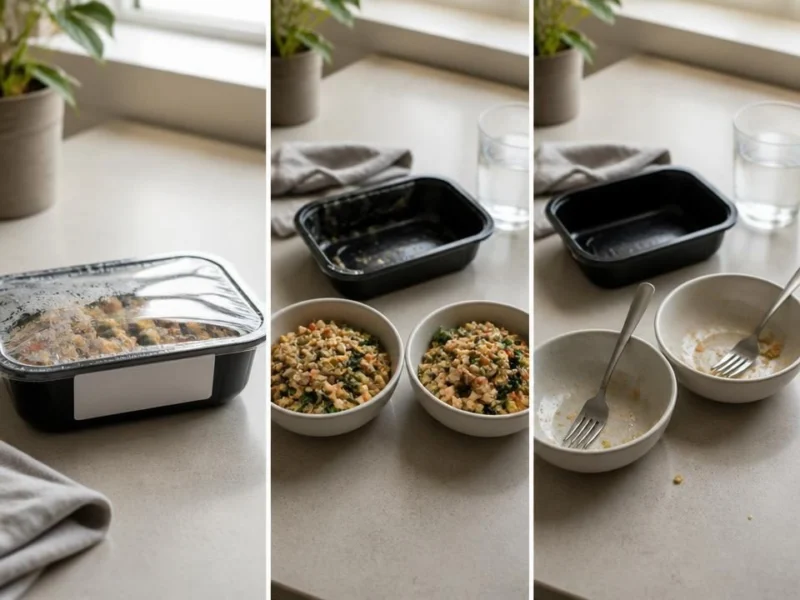
If a package lists 650 mg per serving and contains two servings, eating the entire package supplies 1,300 mg. That uses about 57% of a 2,300-mg daily budget, even if the front of the package presents the meal as a single convenient item.
- Check servings per container.
- Multiply sodium by servings eaten.
- Use 5% DV and 20% DV.
- Compare equal serving weights.
- Verify claims against actual milligrams.
Under FDA labeling definitions, “low sodium” means 140 mg or less per serving. “Reduced sodium” means at least 25% less than the reference product. A reduced-sodium soup can therefore remain high in absolute sodium if the original soup was extremely high.
A workable 2,300-mg daily budget
A budget prevents breakfast and lunch from quietly consuming nearly the entire limit. One flexible example is:
| Meal | Sodium range |
|---|---|
| Breakfast | 400–500 mg |
| Lunch | 600–700 mg |
| Dinner | 700–800 mg |
| Extras | 300–500 mg |
This is an illustration, not a required meal distribution. Someone planning dinner at a restaurant could deliberately choose a lower-sodium breakfast and lunch, leaving more room for the meal. One restaurant entrée may still use most or all of the daily ceiling.
The condiment entries people forget
The difficult part of tracking sodium is rarely the arithmetic. It is remembering ingredients that seem too small to record: soy sauce, bottled dressing, bouillon, seasoning packets, jarred sauces, pickles, olives, cured toppings, and dipping sauces.
Consider a clearly hypothetical seven-day tracking scenario. On days one through three, a person records a chicken bowl at 700 mg but omits dressing, pickled vegetables, and the seasoning sauce. After checking each component on day four, the estimated meal total rises to 1,250 mg. Nothing about the meal changed; the record became more complete.
| Common mistake | Better check |
|---|---|
| Entrée counted, sauce omitted | Add every condiment |
| One serving assumed | Multiply actual servings |
| “Reduced” means low | Check mg and %DV |
| Only saltshaker reduced | Compare packaged foods |
| Salt substitute chosen automatically | Check potassium safety |
Restaurant words that deserve a closer look
Menu descriptions do not reveal an exact sodium amount, but certain terms often signal brines, cured ingredients, salty sauces, or concentrated broth:
- Preserved: brined, cured, smoked, pickled
- Broth-based: broth, au jus, soup
- Sauce-heavy: soy, miso, teriyaki, buffalo
- Seasoned: barbecue, seasoned, blackened
For chain restaurants, check the company’s current nutrition information before ordering. Requesting dressing and sauce on the side gives you control over the portion, while grilled or plainly roasted dishes often make the sodium sources easier to identify.
Affordable lower-sodium eating does not require premium products. Dry beans, plain rice, oats, potatoes, frozen vegetables without sauce, eggs, and unseasoned poultry are widely available bases. Compare unit prices because specialty low-sodium versions sometimes cost more; rinsing ordinary canned beans may be a more practical compromise.
Sodium questions that come up after label reading
Is 2,300 mg a maximum or the amount my body needs?
It is a population-level recommended limit, not the amount you must reach each day. The body needs sodium, but most U.S. diets provide it readily. A medically prescribed target may be lower or otherwise individualized.
Can I average sodium across a week after one salty meal?
For general food awareness, looking at patterns over several days can keep one restaurant meal in perspective. Do not use weekly averaging to override a daily sodium limit prescribed for heart failure, kidney disease, liver disease, or difficult-to-control blood pressure. Those targets may be designed to manage day-to-day fluid and blood-pressure changes.
Do long workouts or hot outdoor work increase sodium needs?
They can. Highly active people with substantial sweat losses may need more sodium than the general limit suggests, especially during prolonged activity in heat. Sweat rate and sweat sodium concentration differ widely, so there is no reliable universal “extra sodium per workout” formula.
Ordinary short workouts do not automatically require electrolyte products or salt loading. Athletes and heat-exposed workers with repeated heavy losses may need an individualized hydration plan based on conditions, duration, fluid intake, and sweat losses.
Are potassium-based salt substitutes safe?
Potassium chloride can reduce sodium while retaining a salty taste, but it is not safe for everyone. People with impaired kidney function or those taking medications that affect potassium should ask a qualified clinician or pharmacist before using one regularly. Excess potassium can become dangerous when the kidneys cannot remove it effectively.
Why can a food be high in sodium without tasting salty?
Taste depends on the complete recipe, serving temperature, texture, and other flavors—not sodium alone. Bread, cheese, breakfast cereal, prepared poultry, sauces, and frozen dishes may contain meaningful sodium without producing an intense salty taste. The label is more dependable than your tongue for estimating daily sodium intake.
This content is based on nutritional physiology and energy metabolism research. It is for informational purposes only and does not constitute medical advice. Consult a qualified healthcare professional before making significant alterations to your caloric or macronutrient intake.