Dry chia seeds are a long-lasting pantry food, but there is no single guaranteed expiration period for every package. Use the package’s best-by date as your first quality reference, then keep or discard older chia based on how it was stored and whether it is still dry, clean, and free of rancid odors, mold, or pests. Soaked chia is different: once water is added, it needs refrigeration and should be treated as a prepared perishable food.
How Long Do Chia Seeds Last?
Chia seed shelf life depends on the package, storage temperature, humidity, light exposure, and whether the seeds are whole or ground. Dry whole seeds generally hold quality for a long time when sealed and stored away from heat and moisture, while ground chia usually loses freshness sooner because more of its oils are exposed to air.
Published estimates vary. A USDA Agricultural Research Service presentation gives an approximately three-year shelf-life estimate for chia stored in a cool, dry, sealed container. That is useful as a storage benchmark, not a guarantee for every brand, package, kitchen, or form of chia.
| Form | Practical planning guidance | Main quality concern | Storage note |
|---|---|---|---|
| Unopened, dry whole chia | Follow the package date; may remain acceptable beyond it if properly stored. | Rancidity over time | Keep sealed, cool, dark, and dry. |
| Opened, dry whole chia | Use within a reasonable period after opening and inspect before use. | Air and moisture exposure | Use an airtight container. |
| Refrigerated dry chia | Optional for longer storage. | Condensation after opening | Keep tightly sealed. |
| Frozen dry chia | Useful for large quantities or extended storage. | Moisture from condensation | Let container warm before opening. |
| Ground chia | Plan to use sooner than whole seeds. | Faster oxidation of exposed oils | Refrigerate or freeze if not using promptly. |
| Soaked chia | Follow the recipe’s refrigerated use-by guidance. | Prepared-food spoilage | Never store it as a pantry food. |
These are planning guidelines, not safety guarantees. Package directions take priority when they differ, especially for a specific product or flavored chia blend.
Do Chia Seeds Expire After the Best-By Date?
Not necessarily. A best-by date generally indicates when a manufacturer expects the food to be at its best quality, rather than an automatic discard deadline for a dry, shelf-stable food. The FoodKeeper App is designed to help consumers manage storage, freshness, and food waste; its storage guidance should be used as practical planning information rather than a promise that food is safe or high quality until a particular day.
A package that is past its date may still be usable if the seeds stayed sealed or airtight, dry, cool, and protected from light. But the printed date does not override visible mold, dampness, insects, webbing, or a strong off odor.
Dry chia contains oils that can gradually oxidize when exposed to heat, light, and air. This is rancidity: a quality decline that can make seeds smell sharp, stale, paint-like, or chemical-like. Moisture is a separate concern because damp seeds can clump, spoil, or develop mold.
How to Store Chia Seeds
Pantry storage for everyday use
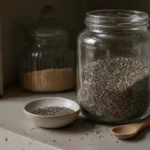
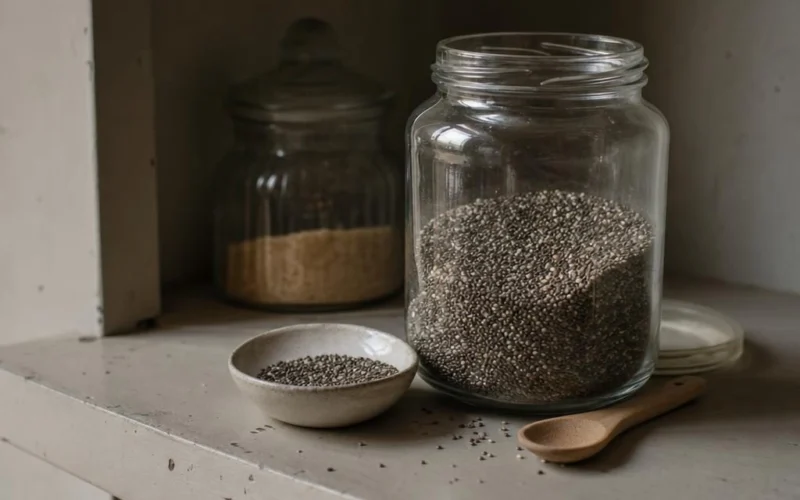
A cool, dark, dry cupboard is usually the best place for chia seeds. The key is limiting exposure to air, humidity, heat, and light—especially after the original package has been opened.
- Transfer opened seeds to an airtight jar or container if the original package does not reseal tightly.
- Store the container in a cool, dark, dry cupboard or pantry.
- Keep it away from the stove, oven, sunny counter, sink, dishwasher steam, and other heat or moisture sources.
- Use a clean, completely dry spoon each time.
- Label the container with the date you opened it.
- Buy a quantity you can use within a reasonable period rather than keeping a large bag open for years.
The recommendation to store chia cool, dry, and sealed aligns with the storage conditions noted in the USDA ARS chia storage material.
When refrigeration or freezing makes sense
Refrigeration is not usually required after opening if dry chia is tightly sealed and your pantry is reasonably cool and dry. It can be useful, however, if you bought chia in bulk, live in a hot or humid climate, or expect to store it for a long time.
Freezing is another practical option for large quantities. Seal the seeds well and keep the container closed until it has warmed closer to room temperature before opening. This helps reduce condensation, which could introduce moisture into the seeds.
Neither refrigeration nor freezing makes chia last indefinitely. If the seeds become damp, moldy, pest-affected, or strongly rancid-smelling, discard them regardless of where they were stored.
How to Tell If Chia Seeds Have Gone Bad
Start with the strongest warning signs rather than relying only on the date. Normal chia seeds should look dry and have a mild, neutral scent.
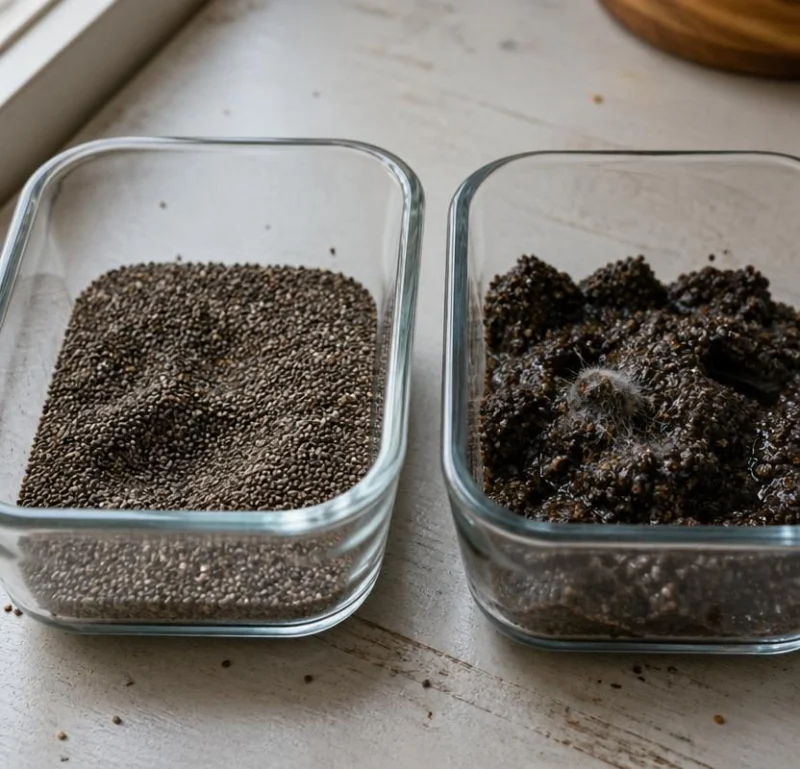
Discard indicators
- Rancid smell: a strong paint-like, sharp, chemical-like, stale, or unpleasant oily odor.
- Mold or unusual appearance: visible mold, unexplained discoloration, or signs of moisture damage.
- Pests: insects, larvae, or webbing in the package or container.
- Wet texture: seeds that are damp, sticky, slimy, or stuck together from moisture.
Not automatically spoilage
- Loose dry clumps caused by compression in a bag or container.
- A package that is past its best-by date but has been stored well and has no off smell or visible damage.
- Seeds that need to be gently shaken or broken apart because they were packed tightly.
If the seeds look and smell normal but you remain uncertain, it is reasonable to avoid using them rather than depend on a taste test. A very small taste check is only an optional final quality check when there are no visible or odor-related warning signs.
What to Do With Ground or Soaked Chia
Ground chia
Ground chia may become stale faster than whole seeds because grinding exposes more surface area to oxygen. Make smaller batches when possible, store them airtight, and consider refrigeration or freezing if you will not use them promptly.
Follow the manufacturer’s storage directions if you buy pre-ground chia, since packaging and added ingredients can affect its expected shelf life.
Soaked chia and chia pudding
Soaked chia, chia gel, and chia pudding are not shelf-stable. Once chia absorbs water or is mixed with milk, yogurt, juice, or other moist ingredients, refrigerate it as prepared food and follow the recipe’s use-by guidance.
Discard soaked chia if it develops mold, an unusual fermented smell, visible separation that seems abnormal for the recipe, or other obvious signs of spoilage. Dry-seed pantry estimates do not apply to soaked chia.
A Simple Keep-or-Toss Decision
- Inspect it: Is the chia dry, normally colored, and free of mold, insects, and webbing? If not, discard it.
- Smell it: Does it smell rancid, paint-like, chemical-like, or strongly stale? If yes, discard it.
- Consider age and storage: If the only issue is a past best-by date or harmless dry compression clumps, review how it was stored. If it remained dry, sealed, and smells normal, it may still be usable.
Frequently Asked Questions
Do chia seeds need to be refrigerated after opening?
No, not usually. A tightly sealed container in a cool, dark, dry pantry is generally adequate. Refrigeration or freezing can be helpful for large quantities, long storage, or hot and humid kitchens.
Can you use chia seeds after the best-by date?
Often, potentially, if they were stored properly and remain dry and free of off odors, mold, pests, webbing, and moisture damage. The date is a quality reference, not permission to ignore spoilage signs.
Keep-or-toss rule: If dry chia is sealed, dry, and smells normal, it may remain usable beyond the package date. If it is damp, moldy, pest-affected, webbed, or strongly rancid-smelling, discard it.