Matcha can become stale after its best-by date, but the printed date is not automatically a safety cutoff. If the powder is dry, clean-smelling, and free of mold, moisture, contamination, or damaged packaging, it may still be usable—though its color, aroma, flavor, and overall quality may have declined. Discard matcha that is damp, moldy, unusually odorous, or otherwise visibly abnormal.
Does Matcha Expire?
Matcha does not usually become unsafe simply because it has passed a printed best-by date. In the United States, date labels such as “Best if Used By” generally indicate when a product is expected to have its best flavor and quality, rather than an automatic food-safety deadline. The FDA recommends checking food for noticeable changes in color, consistency, or texture instead of relying on a date alone.
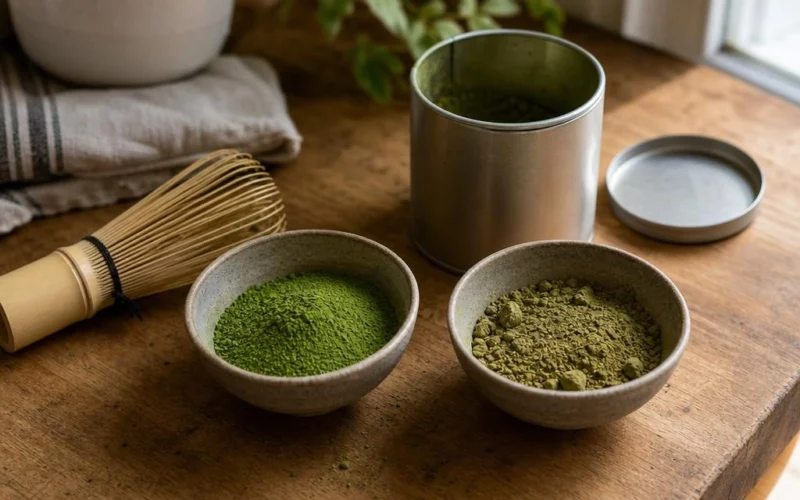
That said, matcha is a quality-sensitive powdered tea. Air, light, heat, and humidity can gradually dull its green color and weaken its fresh grassy aroma. When matcha stays dry and is properly sealed, it will often lose freshness before it becomes clearly spoiled.
Always follow the storage directions and date on the specific product label. Packaging, seal quality, and storage history matter more than a universal matcha expiration timeline.
Expired Matcha vs. Stale Matcha
Past the best-by date is mainly a quality question. A date that has passed does not automatically mean the powder should be thrown away, especially if the container remained sealed, dry, and intact.
Stale matcha is matcha that has lost some of its aroma, vivid color, and flavor due to oxidation or storage conditions. It may look duller and taste flatter, harsher, or more bitter than fresher powder, but it can still be usable if it is dry, clean-smelling, and otherwise normal.
Spoiled or compromised matcha has been affected by moisture, mold, pests, contamination, damaged packaging, or an unusual odor. Dry powder is not automatically safe indefinitely: moisture or contamination can change the assessment quickly.
How Long Does Matcha Last?
There is no single reliable shelf-life number for every matcha powder. An unopened tin or pouch generally holds its quality longer than one that has been opened repeatedly, but the actual matcha shelf life depends on several details:
- Harvest and production date
- Packaging type and seal integrity
- Exposure to heat, light, air, and humidity
- How often the container is opened
- Whether a wet or contaminated scoop was used
Use the producer’s best-by date and storage instructions as your first reference point. Once opened, judge matcha by its condition and storage history rather than by the calendar alone. General storage tools such as the USDA-supported FoodKeeper resource can help with food freshness practices, but they do not establish a universal matcha-specific expiration period.
How to Tell Whether Matcha Is Still Good
Check old matcha in this order: inspect it, smell it, then taste a tiny amount only if it remains dry and appears normal. Color can offer useful clues, but it cannot prove that matcha is safe by itself.
| Sign | What it may indicate | Recommended action |
|---|---|---|
| Bright green, dry powder, clean grassy aroma | Likely fresher quality | Use normally |
| Dull or olive color, flat aroma | Staleness or oxidation | Use soon or use for cooking if otherwise normal |
| Bitter, harsh, or flat taste | Quality loss | Use for cooking or discard if unpleasant |
| Soft or hard damp clumps | Moisture exposure | Discard |
| Musty, sour, rancid, or chemical smell | Possible spoilage or contamination | Discard |
| Visible mold or pest contamination | Unsafe to salvage | Discard |
1. Inspect the Color
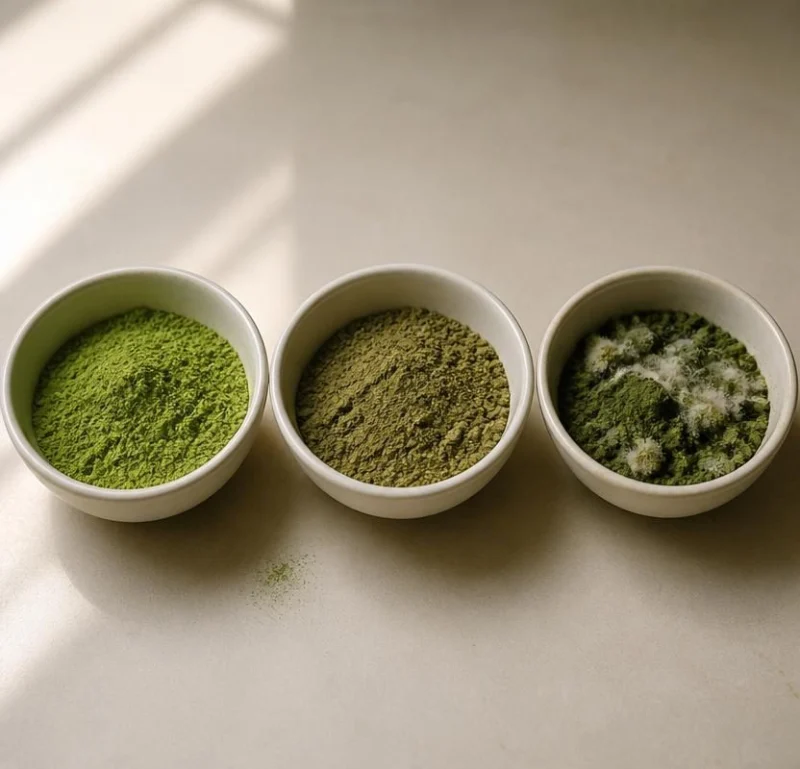
Fresh matcha is commonly bright or vivid green. As it ages or oxidizes, it may shift toward a dull green, olive, yellow-green, or brownish shade. This usually signals quality loss, especially if the powder has been exposed to light or air.
Do not use color as the only test. A faded powder may simply be stale, while matcha that still looks green could have moisture damage or contamination that is not obvious from color alone.
2. Check the Aroma
Fresh matcha commonly smells clean, grassy, vegetal, or mildly sweet. A weak aroma may point to staleness, while a musty, sour, rancid, chemical, or otherwise unfamiliar smell is a reason to discard it.
If the smell makes you hesitate, do not try to confirm it by tasting the powder.
3. Examine Texture and Packaging
Matcha should be dry and finely textured. Small, soft clumps can occur from settling or normal handling and may break apart easily. Damp, hard, sticky, or expanding clumps are different: they suggest moisture exposure and warrant disposal.
Also inspect the container. Discard matcha if the seal is torn, the lid does not close properly, the package is wet, pantry pests are present, or there is visible debris or contamination.
4. Taste Only If It Passes the Earlier Checks
If the powder is dry, looks normal, and smells normal, taste a very small prepared amount. Stale matcha may taste flat, overly bitter, harsh, or less aromatic than expected. That is a quality issue, not necessarily a spoilage sign.
Do not taste matcha with mold, dampness, contamination, or an abnormal odor.
When Should You Throw Matcha Away?
Discard matcha when there is visible mold or fuzzy growth; dampness, wet spots, sticky paste-like areas, or unexplained hard clumps; pest activity; contamination; or a musty, sour, rancid, chemical, or otherwise unusual smell.
Damaged packaging also matters. A torn pouch, broken seal, loose lid, or wet container may have exposed the powder to air, moisture, or contaminants. If you are unsure whether moisture entered the container, discard it rather than taste-test it.
Do not scrape off mold and keep the rest. Matcha is a fine powder, so visible mold or moisture damage is not a problem that can be safely removed from one small area.
- Mold, moisture, contamination, or abnormal odor? ❌ Discard.
- Dry and normal-looking but dull or flat? ✓ Use in cooking or a less flavor-sensitive drink.
- Bright, dry, clean-smelling, and pleasant-tasting? ✓ Use normally.
- Unsure whether moisture entered? ❌ Discard rather than taste-test.
How to Store Matcha After Opening
To preserve freshness, protect matcha from its main enemies: air, light, heat, and humidity. Reseal the package promptly after each use, or keep the powder in an airtight, opaque or light-protective container.
- Seal the container tightly after every use.
- Block light with an opaque tin, pouch, or cupboard storage spot.
- Keep matcha cool and dry, away from sunlight, ovens, and steam.
- Use a clean, completely dry scoop.
- Limit how long the container stays open.
- Follow the product label’s storage instructions.
Avoid storing matcha beside a stove, dishwasher, kettle, or other humid area. Buying an amount you can use within a reasonable period is also more practical than keeping a large supply open indefinitely.
Should You Refrigerate or Freeze Matcha?
Refrigeration is not automatically better. When a cold matcha container is opened in a warm or humid kitchen, condensation can form and introduce moisture into the powder.
If you choose to refrigerate matcha, keep it in truly airtight packaging and let the sealed container come closer to room temperature before opening it. Avoid moving the same container in and out of the refrigerator repeatedly.
Freezing is not required for routine matcha storage. Packaging quality, a tight seal, and moisture control generally matter more than simply using a colder temperature.
What to Do With Matcha That Is Stale but Not Spoiled
Matcha that is duller, less aromatic, or somewhat bitter—but still dry, clean-smelling, and otherwise normal—can work well in smoothies, lattes, oatmeal, sauces, or baking. These uses are more forgiving because milk, fruit, sweeteners, and other ingredients can soften the flavor of stale matcha.
Save your freshest matcha for whisking with water, where its color, aroma, and sweetness are most noticeable. Premium ceremonial-style matcha is especially less forgiving when it has gone stale because its flavor is meant to stand on its own.
Use matcha normally when it is dry, clean-smelling, intact, and still pleasant. Use merely dull or stale but otherwise normal matcha in lattes or cooking. Discard it when mold, moisture, contamination, damaged packaging, or an unusual odor creates doubt.