
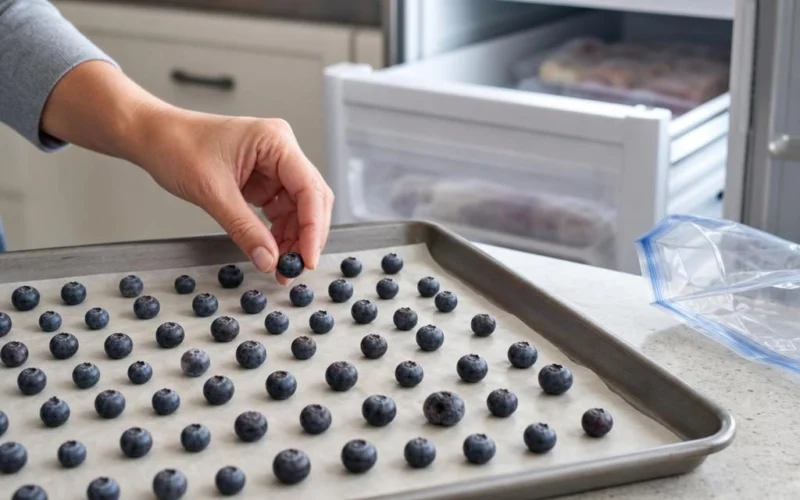
Yes. The most reliable way to freeze blueberries without them clumping is to keep them dry, freeze them in a single layer until firm, then transfer them to a tightly sealed freezer bag or container. This home version of “flash freezing” needs only a tray and a freezer.
The Best Method for Freezing Blueberries Individually
To freeze blueberries without clumping, sort them, keep them dry, freeze them in a single layer until firm, then package them tightly. At home, “flash freezing” simply means tray-freezing the berries before packaging; it does not require commercial rapid-freezing equipment.
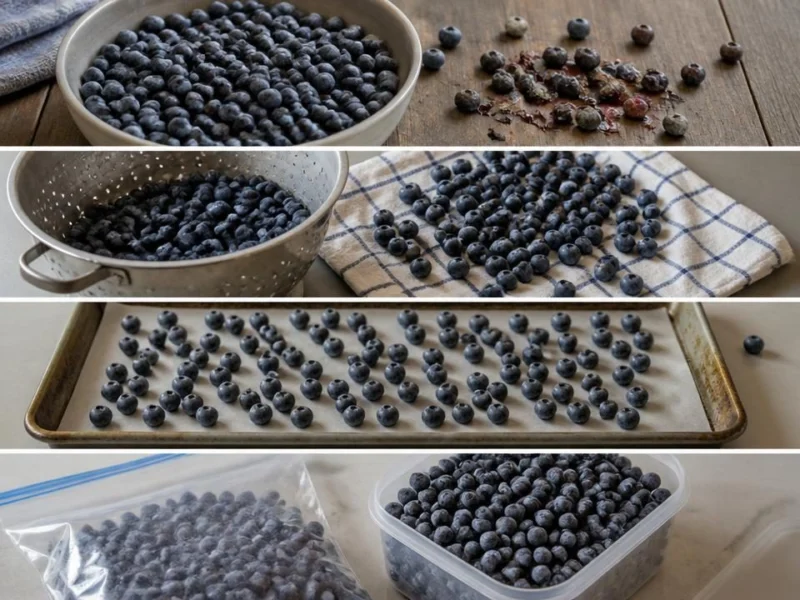
Gather the basic supplies
- Fresh blueberries
- A rimmed baking sheet or freezer-safe tray
- Parchment paper, optional for easier cleanup
- Clean kitchen towels or paper towels if washing the berries
- A freezer-safe zip-top bag or rigid freezer container
- A label and marker
Sort and prepare the berries
Pick through the blueberries before freezing. Remove leaves, stems, crushed berries, leaking fruit, debris, and any berries with visible mold or spoilage. Freezing preserves the condition the berries are already in; it will not restore fruit that is soft, damaged, or deteriorating.
Decide whether to wash before freezing
You can freeze blueberries unwashed or wash them first and dry them thoroughly. Guidance differs: the National Center for Home Food Preservation notes that rinsing is optional if berries are completely dried, while the University of Minnesota Extension recommends washing fresh fruit and allowing it to dry before freezing.
If the berries are reasonably clean, freezing them unwashed avoids adding surface moisture. If washing is necessary or more convenient, rinse them briefly, drain well, and dry them until no visible water remains. Do not put visibly wet blueberries on the tray or into freezer packaging. Surface water forms ice and increases the chance of clumping.
Tray-freeze the blueberries
- Pat or air-dry washed berries until their skins have no visible moisture.
- Line a rimmed baking sheet with parchment, if desired, and arrange the berries in a single layer with space between them.
- Place the tray flat in the freezer and freeze until the berries are firm throughout.
- Transfer the berries to freezer packaging promptly once they are hard and separate easily.
A crowded tray or berries transferred while still partly soft can freeze into clusters rather than remaining loose.
Package, label and return them to the freezer
Transfer the fully frozen berries to a moisture- and vapor-resistant freezer bag or rigid freezer container. Press out as much excess air as practical without crushing the berries, seal tightly, and label the package with the contents and date.
Choose a package size that leaves minimal unused space once filled; excess headspace can expose the berries to more air and reduce quality over time. Return the package to the freezer promptly. How long blueberries remain at their best is mainly a quality issue rather than a universal safety deadline; tight packaging and a consistently cold freezer help limit freezer burn and flavor loss.
Wash First or Freeze Unwashed?
Neither choice is universally best. Freezing unwashed berries avoids adding moisture, while washing first may be more convenient if you want the berries ready to use directly from the freezer. The shared rule across preservation guidance is that washed berries need to be thoroughly dried before freezing.
| Choice | When it makes sense | Main advantage | Main drawback | Non-negotiable step |
|---|---|---|---|---|
| Freeze unwashed | The berries are reasonably clean and you prefer to rinse them later. | No added surface moisture. | You will need to wash them before uses where washing is appropriate. | Sort out damaged fruit and debris first. |
| Wash, dry and freeze | You want berries ready for smoothies, cooking, or other easy use. | Convenient to use straight from the freezer. | Wet skins can create ice and clumps. | Dry until no visible moisture remains. |
The Oregon State University Extension method includes washing and draining berries before freezing them individually on a baking sheet. In contrast, the North Carolina Blueberry Council presents a no-wash approach to avoid extra moisture. Choose the option that suits your kitchen routine, but do not freeze wet berries.
How to Use Frozen Blueberries
Frozen blueberries do not need to be thawed for many recipes. Using them straight from the freezer often helps them hold their shape better during mixing and cooking.
| Use | Use frozen or thawed? | Practical note |
|---|---|---|
| Smoothies | Frozen | Add directly to the blender for a colder, thicker drink. |
| Oatmeal and sauces | Usually frozen | Stir them in while cooking; heat and liquid will soften them. |
| Muffins and many batters | Usually frozen | Fold in gently. Some color streaking is normal. |
| Recipes needing soft, intact berries | Thawed | Thaw in the refrigerator or briefly at room temperature, then drain excess liquid if needed. |
| Eating after thawing | Thawed | Expect a softer texture than fresh berries. |
Thawed blueberries release juice and become softer because ice crystals affect the fruit’s structure. That is normal and does not make them unsuitable for cooking. Repeated thawing and refreezing, however, can further reduce texture and make the berries more likely to freeze together.
If the Berries Clump or Were Already Soft
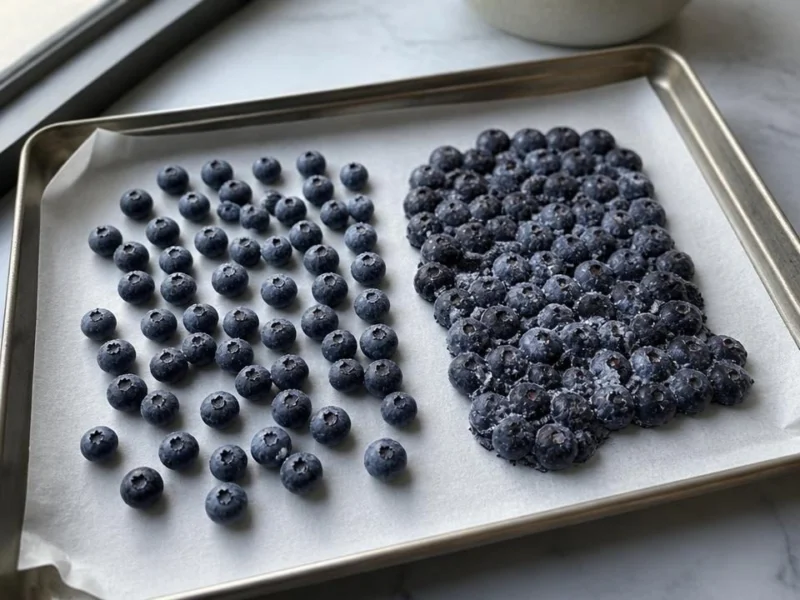
Common causes of clumping
Clumping usually results from moisture or timing: the berries were wet, the tray was overcrowded, they were packaged before fully firm, or the package contained excess air or moisture. A bag that partially thaws and refreezes can also turn into a frozen mass.
Home “flash freezing” does not require special equipment; it simply means freezing the berries separately on a tray until firm.
What to do with a frozen block
If the berries have frozen into a block, let the sealed package sit briefly only until the outside berries begin to loosen, then separate or break off the portion you need. Return the remainder to the freezer promptly.
Avoid warming the bag long enough for the berries to thaw significantly and then refreezing it. If the berries are becoming soft and juicy, use them promptly in smoothies, sauces, oatmeal, or baking.
How to use soft or leaking berries
Blueberries that are soft or leaking but still sound can be frozen promptly for smoothies, sauces, compotes, pancakes, or muffins. They may be useful in these applications, but freezing will not restore a firm texture, so they are less suitable for eating after thawing.
Discard berries with mold, an off smell, or other signs of spoilage rather than trying to preserve them.