
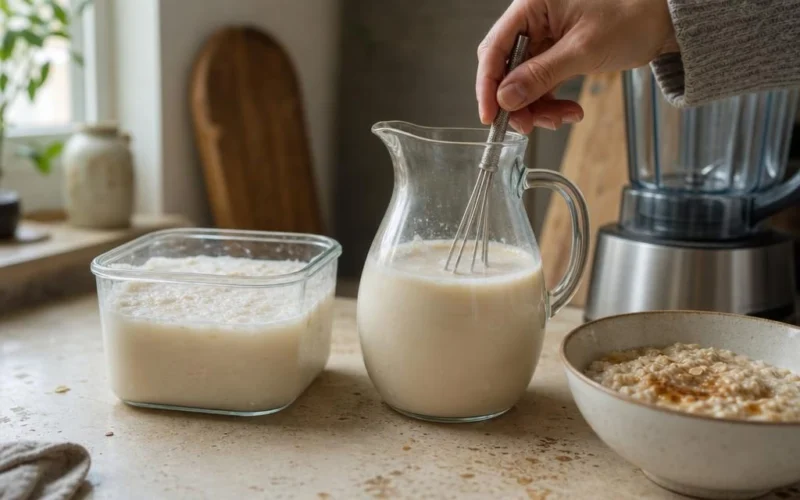
Yes, you can usually freeze oat milk, but it may separate, become grainy, or feel thinner after thawing. Check the package first: Califia Farms advises against freezing, while Oatly says freezing is possible. Freeze small portions, thaw them in the refrigerator, then shake, whisk, or blend; use thawed oat milk mainly in cooking, baking, oatmeal, or smoothies rather than plain drinking or foam-heavy coffee drinks.
Can You Freeze Oat Milk?
Yes, you can usually freeze oat milk if it is still fresh, properly stored, and acceptable to use before freezing. Freezing does not rescue oat milk that is already questionable or spoiled, and thawed oat milk may separate, become grainy, or seem thinner than it was before.
Check the package first because brand directions differ. Oatly says its oat drink can be frozen and may separate after thawing, while Califia Farms advises against freezing because texture can change. Formulations vary, including fat content, stabilizers, and products designed for hot beverages, so the label takes priority over general advice.
Freezing is mainly a quality decision, not a promise that the original texture will return. Shaking, whisking, or blending can redistribute separated ingredients, but may not restore the same smoothness, creaminess, or foaming performance.
Freeze oat milk when you plan to use it in baking, cooking, oatmeal, sauces, soups, or smoothies, where texture changes are less noticeable. Keep it unfrozen when you want to drink it plain or need consistently smooth foam for espresso drinks.
What Changes When Oat Milk Thaws?
Oat milk is a mixture of water, oat solids, oil, and other ingredients that help it stay evenly mixed. During freezing and thawing, the liquid and suspended components can separate. The result may look watery at the top, thicker at the bottom, slightly grainy, or less creamy overall.
Shaking, whisking, or briefly blending thawed oat milk can redistribute separated ingredients. That may make it more uniform, but it does not guarantee the original smooth texture or restore its ability to froth well.
Separation by itself is not proof that oat milk has spoiled. Spoilage is more likely when separation comes with mold, a foul or unusually sour smell, damaged or swollen packaging, or unexpected curdling that does not look like ordinary settling.
How to Freeze Oat Milk Without Waste
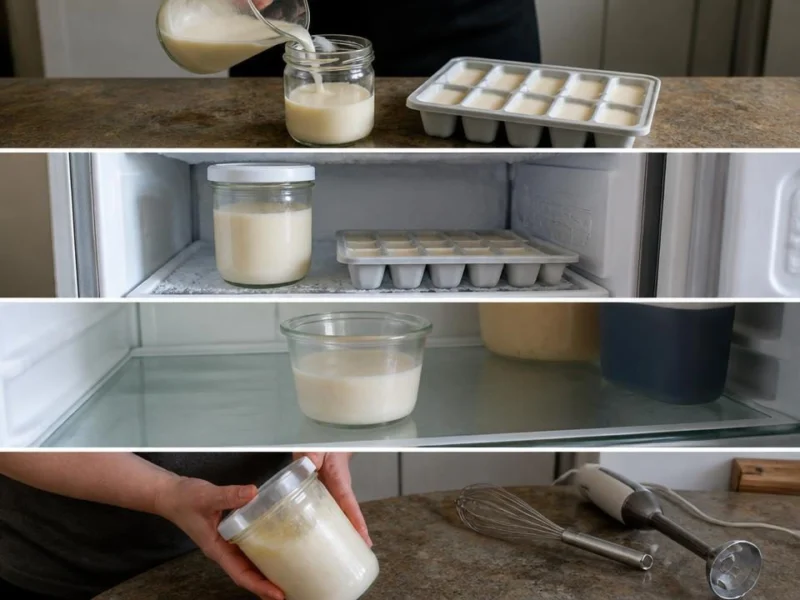
- Check the carton or the brand website for freezing instructions.
- Pour fresh oat milk into a freezer-safe container, silicone ice-cube tray, or another suitable mold.
- Leave room at the top for expansion; do not fill the container completely.
- Seal it securely and label it with the product name and date.
- Freeze it promptly while it is still fresh. Do not freeze oat milk that already seems questionable.
- Choose portions sized for one smoothie, recipe, or serving to avoid thawing more than you need.
Carton, Container, or Ice-Cube Tray?
Do not assume the original carton is freezer-safe. Cartons can split or leak as liquid expands, and some brands specifically advise against freezing their products. Unless the package is labeled for freezing, transfer the oat milk first.
A rigid freezer-safe container works well for a larger amount needed for baking or batch cooking. Leave headspace so expansion does not force the lid open or crack the container.
Ice-cube trays are useful for small amounts. Once frozen, the cubes can be moved to a sealed freezer-safe bag or container and used in smoothies, sauces, oatmeal, or small cooking projects. Larger portions are more efficient for recipes, but they take longer to thaw.
How to Thaw Frozen Oat Milk Safely
Thaw frozen oat milk in the refrigerator. This keeps it cold as it returns to liquid form and aligns with USDA food-safety guidance on safe thawing.
Once thawed, shake the sealed container well. If it still looks uneven, whisk it or blend it briefly before using it. These steps may redistribute separation, but they may not restore the original smooth texture or foaming performance. Treat refrigerator-thawed oat milk as a perishable drink: follow the package handling instructions and consider its temperature history rather than relying on a universal post-thaw time.
Cold-water and microwave thawing are also recognized USDA methods, but they are less convenient for oat milk. Oat milk thawed by either method should be cooked immediately. Do not routinely refreeze thawed oat milk, since another freeze-thaw cycle can further reduce quality; if considering it, follow the product label and safe temperature-handling history.
Which Uses Work Best After Thawing?
The best use depends on whether the recipe can absorb a thinner or slightly grainy texture. Blended or cooked dishes are usually more forgiving than drinks where oat milk’s texture is front and center.
| Use after thawing | Expected result | Recommendation |
|---|---|---|
| Baking and pancakes | Texture changes are usually masked | Good choice |
| Oatmeal | Stirring usually integrates it | Good choice |
| Sauces and soups | Cooking and whisking are forgiving | Good choice |
| Smoothies | Blending improves uniformity | Good choice |
| Plain drinking | Graininess or thinning may be noticeable | Test first |
| Espresso drinks and foam | Smoothness and frothing may be unreliable | Least reliable |
Smoothies work particularly well because the blender combines the oat milk with fruit, yogurt, nut butter, or other ingredients. In contrast, a latte puts the oat milk’s consistency on display. Products formulated for hot beverages may perform differently from standard refrigerated oat milk, but freezing can still make foam less dependable.
If coffee is the planned use, test a small amount before using thawed oat milk for a full drink or serving guests. Cooked coffee drinks are generally more forgiving than drinks that depend on a smooth pour or stable foam.
When Should You Discard Thawed Oat Milk?
Freezing does not rescue oat milk that was already spoiled, and it does not make spoiled milk safe to use. Discard thawed oat milk if you notice mold, a bloated or damaged package, an unusually sour or foul odor, or strange curdling beyond ordinary separation.
Do not taste questionable oat milk to decide whether it is safe. A best-by date is generally about product quality, while obvious spoilage signs and unsafe handling are reasons to throw it away.
Normal separation may improve after shaking or blending. Mold, a bad smell, or damaged packaging are different signals and should not be treated as a texture issue.
Frequently Asked Questions
Can you freeze oat milk in the carton?
Only if the specific package is designed and labeled for freezing. Otherwise, transfer it to a freezer-safe container, leave expansion room, and seal it securely.
How long does frozen oat milk take to thaw?
There is no single thawing time because portion size and container shape vary. Small cubes thaw much faster than a large container; refrigerator thawing is the preferred method.
Can thawed oat milk still be used in coffee?
It can be tested, but smooth drinking coffee and foam are less reliable after freezing. Use it in cooked coffee drinks or choose unfrozen oat milk when texture matters.
How can you tell whether separated oat milk is altered or spoiled?
Separation that improves with shaking or blending may be a quality change. Mold, foul odor, damaged packaging, or unusual curdling warrants discarding it.
Freeze oat milk when the package permits it and the planned use is baking, cooking, oatmeal, or smoothies. Keep it unfrozen when you need the smoothest plain drink or dependable coffee foam, and discard it if thawing reveals actual spoilage rather than ordinary separation.