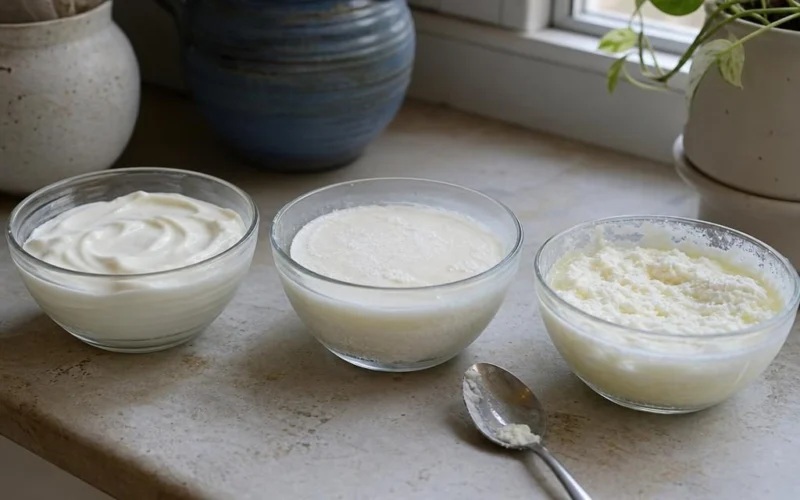
Yes, you can freeze Greek yogurt, but thawed yogurt often becomes thinner, grainier, or separated instead of returning to its original smooth texture. Freezing is worthwhile for reducing waste or saving yogurt for smoothies, baking, marinades, and cooked sauces—not for preserving a perfectly creamy topping. The main concern is quality, although safe handling still matters after thawing.
Should you freeze your Greek yogurt?
- Yes: Greek yogurt can be frozen.
- Expect: Separation, thinning, or graininess after thawing.
- Before freezing: Divide it into single-use or recipe-sized portions.
- Best uses: Smoothies, baking, marinades, and blended or cooked sauces.
- Avoid freezing it if you need: A smooth parfait, topping, dip, or tzatziki.
What happens to Greek yogurt when you freeze it?
When Greek yogurt freezes, ice crystals form and disrupt the structure that gives it a thick, creamy consistency. As it thaws, some of the liquid and milk solids can separate, leaving yogurt that looks watery, curd-like, sandy, or less cohesive.
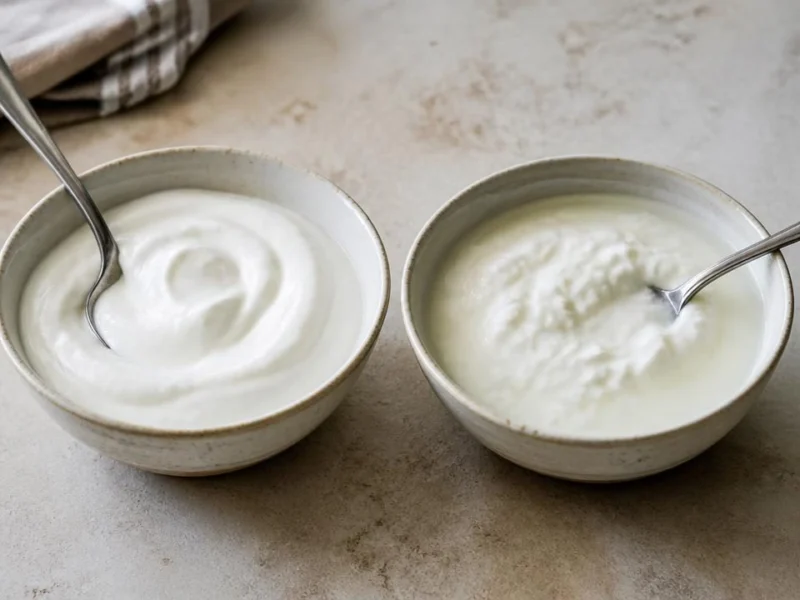
Stirring may bring some of the liquid and solids back together, but it cannot guarantee the original texture. The result depends on the brand, fat level, stabilizers, flavorings, fruit pieces, freezer temperature, and how long the yogurt remains frozen. Yogurt with fruit or other inclusions may change more noticeably as those ingredients soften or release liquid.
Frozen Greek yogurt is also different from commercial frozen yogurt. A plain container placed in the freezer will not reliably become a smooth, scoopable, ice-cream-like dessert because commercial products are formulated and processed for that texture.
How to freeze Greek yogurt
Choose portions that match how you will use it
Portioning Greek yogurt before freezing makes it easier to use later and avoids repeatedly thawing a large container. Choose the amount based on the recipe or meal:
- Single-use spoonfuls: Useful for smoothies or small additions to blended recipes.
- 1/2-cup portions: Convenient for breakfast bowls, sauces, and many baking recipes.
- Recipe-sized portions: Best for muffins, pancakes, marinades, or cooked dishes that call for a larger amount.
Ice-cube trays work for small smoothie portions. Cover the tray or transfer the frozen portions to an airtight freezer container or bag once solid so they are protected from freezer air and odors.
Seal, label, and freeze
Use a freezer-safe airtight container or a well-sealed freezer bag. If you are using a rigid container, leave a small amount of headspace for expansion. Label it with the date and flavor, then freeze it at 0°F (-18°C).
Remove granola before freezing when possible. It becomes soft and unpleasant after thawing, and fruit pieces or other mix-ins can create additional separation or texture changes. You can add fresh toppings after the yogurt has thawed instead.
How to thaw Greek yogurt
Thaw Greek yogurt in the refrigerator rather than on the counter. Keep it covered and refrigerated as it softens.
- Thaw it in the refrigerator. Allow the yogurt to thaw gradually while keeping the container covered.
- Stir gently but thoroughly. Stirring may recombine some separated liquid and solids, but it cannot guarantee the original creamy texture.
- Check its appearance and smell. Discard the yogurt if it has mold, an off odor, damaged packaging, or other signs of spoilage.
- Use it in a forgiving recipe. Keep it refrigerated, follow the package date and storage instructions, and use it promptly as a perishable food.
Do not freeze yogurt that was already spoiled in an attempt to make it safe.
Is thawed Greek yogurt still good for your recipe?
Thawed Greek yogurt is most useful in recipes where blending, mixing, or cooking can hide changes in texture. This table shows where the texture is likely to matter:
| Use | Expected result | Recommendation |
|---|---|---|
| Smoothie | Texture is masked after blending | Excellent choice |
| Muffins, pancakes, or other baking | Texture is incorporated during cooking | Good choice |
| Marinade | Some separation is usually less important | Good choice; stir first |
| Blended or cooked sauce | Blending or heating can make the mixture more cohesive | Usually suitable |
| Plain with fruit or granola | Graininess or watery separation is noticeable | Poorer choice |
| Parfait or spooned topping | Smoothness is central to the experience | Usually avoid |
| Tzatziki or cold dip | It may be less creamy or cohesive | Test a small batch first |
Freezing, thawing, and safety details
The USDA gives one to two months as a quality estimate for yogurt stored at 0°F (-18°C). This is not a strict safety cutoff. Continuous storage at 0°F slows microbial activity and helps preserve frozen food, but freezing does not make yogurt safe if it was spoiled or mishandled before freezing.
If Greek yogurt accidentally froze in the refrigerator, its main issue may be a texture change if the package is intact and it remained cold. Refreezing may be possible when yogurt has stayed properly cold, but another freeze-thaw cycle is likely to worsen the texture. Keep partially thawed yogurt refrigerated, and discard it if its temperature history is uncertain, the package is damaged, or it has mold, an off odor, or other signs of spoilage.
Frequently asked questions
Can you eat Greek yogurt while it is still partly frozen?
Yes, if it was handled safely and is not spoiled. The texture may be icy and uneven, though, so partly frozen Greek yogurt is better treated as a personal preference than as a reliable frozen-yogurt dessert.
Can thawed Greek yogurt replace sour cream in baking or sauces?
It can work in many baked goods, marinades, and blended or cooked sauces. Separation and altered thickness may affect some recipes, so stir it first and do not assume it will behave exactly like sour cream in every sauce or dip.
Is it better to freeze Greek yogurt in ice-cube trays or small containers?
Ice-cube trays are useful for small smoothie portions, but cover them and transfer the frozen pieces to an airtight container afterward. Small containers are better for 1/2-cup or recipe-sized portions and reduce handling.
Freeze Greek yogurt when reducing waste or saving it for smoothies, baking, marinades, or cooked dishes matters more than preserving a perfectly smooth texture. Keep it refrigerated instead when you plan to eat it plain, layer it in a parfait, or use it as a smooth dip or topping.