
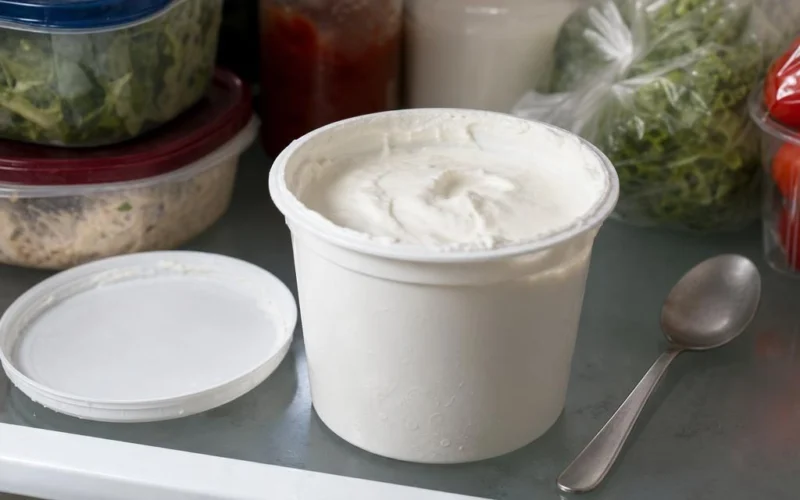
Opened Greek yogurt is best used within about 5–7 days when it has stayed continuously refrigerated at 40°F (4°C) or below, remained covered, and been handled with clean utensils. This is a conservative practical target, not a guaranteed expiration point; follow the package instructions if they are more restrictive. Discard it sooner if it was left warm too long or shows mold, unusual discoloration, an unfamiliar or unpleasant odor, bloating, or clearly abnormal texture.
How Long Does Greek Yogurt Last After Opening?
Aim to finish an opened container within 5–7 days. That window gives you a cautious everyday target for a refrigerated, cleanly handled container, but no single Greek-yogurt-specific number applies to every brand, flavor, or storage situation.
Some general yogurt storage guides list 7–14 days in the refrigerator. For example, the USDA FoodKeeper guide distributed by University of Georgia Extension provides that broader range for yogurt. It should not be read as a guarantee for every opened tub of Greek yogurt, especially one that has been repeatedly opened, served from, or kept in a refrigerator that runs warm.
Quality and safety do not always decline at the same pace. Yogurt may become more watery, tangier, or less smooth before it has obvious spoilage signs. On the other hand, normal smell and appearance cannot rule out every food-safety concern, which is why temperature history and handling matter. Refrigeration slows microbial growth but does not stop it, according to USDA FSIS refrigeration guidance.
Store Opened Greek Yogurt to Protect Quality
Return Greek yogurt to the refrigerator promptly after scooping out a serving. The FDA recommends keeping refrigerators at or below 40°F (4°C); an appliance thermometer is useful because the control dial alone may not show the actual temperature.
- Refrigerate promptly after serving.
- Keep the original container tightly covered, or transfer yogurt to a clean, airtight container.
- Use a clean spoon each time.
- Avoid double-dipping after the spoon has touched food or your mouth.
- Store it on an interior refrigerator shelf, not in the door where temperatures tend to fluctuate.
- Mark the opening date on large containers.
- Follow the package’s storage instructions.
Covered storage and prompt refrigeration are part of FDA food-safety advice for perishable ready-to-eat foods. See the FDA’s guidance on refrigerator thermometers and safe food storage for details.
Normal Whey Separation vs. Signs the Yogurt Should Be Discarded
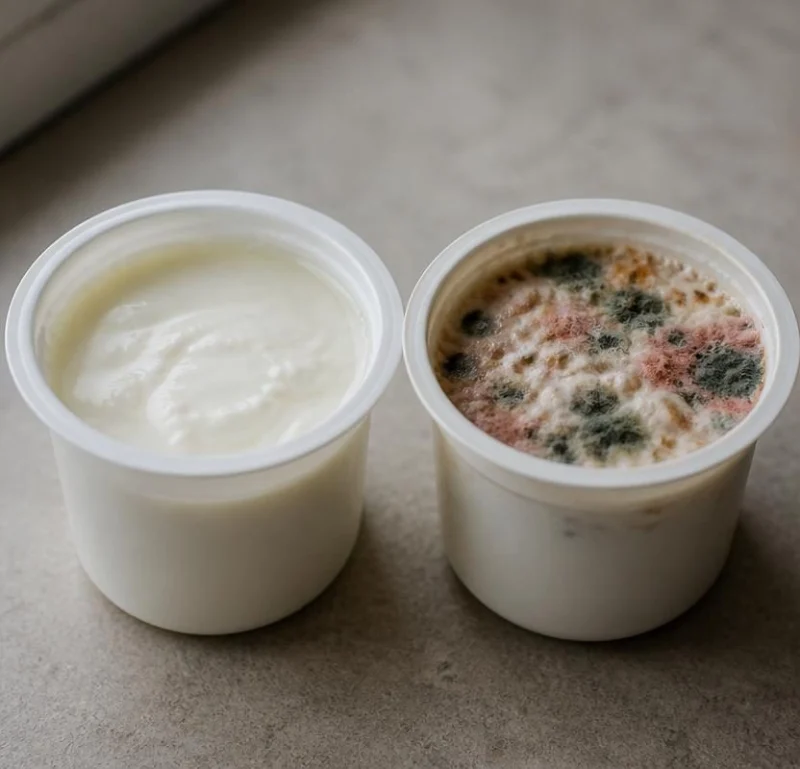
What normal Greek yogurt separation looks like
A thin layer of clear or slightly cloudy liquid on top is often whey separation. It can happen after the container sits in the refrigerator or is jostled during transport. If the yogurt otherwise has its familiar color, smell, and texture, you can stir the whey back in or pour it off.
| Observation | More consistent with normal separation | Discard concern |
|---|---|---|
| Liquid on top | Thin clear or cloudy whey; stir or pour off | Not concerning by itself |
| Smell | Familiar yogurt tang | New or distinctly unpleasant odor |
| Color | Uniform expected color | Pink, orange, green, black, or other unusual color |
| Texture or container | Smooth or slightly changed from separation | Clearly abnormal texture or bloating |
| Mold | None | Any visible mold; discard the entire container |
Appearance is useful for spotting clear spoilage, but it cannot confirm that yogurt is safe after questionable storage. Temperature history and handling still matter.
When to throw the entire container away
Discard the whole container if you see mold anywhere, notice pink, orange, green, black, or otherwise unusual discoloration, smell a strong unfamiliar odor, find a swollen or bloated container, or see texture changes that go beyond ordinary whey separation. Discard it as well if it has a questionable temperature history.
Do not scrape surface mold away and eat the rest. Yogurt is soft and moist, so contamination may extend below the visible spot. Never taste yogurt to decide whether a questionable container is safe.
Use This Decision Guide Before Eating It
- Did it stay at 40°F (4°C) or below?
If its temperature history is unsafe or unknown, discard it. Smell and appearance cannot confirm safety after questionable temperature exposure. - Has it been open for about a week or longer?
Refrigerated, covered, cleanly handled yogurt used within roughly 5–7 days is the most reasonable use window, subject to package directions. Beyond that window, appearance and smell cannot guarantee safety, so a cautious discard is recommended. - Does it have mold, unusual color, an unfamiliar odor, bloating, or abnormal texture?
Any spoilage sign means discard the entire container. Do not taste it to test safety.
Common Storage Situations
What if Greek yogurt was left out?
For refrigerated perishable foods, the FDA advises discarding food left out for more than two hours. When the surrounding temperature is above 90°F (32°C), that limit drops to one hour. Discard Greek yogurt left out overnight; returning it to the refrigerator does not reverse unsafe temperature exposure.
See the FDA’s food storage guidance for prompt refrigeration advice. For other temperature-history questions, use the decision guide above.
Can you eat Greek yogurt after the “best by” date?
The printed date is not a complete answer once the container has been opened. A “best by” date generally relates to expected quality rather than a guaranteed safety cutoff.
Do not use a fixed number of days past the date as a safety rule. Follow any more restrictive manufacturer instructions and use the decision guide for an opened container.
Do large tubs, flavored yogurt, and mixed yogurt last differently?
A large tub does not automatically last longer. Repeated opening and utensil contact create more opportunities for contamination, so mark the opening date on family-size containers.
Follow package guidance for flavored yogurt. Yogurt mixed with fresh fruit, granola, or other ingredients may change texture and may be better used sooner. If transferring yogurt, use a clean, food-safe, airtight container.
Can Greek yogurt be frozen?
Freezing can extend storage time, but thawed Greek yogurt commonly becomes grainier or more watery. If its texture is no longer appealing for eating plain, use it in smoothies, sauces, or baking.
Freezing is a quality compromise, not a way to make previously mishandled yogurt safe.
FAQ
Is watery liquid on Greek yogurt normal?
Yes. A thin layer of whey can be normal. Stir it in or pour it off, then inspect the yogurt for mold, unusual color, unfamiliar odor, or other abnormal changes.
What if my refrigerator became warm during a power outage?
Do not rely on smell or appearance alone. If the yogurt was above 40°F for an unsafe or unknown period, discard it rather than guessing. FDA guidance recommends using temperature information when available and treating questionable refrigerated food cautiously.
Does a clean spoon make Greek yogurt last two weeks?
No. Clean utensils help reduce contamination, but they do not guarantee a two-week shelf life. Use the conservative 5–7-day target and follow package instructions.
Should I throw away the whole container if there is mold?
Yes. Do not scrape off the mold because contamination may extend below the visible surface of soft foods such as yogurt.
If the yogurt’s temperature history is questionable or it has any clear spoilage sign, discard it. If it has stayed cold, covered, and cleanly handled, aim to use it within about 5–7 days and treat the package instructions as the controlling guidance.