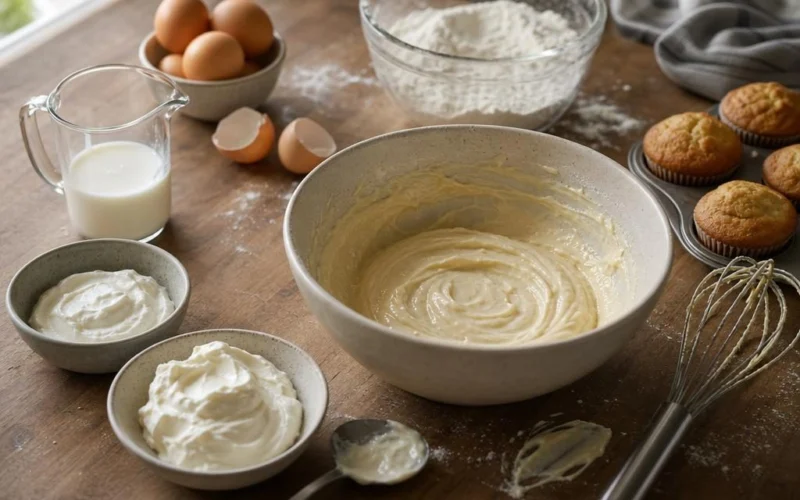
For the closest substitute for Greek yogurt in baking, use sour cream 1:1: replace 1 cup of Greek yogurt with 1 cup of sour cream. Strained plain yogurt is another close 1:1 option. Thinner substitutes, including regular plain yogurt, buttermilk, and some dairy-free yogurts, may loosen the batter and need adjustment.
Match the Substitute to Your Baked Good
Greek yogurt can add moisture, tang, thickness, and some richness to a recipe. The best Greek yogurt replacement for baking depends on which of those jobs matters most in the batter or dough.
Dense cakes, muffins, and quick breads
Choose sour cream or strained plain yogurt first. Both are thick enough to support the moist, close crumb common in loaf cakes, muffins, banana bread, and similar bakes.
Sour cream is usually the least disruptive option because it is similarly thick and tangy. Strained plain yogurt keeps more of the original yogurt flavor and function. Regular plain yogurt can still work, but a very loose batter may bake up with a softer structure or need a little less of the recipe’s other liquid.
Pancakes and waffles
Buttermilk is often a good choice for pancakes and waffles because these recipes are meant to use a pourable batter. It contributes tang and acidity but is much thinner than Greek yogurt, so the finished batter may be lighter and less rich.
Regular plain yogurt also works if you want a middle ground. If it is very thick, you can thin it with a little milk for a batter that pours easily.
Biscuits and scones
Use sour cream or thick plain yogurt when you want a tender dough with little change in consistency. Their thickness helps prevent the dough from becoming overly sticky before shaping.
Buttermilk can work in biscuits and scones designed for a wetter dough, but it is easier to add too much liquid when replacing Greek yogurt. Hold back some of the recipe’s milk or other liquid until you see how the dough comes together.
Greek Yogurt Substitutes at a Glance
These ratios are starting points, not guarantees that every substitute will behave identically. Product thickness, fat level, recipe structure, and the total amount of liquid in the recipe all affect the result. University Extension substitution guides similarly note that swaps can change a baked good’s flavor, texture, or volume.
| Substitute | Starting ratio | Best uses | What changes | Adjust liquid? |
|---|---|---|---|---|
| Sour cream | 1:1 | Cakes, muffins, quick breads, rich batters | Similar thickness and tang; fat and flavor can differ | Usually no |
| Strained plain yogurt | 1:1 | Yogurt cakes, muffins, quick breads | Close thickness and acidity | Usually no |
| Regular plain yogurt | Start at 1:1 | Batters that can be slightly looser | Thinner; may produce a softer, less structured batter | Only if batter is too loose |
| Buttermilk | Add gradually; use less at first | Pancakes, waffles, lighter quick breads | Thinner, less rich, still acidic | Usually yes |
| Blended cottage cheese | 1:1 after blending smooth | Recipes needing thick body | Slightly different flavor and crumb | Add milk only if too thick |
| Unsweetened thick dairy-free yogurt | 1:1 if thick | Dairy-free cakes, muffins, quick breads | Fat, sugar, acidity, and thickness vary by brand | Check batter and label |
Plain yogurt is commonly used as a same-volume substitute for sour cream in baking guidance from Utah State University Extension. That supports why strained yogurt and sour cream are close functional choices here, but Greek yogurt is still thicker than many regular yogurts.
How to Adjust the Swap Without Ruining the Batter
The safest way to handle a thinner substitute is to hold back some liquid from the original recipe. Adding extra flour can make cakes, muffins, and quick breads dense or dry, while reducing liquid lets you preserve the recipe’s flour-to-leavening balance.
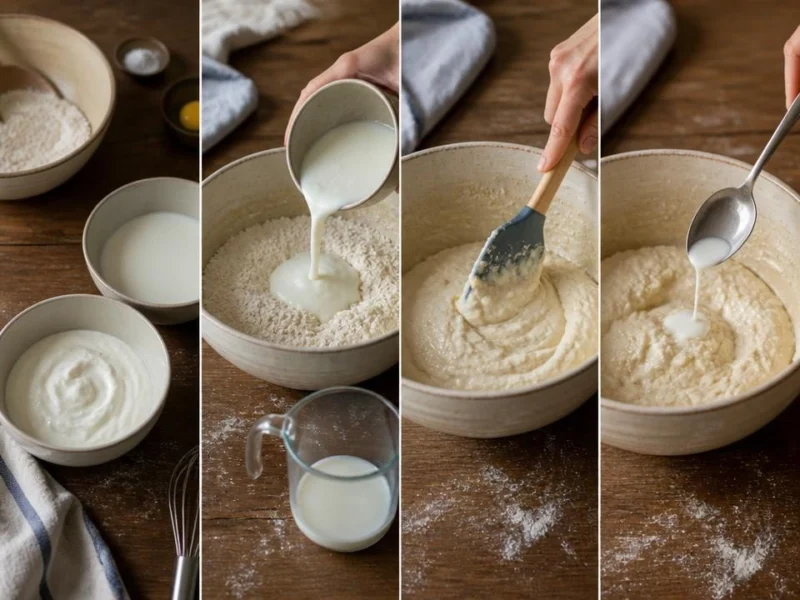
- Identify the recipe’s milk, water, juice, coffee, or other liquid ingredient.
- Use the substitute at its recommended starting amount.
- If the substitute is thin, reserve part of the other liquid before mixing.
- Mix only until the ingredients are combined.
- Check whether the batter seems unusually loose or unusually stiff.
- Add reserved liquid, or a little milk for an overly thick batter, 1 tablespoon at a time.
When the substitute is thinner
For regular plain yogurt, start with the same volume as Greek yogurt and assess the batter. If the recipe already has plenty of liquid, you may want to strain the yogurt first for a closer match.
For buttermilk or thin dairy-free yogurt, start more cautiously. You can either use less than the full amount of Greek yogurt called for or hold back about 1 to 2 tablespoons of another liquid per cup of substitute, then add it only if needed. A conversion such as ¾ cup buttermilk for 1 cup Greek yogurt can be useful as a starting point, but it is not a universal formula.
Buttermilk primarily matches Greek yogurt’s acidity and pourability, not its thickness or richness. King Arthur Baking notes that yogurt can be thinned with milk for buttermilk-style uses, but the texture and flavor of the final bake remain recipe-dependent.
When the substitute is thicker
Very thick strained yogurt and blended cottage cheese can make a batter stiffer than expected. Blend cottage cheese until completely smooth before measuring it; otherwise, curds can remain visible in the crumb.
If the batter looks notably thicker than the original recipe suggests, add milk 1 tablespoon at a time. Cottage cheese can provide a useful thick, creamy base, but expect a somewhat different flavor and texture from a Greek-yogurt bake.
Check sweetness, fat, and flavor
- Use plain, unsweetened products unless the recipe specifically calls for flavored yogurt.
- Vanilla, fruit, and sweetened yogurts can add sugar, flavoring, fruit pieces, and stabilizers that change the result.
- Full-fat or whole-milk options generally preserve a richer, more tender result than nonfat alternatives.
- Low-fat and nonfat sour cream or yogurt can still bake successfully, but the finished crumb may be less rich.
Yogurt and sour cream can contribute both moisture and fat, so replacing either with a thinner dairy ingredient can change the bake beyond simple batter thickness. See King Arthur Baking’s recipe success guidance for more context on how dairy substitutions can affect results.
The Best Swap for Each Common Situation
- Need a thick 1:1 replacement for cakes, muffins, or quick breads? Use sour cream or strained plain yogurt.
- Want the closest yogurt-based option? Use strained plain yogurt.
- Making pancakes, waffles, or another pourable batter? Use buttermilk or regular plain yogurt; account for the extra liquid.
- Making biscuits or scones? Choose sour cream or thick plain yogurt to help maintain a tender, manageable dough.
- Need a dairy-free option? Use unsweetened, thick dairy-free yogurt, checking the label for thickness, sugar, and acidity.
- Have cottage cheese? Blend it smooth before using; it can provide body but may produce a slightly different crumb.
- Only have regular plain yogurt? Use it in the same volume if a looser batter is acceptable, or strain it first for a closer match.
What Acidity Does in a Baking Recipe
Greek yogurt, sour cream, plain yogurt, and buttermilk can all contribute acidity. In recipes containing baking soda, that acidity may help support leavening and influence flavor and browning. But the full ingredient list matters: brown sugar, molasses, natural cocoa, citrus, and other ingredients may also affect the recipe’s acid balance.
Sour cream and thick yogurt contribute acidity, moisture, thickness, and some fat. Buttermilk contributes acidity and liquid, but it does not replicate Greek yogurt’s body. That is why buttermilk often suits pourable batters better than dense cakes or stiff biscuit doughs.
Quick Answers Before You Substitute
Can I use regular plain yogurt instead of Greek yogurt without straining it?
Yes. Start with the same volume, but expect a thinner batter because regular plain yogurt usually contains more liquid than Greek yogurt. For a cake, muffin, or quick bread that depends on a thick batter, strain the yogurt first or hold back some of the recipe’s other liquid and add it gradually.
What is the best dairy-free substitute when the recipe uses baking soda?
Use an unsweetened, thick dairy-free yogurt with a tangy flavor and clear acidity when possible. Check the ingredient label because dairy-free yogurts vary widely in thickness, fat, added sugar, and acidity; do not assume every product will behave like Greek yogurt with baking soda. If the recipe includes other acidic ingredients, they also contribute to the overall balance.
For the least change to most cakes, muffins, and quick breads, use sour cream or strained plain yogurt in the same volume as Greek yogurt. For pancakes, waffles, or other pourable batters, buttermilk can work well, but add it gradually and adjust the remaining liquid based on the batter.