
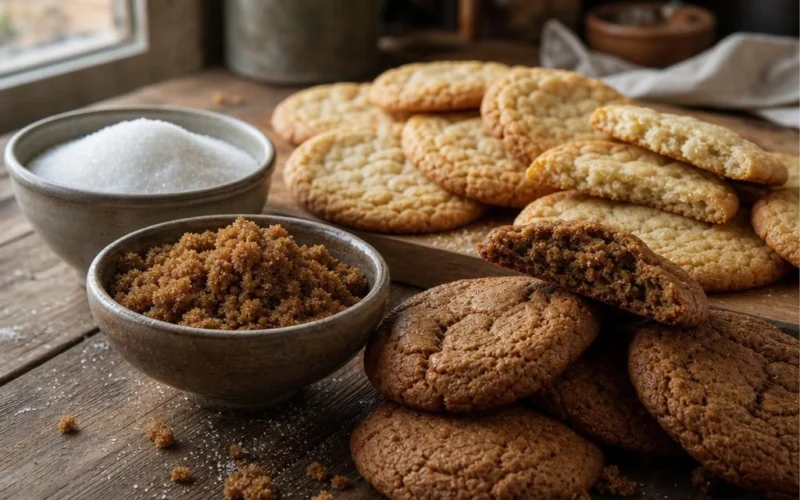
For the closest substitute for brown sugar in cookies, use 1 cup granulated sugar plus 2 teaspoons molasses for every 1 cup packed light brown sugar. Use 1 tablespoon molasses for a darker, deeper brown-sugar-style result. Plain white sugar also works 1:1, but the cookies will usually be paler, crisper, and less caramel-like.
Choose the Substitute Based on the Cookie You Want
- Closest match for flavor and chewiness: Granulated sugar plus molasses.
- Paler, crisper cookies with the simplest swap: Granulated white sugar, 1:1.
- Dry caramel-like alternative: Coconut sugar, 1:1.
- Softer, more variable result: Honey or maple syrup, only if you can adjust the recipe and test the dough.
- Need dark color and molasses flavor: Avoid white sugar alone.
These are baking tendencies, not guarantees. Flour measurement, butter temperature, eggs, baking soda or baking powder, and whether the dough is chilled can all change spread and texture.
Brown Sugar Substitutes Compared
Dry sugars are generally more predictable cookie swaps than liquid sweeteners. Honey and maple syrup require recipe-specific liquid adjustments.
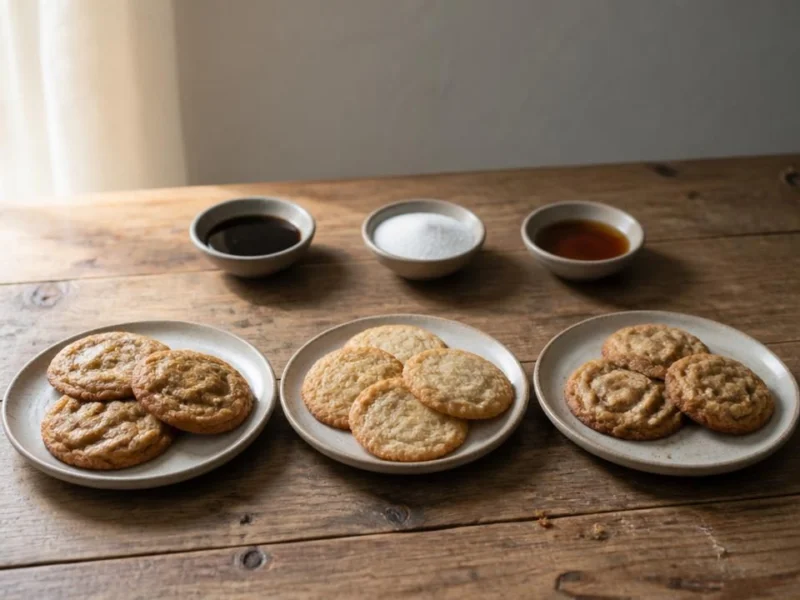
| Substitute | Ratio per 1 cup brown sugar | Sweetness and flavor | Moisture | Spread | Chewiness | Browning | Best use |
|---|---|---|---|---|---|---|---|
| White sugar + molasses | 1 cup sugar + 2 tsp molasses for light; 1 tbsp for dark | Closest match; molasses depth | Similar practical moisture | Usually closest to original | Usually closest to original | Similar | Best overall replacement |
| White sugar alone | 1 cup | Sweet but less complex | Less moisture contribution | Recipe-dependent | Usually crisper, less chewy | Paler | Emergency dry swap; crisp cookies |
| Coconut sugar | 1 cup | Caramel-like; less direct sweetness | Dry substitute | Variable | Often less soft; may feel slightly grainier | Darker | Dry caramel-like alternative |
| Honey | Use a recipe-specific adjustment | Sweet with floral flavor | Adds substantial liquid | May increase spread or make cookies flatter | Often softer; formula-dependent | Can brown faster or more deeply | Recipes designed for honey or test batches |
| Maple syrup | Use a recipe-specific adjustment | Sweet with maple flavor | Adds liquid | May increase spread or make cookies flatter | Variable; can be softer | Can increase browning | Cookies where maple flavor is welcome |
Cookie results still depend on the full formula, including butter, flour, eggs, leavening, and dough temperature.
How to Make a Brown Sugar Substitute with White Sugar and Molasses
Conventional U.S.-style brown sugar is generally granulated sugar with molasses mixed in. This homemade version is the most reliable brown sugar replacement for cookies because it restores both the dry sugar base and much of brown sugar’s molasses flavor, color, and moisture contribution.
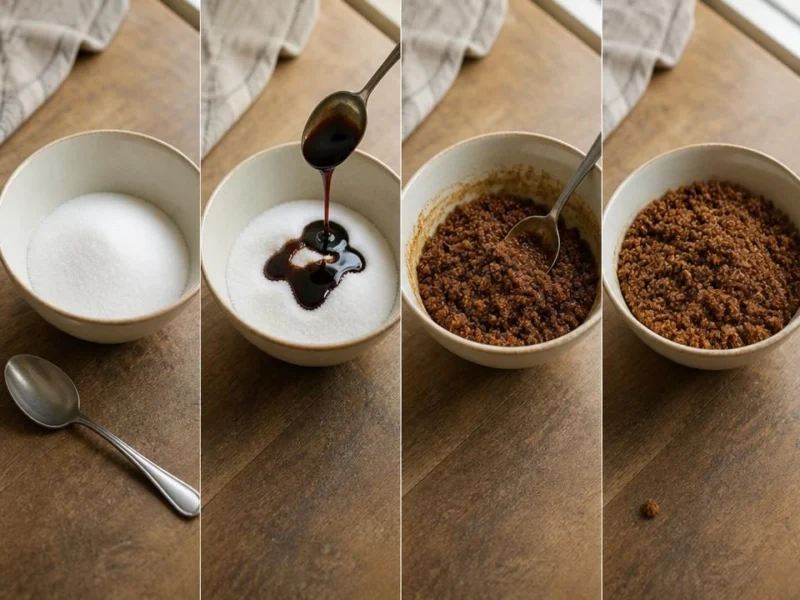
- Measure 1 cup granulated sugar.
- Add 2 teaspoons molasses for a light-brown-sugar-style substitute, or 1 tablespoon molasses for a dark-brown-sugar-style substitute.
- Mix thoroughly with a fork or spoon until the molasses is evenly distributed and no large clumps remain. Use it in place of 1 cup packed brown sugar.
These ratios follow guidance from King Arthur Baking, which also notes that brown sugar affects flavor, color, moisture, and acidity in baked goods.
Do not use straight molasses as the full brown sugar replacement. Molasses is much more strongly flavored and much wetter than brown sugar. Replacing 1 cup of brown sugar with 1 cup of molasses can leave cookie dough overly loose, intensely flavored, and prone to excessive browning.
This guidance refers to U.S.-style light and dark brown sugar. In other countries, “brown sugar” may mean a less-refined or raw cane sugar rather than white sugar blended with molasses, so its behavior may differ.
What Changes When You Use a Liquid Sweetener?
Honey and maple syrup can make cookies taste good, but they change the dough more than a dry sugar substitute does. Both bring in liquid that brown sugar does not provide in the same amount, which can affect dough consistency, spread, softness, and how quickly the cookies color in the oven.
General baking substitution guidance from Utah State University Extension notes that honey requires liquid adjustments and that substitutions can alter flavor, color, texture, and volume. For cookies, use a recipe written for the liquid sweetener when possible.
If you are adapting a recipe anyway, mix the dough and assess it before baking the full batch. If it seems noticeably loose or greasy, chill it before portioning. Chilling can firm the fat and slow spreading, although it cannot fully recreate the behavior of dry brown sugar. Avoid adding flour by instinct: too much can make cookies dense, dry, or cakey.
For an important batch, bake one test cookie first. Watch whether it spreads too far, browns before the center sets, or stays unusually soft after cooling. Those are signs that a dry option, especially white sugar plus molasses, would be a safer choice next time.
Baking-Soda and Recipe-Formula Edge Cases
Brown sugar contributes some acidity from its molasses content. In recipes using baking soda, that acidity can affect browning, spread, and lift. This is one reason white sugar alone may not behave exactly like brown sugar even when the measured amount is the same.
Do not add extra baking soda automatically when replacing brown sugar with white sugar. The right leavening balance depends on the whole formula, including other acidic ingredients such as buttermilk, yogurt, natural cocoa powder, or additional molasses. Follow the original recipe’s baking soda and baking powder amounts unless you have a tested adjustment for that specific recipe.
The difference can be more noticeable in a cookie recipe that relies heavily on brown sugar and baking soda, or one with very little flour relative to butter and sugar. In those cases, the white-sugar-plus-molasses formula is the lower-risk substitute because it more closely restores the missing ingredient functions.
Match the Substitute to the Recipe’s Failure Risk
- The dough already seems loose or greasy: Choose a dry substitute, such as plain white sugar or white sugar plus molasses, and chill the dough before baking.
- The dough is dry or crumbly: Do not add flour. Reassess any honey or maple syrup substitution, or return to the original dry-sugar formula.
- The cookies must stay soft and chewy: Use white sugar plus molasses rather than white sugar alone.
- Color and molasses flavor are essential: Avoid plain white sugar as the only substitute.
- The recipe is delicate or highly leavened: Avoid a casual honey or maple syrup swap.
- Using honey or maple syrup anyway: Bake one test cookie first.
Stop and switch to a dry substitute if the test cookie spreads excessively or darkens before the center sets. If the dough becomes unexpectedly dry and crumbly, do not compensate with extra flour; reconsider the liquid-sweetener swap or use the original dry-sugar approach. If the flavor is harshly molasses- or maple-forward, use the white-sugar-plus-molasses formula for a closer match, or plain white sugar for a simpler dry swap.
FAQ
What is the closest substitute for brown sugar in chocolate-chip cookies?
White sugar plus molasses is the closest match. For 1 cup packed light brown sugar, combine 1 cup granulated sugar with 2 teaspoons molasses. For a darker brown-sugar-style result, use 1 tablespoon molasses. This option comes closest in molasses flavor, color, and chewy texture.
Will cookies spread more or less with white sugar?
There is no universal direction. White sugar often produces a crisper cookie and removes brown sugar’s molasses moisture, but spread also depends on butter, flour, eggs, leavening, and dough temperature. A chilled dough and a single test cookie are more reliable than assuming all recipes will spread the same way.
Can honey or maple syrup replace brown sugar without changing the recipe?
No, not reliably. Both add liquid and can alter spread, browning, and softness. Use a recipe-specific conversion if you want their flavor, or choose a dry substitute when you need the cookie to behave more like the original recipe.