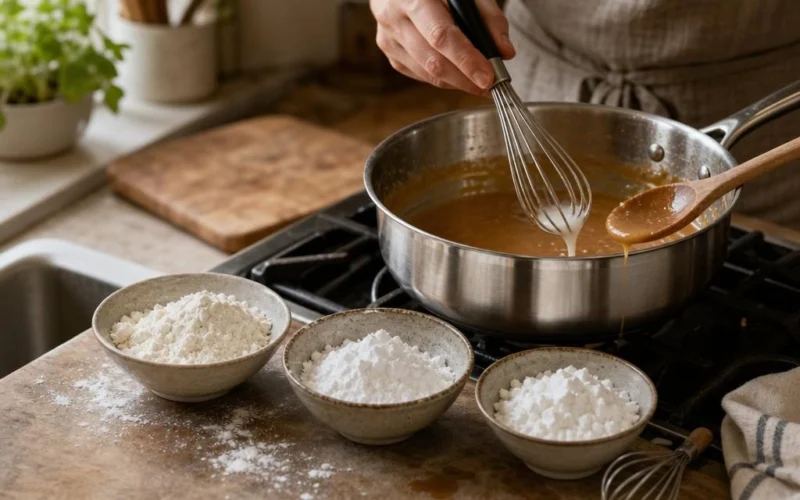
For every 1 tablespoon of cornstarch, use 2 tablespoons of all-purpose flour, or start with 1 tablespoon of arrowroot, potato starch, or tapioca starch. These are starting ratios, not perfect swaps: flour creates an opaque sauce that needs cooking, while root starches thicken quickly but can turn gummy or stringy if overused or cooked too long.
Start With the Sauce You’re Making
The best substitute for cornstarch in sauce depends on the finish you want and how the sauce will be cooked. A creamy cheese sauce has different needs than a clear pan glaze, and a sauce that will simmer for 20 minutes behaves differently from one thickened just before serving.
Quick decision tree
Choose by sauce type:
- Need a creamy, dairy-based, or fat-based sauce? Use flour in a roux or beurre manié.
- Need a clear, glossy, acidic sauce? Try arrowroot and add it near the end.
- Need fast thickening close to serving? Choose potato starch.
- Need a neutral gluten-free option? Start with potato starch or tapioca starch.
- Making the sauce ahead or freezing it? Test the finished recipe first, especially with arrowroot or tapioca.
There is no universal winner because starches differ in clarity, gloss, cooking behavior, and how they interact with fat, dairy, and acid.
Cornstarch Substitute Ratios and Trade-Offs
Use these starting amounts to replace 1 tablespoon of cornstarch. The result can vary with the amount of liquid, sauce reduction, acidity, fat, and cooking time.
| Substitute | Amount per 1 tablespoon cornstarch | Finish | Best use | Key warning |
|---|---|---|---|---|
| All-purpose flour | 2 tablespoons | Opaque; matte to lightly creamy | Gravies, roux-based sauces, cream sauces, cheese sauces | Cook to remove raw flour flavor; dry flour can lump when added directly to hot liquid. |
| Arrowroot powder | Start with 1 tablespoon | Clear and glossy | Acidic sauces, fruit sauces, glazes, and sauces where appearance matters | May become stringy in some gravies and can lose its preferred texture with prolonged cooking. |
| Potato starch | Start with 1 tablespoon | Relatively glossy; quick-thickening | Neutral sauces and last-minute thickening | Add near the end. Potato starch is not the same ingredient as potato flour. |
| Tapioca starch | Start with 1 tablespoon | Glossy and somewhat elastic | Selected gravies, glazes, and gluten-free sauces | Overuse or prolonged cooking can make the sauce gummy or stringy. |
These amounts are starting points, not universally interchangeable equivalents. Adjust gradually for the specific sauce rather than assuming every starch works as a direct 1:1 swap.
How to Add Each Substitute Without Lumps
Flour: use a roux or beurre manié
Flour works best when it is combined with fat before it meets the hot liquid. This avoids lumps and gives the flour time to cook.
- For a roux: Whisk flour into an equal amount of fat, such as butter, oil, or pan drippings. Cook briefly over moderate heat, then gradually whisk in warm or room-temperature liquid.
- For beurre manié: Knead equal parts softened butter and flour into a smooth paste. Whisk small pieces into a simmering sauce until it reaches the thickness you want.
Do not stir dry flour directly into a hot sauce. It tends to form floury clumps, and uncooked flour can leave a raw taste. Roux-based thickening is especially dependable for cream sauces, cheese sauces, and gravy-style sauces that need continued cooking.
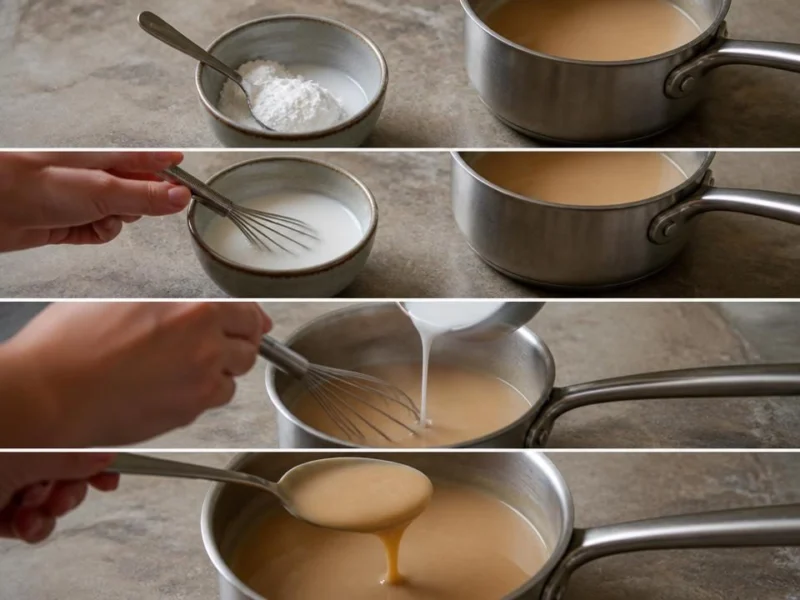
Arrowroot, potato starch, and tapioca: make a cold slurry
Root starches should be dispersed in cold liquid before they are added to sauce. Texas A&M AgriLife Extension recommends mixing starch into a cool liquid first so it can be incorporated smoothly into the hot sauce.
- Measure the starch and mix it with a small amount of cool water, stock, juice, or another compatible cold liquid.
- Whisk until the slurry is smooth and free of dry pockets.
- Whisk the slurry gradually into the hot sauce.
- Heat only as long as needed for the sauce to thicken, then reduce the heat or serve.
Potato starch and potato flour should not be substituted for one another. Potato starch is a refined starch used for thickening; potato flour is made from whole dried potatoes and can add more potato flavor, color, and body.
Match the Thickener to Sauce Texture and Cooking Conditions
Clear and glossy versus opaque
Flour produces a cloudier, less glossy sauce than cornstarch and most root starches, making it better suited to creamy gravies and opaque sauces. For a clear, glossy finish, arrowroot is a useful starting choice, particularly when appearance matters. It is not ideal for every gravy, however, because it can develop a stringy texture in some savory preparations.
Dairy and high-fat sauces
For many cream, cheese, and high-fat sauces, flour is the more dependable cornstarch substitute. A roux incorporates flour into fat before the liquid is added, helping create a cohesive sauce that can continue cooking as needed.
Arrowroot is not a universal substitute for dairy-heavy sauces; test it cautiously because the texture can vary by recipe. Tapioca can work in some creamy sauces, but its elasticity may be noticeable when the sauce is thickened heavily.
Acidic sauces
Arrowroot is a useful starting choice for acidic sauces because it can produce a clear, glossy finish. Add it near the end of cooking, then heat only as long as needed to thicken; prolonged cooking can impair its texture.
Reheating, refrigeration, and freezing
Storage results depend on the starch, concentration, acidity, fat, dairy content, and cooking method. Do not assume a sauce that looks smooth when freshly made will have the same texture after chilling, reheating, or freezing.
Test the completed recipe before making it ahead, especially when using arrowroot or tapioca. Chill or freeze a small portion, reheat it, and assess the texture before relying on that thickener for meal prep.
Prolonged heat
Root starches thicken quickly but can lose their preferred texture or become gummy or stringy when cooked too long. Arrowroot and tapioca can become stringy in gravy and similarly thick savory preparations if they are overcooked or used heavily.
Flour-based thickeners are generally better suited to sauces that need a roux and continued cooking, although excessive reduction can still make the sauce too thick.
Fixes for a Thin, Lumpy, or Gummy Sauce
- Thin sauce: Make a small additional slurry using the same starch and cold liquid. Add it gradually, whisk, heat briefly, and reassess before adding more. For a flour-based sauce, use a small amount of smooth beurre manié instead.
- Lumpy starch sauce: Whisk vigorously or strain the sauce through a fine sieve. Do not try to fix lumps by adding more dry starch.
- Lumpy flour sauce: Strain if needed. For the next adjustment, use beurre manié or prepare a separate roux rather than adding loose flour.
- Gummy or stringy sauce: Stop adding starch, thin the sauce gradually with compatible liquid, and avoid prolonged boiling. If the texture does not improve, the starch may have been overused or overcooked and remaking the sauce may be the better option.
- Too-thick sauce: Whisk in stock, water, milk, cream, pan juices, or another compatible liquid a little at a time. Adding more fat or starch will not solve excessive thickness.
Choose flour for creamy or fat-based sauces, arrowroot for a clear acidic finish, and potato starch or tapioca when fast gluten-free thickening is useful—but begin with the listed ratio, add carefully, and adjust based on the sauce’s actual texture.