
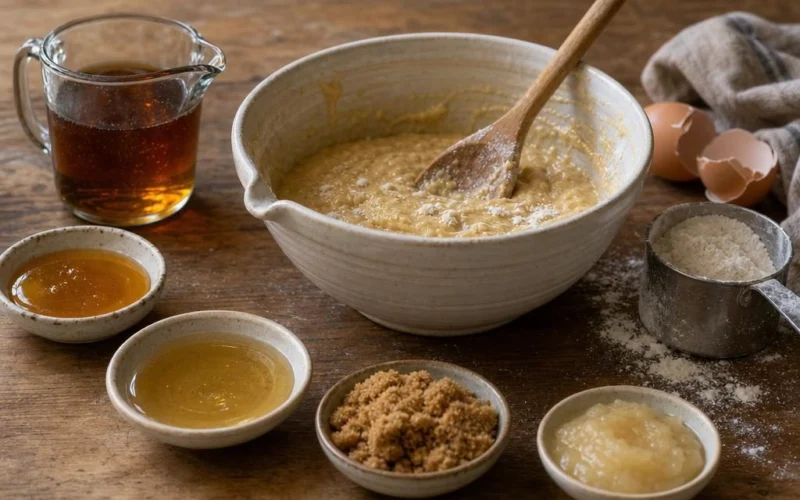
Honey is usually the closest 1:1 substitute for maple syrup, while agave is a milder vegan option and brown-sugar syrup is useful when you need a pantry replacement. Equal-volume swaps are most dependable in sauces, oatmeal, and glazes; cakes, cookies, and other structured baked goods may need liquid or texture adjustments.
Choose Your Maple Syrup Replacement
- Closest flavor match: Honey, usually 1:1.
- Best vegan liquid option: Agave, usually 1:1.
- Best pantry substitute: Brown-sugar syrup, 1:1 by volume.
- When less liquid matters in baking: Use packed brown sugar plus measured water rather than treating dry sugar as a direct liquid-for-liquid swap.
The best substitute depends on what you’re making
Maple syrup does more than sweeten a recipe. It adds moisture, helps sauces flow, contributes to browning, and brings a distinct caramel-like maple flavor. A successful maple syrup replacement depends on which of those jobs matters most.
For sauces, marinades, oatmeal, and glazes, choosing another liquid sweetener is usually straightforward. Baking is less forgiving because liquid sweeteners can change batter thickness, cookie spread, softness, and how quickly the surface browns. King Arthur Baking’s guidance on liquid sweeteners notes that these ingredients can increase moisture and browning, so recipe structure matters.
Maple syrup substitutes at a glance
Honey is usually the closest 1:1 substitute for maple syrup; agave is a milder vegan option, and brown-sugar syrup is a useful pantry substitute. Equal-volume swaps are most dependable in sauces, oatmeal, and glazes, while structured baking may require adjustments for liquid, texture, and browning.
Choose Your Maple Syrup Replacement
- Need a liquid sweetener? Choose honey or agave.
- Need the closest rich flavor? Start with honey.
- Need a vegan option? Choose agave or brown-sugar syrup.
- Need less liquid in a baked recipe? Start with brown sugar plus measured water.
| Substitute | Starting ratio for maple syrup | Best uses | Flavor | Texture or liquid adjustment | Vegan? |
|---|---|---|---|---|---|
| Honey | 1:1 by volume | Baking, sauces, oatmeal, glazes | Rich and floral | May brown faster | No |
| Agave | 1:1 by volume | Sauces, oatmeal, glazes, some baking | Mild and less maple-like | May produce a thinner result | Yes |
| Brown-sugar syrup | 1:1 by volume | Sauces, oatmeal, glazes, some baking | Caramel-like | Simmer briefly if more body is needed | Yes, if made with vegan ingredients |
| Brown sugar plus water | ¾ cup packed brown sugar plus ¼ cup water per 1 cup maple syrup | Baking when a drier mixture is preferred | More caramel and molasses-forward | Adds less liquid than a full syrup swap but still changes structure | Usually, if ingredients are vegan |
Choose the substitute by recipe use
For baking
For every 1 cup of maple syrup in a baking recipe, start with 1 cup honey, agave, or prepared brown-sugar syrup when the batter can tolerate a liquid-for-liquid swap. Honey gives the fullest flavor, agave is milder, and brown-sugar syrup brings a more caramel-like taste.
Liquid sweeteners can make baked goods softer or wetter and can darken the exterior faster. If the batter looks looser than expected after the swap, reduce another liquid in the recipe slightly before adding extra flour. Adding flour automatically can throw off the balance of fat, eggs, and leavening.
Start checking for doneness earlier when using honey or another liquid sweetener that browns readily. A deeply colored surface does not always mean the center is finished baking.
For a less-liquid option, use this practical starting formula to replace 1 cup maple syrup:
¾ cup packed brown sugar plus ¼ cup water
Stir until the sugar dissolves, and let the mixture cool slightly before adding it to a batter if temperature could affect melted butter, eggs, or chocolate. This formula can be useful for cookies or denser quick breads, but it is not a universal conversion for every cake, bread, or pastry.
Do not add baking soda automatically when replacing maple syrup. Some substitution guides suggest baking soda in certain honey-based baking changes, but it only makes sense when the formula’s acidity and leavening balance support it. Unneeded baking soda can affect flavor, color, and texture. See the baking notes from Utah State University Extension for why liquid and leavening adjustments depend on the original recipe.
Candy, jam-setting, preservation, and highly technical pastry are poor candidates for casual sweetener swaps. In particular, changing sweeteners can alter jam flavor and set, so use a tested preservation formula rather than improvising one, as advised in Utah State University Extension’s preservation guidance.
For sauces and marinades
Use honey, agave, or brown-sugar syrup at a 1:1 ratio by volume to replace maple syrup in barbecue sauces, salad dressings, pan sauces, and marinades.
Choose honey when you want a fuller, more noticeable sweet flavor. Choose agave when other ingredients, such as soy sauce, citrus, garlic, or chile, should remain in front. Brown-sugar syrup works well when a darker caramel note fits the sauce.
Maple syrup, honey, and agave do not have identical thickness. If a sauce made with brown-sugar syrup needs more body, simmer it briefly while stirring and watching carefully for scorching or excessive reduction.
For oatmeal and other breakfast foods
Oatmeal is one of the most forgiving uses because its texture does not depend on syrup for structure. Use honey or agave 1:1 as a starting point, then adjust to taste.
Brown-sugar syrup also works well in oatmeal, yogurt, chia pudding, or breakfast bowls if a caramel-like flavor sounds appealing. Plain brown sugar can work, too, although it will not dissolve and coat the food exactly like syrup unless there is enough heat and moisture.
For glazes
For a glaze, replace maple syrup with honey, agave, or brown-sugar syrup at a 1:1 starting ratio. Honey makes a richer glaze but can brown quickly under heat. Agave creates a milder, often thinner glaze, which can be useful for drizzling over roasted vegetables or fruit.
Brown-sugar syrup provides deeper caramel flavor and can be reduced briefly if it seems too thin. Check the consistency after heating: glazes concentrate as water evaporates, so a small splash of water, juice, or other recipe-appropriate liquid may be enough to loosen one that becomes too thick.
Replacing maple syrup with brown sugar
Replacing maple syrup with brown sugar is different from replacing it with honey or agave. Maple syrup is already a pourable liquid, while brown sugar is a dry ingredient that pulls moisture into the mixture as it dissolves.
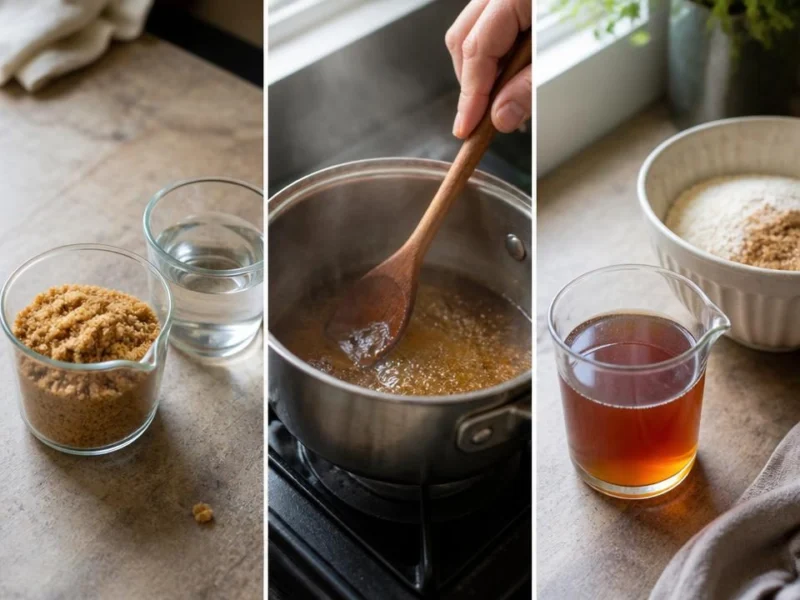
Starting formula
For each 1 cup of maple syrup, begin with ¾ cup packed brown sugar plus ¼ cup water. For a smaller replacement, use the same proportion: ⅜ cup brown sugar plus 2 tablespoons water replaces ½ cup maple syrup.
Mix the sugar and water until dissolved. Then assess whether the recipe needs a pourable syrup, a thick glaze, or a batter with a particular consistency before making further changes.
Why the swap is not exact
Brown sugar changes moisture distribution, sweetness perception, browning, and texture. In cookies, it may encourage chewiness and spread differently than maple syrup. In cakes, it may make the batter thicker or less cohesive if there is not enough liquid.
There is no single brown-sugar conversion that performs equally well in every cake, cookie, bread, sauce, or glaze. Published guidance for changing between dry and liquid sweeteners also varies because the original formula matters; MOFGA’s sweetener substitution guide illustrates how liquid reductions differ among recipes.
How to troubleshoot the finished mixture
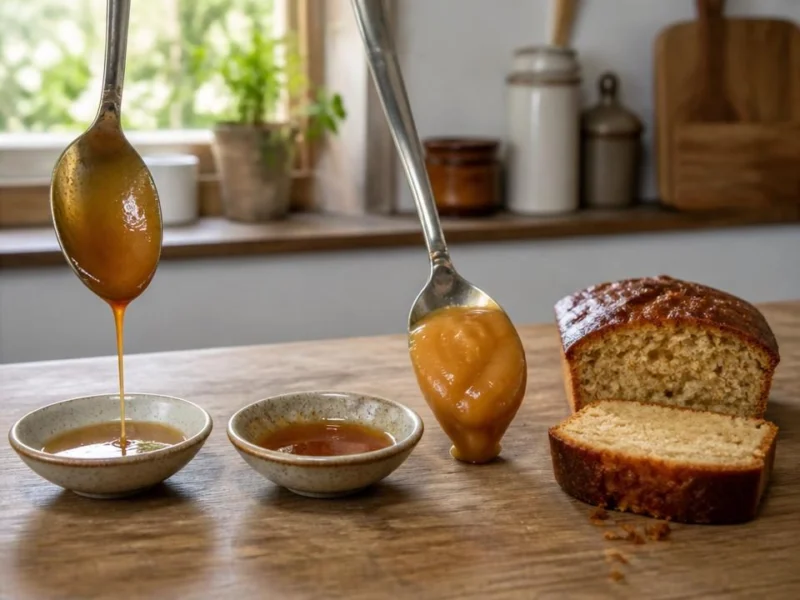
- Too thin: For sauces and glazes, reduce briefly over gentle heat. In baking, reassess the recipe’s other liquids before adding more dry ingredients.
- Too dark or browning too quickly: Check doneness earlier and, if the recipe allows, protect the surface loosely while the center finishes. Do not assume a dark top means the interior is done.
- Too thick: Add an appropriate liquid a small amount at a time—water, milk, juice, or broth depending on the recipe—until the consistency returns.
- Structure failing in a cake or cookie: Stop treating the swap as a simple 1:1 conversion. Use a recipe designed for the sweetener you have, especially if the original recipe relies heavily on maple syrup for moisture, spread, or flavor.
For most everyday recipes, use honey 1:1 when flavor matters, agave 1:1 when you want a vegan and milder option, and brown-sugar syrup 1:1 when you want a pantry-friendly liquid substitute. In structured baking, choose the option that preserves the recipe’s needed moisture and structure rather than assuming every 1:1 swap will behave identically.