The best substitute for cornstarch in baking depends on its job. For a cake-flour-style mixture, use potato starch or arrowroot at a 1:1 volume starting point while removing the same amount of flour; for fruit filling, use 2 tablespoons of all-purpose flour per 1 tablespoon of cornstarch, or try arrowroot, tapioca starch, or potato starch at roughly 1:1. These are starting points, not universal swaps, because starches change texture, clarity, and structure differently.
First, identify what the cornstarch is doing
Cornstarch can serve very different purposes in a baked recipe, so a thickener conversion will not necessarily work in cake batter.
- Tenderizing cakes: Cornstarch replaces a small portion of wheat flour, lowering the amount of gluten-forming flour and helping create a softer crumb.
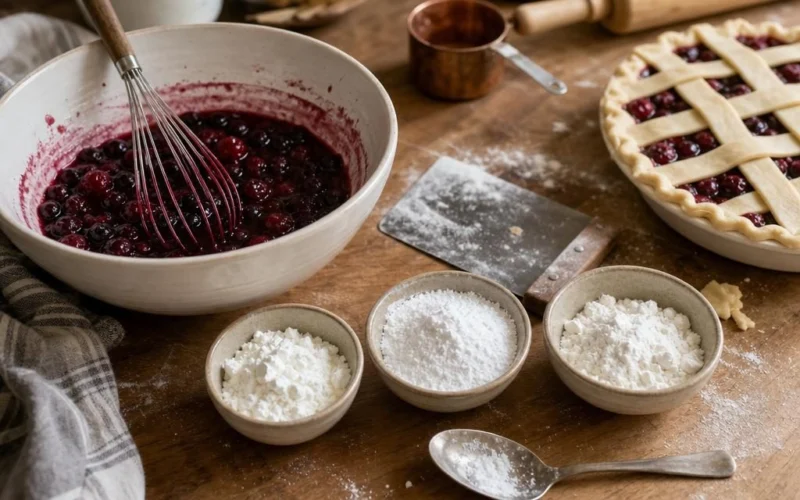
- Thickening fillings: In fruit pies, cobblers, custards, and dessert sauces, it absorbs liquid and thickens when heated.
- Changing cookie or pastry texture: A small amount can make baked goods more tender, sandy, or delicate.
- Supporting a gluten-free blend: It may be one component among flours, starches, and binders that work together for structure.
That function determines both the substitute and the ratio.
Best substitutes by baking use
| What cornstarch is doing | Best starting substitute | Starting ratio | Likely result | Main caution |
|---|---|---|---|---|
| Making a cake-flour-style mixture | Potato starch or arrowroot | 1:1 for the cornstarch portion | Soft, tender crumb | Rise and crumb may differ from the standard cornstarch method. |
| Thickening fruit or pie filling | All-purpose flour | 2 tablespoons flour per 1 tablespoon cornstarch | Thicker but more opaque filling | Cook thoroughly to avoid a raw flour taste. |
| Thickening fruit or pie filling | Tapioca, arrowroot, or potato starch | About 1:1 by volume | Often clearer than flour | Firmness and gumminess vary by starch and fruit. |
| Tenderizing cookies or pastry | Potato starch or arrowroot | About 1:1 for a small amount | Potentially more delicate texture | Spread, crumble, and handling can change. |
| Part of a gluten-free flour mix | Tested gluten-free flour blend | Follow the blend or recipe guidance | More reliable structure | One starch cannot replace an entire blend. |
| Thickening baked custard or dessert sauce | Flour or a recipe-suitable starch | Depends on the formula | May change body and appearance | Dairy-heavy mixtures can behave differently with arrowroot or tapioca. |
For starch-to-starch swaps, the listed amounts are practical starting points. Fruit type, acidity, liquid content, and the rest of the recipe can change the amount that performs best.
Cakes and cupcakes: replacing cornstarch for tenderness
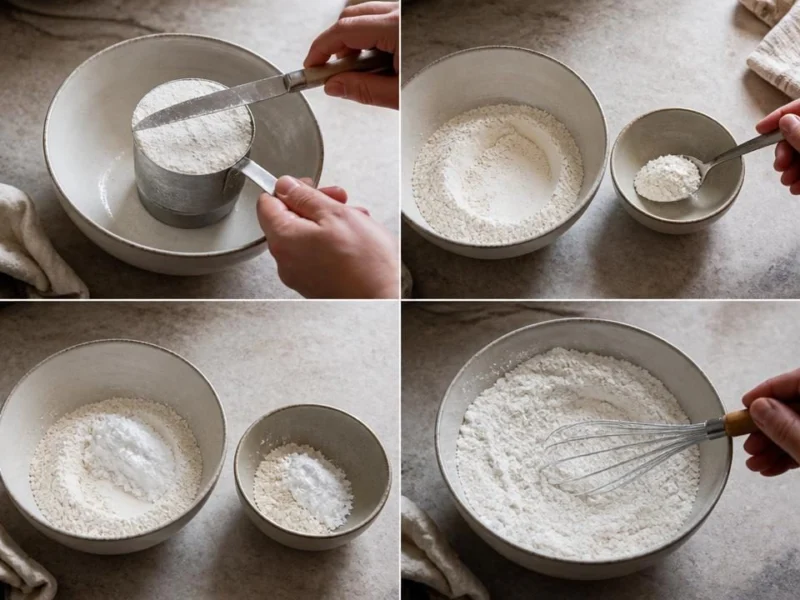
Use potato starch or arrowroot in a cake-flour-style mixture
The familiar homemade cake flour method replaces part of all-purpose flour with cornstarch. King Arthur Baking explains that this reduces the overall proportion of gluten-forming flour, which helps produce a softer cake crumb.
For each 1 cup of all-purpose flour, use this calculation:
- Measure 1 cup all-purpose flour.
- Remove 2 tablespoons of that flour.
- Add 2 tablespoons potato starch or arrowroot.
- Sift or whisk thoroughly before adding the mixture to the batter.
This is an experimental equivalent to the established cornstarch method, not a promise of an identical cake. Potato starch or arrowroot can alter the rise, crumb, or tenderness, particularly in delicate sponge cakes. The standard cornstarch technique is described in King Arthur Baking’s cake flour guide.
If you only have all-purpose flour
You can omit the cornstarch and keep the original amount of all-purpose flour. The cake may be somewhat firmer or denser because it contains more gluten-forming flour than intended.
Do not add extra flour to replace cornstarch on top of the recipe’s existing dry ingredients. In a cake-flour-style mixture, the flour must be removed first. Adding it instead changes the dry balance and can produce a heavier cake.
Can potato starch replace cornstarch in cake?
Yes, potato starch can replace the cornstarch portion of a cake-flour-style mixture at an approximately 1:1 volume starting point. It should replace the starch only; it is not a full replacement for the recipe’s flour.
Be careful with the product name: potato starch and potato flour are different ingredients. Potato starch is a refined starch, while potato flour is made from whole potatoes and absorbs moisture differently.
Pie and fruit fillings: replacing cornstarch as a thickener
Use all-purpose flour when availability matters most
All-purpose flour is the most accessible cornstarch replacement for thickening fruit filling. Utah State University Extension recommends about 2 tablespoons of flour for each 1 tablespoon of cornstarch in thickening applications.
| Cornstarch called for | All-purpose flour to use |
|---|---|
| 1 tablespoon | 2 tablespoons |
| ¼ cup | ½ cup |
Flour-thickened filling is usually more opaque or cloudy than a cornstarch-thickened one. It can also be slightly heavier and needs adequate cooking to avoid a noticeable flour taste. Choose flour when convenience matters more than a clear, glossy finish.
Use tapioca, arrowroot, or potato starch for a starch-based swap
For fruit fillings, tapioca starch, arrowroot, or potato starch can be used at approximately 1:1 by volume for cornstarch as a starting point. These starches may be a better choice than flour when a clearer or glossier filling is the goal.
The results will not be identical in every pie. Tapioca can become elastic or slightly gummy if overused, while arrowroot and potato starch may set differently depending on the fruit, acidity, heating time, and sugar level. Check the package label to confirm that you are using the intended starch ingredient, particularly when baking gluten-free or avoiding corn.
For pie formulas, thickener amounts also vary with the fruit’s moisture level, as shown in King Arthur Baking’s fruit pie workbook.
Adjust for fruit and filling conditions
Frozen and especially juicy fruit release more liquid than firm, fresh fruit. A recipe developed for fresh berries or apples may need a recipe-specific adjustment when made with frozen fruit, even when using the same thickener.
Acidic fruit can also affect thickener performance. If clarity matters, consider a starch rather than wheat flour, but use a tested recipe for very tart fruit or an unfamiliar starch. Dairy-based fillings require similar caution: arrowroot and tapioca may not behave like cornstarch in creamy custards or sauces.
Cookies, shortbread, and pastries
In cookies, shortbread, and pastry dough, cornstarch is usually there for tenderness or a more delicate texture—not to thicken a large amount of liquid. Potato starch or arrowroot can be tested at roughly 1:1 by volume when the recipe calls for a small amount.
Do not add extra liquid simply because the starch changed. A small shift in the dry-starch balance can affect cookie spread, pastry handling, and how readily shortbread crumbles after baking.
If the recipe uses only a teaspoon or tablespoon of cornstarch, omitting it may be the simpler choice. Expect a slightly less tender result, but this may be preferable to making a larger flour substitution in a delicate dough.
Gluten-free baking: use a blend, not a single-starch replacement
Gluten-free baking blends commonly combine flours, starches, and sometimes gums or other binders. Those ingredients work together to provide structure that wheat gluten would otherwise supply. Utah State University Extension notes that gluten-free baked goods often rely on combinations rather than one starch alone.
The same distinction applies to tapioca starch and cassava flour. Tapioca starch is extracted starch; cassava flour is made from more of the whole root and behaves differently in dough and batter.
If a gluten-free recipe calls for a named blend, use another tested gluten-free blend rather than replacing all of it with cornstarch, potato starch, arrowroot, or tapioca starch. If gluten avoidance is medically necessary, check the package label for gluten-free status and possible cross-contact information.
Troubleshooting a substitution that went wrong
| Problem | Likely cause | Next adjustment |
|---|---|---|
| Runny filling | Too little thickener, excess fruit liquid, or incomplete cooking | Let the filling reach the recipe’s required cooking stage before adding more thickener next time. |
| Gummy or stringy filling | Too much starch or prolonged cooking | Use less starch next time and follow the recipe’s heating method closely. |
| Cloudy filling | Flour or a less-clear thickener | Choose a suitable starch instead of wheat flour when clarity matters. |
| Dense cake | Extra flour was added instead of replacing an equal amount | Remove the flour first, then add the starch in the same volume. |
| Dry or crumbly pastry | Too much replacement starch or altered flour-to-fat balance | Try a smaller starch substitution in the next batch. |
Ingredient-label and terminology checks
In the United States, cornstarch generally means refined starch from corn. Cornmeal and corn flour are not automatic substitutes. Outside the United States, “corn flour” can refer to different products, so check the package rather than relying on the name alone.
Potato starch and potato flour are different ingredients. Potato starch is a refined starch, while potato flour is made from whole potatoes and behaves differently in baking; they are not interchangeable.
Tapioca starch and cassava flour are also different. Tapioca starch is extracted from cassava root, whereas cassava flour is made from the whole root. Do not substitute one for the other without a recipe-specific conversion.
Packaged starches and gluten-free blends may contain additives and allergen-related labeling. For corn-free or gluten-free baking, check the full ingredient list, package claims, and any manufacturer allergen or cross-contact statements when medically necessary. Readers avoiding corn should check these details for corn-derived additives rather than relying only on the words “potato starch,” “arrowroot,” or “tapioca.”
The practical decision rule
If cornstarch is tenderizing a cake, replace only that portion of the flour with potato starch or arrowroot as a test. If it is thickening fruit, choose flour for convenience or a starch for a clearer filling. If it is part of a gluten-free blend, replace the blend with another tested blend rather than swapping one starch. For a sensitive recipe or an important bake, match the substitute to cornstarch’s function and treat starch-to-starch ratios as starting points rather than guarantees.