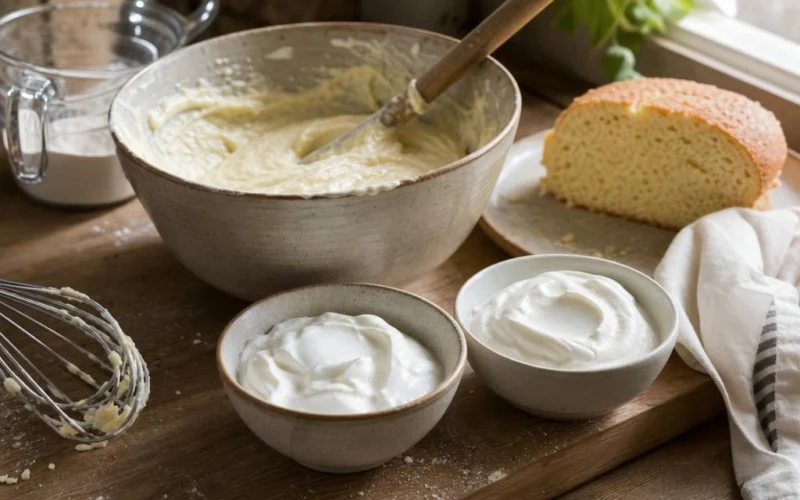
Plain, full-fat Greek yogurt is usually the best substitute for sour cream in baking. Replace sour cream with Greek yogurt in a 1:1 ratio by volume, using unsweetened plain yogurt. For buttermilk, use less liquid and add fat—about ¾ cup buttermilk plus ¼ cup melted butter for each 1 cup sour cream—because buttermilk is thinner and less rich.
The exact result still depends on the recipe, the dairy product’s fat level, and the intended batter texture. Cheesecake-style batters are especially sensitive to thin substitutes, so use a thick option such as Greek yogurt or crème fraîche.
The Best Substitute for Sour Cream in Baking
For most cakes, muffins, and quick breads, full-fat plain Greek yogurt is the simplest sour cream replacement. A 1:1 swap means equal volume: if the recipe calls for 1 cup sour cream, use 1 cup Greek yogurt; if it calls for ½ cup sour cream, use ½ cup Greek yogurt.
Choose yogurt that is plain, unsweetened, and unflavored. Greek yogurt is close to sour cream because it brings moisture, cultured acidity, and a thick texture. It is not always identical—brands differ in thickness, tang, and fat—but it is usually the most reliable starting point. University Extension substitution charts also list plain yogurt as a direct sour cream substitute, while noting that milk- and buttermilk-based options need added fat or other adjustments. Utah State University Extension
Sour Cream Substitutes Ranked by Use Case
| Substitute | Ratio per 1 cup sour cream | Best uses | Expected changes |
|---|---|---|---|
| Full-fat plain Greek yogurt | 1 cup | Cakes, muffins, quick breads, cheesecake-style batters | Very close; may be slightly tangier or thicker |
| Plain regular yogurt | 1 cup | Cakes, muffins, looser batters | Thinner batter; less dense texture |
| Crème fraîche | 1 cup | Cakes, rich batters, cheesecake-style mixtures | Milder tang; richer result |
| Buttermilk plus melted butter | ¾ cup buttermilk + ¼ cup butter | Pourable cake and muffin batters | More liquid; may need less other liquid |
| Cream cheese loosened with milk | Adjust to sour-cream-like texture | Cheesecake-style mixtures, thick batters | Denser and richer |
| Milk plus acid | Milk with a small amount of acid; adjust fat and liquid as needed | Last-resort cakes or muffins | Thinner, less rich, less creamy |
Greek Yogurt: The Best 1:1 Swap
Full-fat Greek yogurt is the closest practical default because it is strained, thick, and cultured. Stir it until smooth before measuring, especially if liquid has collected on the surface. This helps it blend more evenly into the batter.
Low-fat and nonfat Greek yogurt can also work at 1:1, but they may produce a slightly leaner, firmer, or less rich crumb. The difference is most noticeable in recipes where sour cream contributes substantial fat and tenderness, rather than just moisture.
Plain Regular Yogurt
Plain regular yogurt can replace sour cream 1:1 as a starting point, but it contains more water than Greek yogurt and is usually thinner than sour cream. It tends to work best in cakes and muffins with naturally pourable batters.
If the recipe already includes a generous amount of milk, water, coffee, juice, or another liquid, hold back 1 to 2 tablespoons of that liquid at first. Do not automatically add flour to compensate; first compare the batter with the consistency the recipe appears to intend.
Crème Fraîche
Use crème fraîche in a 1:1 ratio for sour cream. It is thick and rich, making it a particularly useful choice for cakes and cheesecake-style mixtures where structure matters.
Expect a milder tang than sour cream and, depending on the product, a richer result. It is often more expensive or less available than yogurt, but it is a strong functional match when you have it.
Buttermilk Plus Fat
For each 1 cup of sour cream, start with about ¾ cup buttermilk plus ¼ cup melted butter. Let the butter cool slightly before combining it with the buttermilk so it does not separate excessively.
This is a practical starting point rather than a laboratory-perfect formula. Buttermilk provides cultured acidity and moisture, while butter helps replace some of the richness that sour cream would contribute. Extension substitution guides similarly pair buttermilk or sour milk with added butter for sour cream replacements. Mississippi State University Extension
Because buttermilk is pourable, reduce or hold back another liquid if the batter becomes noticeably loose. The importance of thickness in cultured-dairy substitutions is also emphasized in practical baking guidance from King Arthur Baking.
Cream Cheese Loosened With Milk
For thick mixtures, soften cream cheese and blend it with a small amount of milk until it reaches a smooth, sour-cream-like consistency. Add the milk gradually rather than relying on one fixed ratio, since cream cheese brands vary in firmness.
This option is most useful for cheesecake-style batters or recipes where extra thickness is desirable. It can make the finished bake denser and richer than sour cream would, so it is less ideal for a light, tender cake.
Milk Plus Acid
Milk alone is not an equivalent substitute for sour cream. It lacks sour cream’s thickness, fat, and cultured texture, so replacing sour cream with the same amount of milk can make a batter too loose.
Use this only when other options are unavailable. A small amount of lemon juice or white vinegar mixed into milk can add acidity and tang, but the mixture still lacks sour cream’s thickness and richness. Depending on the batter, you may need to add some fat and hold back or reduce other liquid to avoid making it too thin.
This is a texture-based fallback rather than a universal formula: use enough milk to supply the needed moisture, add acid sparingly for tang, and assess whether the batter needs added fat. Expect a thinner batter and potentially less rich crumb, especially compared with Greek yogurt or crème fraîche.
Which Substitute Works Best for Each Type of Baked Good?
Cakes
Greek yogurt is the default 1:1 choice for cakes. Plain regular yogurt can also work, but check whether the batter becomes thinner than intended. Buttermilk plus butter is workable in many pourable cake batters when you hold back some other liquid.
If a cake uses baking soda, the acidity from sour cream, yogurt, or buttermilk may interact with it. However, the final rise depends on the complete formula—including the amount of baking soda, baking powder, flour, eggs, and liquid—so do not assume every swap needs the same leavener adjustment.
Muffins
Greek yogurt and regular plain yogurt generally work well in muffins because muffin batters can tolerate moderate variation in thickness. Buttermilk plus butter can also work when a softer, more pourable batter is acceptable.
Once you make a consistency adjustment, mix only until the ingredients are combined. Overmixing can make muffins tougher regardless of which sour cream substitute you use.
Quick Breads
Greek yogurt is usually the easiest option for banana bread, loaf cakes, and other quick breads. Its thickness helps preserve the body of a batter that needs enough structure to bake evenly in a loaf pan.
Buttermilk can work, but it may create a thinner batter and a different loaf texture. Hold back a little of the recipe’s other liquid before adding extra flour, since extra flour can make a quick bread dry or heavy.
Cheesecake-Style Batters
Use full-fat Greek yogurt, crème fraîche, or cream cheese loosened with milk for cheesecake-style mixtures. These options are thick enough to better support the dense, creamy body such recipes are meant to have.
Avoid using buttermilk as a direct 1:1 replacement here. Its thin consistency can weaken the mixture and change the finished texture more noticeably than it would in an ordinary cake or muffin batter.
How to Adjust the Batter After Swapping
The goal is not to force every substitute into an identical formula. It is to make the smallest adjustment needed to restore the batter’s intended consistency while preserving enough moisture, fat, and acidity for the recipe to behave as expected.
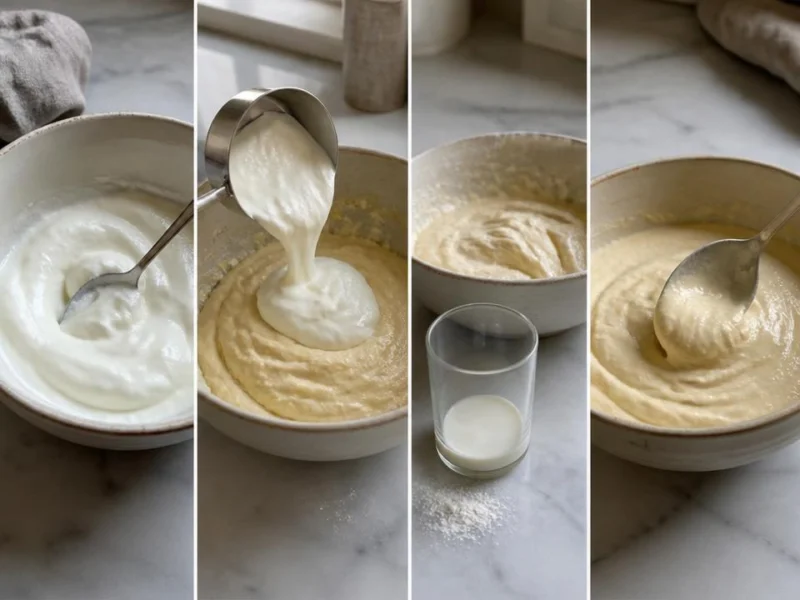
- Match thickness first. Use Greek yogurt, crème fraîche, or cream cheese for thick batter and cheesecake-style mixtures.
- Hold back liquid. When using regular yogurt or buttermilk, reserve a small amount of the recipe’s other liquid until you see the batter.
- Add liquid gradually. If thick Greek yogurt or a cream cheese mixture makes the batter unusually stiff, add milk or another recipe liquid a teaspoon or tablespoon at a time.
- Do not add flour automatically. A slightly looser batter is not always a problem, and extra flour can make baked goods dry or dense.
- Check the leaveners. Yogurt and buttermilk are acidic, but their effect on baking soda depends on the total recipe—not on one ingredient alone.
- Keep it plain. Sweetened, vanilla, fruit-flavored, or dessert-style yogurt changes both flavor and sugar content in a standard recipe.
For a thick batter, choose a thick substitute. For a pourable cake or muffin batter, regular yogurt or buttermilk may be workable as long as you manage the added liquid.
Common Mistakes When Replacing Sour Cream
- Using sweetened or flavored yogurt in a recipe designed for plain sour cream.
- Assuming nonfat Greek yogurt will give the same richness and crumb as full-fat sour cream.
- Replacing 1 cup sour cream with 1 cup buttermilk without reducing liquid or adding fat.
- Using milk alone and expecting the same thickness, richness, or structure.
- Adding extra flour before checking whether the batter is actually too thin for that recipe.
- Assuming every sour-cream recipe needs an identical acidity or baking-soda adjustment.
The practical rule is simple: make the smallest adjustment needed to restore the batter’s intended consistency.
Frequently Asked Questions
Can I use Greek yogurt instead of sour cream in cake?
Yes. Use plain Greek yogurt in a 1:1 ratio by volume, preferably full-fat. It is usually the closest swap, though the cake may be slightly tangier or less rich depending on the yogurt and the original sour cream.
How much buttermilk replaces sour cream without making batter too thin?
Start with about ¾ cup buttermilk plus ¼ cup melted butter for every 1 cup sour cream. Hold back some other liquid if necessary, because buttermilk is much thinner than sour cream. This approach aligns with Extension substitution guidance that combines buttermilk or milk with added butter. Colorado State University Extension
Can I use nonfat Greek yogurt instead of sour cream?
Usually, yes, at a 1:1 ratio. However, expect a less rich result and possibly a slightly tighter crumb, especially in recipes that rely on sour cream for fat as well as moisture. Use full-fat Greek yogurt when texture is especially important.
Use full-fat Greek yogurt 1:1 when you want the closest, simplest swap. Choose buttermilk plus butter when acidity and moisture matter and you can adjust liquid. For a thick cheesecake-style batter, use Greek yogurt, crème fraîche, or a loosened cream-cheese mixture.