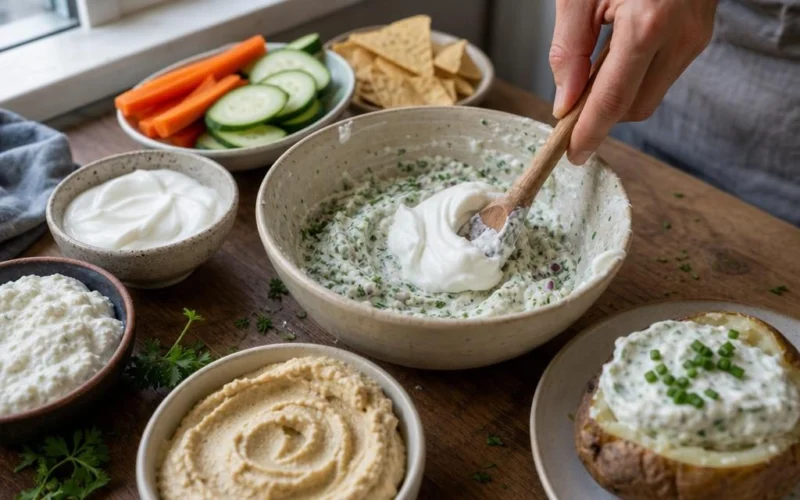
The best all-purpose substitute for sour cream in dip is plain, unsweetened Greek yogurt, used 1:1. It is the closest everyday flavor match, though thin yogurt may need straining and a small amount of lemon juice if it needs more tang. Choose blended cottage cheese for a thick, protein-focused dip, crème fraîche for a rich, mild finishing topping, or a thick, unsweetened dairy-free sour cream or Greek-style plant yogurt when avoiding dairy.
The Best Sour Cream Substitute Depends on the Job
A cold dip needs to stay scoopable after you add seasonings, salsa, cucumber, or herbs. A topping for tacos or baked potatoes needs enough body to sit on the food without running off. Those are slightly different jobs, even when the recipe starts with the same amount of sour cream.
Three qualities matter most:
- Thickness: Whether the substitute holds up in a dip or stays in place as a topping.
- Tang: The clean acidic flavor that makes sour cream taste distinct from plain cream or mayonnaise.
- Richness: The fuller, more buttery mouthfeel that comes from a higher-fat dairy base.
Use the ratios below as starting points, not fixed rules. Fat level, acidity, stabilizers, salt, and moisture differ across brands. Plain yogurt is commonly used cup for cup in place of sour cream, but substitutions can still change flavor and texture, as noted by Utah State University Extension.
Ranked Sour Cream Substitutes for Cold Dips and Toppings
This ranking is for cold uses—not baking, sauces, or heated dishes. It prioritizes how closely each option performs in a savory dip or as a finishing topping.
| Substitute | Starting ratio | Thickness | Tang | Flavor change | Best use | Adjustment |
|---|---|---|---|---|---|---|
| Plain Greek yogurt | 1:1 | Medium to thick | Similar to tangier | Can taste less rich | Dips and toppings | Strain if thin; add lemon only if needed |
| Crème fraîche | 1:1 | Thick | Milder | Richer, more buttery | Baked potatoes, tacos, rich toppings | Add a little lemon juice if desired |
| Blended cottage cheese | 1 cup + 1–2 tsp lemon juice | Thick after blending | Mild until acidified | Slightly dairy-forward | Thick dips | Blend smooth; loosen only if needed |
| Dairy-free sour cream | Usually 1:1 | Product-dependent | Product-dependent | May have plant-specific notes | Dairy-free dips and toppings | Choose unsweetened; strain if thin |
| Plain regular yogurt | 1:1 starting point | Often thin | Tangy | Lighter, less dense | Quick dips where thickness matters less | Strain and reduce other liquids |
1. Plain Greek Yogurt: Best All-Purpose Substitute
Use plain, unsweetened Greek yogurt in the same amount as sour cream. It is the closest everyday sour cream replacement for a cold dip because it is creamy, tangy, and usually thick enough to carry seasoning blends, taco spices, or chopped herbs.
Greek yogurt is similar to sour cream, not identical. Nonfat and low-fat versions can taste sharper and less rich, while whole-milk Greek yogurt usually gives a fuller result. Food Network also identifies Greek yogurt as a close culinary substitute because of its tang and creamy consistency.
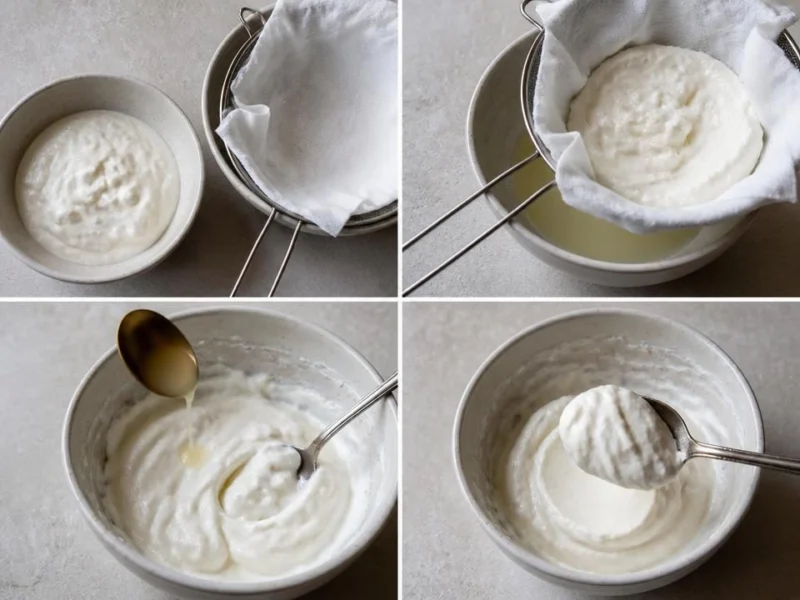
If your yogurt looks loose or releases whey after stirring, strain it in a fine-mesh strainer lined with cheesecloth, a coffee filter, or a clean paper towel until it thickens. Then mix the dip. If the finished mixture needs more sour-cream-like bite, stir in lemon juice a few drops at a time and taste between additions.
2. Crème Fraîche: Best for a Rich, Mild Topping
Replace sour cream with crème fraîche 1:1. It is generally thicker and richer, but less tangy, so it works especially well when you want a smooth topping for baked potatoes, chili, tacos, or roasted vegetables.
Its mild flavor can make a spicy topping taste rounder and less sharp than one made with sour cream. For a more familiar sour cream flavor, mix in a small amount of lemon juice, then taste before adding more. This is usually a better finishing topping than a base for a strongly seasoned dip when you specifically want pronounced tang.
3. Blended Cottage Cheese: Best for a Thick, Protein-Rich Dip
For a thick cottage cheese dip, start with 1 cup cottage cheese plus 1 to 2 teaspoons lemon juice. Blend until completely smooth, scraping down the blender or food processor as needed. If it is thicker than you want, blend in 1 to 2 teaspoons of milk or water at a time.
This is a practical starting formula, not a strict one-for-one sour cream conversion. Cottage cheese varies widely in curd size, saltiness, and moisture, so taste it after blending before adding seasoning. Lemon juice supplies some of the acidity that cottage cheese lacks on its own.
Blending cottage cheese into a dip is a well-established preparation approach; Utah State University Extension includes blended cottage-cheese-and-yogurt dip recipes in its Healthy Snacks Curriculum. Use this option when a thick texture and a smoother, more substantial base matter more than reproducing sour cream exactly.
4. Dairy-Free Sour Cream or Thick Plant-Based Yogurt
For a dairy-free sour cream dip, use a commercial dairy-free sour cream 1:1 if it is unsweetened and already thick. This is usually the most direct option for toppings because it is designed to mimic sour cream’s texture.
Thick, unsweetened Greek-style plant yogurt can also work. If it is loose, strain it before mixing and go easy on watery add-ins. Coconut-based products may leave a noticeable coconut flavor, which can be fine with some curries or spicy dips but may be distracting in a classic ranch-style or taco topping.
“Dairy-free” does not tell you how a product compares nutritionally with dairy sour cream. Plant-based products can differ substantially in ingredients, fat, calories, protein, and added thickeners, so compare the specific package and serving size if nutrition is part of your decision.
Other Options That Change the Dip More
Plain regular yogurt works in a pinch, but it is usually thinner than Greek yogurt and may make a dip runny. Mashed avocado creates a creamy topping, but its green color, richer flavor, and lack of dairy tang make it a different style of dip.
Hummus adds thickness and body but brings chickpea and tahini flavors that can compete with a recipe designed for sour cream. Mayonnaise can add creaminess, but it changes the fat profile and flavor substantially and does not provide sour cream’s clean tang. It is not the closest substitute for a tangy cold dip.
How to Adjust Any Substitute Before Serving
Make changes in this order so the dip does not become overly sour, salty, or thin:
- Match the quantity first. Start with the recipe’s stated amount of sour cream or the substitute’s recommended starting formula.
- Check thickness. Strain yogurt or blend cottage cheese smooth before adding more ingredients. For a topping, aim for a thicker consistency than you would for a scoopable dip.
- Add acidity gradually. Use lemon juice a few drops or small spoonfuls at a time. A little can brighten a mild base; too much can make it sharp and thin.
- Taste for salt. Cottage cheese and prepared dairy-free sour creams may already contain more salt than sour cream.
- Control moisture. Salsa, grated cucumber, tomatoes, and thawed frozen herbs can all release water into the bowl.
If a dip becomes loose, reduce added liquid or strain the base before mixing instead of adding more yogurt or sour cream substitute. For cucumber, lightly salt it, let it sit briefly, then squeeze out excess moisture before folding it into the dip. For salsa-based dips, drain off obvious liquid first.
Choose the Right Swap for Your Specific Use
For a ranch-style, onion, or herb dip, Greek yogurt is the closest everyday sour cream swap. Choose blended cottage cheese when the priority is a notably thick dip base and you are willing to blend it smooth and adjust its tang. For tacos or baked potatoes, crème fraîche makes the richest finishing topping; Greek yogurt and a thick dairy-free sour cream also work well when their flavor and dietary fit are preferred.
“Best” depends on the texture, tang, richness, and dietary requirements of the dish.
Frequently Asked Questions
Can I use regular plain yogurt instead of Greek yogurt in a dip?
Yes. Start with a 1:1 swap, but regular plain yogurt is usually thinner than Greek yogurt. Strain it through a fine strainer or cheesecloth until it reaches the consistency you want, and reduce other liquids in the recipe. Use plain, unsweetened yogurt only.
How can I make a dairy-free substitute thick enough for tacos or baked potatoes?
Start with a thick, unsweetened dairy-free sour cream or Greek-style plant yogurt. Strain thinner yogurt before seasoning, avoid watery mix-ins, and add lemon juice in small amounts only after checking the flavor. If the product is coconut-based, taste it first to make sure the coconut note suits the topping.
Use Greek yogurt 1:1 for the closest everyday swap, crème fraîche when richness matters most, blended cottage cheese for a thick protein-focused dip, and a thick unsweetened dairy-free product when avoiding dairy. Strain thin bases and add lemon juice gradually instead of making large adjustments all at once.