Cottage cheese can be a convenient source of protein, but it is not automatically low in sodium or universally healthier than other dairy foods. The best choice depends on your priorities, including calories, saturated fat, sodium, lactose tolerance, milk allergy, and calcium.
The nutrition table below uses plain 2% cottage cheese as a representative reference. Because values vary by brand and serving size, compare it with the Nutrition Facts label on your package.
What does 2% cottage cheese provide?
Plain 2% cottage cheese can be a convenient source of protein, but it is not automatically low in sodium or universally healthier than other options. The best type depends on your priorities for protein, calories, saturated fat, sodium, lactose tolerance, milk allergy and calcium. A representative 1/2-cup serving (about 113 grams) provides approximately 92 calories, 11.8 grams of protein and 348 milligrams of sodium—about 15% of the FDA Daily Value for sodium.
Portion size matters most for sodium. One cup of this representative product provides about 184 calories, 23.6 grams of protein and 696 milligrams of sodium. If a package lists 350 milligrams of sodium per 1/2 cup and you eat 1 cup, the calculation is 350 × 2 = 700 milligrams.
The following representative estimates are calculated from USDA FoodData Central data for plain 2% low-fat cottage cheese. Formulas differ by brand, so use your package label for the product you eat.
| Nutrient | Per 100 g | Per 1/2 cup (113 g) | Approx. DV per 1/2 cup |
|---|---|---|---|
| Calories | 81 kcal | 92 kcal | — |
| Protein | 10.45 g | 11.8 g | 24% |
| Carbohydrate | 4.76 g | 5.4 g | 2% |
| Total fat | 2.27 g | 2.6 g | 3% |
| Saturated fat | 1.24 g | 1.4 g | 7% |
| Fiber | 0 g | 0 g | 0% |
| Sodium | 308 mg | 348 mg | 15% |
| Calcium | 111 mg | 125 mg | 10% |
| Phosphorus | 150 mg | 170 mg | 14% |
| Selenium | 9.4 mcg | 10.6 mcg | 19% |
| Vitamin B12 | 0.63 mcg | 0.71 mcg | 30% |
This serving supplies substantial protein for fewer than 100 calories, along with some calcium, phosphorus, selenium and vitamin B12. It contains virtually no fiber, and its calcium content is useful but not exceptionally high for a dairy food. Daily Value percentages use the FDA’s general label-reference values and are not individualized intake targets; see the FDA Daily Value guide.
How varieties compare
| Type | Protein, calories and fat | Sodium or lactose | Best reason to choose it—and what to check |
|---|---|---|---|
| 2% low-fat | Representative 1/2 cup: 11.8 g protein, 92 calories, 2.6 g fat and 1.4 g saturated fat | Representative 348 mg sodium; contains lactose | Moderate-fat reference option; compare sodium and calcium on the label |
| 4% creamed | The USDA reference has about 98 calories and 4.3 g fat per 100 g, with protein broadly comparable to 2% | Not inherently lower in sodium or lactose | Richer texture; check saturated fat, sodium and serving size |
| Dry-curd/nonfat, uncreamed | A distinct, less-moist product with a separate nutrient profile | Sodium varies; it still contains milk components | Useful for recipes requiring dry curds; do not substitute standard 2% values or assume every nonfat product is dry-curd |
| Lactose-free | Protein, calories and fat depend on the base formulation | Lactose is reduced or broken down; sodium still varies | Designed for lactose intolerance; it still contains cow’s-milk proteins and is not suitable for milk allergy |
| Low- or no-sodium | Protein, calories and fat depend on the product | Formulated with less sodium than regular versions | Useful when sodium is the priority; verify the milligrams per serving rather than relying only on front-label wording |
For a fair package comparison, use the same serving weight and check protein, calories, saturated fat, sodium and calcium. Then confirm any specific claim you need, such as “lactose-free.” Whipped, flavored and ordinary nonfat products can differ substantially in serving weight, added ingredients and nutrient content, so their labels take priority over database averages.
How cottage cheese affects protein intake, fullness and nutrient balance
Its protein is predominantly casein
Most cottage cheese protein is casein, the main group of proteins in cow’s milk, with a smaller whey fraction. Casein forms curds during cheesemaking and is generally digested more slowly than isolated whey protein. A 1/2-cup portion of 2% cottage cheese provides about 12 grams of complete protein, meaning it supplies all nine essential amino acids.
That makes cottage cheese useful in breakfasts, snacks and light meals that would otherwise contain little protein. It does not independently cause muscle gain or fat loss. Training, total daily protein, overall calorie intake, sleep and the rest of the diet still determine the broader outcome.
Claims about cottage cheese as a medically proven bedtime food go beyond the evidence. Research on pre-sleep casein supplements cannot automatically be applied to every cottage-cheese portion, exercise routine or dietary pattern.
Protein does not cancel out sodium
Salt helps control flavor, curd characteristics and shelf stability, which is why regular cottage cheese can contain far more sodium than its mild taste suggests. The FDA defines 20% Daily Value or more per serving as high in sodium, while 5% or less is considered low.
A representative 1/2-cup portion at 348 milligrams supplies about 15% of the Daily Value. If a particular label lists 460 milligrams per serving, that serving reaches 20% and qualifies as high under the FDA label guideline.
Sodium matters most in the context of the entire day. Cottage cheese eaten with salted crackers, smoked salmon or deli meat can create a concentrated sodium load. Pairing it with unsalted vegetables, fruit, oats or no-salt-added nuts keeps the meal’s total more manageable.
It contributes calcium, but draining removes some
Cottage cheese contains calcium and phosphorus, yet it is not always the calcium leader people expect from dairy. During production, milk forms curds and whey; draining part of the whey can remove some calcium and other water-soluble components. Fortification and manufacturing methods also vary.
A 1/2-cup serving can contribute around one-tenth of the calcium Daily Value, depending on the product. Milk and some yogurts often provide more calcium per customary serving, so check the label if calcium is your main reason for choosing dairy.
Live cultures are a label claim, not an assumption
Cultures may be used during cottage-cheese production, but processing and packaging determine whether viable organisms remain in the finished food. A culture listed among the ingredients does not establish a meaningful probiotic dose.
Look for wording such as “live and active cultures” or named probiotic cultures on the container. The Academy of Nutrition and Dietetics recommends checking the package rather than treating all cottage cheese as probiotic.
Portions, side effects and who should be careful
There is no evidence-based universal maximum number of cups that everyone should eat daily. For most uses, 1/2 cup is a practical snack portion, while 3/4 to 1 cup may serve as the protein component of a meal. The larger portion needs to be assessed against the person’s full-day sodium, calories and saturated fat.
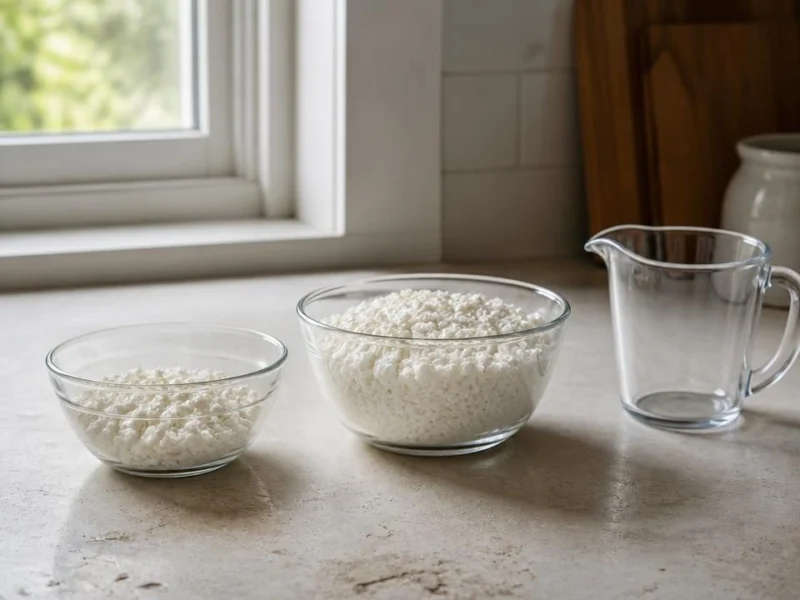
A useful visual check is one loosely filled measuring cup: half full is a standard serving; completely full is two servings. Measuring once can help calibrate bowls that make 1 cup look smaller than it is.
Use this 20-second package check
- Serving size: Confirm whether the label uses 1/2 cup, grams or another measure.
- Protein: Compare equal weights, not different serving sizes.
- Sodium: Multiply it by the servings you will eat.
- Saturated fat: Compare 4%, 2%, 1% and nonfat products.
- Added sugars: Check flavored fruit and dessert-style varieties.
- Special claims: Verify “lactose-free,” “low sodium” or live cultures.
The common mistake is selecting a product for its protein number while overlooking that the planned bowl contains two labeled servings. The fix is simple: calculate protein and sodium for the same portion before comparing brands.
Lactose intolerance is different from milk allergy
Ordinary cottage cheese contains lactose, although the amount varies with processing. People with lactose intolerance differ in how much they can digest before experiencing gas, bloating, abdominal discomfort or diarrhea. The National Institute of Diabetes and Digestive and Kidney Diseases advises individualized assessment; some people tolerate limited dairy portions, while others use lactose-free products.
Lactose-free cottage cheese still contains cow’s-milk proteins. It is therefore not appropriate for a cow’s-milk-protein allergy. Milk allergy can cause reactions beyond digestive discomfort and requires guidance from a qualified clinician.
People managing IBS during a structured FODMAP elimination or reintroduction should treat tolerance as portion-dependent. “Lactose-free” may address lactose, but gums, thickeners and serving size can still affect individual symptoms.
Sodium-restricted eating requires the package number
People with hypertension, edema, kidney disease, heart failure or a clinician-directed sodium restriction may need a lower target than the general 2,300-milligram Daily Value. Regular cottage cheese can use a substantial share of that allowance.
Choose a product specifically labeled low sodium or no salt added and verify the milligrams per serving. Rinsing ordinary curds is sometimes suggested online, but the amount of sodium removed is unpredictable and the texture changes. It is not a reliable substitute for a verified lower-sodium label.
People with chronic kidney disease may also have individualized protein, phosphorus, potassium or fluid targets. Those needs cannot be determined from the cottage-cheese label alone.
Added sugar can hide in flavored containers
The carbohydrate in plain cottage cheese largely reflects naturally occurring lactose. That is different from added sugar. Fruit-flavored versions may contain syrups, fruit preparations or sweeteners, so the Added Sugars line provides the useful comparison.
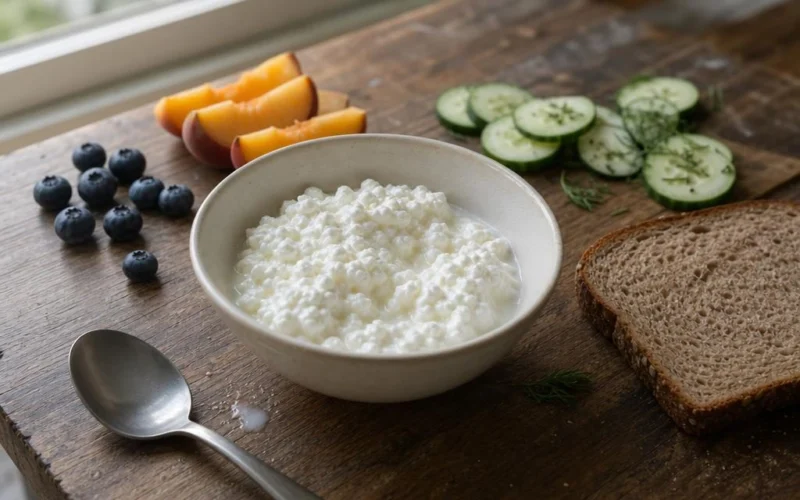
For sweetness with more fiber, start with plain cottage cheese and add berries, sliced peaches, pear or cinnamon. Cottage cheese itself contains virtually no fiber.
Ways to turn cottage cheese into a balanced snack or meal
Cottage cheese works best as a protein component rather than a complete meal by itself. Fruit, vegetables, whole grains, seeds or nuts fill its main nutritional gap by adding fiber and varied textures.
| Cottage cheese with | How to prepare | What it adds |
|---|---|---|
| Berries and walnuts | Layer in a bowl | Fiber and unsaturated fat |
| Tomato and whole-grain toast | Add pepper and herbs | Fiber and carbohydrates |
| Herbs and lemon | Blend until smooth | Low-salt dip flavor |
| Scrambled eggs | Stir in near finish | Moisture and protein |
| Baked pasta | Use in ricotta blend | Creaminess and protein |
| Oats and peaches | Spoon over cooked oats | Fiber and sweetness |
Blend the curds for sauces and dips
Blending changes the curd structure into a smoother, pourable base without changing the nutrition of the measured portion. Process it for about 30 to 60 seconds, stopping once to scrape the sides. Lemon juice, garlic, dill, parsley or black pepper can build flavor without relying on a salty seasoning packet.
A thicker 4% product usually produces a richer dip, while a lower-fat product may need less added liquid. If the sauce is heated, use gentle heat and avoid prolonged boiling, which can encourage protein separation and a grainier texture.
Add it to eggs after they begin setting
Stir cottage cheese into scrambled eggs when the eggs are partly set rather than at the start. This limits the time available for whey to separate and make the pan watery. A spoonful or two adds moisture; a much larger amount shifts the dish toward a softer, curd-heavy texture.
Fresh tomatoes, spinach or mushrooms add volume and fiber, but cook watery vegetables before adding the cottage cheese. Pre-cooking reduces liquid pooling in the finished eggs.
Use it in baked dishes without assuming equal substitution
Cottage cheese can replace part of the ricotta in lasagna, stuffed shells or casseroles. It has looser curds and often more free moisture, so draining it briefly or blending it with egg and herbs can create a more cohesive filling.
The substitution changes sodium and texture. Compare the labels for the actual ricotta and cottage cheese being used instead of assuming the higher-protein option is lower in every other nutrient.
Build sweet bowls from plain cottage cheese
Pair plain cottage cheese with a high-fiber carbohydrate and a small source of unsaturated fat. Berries with walnuts, pear with chia seeds, or peaches with oats are more balanced combinations than sweetened cottage cheese topped with granola syrup.
Nuts and seeds also help the body absorb fat-soluble carotenoids when the bowl includes fruits such as cantaloupe or mango. Keep portions in view: nuts are nutrient-dense, but a large handful can add considerably more energy than a tablespoon or two.
Questions readers ask before buying cottage cheese
Is 2% cottage cheese healthier than nonfat or 4%?
No single fat level is best for everyone. Nonfat usually has fewer calories, 2% offers a middle ground, and 4% has a richer texture with more total and saturated fat. Protein and sodium vary by brand, so compare equivalent weights. A lower-fat label does not guarantee lower sodium or fewer additives.
Can I eat cottage cheese every day?
It can fit into a varied daily diet if the portion suits your calorie, protein, saturated-fat and sodium needs. Eating 1/2 cup daily has a different nutritional effect from eating 1 or 2 cups. Rotate protein and calcium sources when possible so cottage cheese does not crowd out beans, fish, eggs, yogurt, nuts or other useful foods.
Is cottage cheese better than Greek yogurt?
Neither is universally better. Plain cottage cheese often provides substantial protein but usually contains more sodium. Plain Greek yogurt is often lower in sodium and more consistently sold with live cultures, while protein, calcium, fat and lactose vary by product. Choose according to the label and intended use rather than declaring one overall winner.
Does small-curd cottage cheese have different nutrition?
Curd size mainly changes texture. Small- and large-curd products can use different manufacturing methods or ingredients, but curd size alone does not predict calories, protein or sodium. Compare the Nutrition Facts panels rather than treating one curd size as nutritionally superior.
Why does cottage cheese sometimes have watery liquid on top?
Some whey can separate during storage, especially after the container is moved or opened. Stirring usually restores the texture if the product has been refrigerated correctly and remains within its safe-use period. Discard it if there is mold, an abnormal odor, package swelling or other clear spoilage; do not taste food to test whether it is safe.
This content is based on food chemistry and clinical nutrition research. It is for informational purposes only and does not constitute medical advice. Consult a qualified healthcare professional before making significant changes to your dietary routine.