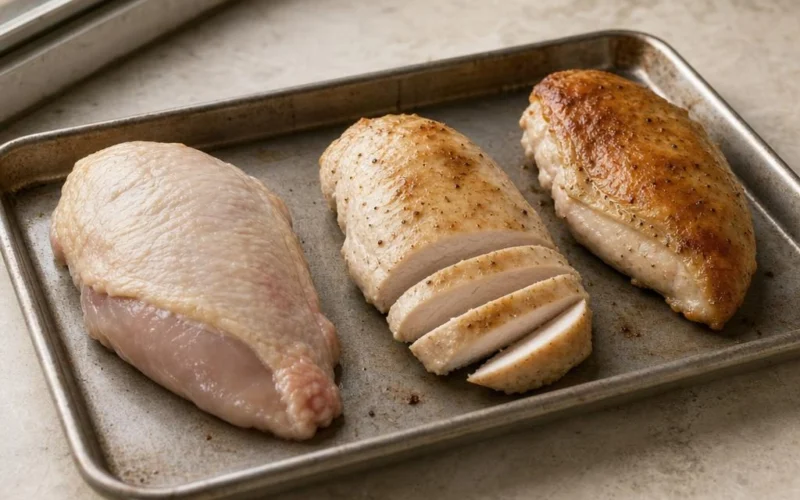
A 3-ounce cooked serving of chicken breast provides about 25–31 grams of protein, depending on the USDA entry, retained skin, and preparation. A 100-gram (3.5-ounce) serving of cooked, skinless breast commonly has about 30–31 grams of protein and 160–170 calories. Match the chicken’s weight state to the database entry: weigh raw chicken with raw data, or cooked chicken with cooked data.
“One chicken breast” is not a standardized serving. Protein and calorie totals depend on the piece’s size, whether skin remains, how much water cooks out, and whether the product contains added saltwater solution, oil, breading, or sauce.
How Much Protein and How Many Calories Are in Chicken Breast?
These are approximate reference values from selected USDA FoodData Central entries for plain chicken breast, not universal values for every brand, restaurant meal, or preparation.
| Food state | Protein | Calories | Use this weight |
|---|---|---|---|
| Raw, skinless, boneless breast meat only, 100 g | About 22.5 g | About 120 | Raw |
| Roasted, skinless, boneless breast meat only, 100 g | About 31 g | About 165 | Cooked |
| Roasted, skinless, boneless breast meat only, 3 oz | About 26 g | About 140 | Cooked |
| Roasted breast, meat and skin, 100 g | About 30 g | About 197 | Cooked |
Three ounces equals about 85 grams. The 3-ounce values are calculated from the selected USDA record for “chicken, broilers or fryers, breast, skinless, boneless, meat only, cooked, roasted” (about 165 calories and 31 g protein per 100 g). The skin-on row uses the separate USDA record for “chicken, broilers or fryers, breast, meat and skin, cooked, roasted”; its values are record-specific and are not broadly representative of every skin-on portion, because retained skin and rendered fat vary. The raw row uses the USDA entry for “chicken, broilers or fryers, breast, skinless, boneless, meat only, raw.” See USDA FoodData Central chicken breast records and roasted chicken breast records.
A palm-sized cooked portion is often roughly 3–4 ounces, but a kitchen scale is more accurate for calorie or protein tracking.
Why Does Cooked Chicken Show More Protein per 100 Grams?
Cooked chicken appears to contain more protein per 100 grams because heat drives off water. The protein does not multiply during cooking; it is simply concentrated into a smaller finished weight.
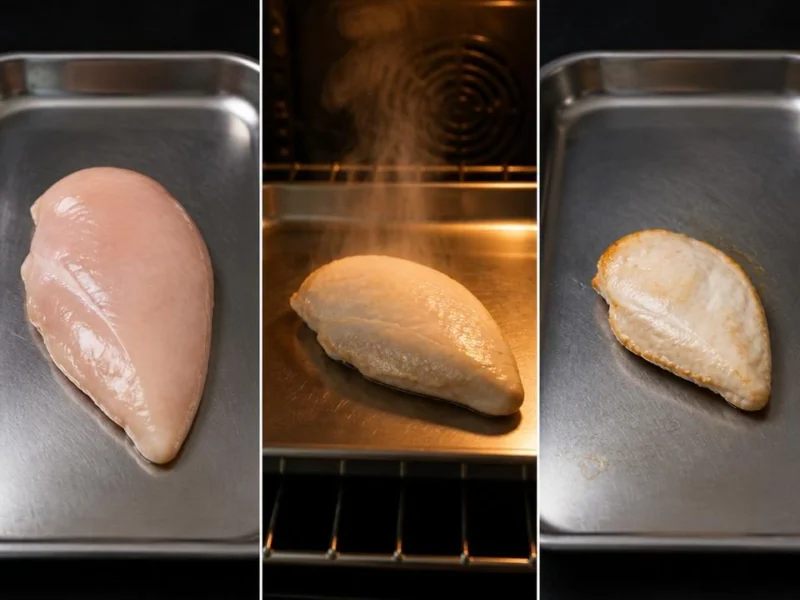
Raw chicken contains a high proportion of water. As it roasts, bakes, grills, poaches, or air-fries, moisture leaves the meat. If the original piece weighs less after cooking, each 100-gram cooked portion represents more of the original chicken than 100 grams of raw meat did.
Cooking also does not add calories to plain chicken. The total protein and energy in the original piece remain broadly similar unless juices are discarded, fat is trimmed away, or ingredients such as oil, breading, glaze, or sauce are added.
The 8-Ounce-to-6-Ounce Example
An 8-ounce raw chicken breast may finish near 6 ounces cooked. That is an illustration, not a conversion rule: thickness, cooking temperature, time, method, and resting loss all affect the final yield.
- Weigh 8 ounces raw chicken.
- Cook it without adding measurable ingredients.
- Weigh the finished meat; it may be close to 6 ounces.
- Log either the original 8 ounces with a raw entry or the finished 6 ounces with a cooked entry.
Skinless Versus Skin-On Chicken Breast
Chicken skin changes calories and fat more dramatically than it changes protein. A cooked breast with skin can still provide plenty of protein, but the skin contributes extra fat and raises the calorie total.
Skinless cooked breast is generally the more protein-dense choice per calorie. Skin-on chicken may make sense for people who prefer its flavor and richer texture or who are building a meal with more dietary fat. Neither option is automatically better in every meal.
Skin-on entries also vary more. The final nutrition depends on how much skin remains after cooking, whether fat renders out, and whether you actually eat all of the skin on the serving.
| Goal | Better default |
|---|---|
| Protein per calorie | Skinless cooked breast |
| More flavor and fat | Skin-on portion |
| Consistent tracking | Weighed portion |
| Lower sodium | Plain, no solution |
A large retail breast can equal two or more standard 3-ounce servings. Breast count is therefore a poor substitute for weighing, especially for meal prep or macro tracking.
How to Log Chicken Breast Without Mixing Raw and Cooked Data
- Identify the product: plain, seasoned, rotisserie, breaded, deli, or chicken with added solution.
- Check whether the package nutrition panel describes the food as raw, cooked, or ready to eat.
- Use the raw weight when selecting a raw USDA entry.
- Use the finished weight when selecting a cooked USDA entry.
- Select the matching USDA record or package nutrition label.
- Log oil, butter, breading, marinade, glaze, sauce, and dressing separately when they contribute calories.
- For a recipe, total all ingredients, then divide by the number of portions or the final cooked weight.
| Your measurement | Select |
|---|---|
| Raw package weight | Raw entry |
| Cooked meal portion | Cooked entry |
| Rotisserie breast | Retailer or package label |
| Chicken with added solution | Matching package label |
| Breaded chicken | Breaded product entry |
For branded products, use the package label rather than a generic USDA entry whenever possible. This is especially important for chicken with added solution, seasoning, or retailer-specific trimming, which can change sodium, calories, and the nutrition values for the measured weight.
Added Solution, Sodium, Oil, and Breading Can Change the Numbers
“With Added Solution” chicken
Some raw chicken is injected or packaged with a saltwater or phosphate solution. The ingredient list may say “contains up to X% solution” or use similar wording. This added liquid can increase the package weight and raise sodium compared with plain, unseasoned chicken.
Use the package nutrition panel for these products. A generic raw chicken breast entry may underestimate sodium and may not match the product’s retained water after cooking.
Rotisserie, deli, and ready-to-eat chicken
Rotisserie and deli chicken often contain seasoning, brine, skin, and variable amounts of fat. Removing the skin can reduce calories, but the remaining meat may still be more sodium-rich than plain home-cooked breast.
Use the retailer’s nutrition information when available. If it is unavailable, select the closest prepared-chicken entry and treat the result as an estimate rather than assuming it matches plain roasted chicken.
Oil, marinades, sauces, and breading
Grilled, baked, roasted, poached, and air-fried chicken do not have fixed calorie values independent of ingredients. Water loss affects calorie concentration per ounce, while retained oil, breading, cheese, sugary glazes, and creamy sauces can add far more calories than the cooking label itself.
- Oil or butter: log the amount that remains on or in the food.
- Marinade: count it if a measurable amount is retained.
- Breading: choose a breaded product entry rather than plain breast.
- Sauce: add it separately when possible for a clearer meal estimate.
Does Cooking Destroy Chicken Protein?
Normal cooking does not remove all the protein from chicken breast. Heat changes the structure of muscle proteins, causing the meat to firm up and turn opaque, but the apparent rise in protein per 100 grams is mainly a water-loss effect.
Small changes in the final total can occur if cooking juices are discarded, visible fat is trimmed, or part of the meat is left behind. For everyday food logging, the more meaningful decision is choosing the entry that matches the raw or cooked weight you measured.
For food safety, USDA advises cooking poultry to 165°F (74°C) in the thickest part, checked with a food thermometer. White meat, pinkness, and clear juices are not reliable safety tests on their own. See the USDA safe minimum internal temperature chart and its guidance on safe chicken handling.
Which Chicken Breast Choice Fits Your Meal?
Choose based on the meal you are making and the information you need to track.
- Highest protein with fewer calories: cooked, skinless breast.
- More flavor from fat: a measured skin-on portion.
- Lower sodium: plain, unseasoned chicken without added solution.
- Most accurate tracking: weigh the portion and match its food-data state.
- Restaurant or prepared chicken: use the product label or estimate the ingredients separately.
Use the palm-size check only as a rough guide: a cooked portion about the size and thickness of your palm is often around 3–4 ounces. If protein or calorie intake matters for a specific eating pattern, weigh the cooked serving instead of counting whole breasts.
Chicken Breast Protein Questions Readers Still Ask
How much protein is in 3 ounces of cooked chicken breast?
A 3-ounce cooked serving usually contains about 25–31 grams of protein. A common USDA roasted, skinless breast-meat entry works out to about 26 grams, while the precise amount changes with skin, cooking losses, and the selected food record.
How much protein is in 100 grams of raw chicken breast?
A common raw, boneless, skinless chicken breast reference contains about 22–23 grams of protein per 100 grams and about 120 calories. Added solution, retained skin, trimming, and brand differences can change the result.
Should chicken breast be weighed before or after cooking?
Either method works. Pair raw weight with raw nutrition data, or pair cooked weight with cooked nutrition data. Problems arise only when the weight and entry describe different states of the food.
Is one whole chicken breast one serving?
No. Retail chicken breasts vary widely in size, and a large piece may contain two or more 3-ounce cooked servings. Weighing the edible portion is more accurate than logging one breast as a fixed amount.
Is chicken breast always the lowest-calorie chicken choice?
Skinless breast is usually among the leanest chicken choices, but preparation still matters. Skin, breading, oil, sauces, sodium-containing solutions, and restaurant portions can substantially change the final meal.
This content is based on food chemistry and clinical nutrition research. It is for informational purposes only and does not constitute medical advice. Consult a qualified healthcare professional before making significant changes to your dietary routine.