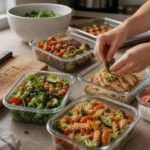
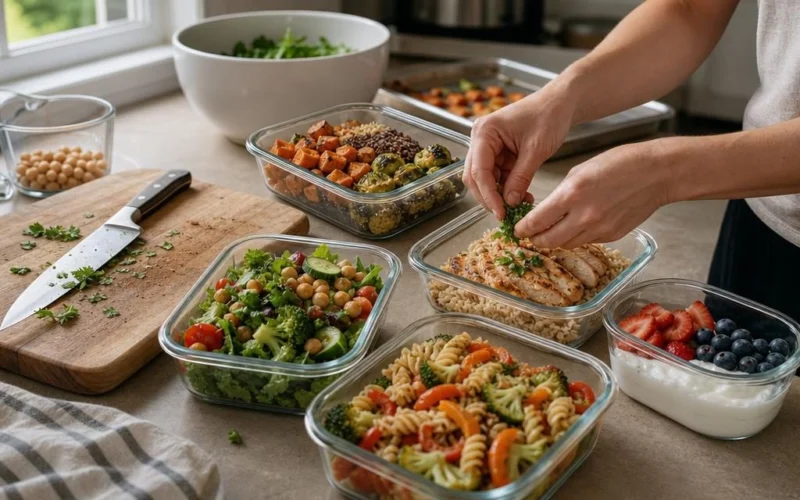
Meal prep does not require seven identical containers lined up in the refrigerator. The most workable approach is to cook flexible components—two proteins, one or two carbohydrates, several vegetables, and two sauces—then turn them into different meals through the week. Assemble only a few complete meals, freeze portions you will not eat within four days, and leave room for leftovers, takeout, or changing plans.
Build Your Week Around Components, Not Identical Meals
Component cooking means preparing building blocks rather than committing every ingredient to one finished recipe. A batch of chicken, roasted peppers, brown rice, greens, and yogurt sauce can become a warm bowl on Monday, a wrap on Tuesday, and a cold salad on Wednesday.
It also makes schedule changes easier to manage. If an unexpected dinner comes up, you can save or freeze a portion rather than eating it simply because it is already assembled.
The two-protein, one- or two-carbohydrate starting point
| Component | Examples | Best use |
|---|---|---|
| Two proteins | Chicken and chickpeas; tofu and eggs | Bowls, wraps, salads, soups |
| One or two carbohydrates | Brown rice, quinoa, potatoes, tortillas | Bowls, plates, soups, wraps |
| Three vegetables | Roasted broccoli, raw peppers, greens | Roasted, raw, sautéed |
| Two sauces | Salsa, pesto, yogurt-herb sauce | Change the flavor direction |
| Crunch | Cabbage, seeds, nuts | Add just before serving |
A practical starting batch includes two proteins, one or two carbohydrate bases, three vegetables, and two sauces. Keep the proteins and carbohydrates neutrally or lightly seasoned so they can work in more than one meal. Roasted chicken with garlic and pepper, for example, can pair with salsa in a taco bowl, lemon-herb dressing in a salad, or broth and vegetables in soup.
- Choose contrasting proteins, such as chicken and chickpeas, tofu and eggs, or fish and lentils.
- Use one roasted vegetable, one crisp raw vegetable, and one leafy or quick-cooking vegetable.
- Build two distinct flavor directions, such as salsa with yogurt-herb sauce or pesto with a vinegar-based dressing.
- Keep fresh toppings, herbs, and crunchy ingredients separate until serving.
A flexible plate formula instead of fixed calorie targets
A plate framework can help you assemble balanced meals without making every serving identical. Harvard’s Healthy Eating Plate emphasizes vegetables and fruit, quality carbohydrates, protein foods, and healthy fats rather than a universal calorie prescription.
| Meal component | Practical guide | Examples |
|---|---|---|
| Vegetables or fruit | About half | Greens, peppers, broccoli |
| Protein | About one-quarter | Chicken, tofu, beans |
| Carbohydrate | About one-quarter | Rice, potatoes, oats |
| Flavor and fat | Add to taste | Olive oil, nuts, sauce |
This is an educational framework, not an individualized meal prescription. Appetite, activity, and energy needs can change the amount of protein, carbohydrates, or total food that feels appropriate. Oils, cheese, nuts, dressings, and large grain portions can also add substantial calories, even when the meal uses nutritious ingredients.
Turn the Same Ingredients Into Different Meals
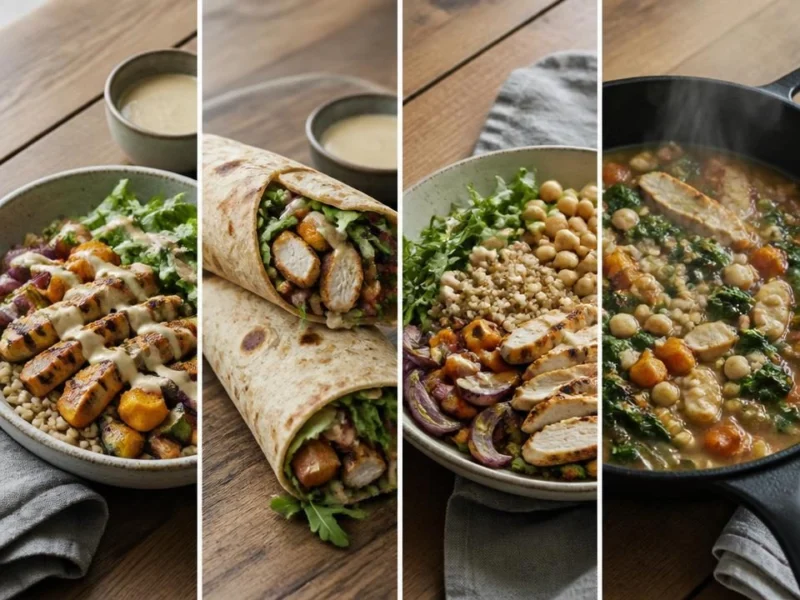
Variety usually comes from format, temperature, texture, and seasoning—not from buying seven unrelated recipes. A warm rice bowl feels different from a chilled wrap even when both contain the same chicken and roasted vegetables.
| Base component | Meal 1 | Meal 2 | Meal 3 | Meal 4 |
|---|---|---|---|---|
| Chicken | Rice bowl | Tacos | Salad | Soup |
| Chickpeas | Grain bowl | Hummus wrap | Salad topping | Curry |
| Roasted vegetables | Plate meal | Omelet filling | Wrap filling | Pasta mix-in |
| Quinoa | Bowl base | Cold salad | Soup garnish | Stuffed peppers |
| Yogurt sauce | Bowl drizzle | Dip | Wrap spread | Salad dressing |
Change the format before changing the groceries
Use a different meal format before deciding you are bored with the ingredients. Turn a chicken-and-rice combination into tacos by adding tortillas, salsa, cabbage, and lime. Make it a salad by serving the chicken cold over greens with crunchy vegetables. Add broth, beans, and frozen vegetables for a quick soup.
Flavor contrast matters. A creamy yogurt-herb sauce, a spicy salsa, and an acidic vinaigrette can give the same neutral batch a different identity. Crunch also changes the experience: shredded cabbage, toasted seeds, chopped nuts, or pickled vegetables are best added immediately before eating.
Keep texture from collapsing by storing parts separately
Day-three boredom often starts with soggy greens, soft toppings, and watery containers. Store dressings, sauces, avocado, fresh herbs, greens, and crunchy toppings separately. Let cooked grains and vegetables cool before packing, then use leakproof containers and clear date labels.
A common scenario is preparing five identical chicken-and-rice lunches on Sunday. By Wednesday, the food may still be safe, but the meal has become unappealing because every bite has the same flavor and soft texture. Freeze later portions, keep toppings separate, and change the format before you reach that point.
A Seven-Day Meal-Prep Schedule That Leaves Room for Real Life
The best prep day is the one you can repeat. Before shopping, check your refrigerator, freezer, and pantry to avoid duplicate purchases and wasted food. USDA MyPlate recommends this approach when planning budget-friendly weekly meals.
- Sunday: Check available food, choose a few meals, and make a short grocery list.
- Sunday: Cook two proteins, one grain or starchy base, a tray of vegetables, and two sauces.
- Monday: Assemble a grain bowl with one protein, vegetables, and sauce.
- Tuesday: Reuse the protein in a wrap or salad.
- Wednesday: Spend 15–20 minutes refreshing greens, eggs, vegetables, or sauce.
- Thursday: Thaw a frozen portion or build a cold meal from prepared components.
- Friday: Keep a flexible meal slot for leftovers, a quick skillet meal, social food, or takeout.
- Weekend: Cook one fresh meal and restock only the components you actually used.
| Day | Main action | Meal format |
|---|---|---|
| Sunday | Cook components | Prep |
| Monday | Assemble | Grain bowl |
| Tuesday | Reformat | Wrap or salad |
| Wednesday | Refresh | Fresh plate |
| Thursday | Thaw | Frozen meal |
| Friday | Stay flexible | Skillet or leftovers |
| Weekend | Restock | Fresh meal |
A one-day example for a busy schedule
- 7:30 a.m.: Greek yogurt, berries, oats, and pumpkin seeds.
- 12:30 p.m.: Chicken, brown rice, roasted peppers, greens, and salsa.
- 3:30 p.m.: Apple with peanut butter or a prepared bean-and-vegetable snack.
- 7:00 p.m.: Chickpea and vegetable wrap with yogurt-herb sauce.
After evening training, someone who remains hungry may choose a larger grain or protein portion at dinner. Base that adjustment on hunger and activity rather than treating it as a rule for everyone.
What to prepare when you live alone or dislike leftovers
Solo households often do better with two or three servings of a finished dish and flexible ingredients for breakfasts, salads, and wraps. Freeze individual portions promptly if they will not be eaten within a few days. Cold grain salads, sandwiches, yogurt bowls, and assembled plates can reduce reliance on reheated dinners.
Shift workers do not need to force a Sunday routine. Two smaller prep sessions around work blocks may be more realistic: cook a protein and vegetables before a run of shifts, then do a short refresh on the next day off. Frozen vegetables, canned beans, precooked grains, and rotisserie chicken are useful shortcuts when they make the plan workable.
Store, Freeze and Reheat Food Before It Becomes a Safety Problem
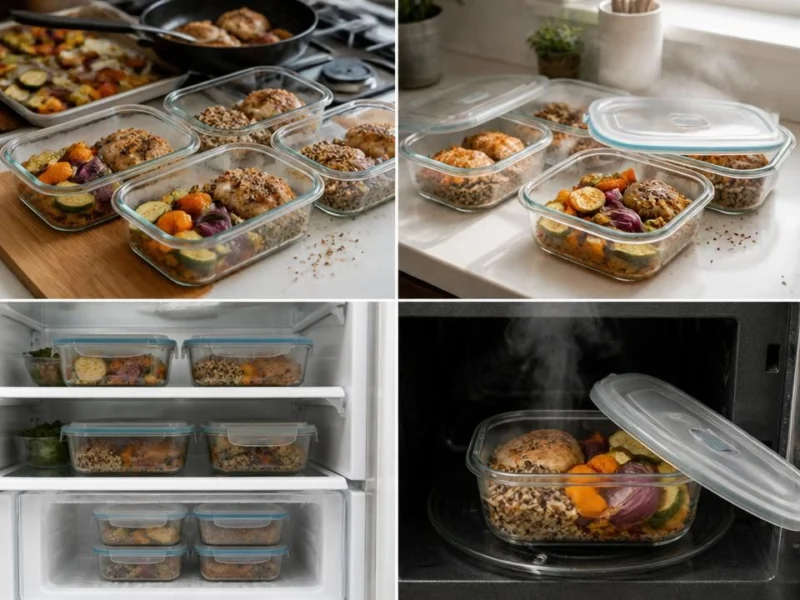
USDA Food Safety and Inspection Service states that cooked leftovers generally keep for three to four days in the refrigerator when handled properly. FoodSafety.gov provides food-specific guidance because storage times differ among cooked poultry, soups, salads, rice dishes, and other foods.
| Food timing | Action |
|---|---|
| Days 1–3 | Refrigerate |
| Day 4 | Eat or freeze |
| Beyond day 4 | Freeze earlier |
| Frozen portions | Thaw safely, reheat |
The “freeze two, refrigerate three” rule
This is a planning habit, not an official one-size-fits-all food rule. If you make five servings on Sunday, refrigerate the portions intended for the first three days and freeze two portions promptly. Label containers with the food and date, then thaw the next serving in the refrigerator before eating.
Do not rely on smell or appearance alone. Harmful bacteria do not always make food look or smell spoiled. Check the detailed FoodSafety.gov cold storage chart for food-specific timelines, and review USDA’s leftover safety guidance for safe handling.
Fix the Most Common Meal-Prep Failure Points
Day three boredom
The fix is not buying more recipes. Change a prepared bowl into a wrap, salad, soup, or skillet meal. Use a frozen portion later in the week, then add fresh greens, cabbage, herbs, or a different sauce on the day you eat it.
The Sunday prep becomes too ambitious
If prep regularly takes several hours, food gets discarded, or your plan includes seven fully finished meals with no flexible slot, the system is too large. Cut back to two proteins, one grain, three vegetables, and two sauces. One convenience item—such as canned beans, frozen vegetables, or precooked grains—can save the plan from becoming a chore.
Hunger or low energy after a prepared meal
Use a one-week self-check. Note whether hunger returns within two hours, whether you repeatedly leave food unfinished, and whether you are reaching for unplanned snacks because your meal was not satisfying. Frequent early hunger can signal that the meal needs more protein, high-fiber carbohydrate, vegetables, added fat, or a larger overall portion.
The schedule changes halfway through the week
Do not eat food out of obligation. If a planned meal will not be eaten within the safe refrigerator window, freeze it. If fresh vegetables are losing quality, use them in a soup, omelet, or skillet. A social meal can simply replace one prepared serving; move that portion to another day or freeze it.
Questions That Come Up After You Start Meal Prepping
Can meal prep work if I hate reheated food?
Yes. Prep ingredients instead of complete meals: washed greens, cooked grains, chopped vegetables, sauces, hard-boiled eggs, and proteins that work cold. Wraps, sandwiches, yogurt bowls, cold grain salads, and assembled plates reduce the number of meals that need reheating.
How many days can cooked meal-prep food stay in the refrigerator?
Most cooked leftovers generally keep for three to four days when refrigerated promptly and kept at 40°F or below. Refrigerate perishable food within two hours, or one hour above 90°F. FoodSafety.gov’s storage chart is the best reference for specific foods.
What should I freeze immediately instead of refrigerating?
Freeze any individual portion you do not expect to eat within three to four days. This is especially useful for cooked poultry, rice-based meals, soups, and complete single-serving meals. It also prevents solo households from facing the same dinner repeatedly before the food-quality window closes.
Is it better to prep complete meals or separate ingredients?
Complete meals fit highly predictable schedules and make grab-and-go lunches easy. Separate ingredients suit changing plans, different appetites, picky eaters, and people who lose interest in leftovers. For most households, a hybrid works best: prepare two or three complete meals, then keep remaining ingredients modular.
How do I keep salads, wraps, and grain bowls from becoming soggy?
Cool grains before packing, drain wet ingredients well, and store dressing separately. Keep greens, avocado, fresh herbs, juicy vegetables, and crunchy toppings in their own containers until close to eating time. A dry layer of grains or protein beneath greens can also keep a bowl in better condition.
This content is based on clinical nutrition research and practical meal planning. It is for informational purposes only and does not constitute medical advice. Consult a qualified healthcare provider before making major changes to your dietary routine.