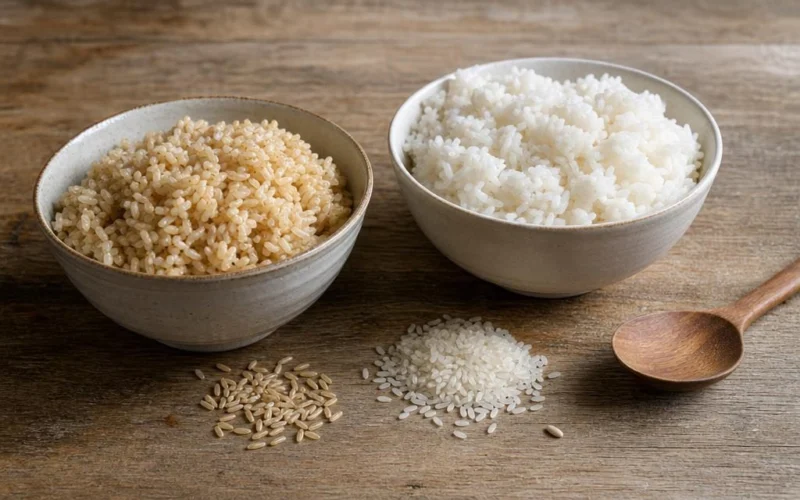
Brown rice generally has the nutritional edge because it is a whole grain with more fiber, magnesium, and naturally occurring nutrients. White rice can still be a sensible choice when you want a softer texture, faster cooking, or a lower-fiber meal—and the calorie difference is usually small when you compare the same cooked weight.
Brown Rice vs. White Rice at a Glance
The main difference between brown and white rice is how much of the grain remains after processing. Brown rice is a whole grain; white rice is a refined grain.
What changes during processing?
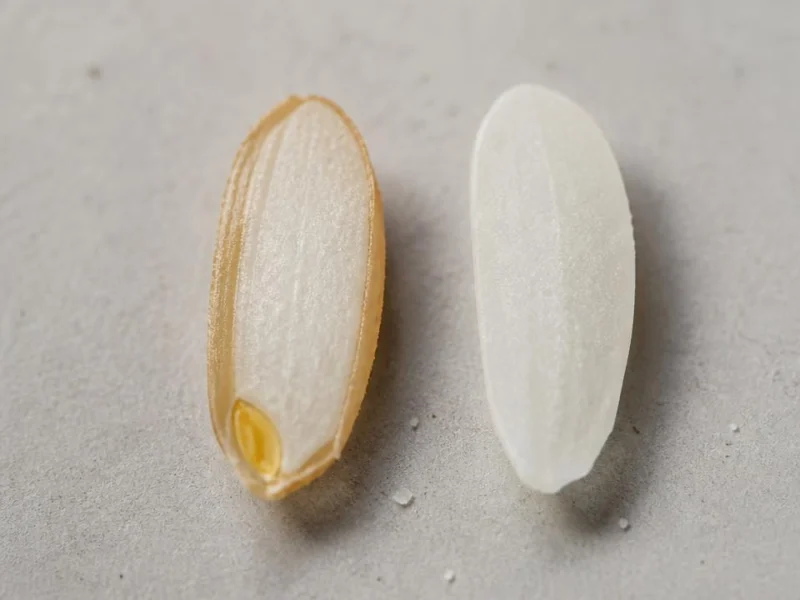
A rice grain has three main parts: the bran, germ, and endosperm. Brown rice keeps all three. The bran is the fiber-rich outer layer, the germ contains fats and several nutrients, and the endosperm is the starchy center.
To make white rice, producers remove the bran and germ, leaving mostly the endosperm. This creates the softer texture and faster cooking time many people prefer, but it also lowers the fiber content. In the United States, many white-rice products are enriched after milling with iron and certain B vitamins.
Brown rice: Bran + germ + endosperm
White rice: Endosperm remaining after the bran and germ are removed
Nutrition Comparison: Cooked Long-Grain Rice
This comparison uses USDA FoodData Central entries for rice, brown, long-grain, cooked and rice, white, long-grain, regular, enriched, cooked. All values are shown per 100 g cooked so that both types are compared at the same cooked weight.
| Nutrient | Brown rice per 100 g cooked |
White rice per 100 g cooked |
|---|---|---|
| Calories | 123 | 130 |
| Carbohydrates | 25.6 g | 28.2 g |
| Protein | 2.7 g | 2.7 g |
| Fiber | 1.6 g | 0.4 g |
| Total fat | 1.0 g | 0.3 g |
| Magnesium | 44 mg | 12 mg |
| Iron | 0.6 mg | 1.2 mg |
| Thiamin (vitamin B1) | 0.10 mg | 0.26 mg |
| Folate | 4 mcg | 58 mcg |
Brown rice naturally retains more fiber and magnesium because its bran and germ remain. The higher iron, thiamin, and folate values in this white-rice entry reflect enrichment, in which selected nutrients are added after milling.
Cup-based portions are less consistent than cooked weight: rice types can differ in density and water absorption, so a ½-cup serving may not weigh the same for brown and white rice.
Values are rounded estimates from the specified USDA entries. Variety, brand, enrichment, water absorption, and preparation can change nutrition values; do not mix values from different rice types or serving weights. See USDA FoodData Central for food-specific entries.
Do the Calories Really Differ?
Not by much when you compare the same cooked weight. Per 100 grams, the USDA entries above show brown rice at 123 calories and white rice at 130 calories. That small difference is unlikely to matter as much as your portion size, cooking fat, sauces, and what else is on the plate.
The confusion often starts with cup measurements. A cup of cooked brown rice can weigh more than a cup of cooked white rice because the grains absorb and hold water differently. That means a volume-based comparison can make brown rice appear higher in calories even when its calories per 100 grams are slightly lower.
Brown rice is not inherently a weight-loss food. Either type can fit a weight-management eating pattern when the serving is appropriate for the meal and paired with filling foods such as vegetables, beans, lentils, eggs, fish, tofu, chicken, or yogurt-based sauces.
Fiber, Digestion and Blood Sugar
Fiber and fullness
Brown rice generally provides several times more fiber than white rice. Fiber supports digestive regularity and can help make a meal feel more satisfying, especially when the meal also includes protein and vegetables.
That does not mean white rice makes a meal low in fiber by default. A bowl of white rice with black beans, roasted vegetables, avocado, and chicken can provide substantially more fiber than brown rice served alone. Whole grains are encouraged as part of a balanced eating pattern, but the rest of the meal still matters.
Blood sugar response depends on more than rice color
Brown rice often produces a lower blood-sugar response than some white-rice varieties, partly because it retains more fiber. Still, there is no single glycemic index value that applies to all brown rice or all white rice.
Rice variety, grain length, processing, cooking time, cooling and reheating, portion size, and the foods eaten alongside it can all affect the response. Basmati, jasmine, sticky rice, parboiled rice, and short-grain rice can behave differently even when they are all labeled “white rice.”
Research has found associations between rice type and long-term metabolic outcomes in some populations, but associations do not prove that replacing white rice with brown rice alone prevents diabetes. A systematic review of randomized trials also found that results for body weight, blood lipids, and glycemic outcomes were not uniform across studies. For people managing diabetes or another condition that affects blood sugar, personal carbohydrate targets are best discussed with a qualified clinician or registered dietitian. See the systematic review of randomized trials and this meta-analysis of observational research for the evidence and its limitations.
Which is easier to digest?
White rice is softer and lower in fiber, so some people find it more comfortable during temporary digestive upset or when they prefer a lower-fiber meal. Brown rice has a firmer, chewier texture and more fiber, which may be less comfortable for some people.
Neither type is universally easier to digest. Tolerance can depend on the portion, preparation, and the rest of the meal.
Which Rice Should You Choose?
| If your priority is… | More suitable starting choice | Important qualification |
|---|---|---|
| More fiber or whole grains | Brown rice | It retains the bran and germ. |
| Softer texture | White rice | White rice is usually softer and less chewy. |
| Faster cooking | White rice | Many white-rice varieties cook more quickly. |
| Lower-fiber meal | White rice | This may suit some digestive preferences or temporary needs. |
| Weight management | Either | Prioritize portion size and the full meal. |
| Blood-sugar considerations | Depends | Consider variety, preparation, portion, and meal composition. |
| Gluten-free eating | Either plain rice | Check flavored products for added ingredients and cross-contact. |
| Personal preference | Either | The option you enjoy and use consistently can support a balanced pattern. |
Arsenic and Rice: What the Evidence Supports
Rice can contain inorganic arsenic because rice plants absorb it from soil and water. Brown rice may retain more arsenic than white rice because its outer layers remain intact, though levels vary by product, growing conditions, and rice type.
The practical response for most people is variety, not eliminating rice. The FDA advises eating a variety of grains and rice types, particularly when rice is eaten frequently. Oats, quinoa, barley, couscous, corn, bulgur, and other grains can help diversify grain choices.
Extra care with grain variety is especially relevant for infants and young children, who eat more food relative to their body size. Ordinary rice consumption is not automatically unsafe, but frequent rice eaters may benefit from rotating grains. See the FDA’s guidance on limiting exposure to arsenic for details.
Make Either Rice Part of a More Balanced Meal
- ☐ Add a protein source, such as fish, poultry, eggs, tofu, tempeh, Greek yogurt, or beans.
- ☐ Include vegetables.
- ☐ Add beans or lentils when they fit the meal.
- ☐ Choose a rice portion that fits the meal’s total energy and carbohydrate content.
- ☐ Keep high-sodium sauces, fried toppings, and large amounts of added oil moderate.
Common Rice Choices Beyond Brown and White
Basmati and jasmine are rice varieties known for their aroma, texture, and cooking characteristics. Neither is automatically healthier simply because of its name. They can be sold as white or brown rice, and their nutrition depends on the specific product and preparation.
Parboiled rice is partially cooked in the husk before milling. This changes its texture and can affect nutrient retention, but it is not a universal nutritional winner. Check the nutrition label or the relevant USDA entry instead of assuming every basmati, jasmine, or parboiled product has the same calorie, fiber, or micronutrient profile.
Frequently Asked Questions
Is brown rice lower in calories than white rice?
Usually not by a meaningful amount when you compare the same cooked weight. Cup-based numbers can look different because cooked brown and white rice may weigh differently and absorb different amounts of water.
Is white rice okay for weight loss?
Yes. White rice can fit a weight-management eating pattern if the portion works within your overall calorie intake and the meal includes satisfying foods such as protein, vegetables, and beans. Rice color alone does not determine whether a meal supports weight goals.
Does rinsing rice remove arsenic?
Not substantially. The FDA says rinsing has minimal effect. Cooking rice in excess water and draining it can reduce some inorganic arsenic, though it may also reduce nutrients in enriched rice.
Is basmati or jasmine rice healthier than brown or white rice?
Neither is automatically healthier. Basmati and jasmine describe varieties, while brown and white describe processing. Compare the specific product, portion, and preparation method.
For most people seeking more fiber and whole grains, brown rice is the stronger default. White rice remains a practical and nutritionally workable option when a softer texture, faster cooking, lower-fiber meal, or personal preference matters. Whichever type you choose, portion size and the foods served with it are the more useful everyday focus.