
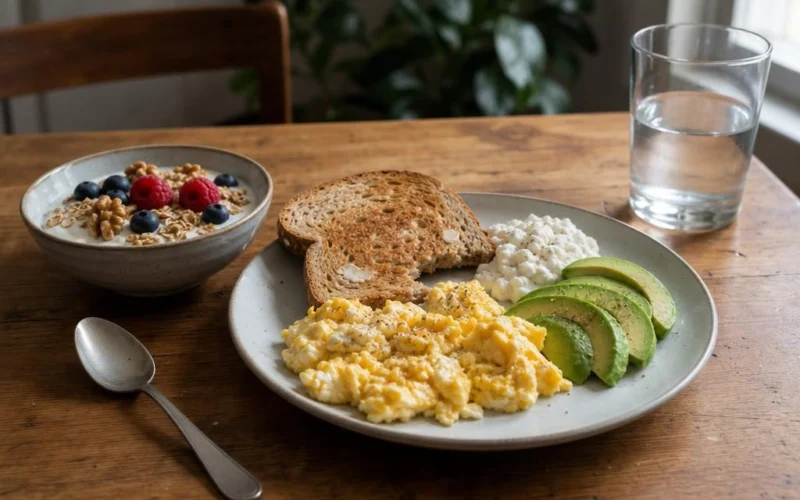
The most filling high-protein breakfast ideas combine 20–30 grams of protein, a fiber-rich food, and enough total volume for your appetite. Eggs, yogurt, tofu, or a shake may supply the protein, but fruit, vegetables, beans, oats, or whole grains often make the difference between a complete meal and hunger returning at 10 a.m.
Use the protein + fiber + volume formula
A practical protein range for breakfast is about 20–30 grams. This isn’t an official requirement or a metabolic threshold; it is a useful starting point supported by controlled breakfast studies and common dietitian guidance.
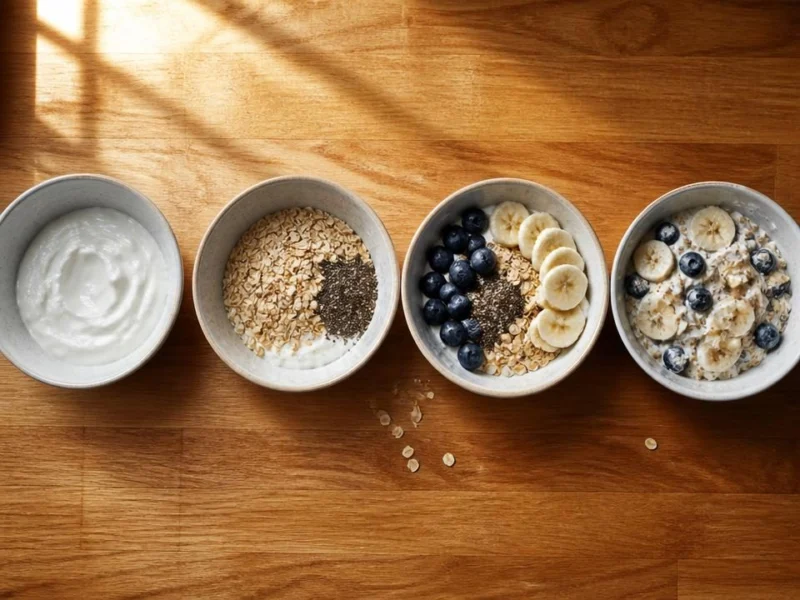
In one randomized crossover trial, a 30-gram-protein egg breakfast produced greater reported satiety than a low-protein cereal meal. A breakfast containing 20 grams of protein and 7 grams of fiber also reduced intake at a later meal compared with the low-protein breakfast. These were short-term findings, so they don’t prove that a particular breakfast causes weight loss. See the randomized breakfast trial on protein, eggs, and fiber.
| Breakfast part | What to choose | Examples |
|---|---|---|
| Protein anchor | Aim for 20–30 g | Yogurt, eggs, tofu |
| Fiber source | Add a meaningful serving | Oats, beans, berries |
| Food volume | Include produce | Fruit, greens, peppers |
| Optional fat | Use a modest portion | Nuts, seeds, avocado |
Fiber absorbs water and adds bulk, while whole fruit and vegetables increase the physical size of a meal. Fat can slow digestion and improve flavor, but nuts, seeds, nut butter, cheese, and avocado are calorie-dense, so a small portion may be enough.
The Dietary Guidelines for Americans use 14 grams of fiber per 1,000 calories as a reference point for the overall diet. That isn’t a breakfast-specific prescription, but it explains why a low-fiber protein bar or bottled shake may feel less substantial than a bowl containing the same protein plus oats, berries, and seeds. The reference appears in the Dietary Guidelines for Americans.
Ten combinations that cover different mornings
The estimates below use typical ingredient values from USDA FoodData Central. All protein and fiber figures are recipe-dependent estimates; brands, produce varieties, preparation, and measured portions will change the totals.
| Meal and portions | Concise assembly | Estimated protein | Estimated fiber | Prep | Best use |
|---|---|---|---|---|---|
| Yogurt oat bowl: 1 cup plain Greek yogurt, 1/2 cup rolled oats, 1/2 cup blueberries, 1 tablespoon chia seeds | Stir together or layer in a container. | About 30 g | About 10 g | 5 min | Desk breakfast |
| Egg-bean toast: 2 eggs, 1/2 cup black beans, 1 slice whole-grain toast, 1/2 cup peppers or spinach | Cook the eggs and vegetables; warm the beans and serve over toast. | About 24 g | About 10–11 g | 10 min | Savory meal |
| Cottage cheese bowl: 3/4 cup low-fat cottage cheese, 1 medium pear, 2 tablespoons pumpkin seeds | Slice the pear and spoon it over the cottage cheese; add seeds. | About 27 g | About 6–7 g | 5 min | No cooking |
| Tofu-edamame scramble: 6 ounces firm tofu, 1/2 cup shelled edamame, 1 cup spinach and peppers, 1 corn tortilla | Crumble and sauté the tofu with edamame and vegetables; serve with the tortilla. | About 29–30 g | About 8–9 g | 15 min | Vegan option |
| Protein overnight oats: 1/2 cup rolled oats, 3/4 cup plain Greek yogurt, 1/2 cup milk, 1 tablespoon chia seeds, 1/2 small apple | Mix everything except the apple; refrigerate overnight and add chopped apple before eating. | About 28 g | About 10 g | 5 min | Batch prep |
| Berry oat smoothie: 1 cup soy milk, 1 scoop protein powder providing 20 g protein, 1/3 cup oats, 1 cup blueberries, 1 tablespoon chia seeds | Blend until thick, adding ice or water only as needed. | About 32 g | About 10 g | 5 min | Post-workout |
| Egg-bean burrito: 2 eggs, 1/2 cup black beans, 1 cup spinach and peppers, 1 medium whole-wheat tortilla | Cook the eggs and vegetables, add warm beans, then roll everything in the tortilla. | About 24–25 g | About 11–12 g | 15 min | Commuting |
| Salmon avocado toast: 2 1/2 ounces cooked salmon, 2 slices whole-grain bread, 1/4 avocado, tomato slices | Toast the bread, mash on the avocado, and top with salmon and tomato. | About 27 g | About 7–9 g | 10 min | Quick savory meal |
| Chickpea-tofu pancake: 1/2 cup chickpea flour, 5 ounces firm tofu, 1/2 cup chopped spinach and peppers, water and seasoning | Whisk flour with enough water for a batter; fold in crumbled tofu and vegetables, then cook in a skillet. | About 26–27 g | About 8 g | 15 min | Egg-free meal |
| Turkey vegetable sandwich: 3 ounces cooked turkey breast, 2 slices whole-grain bread, lettuce, tomato, cucumber, mustard | Layer the turkey and vegetables on the bread; add mustard and pack chilled. | About 28 g | About 7–8 g | 8 min | Portable meal |
| Goal | Useful approach |
|---|---|
| Weight management | Combine protein, fiber, and produce in a portion that suits your needs |
| Muscle building | Include protein plus enough total energy to support training |
| Vegan eating | Use tofu, soy milk, edamame, chickpea flour, and other legumes |
| Dairy-free eating | Choose eggs, soy foods, beans, or an appropriate protein powder |
| Portable breakfast | Prepare a burrito, overnight oats, or a chilled sandwich |
Why some protein breakfasts still leave you hungry
Protein generally takes longer to digest than refined carbohydrate and can influence appetite signals from the digestive tract. Controlled trials have found greater short-term fullness after higher-protein breakfasts, including a study in premenopausal women comparing 30- and 39-gram-protein convenience meals with a 3-gram-protein meal or no breakfast. That result concerned acute appetite, not long-term body weight; details are available in the randomized crossover trial.
The broader evidence is less decisive. A systematic review of protein and appetite found that higher-protein diets may improve satiety in some adults with overweight or obesity, but the studies and diets varied considerably and the evidence quality was low.
Twenty grams in a bottle is not always a meal
A bottled shake can be useful on a rushed morning, but protein quantity doesn’t capture chewing, meal size, fiber, or energy content. Someone who drinks a 150-calorie shake at 7 a.m. and becomes hungry at 8:30 may not need a second scoop. Adding a banana, berries, oats, or whole-grain toast creates a larger mixed meal.
The same issue appears with eggs. Two large eggs provide roughly 12 grams of protein, but eggs alone contain no fiber and may be too small a breakfast for an active adult. Beans, vegetables, fruit, potatoes, or whole-grain toast address those gaps without turning breakfast into a protein contest.
There is no verified 30-minute protein deadline
You do not need 30 grams of protein within 30 minutes of waking to “start” your metabolism. No established metabolic cutoff makes protein at minute 29 fundamentally different from protein at minute 45.
Eat at a time that suits your appetite, work schedule, and training. An early riser might eat before commuting; a person who feels nauseated immediately after waking could pack breakfast for later. Morning exercisers can split the meal—a small snack before training and a protein-rich breakfast afterward—if that feels better.
Breakfast itself is optional for adults who prefer not to eat early. Research on breakfast eating versus skipping does not establish one universal weight-management rule, as summarized in an evidence review of breakfast and health.
Who needs individualized protein advice?
People taking GLP-1 medications may tolerate smaller meals because nausea, early fullness, or slowed stomach emptying can make a large breakfast uncomfortable. A smaller yogurt bowl, half a burrito, or divided meal may be easier than forcing a large serving. Persistent nausea, vomiting, dehydration, or inability to eat warrants medical advice.
Pregnancy, breastfeeding, diabetes treated with glucose-lowering medication, digestive disorders, food allergies, and a history of disordered eating can also require different meal planning. Protein foods can remain part of breakfast, but rigid macro targets or aggressive restriction may be unsuitable.
A seven-day plan you can prepare without eating the same meal daily
Prepare flexible components rather than seven finished breakfasts. A weekend batch can cover the first part of the week, while frozen burritos and smoothie packs handle later mornings. Refrigerate leftovers promptly in covered containers and keep the refrigerator at 40°F (4°C) or below. Storage time varies with the ingredients, preparation, cooling, packaging, and handling, so follow product labels and current local food-safety guidance rather than relying on one rule for every dish. Freeze portions you will not use soon. When reheating cooked leftovers, heat them throughout to 165°F (74°C).
| Component | What to batch | Storage guidance | How to use it |
|---|---|---|---|
| Egg-bean or tofu-bean burritos | Assemble 3–4; leave out avocado and watery salsa | Refrigerate assembled burritos promptly if eating them soon; freeze the rest individually. Cooked eggs, tofu, and beans are perishable once prepared. | Thaw in the refrigerator or reheat from frozen, following appliance guidance, until the center reaches 165°F (74°C) |
| Tofu-edamame scramble | Cook 2–3 portions with peppers and spinach | Cool and refrigerate promptly in shallow, covered containers. Freeze portions not intended for the next few mornings; texture may soften. | Reheat to 165°F (74°C), then add a fresh tortilla or toast |
| Overnight oat jars | Portion oats, chia, and cinnamon into small batches; add yogurt and milk as needed | Keep refrigerated and follow the storage guidance for the dairy or plant-based milk used | Add fresh fruit shortly before eating |
| Smoothie packs | Bag berries, oats, and chia in individual portions | Freeze the dry packs; keep milk and other perishable liquids refrigerated according to package directions | Blend with soy milk and protein powder |
| Beans and sturdy vegetables | Drain and rinse beans; chop peppers, carrots, or cabbage | Refrigerate opened beans and chopped vegetables promptly in separate covered containers. Freeze extra beans if they will not be used soon. | Add to eggs, tofu, toast, or burritos; reheat cooked mixtures to 165°F (74°C) |
| Dry toppings | Portion seeds, nuts, and oats into small containers | Store according to package directions | Add immediately before eating to preserve texture |
| Fresh-assembly items | Keep yogurt, cottage cheese, bread, fruit, avocado, and cooked salmon available | Follow package directions and refrigerate cooked salmon promptly. Freeze it if it will not be eaten soon rather than keeping it for the entire week. | Assemble bowls, sandwiches, and toast on the day of eating; if reheating salmon, heat it to 165°F (74°C) |
A practical prep rhythm
- On the weekend: freeze several burritos, cook a small batch of tofu scramble, portion dry oats, and make smoothie packs.
- For the first part of the week: use promptly refrigerated scramble, overnight oats, opened beans, and chopped vegetables.
- At midweek: prepare another oat jar if needed and restock fresh fruit, yogurt, cottage cheese, or bread.
- For later mornings: use frozen burritos or smoothie packs instead of keeping cooked eggs, tofu, beans, or salmon refrigerated all week.
- Before serving: add avocado, crunchy toppings, fresh fruit, and toast so they retain their texture.
Frozen berries and vegetables are useful budget options, while canned beans save preparation time. Draining and rinsing canned beans removes some of the packing liquid and can reduce sodium.
Suddenly adding large portions of beans, oats, and chia after eating little fiber may temporarily increase gas and bloating. Start with one added high-fiber food, increase gradually, and drink enough fluid rather than adding several large servings at once.
Repair a breakfast that looks better on paper than it feels
| Instead of | Build this |
|---|---|
| Protein shake alone | Blend it with oats and berries |
| Two eggs alone | Add beans, vegetables, and whole-grain toast |
| Plain yogurt alone | Add fruit, oats, and seeds |
| Protein bar alone | Pair it with whole fruit and milk or fortified soy milk |
| Cheese-heavy sandwich | Use a leaner protein portion and add vegetables and fruit |
Processed meats, cheese-heavy sandwiches, bars, and fast-food burritos can raise the protein number while contributing substantial sodium, saturated fat, or added sugar. Check the label and rotate them with less-processed staples such as yogurt, eggs, tofu, beans, oats, fruit, and vegetables.
A realistic full day around a morning workout
- 6:30 a.m.: Banana before a short workout, if desired.
- 8:00 a.m.: Greek yogurt, oats, berries, chia, and water.
- 12:30 p.m.: Chicken or tofu grain bowl with vegetables and beans.
- 4:00 p.m.: Apple with peanut butter.
- 7:00 p.m.: Salmon or lentils, potatoes, and roasted vegetables.
The times are examples, not metabolic deadlines. Shift workers can treat “breakfast” as the first substantial meal after waking, even if that occurs in the afternoon. The same meal-building formula works without forcing food at a conventional breakfast hour.
Run a seven-morning hunger check
Record when you finish breakfast and when clear physical hunger returns. Also note energy, stomach comfort, and whether the meal was practical enough to repeat.
If hunger returns within one to two hours on several mornings, change one variable at a time: add a fiber-rich carbohydrate, include fruit or vegetables, or increase the overall portion. If the meal already contains 20–30 grams of protein, another scoop of powder is not the only possible fix.
A hypothetical progression might look like this: on days one and two, a 20-gram bottled shake leaves someone hungry by 9:30 a.m. On day three, adding oats and berries extends satisfaction closer to lunch. By the end of the week, the person knows the mixed smoothie works on training days while a solid yogurt bowl feels better on desk days. The useful result is the repeatable pattern, not a perfect macro number.
Questions about building a breakfast that lasts
What are easy high-protein breakfast ideas without eggs?
Try Greek yogurt with oats and berries, cottage cheese with fruit and seeds, tofu-edamame scramble, protein overnight oats, or a chickpea-flour pancake with tofu. For a dairy-free meal, choose soy yogurt with adequate protein, fortified soy milk, tofu, tempeh, or beans; check labels because plant-based yogurts vary widely in protein.
Can a smoothie be filling enough for breakfast?
Yes, but a thin protein-and-water shake may be too small for some people. Use a protein source such as Greek yogurt, soy milk, or protein powder, then add oats, fruit, and chia or ground flax. Make it thick enough to drink slowly, and pair it with toast or fruit if liquid meals consistently leave you hungry.
Do I need carbohydrates with a high-protein breakfast?
There is no universal requirement at each meal, but fiber-rich carbohydrates often make breakfast more substantial. Oats, beans, fruit, potatoes, and whole-grain bread also supply nutrients that isolated protein foods lack. Morning athletes may find carbohydrate especially useful around training.
Is 30 grams better than 20 grams?
Not necessarily. Both can fit a filling breakfast, depending on body size, total daily intake, activity, and the rest of the meal. Twenty grams paired with fiber and adequate food volume may be more satisfying than 30 grams from a small drink. Treat 20–30 grams as a starting range rather than a pass-or-fail target.
Which breakfasts travel best?
Frozen breakfast burritos, overnight oats, yogurt bowls packed with toppings separately, and whole-grain sandwiches are practical choices. Use an insulated bag and cold pack for perishable foods. A shelf-stable backup can combine a lower-sugar protein bar with whole fruit, though bars vary in protein, fiber, sodium, and added sugar.
This content is based on clinical nutrition research and practical meal planning. It is for informational purposes only and does not constitute medical advice. Consult a qualified healthcare provider before making major changes to your dietary routine.