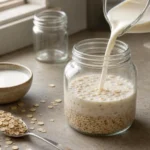
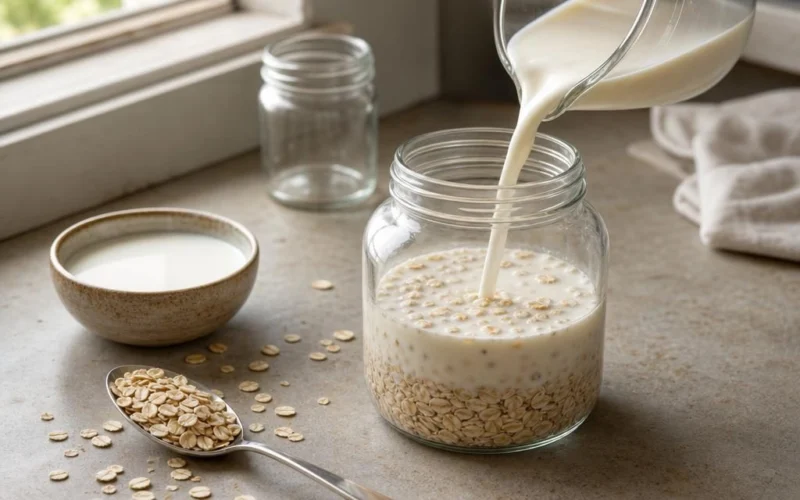
For 1 cup (80 g) of dry rolled oats, start with 1 cup (240 ml) milk plus 1/2 cup (about 120 g) yogurt. For one serving, use 1/2 cup (40 g) oats, 1/2 cup (120 ml) milk, and 1/4 cup (about 60 g) yogurt. These are starting ratios, not fixed rules: chia seeds, yogurt, oat size, milk type, and your preferred thickness can all change the result.
The Default Overnight Oats Ratio
The most dependable base formula for creamy, spoonable overnight oats is:
1 part rolled oats + 1 part milk + 1/2 part yogurt
Use rolled or old-fashioned oats as the default. For every 1/2 cup of dry oats, add 1/2 cup milk and 1/4 cup yogurt. The yogurt is optional, but it makes the mixture thicker and creamier than milk alone.
When a recipe says “1 cup oats,” it means 1 cup of dry oats before soaking, not cooked oatmeal. For 1 cup of dry rolled oats, use:
- 1 cup (80 g) rolled oats
- 1 cup (240 ml) milk
- 1/2 cup (about 120 g) yogurt
This produces a thick, spoonable mixture after chilling. Add a little more milk if you prefer looser oats.
Recipes use different overnight oats ratios because they do not always define “liquid” in the same way. Some count yogurt, fruit puree, or other water-containing ingredients along with milk; others count only the milk. The formula above keeps milk and yogurt separate so you can adjust each one more predictably.
Base Formula for One Serving
For one jar or serving, combine:
- 1/2 cup (40 g) rolled oats
- 1/2 cup (120 ml) milk
- 1/4 cup (about 60 g) yogurt
Add sweetener, fruit, nuts, seeds, or spices according to taste. Treat these as additions rather than part of the core liquid ratio, since ingredients such as mashed banana or berries can change both moisture and thickness.
Milk provides most of the soakable liquid. Yogurt adds less free liquid and contributes body, so replacing the yogurt with an equal volume of milk will not create exactly the same texture.
Scale the Ratio for 1, 2, or 4 Servings
The table below assumes rolled oats, milk, and yogurt with no chia seeds. Gram values are approximate because oat density varies by brand and because cups can be filled loosely or compacted.
| Dry rolled oats | Milk | Yogurt | Approximate yield |
|---|---|---|---|
| 1/2 cup (40 g) | 1/2 cup (120 ml) | 1/4 cup (about 60 g) | 1 serving |
| 1 cup (80 g) | 1 cup (240 ml) | 1/2 cup (about 120 g) | 2 servings |
| 2 cups (160 g) | 2 cups (480 ml) | 1 cup (about 240 g) | 4 servings |
Optional chia adjustment: For each 1/2 cup of oats, add 1 tablespoon chia and 2–4 tablespoons extra milk. Add the lower amount first, then adjust after chilling if needed.
Adjust the Formula for Chia, Yogurt, and Different Oats
These changes are culinary starting points rather than universal constants. The best amount depends on the particular oats, milk, yogurt, and texture you want.
| Ingredient or oat type | Starting adjustment per 1/2 cup oats | Expected texture change | Best use |
|---|---|---|---|
| Chia seeds | Add 1 tablespoon chia and 2–4 tablespoons milk | Thicker and more gel-like | When you want a denser jar with chia included |
| No yogurt | Use about 2/3 cup milk | Less creamy and usually looser | Dairy-free or yogurt-free mixtures |
| Quick oats | Use 10–20% less liquid | Softer with a less distinct oat texture | Shorter soaking or a smoother consistency |
| Jumbo rolled oats | Add 1–2 tablespoons milk | Chewier and slower to soften | Overnight soaking and hearty texture |
If You Add Chia Seeds
Start with 1 tablespoon chia seeds per 1/2 cup oats, then add 2–4 tablespoons extra milk. Chia absorbs liquid and thickens as it hydrates, so a simple equal-parts oats-to-milk mixture can become very dense when chia and yogurt are added together.
Stir the mixture thoroughly, including the bottom and sides of the jar. If it looks unusually thick before refrigeration, add some of the extra milk immediately. Otherwise, chill it and make the final adjustment in the morning.
If You Skip Yogurt
Without yogurt, use about 2/3 cup milk for every 1/2 cup oats as a starting point. This replaces some of the volume supplied by yogurt, but the finished oats will generally be less creamy.
You can also use a water-based ingredient such as fruit puree as part of the mixture. Keep in mind that fruit puree changes sweetness, acidity, and texture, so it should not be treated as a direct one-for-one substitute for either milk or yogurt.
If You Use Quick Oats
Quick oats soften faster than standard rolled oats and tend to produce a softer, less distinct texture. Start with 10–20% less liquid than the base formula. For a 1/2-cup serving, that means slightly less than 1/2 cup milk when you are also using 1/4 cup yogurt.
Check quick-oat mixtures after at least 4 hours rather than assuming they will behave like old-fashioned oats. If the texture is too thick, loosen it with milk after soaking.
If You Use Jumbo Rolled Oats
Jumbo rolled oats have larger flakes and may absorb liquid more slowly. Add 1–2 tablespoons more milk per 1/2 cup oats and allow the mixture to soak overnight.
They may remain somewhat chewier than regular rolled oats even after a full soak. If they are still firm in the morning, add a splash of milk and refrigerate the jar longer.
How to Mix and Chill Overnight Oats
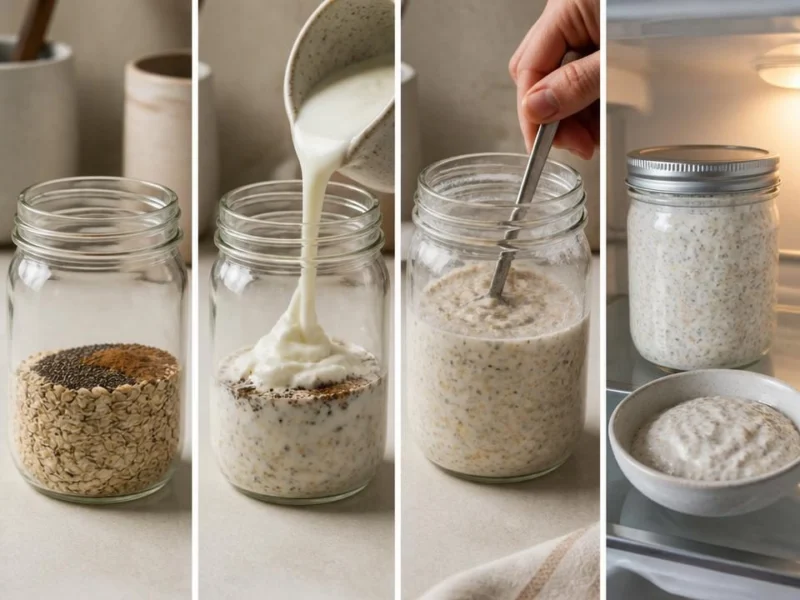
- Combine the dry ingredients. Add the oats and any chia seeds or spices to a jar or lidded container.
- Add the milk and yogurt. Pour in the measured milk, then add yogurt and any fruit or sweetener.
- Stir thoroughly. Scrape the sides and bottom so dry oats do not remain trapped above or below the liquid.
- Seal and refrigerate. Cover the container and chill it for at least 4 hours. Overnight is usually more convenient and gives the oats more time to soften.
- Adjust in the morning. Stir the oats and add milk if they are thicker than you want.
Harvard T.H. Chan School of Public Health describes overnight soaking as a way to prepare oats and notes that refrigeration for at least 4 hours is commonly used. Toppings can go in before chilling or be added in the morning: nuts and granola usually retain more crunch when added just before eating, while fruit and spices can be mixed in earlier.
Fix the Texture After Chilling
The final texture is easier to judge after soaking than before. Add small amounts, stir well, and give the oats a minute to absorb the change before adding more.
| Problem | Likely reason | Immediate fix | Next-batch adjustment |
|---|---|---|---|
| Too thick | Not enough milk, or chia and yogurt absorbed more liquid than expected | Stir in milk 1 tablespoon at a time | Begin with more milk or reduce the chia |
| Too thin | Extra milk, juicy fruit, or insufficient soaking | Add a small amount of oats, chia, or yogurt and chill again | Reduce the liquid slightly or drain excess fruit juice |
| Gummy | Too much chia, overmixing, or a heavy combination of yogurt and liquid | Avoid further vigorous mixing; if needed, stir in a small amount of milk gently | Use less chia, yogurt, or liquid |
| Oats still firm | Jumbo flakes, a short soak, or insufficient liquid | Add milk and refrigerate longer | Use more milk and allow an overnight soak |
There is no single rescue quantity for every jar. A small serving that is slightly too thick may need only a spoonful of milk, while a large batch or a chia-heavy mixture may need substantially more.
How Long Can Overnight Oats Sit Out?
Milk- or yogurt-based overnight oats should be prepared and stored in the refrigerator, not left on the counter overnight. Keep the refrigerator at 40°F (4°C) or below, consistent with USDA Food Safety and Inspection Service guidance on refrigeration.
The USDA also recommends a two-hour room-temperature limit for perishable foods. If dairy-based overnight oats have remained unrefrigerated for more than 2 hours, do not treat them as safe simply because they were intended to be eaten cold; the USDA specifically warns against consuming perishable foods left out overnight.
Prepare and store the mixture in the refrigerator, chill it for at least 4 hours, and adjust the finished oats with milk in the morning if they are thicker than desired.