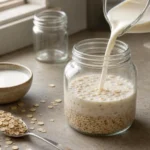
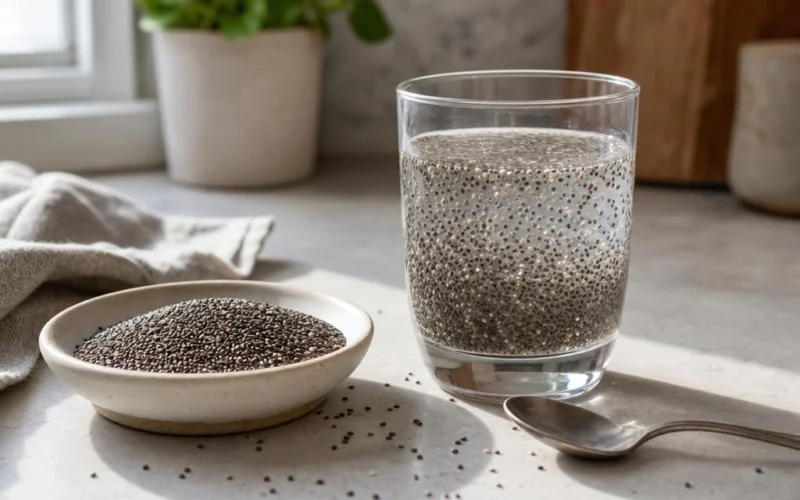
No, chia seeds do not always need to be soaked. You can add them directly to moist foods such as yogurt, oatmeal, smoothies, soups, or batter, but avoid swallowing a large spoonful of completely dry chia seeds because they absorb liquid and may expand after swallowing. Soak them when you want a gel-like texture, such as for chia pudding or chia water.
How to Prepare Chia Seeds for Different Foods
You do not need to soak chia seeds before adding them to foods that are already moist or to batter. However, avoid swallowing a large amount of completely dry chia by itself; soak it when you want a gel-like texture, such as for chia pudding.
| Use case | Soak first? | Suggested method | Expected texture | Caution |
|---|---|---|---|---|
| Chia pudding | Yes | Mix with milk or another liquid, stir, and refrigerate for several hours or overnight. | Thick, spoonable gel | Stir after mixing to help prevent clumps. |
| Smoothies | No | Blend thoroughly with the liquid ingredients; let stand briefly for a thicker smoothie. | Smooth, then thicker as it sits | Blend the seeds into the drink rather than swallowing them separately. |
| Oatmeal | No | Stir into hot oatmeal or overnight oats; add liquid if needed. | Soft or slightly gelled | Chia continues to thicken the oats as they sit. |
| Yogurt | No | Mix thoroughly into yogurt; eat immediately for crunch or let sit for softer seeds. | Crunchy at first; softer and thicker later | Mix into enough yogurt to keep the seeds in a genuinely moist food. |
| Baking | No | Add dry chia directly to moist batter or dough. | Hydrated in the finished baked food | Chia may thicken batter, so follow the recipe’s liquid amounts. |
| Dry toppings | No separate soak | Use only a small sprinkle over a moist food, such as yogurt or oatmeal. | Light crunch unless allowed to sit | Do not eat a large spoonful of dry chia on its own. |
Chia does not need to be ground like flaxseed. Choose the preparation for the food and texture you want: use it dry only as an ingredient in a moist recipe or batter, and soak it for pudding or gel.
How Long to Soak Chia Seeds
Soaking time depends on the texture you want, not on a universal nutrition or safety requirement. A short soak can make chia noticeably thicker, while a longer soak produces the more even, pudding-like consistency many recipes call for.
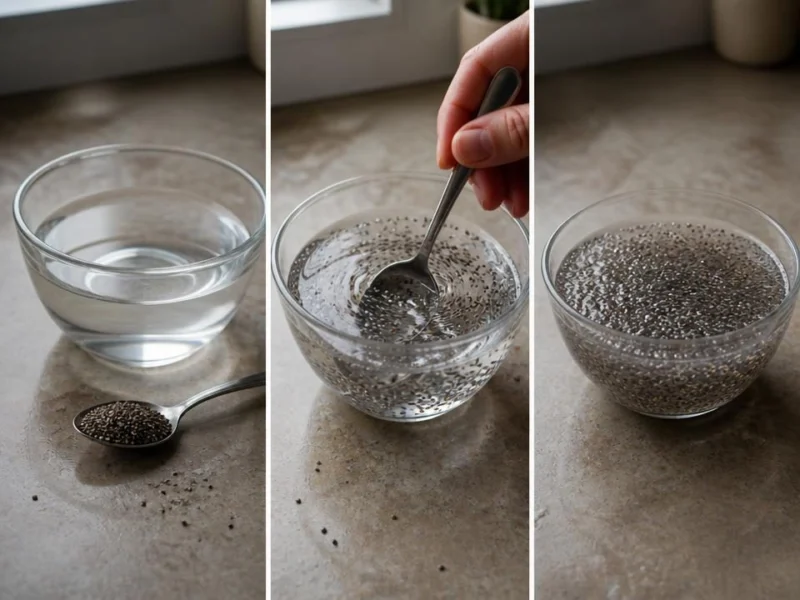
Starting Ratio for Chia Gel
A practical kitchen starting point is 1 tablespoon of chia seeds for about 1/4 to 1/2 cup of liquid. This is a recipe guideline, not a universal scientific standard. Use milk, plant milk, water, juice, or another liquid that suits the dish.
- About 10 to 15 minutes: partial thickening; useful when you want a quick gel or a thicker smoothie.
- Several hours or overnight: a more uniform, soft texture for chia pudding. MedlinePlus gives at least four hours as a pudding refrigeration time.
- For a looser gel: add more liquid or stir in an extra splash after the seeds hydrate.
- For a thicker gel: use a little more chia, allow more time, or both.
Stir once when you combine the seeds and liquid, then stir again after a few minutes if seeds are clumping together. Chia forms a gel when exposed to liquid, which is why it can thicken pudding, oats, and drinks. The Harvard T.H. Chan School of Public Health describes this gel-forming quality as one of chia’s defining cooking properties.
You do not have to soak chia overnight just because it is chia. Overnight soaking is helpful for pudding, but moist foods, cooked dishes, and batter can hydrate the seeds during preparation and eating.
What to Do If You Forgot to Soak Chia Seeds
- Mix the seeds thoroughly into a wet food or liquid instead of eating them dry.
- For a smoothie, blend the chia with the liquid ingredients until fully incorporated.
- For oatmeal, yogurt, or another moist dish, add enough milk, water, or other liquid to keep the food comfortably moist as the chia thickens it.
- If you wanted pudding, mix the seeds with liquid and refrigerate it until it reaches the texture you prefer.
Drinking water immediately after swallowing a dry spoonful is not a reliable substitute for hydrating the seeds before you eat them. Let the chia absorb liquid in the recipe or food itself.
Chia Seeds, Hydration, and Fiber
Chia seeds absorb liquid and form a gel, but you do not need to calculate a fixed amount of water based on claims that chia absorbs a particular number of times its weight. Those figures vary by conditions and are not useful as a personal hydration rule.
Chia is also not a replacement for ordinary fluids. Your overall fluid needs depend on factors such as your diet, activity level, environment, and health situation. Drink normally with meals and throughout the day rather than trying to “offset” chia with an arbitrary amount of water.
A larger-than-usual increase in fiber can cause gas, bloating, or abdominal discomfort for some people. If chia is new to your diet, start with a modest amount, use it in moist foods, and increase gradually if it agrees with you. There is no good reason to assume that soaking makes chia inherently more nutritious or improves nutrient absorption for everyone; its clearest effect is on texture and how easily it mixes into food.
When to Be More Careful With Dry Chia
The concern is swallowing a large amount of chia while it is completely dry, not using seeds that are thoroughly mixed into moist food or batter. People with swallowing difficulty, a history of food getting stuck, esophageal narrowing, or similar problems should avoid dry chia and seek individualized medical guidance.
The American College of Gastroenterology identifies dry chia as a particular concern for people with dysphagia or esophageal strictures.
Choose the preparation for the food and texture you want: use chia dry only as an ingredient in a moist recipe or batter, soak it for pudding or gel, and avoid swallowing a large amount completely dry.