The best way to tell if an avocado is ripe without cutting it is to apply gentle, even pressure with the palm of your hand. A ripe avocado should give slightly but should not feel mushy. Skin color is only a supporting clue because Hass and green-skinned varieties ripen differently, while the stem area and visible damage can offer additional warnings—but no external test guarantees perfect flesh inside.
The Best Way to Tell If an Avocado Is Ripe
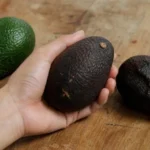
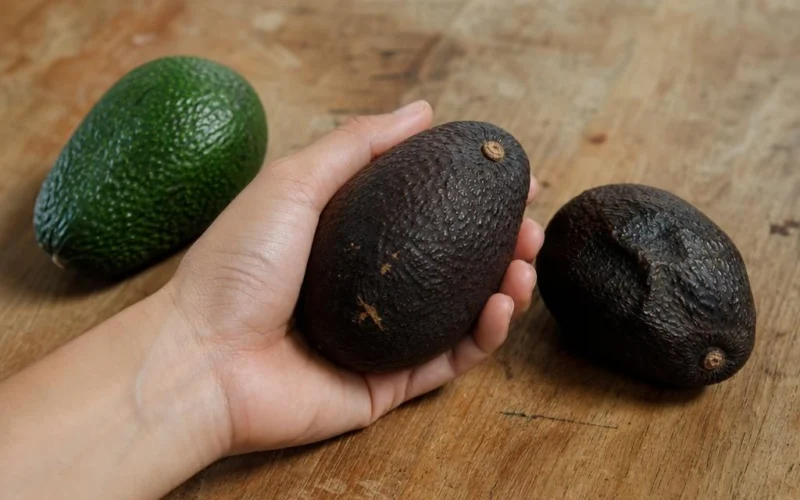
Hold the avocado in your palm and press the broad surface gently. A ready-to-eat avocado usually feels slightly yielding across much of the fruit, rather than hard in some areas and soft in others.
- Rock-hard: Not ready to eat.
- Slightly yielding: Ripening or ready soon.
- Soft with even, gentle give: Usually ready to eat.
- Mushy or deeply soft: Potentially overripe, bruised, or damaged.
Use your palm instead of squeezing with your fingertips. Fingertips concentrate pressure in small areas and can bruise the flesh, particularly when the avocado is already soft. Compare the overall firmness with light pressure rather than repeatedly pressing one spot.
Shopping checklist
- Feel the avocado gently with your palm.
- Compare firmness across the fruit.
- Check color according to the avocado’s variety.
- Inspect the stem end and entire surface for damage.
Use This Three-Step Avocado Ripeness Test
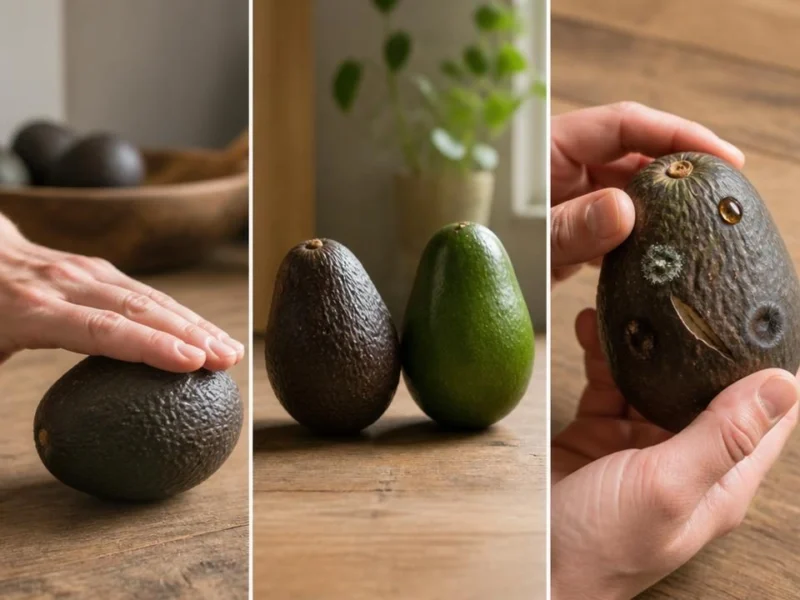
1. Feel for slight, even softness
Firmness is the most useful general test for an uncut avocado. A hard avocado needs more time at room temperature. A fruit that yields a little under gentle palm pressure is closer to eating quality, while widespread mushiness suggests that it may be past its best.
Uneven softness deserves caution. A single sunken or very soft area may indicate impact damage or internal bruising rather than normal ripeness.
2. Consider the skin color—and the variety
Hass avocados often become darker as they ripen, so a change from green toward darker purple-brown or nearly black skin can support the firmness assessment. However, dark skin does not prove that the flesh is ready; an avocado can darken while remaining firm or develop dark skin as it becomes overripe.
Many green-skinned varieties can remain green when ripe. For these avocados, color is less useful, so rely more heavily on gentle, even softness. Guidance from Avocados Australia’s ripeness chart similarly distinguishes color behavior between Hass and green-skinned varieties.
3. Check the stem end and the whole surface
The stem cap can provide a secondary clue. If it is loose, you may see green beneath it, which can be consistent with a ripe avocado. Brown discoloration may suggest aging or quality problems. Still, the stem-cap test can mislead and should not override a hard, mushy, or visibly damaged texture.
Look over the entire avocado for sunken areas, cracks, impact marks, leaking liquid, mold, loose-feeling skin, or isolated soft spots. These signs can suggest bruising or poor quality, but they do not confirm exactly what the flesh looks like inside. The USDA Agricultural Research Service recommends checking avocados and other produce for bruises, wounds, blemishes, disease, and similar defects.
Choose an Avocado for Today, Later, or Not at All
| What you notice | Likely stage | Best choice |
|---|---|---|
| Rock-hard with no give | Not ready | Buy for later |
| Slight, even give | Ripening or nearly ready | Likely ready soon |
| A little give under gentle palm pressure | Ready to eat | Buy for today |
| Mushy, dented, leaking, or unevenly soft | Overripe, bruised, or damaged | Skip it or inspect carefully if already purchased |
| Dark Hass skin | Possible supporting clue | Confirm with firmness |
| Green skin on a green-skinned variety | May still be ripe | Confirm with firmness |
Ripening speed varies with the avocado variety, temperature, and how mature and firm it was when purchased. Instead of relying on a fixed number of days, check a hard or nearly ripe avocado periodically and use it when the texture reaches the slightly yielding stage.
Common Avocado Ripeness Mistakes
Black does not automatically mean ripe. This is especially important with Hass avocados. Skin color can support a decision, but firmness remains the better general indicator.
Removing the stem cap is not a foolproof test. The color underneath may add information, but the cap can be loose, damaged, or missing before you buy the fruit. Do not use it to justify an avocado that feels hard, mushy, or damaged.
Soft does not always mean ready. A ripe avocado should have some structure and gentle give. Widespread sinking, leaking, mold, a foul or rancid odor, or severe surface damage are quality warnings. Industry guidance from the California Avocado Commission also identifies excessive softness, a shriveled stem end, brown or stringy flesh, and rancid odor as signs of poor quality.
An avocado can feel ripe externally and still have internal bruising or other defects. Sunken areas, impact marks, irregular softness, and loose-feeling skin increase suspicion, but the inside cannot be confirmed perfectly without cutting it open.
What to Do After You Choose One
Leave a hard avocado at room temperature and check it again as it softens. A nearly ripe avocado should also be checked by feel rather than judged by a fixed calendar, because household temperature and fruit variety affect the process.
When an avocado has slight, even give, use it promptly or move it to the refrigerator to slow further softening. If you cut it open and find mold, widespread discoloration, brown or stringy flesh, or a sour or rancid odor, discard it based on the fruit’s quality and safety condition rather than trying to salvage questionable portions.
The practical rule is simple: choose an avocado with slight, even palm give; use variety-appropriate color and the stem end only as supporting clues; and reject fruit that is mushy, leaking, moldy, or significantly damaged.