
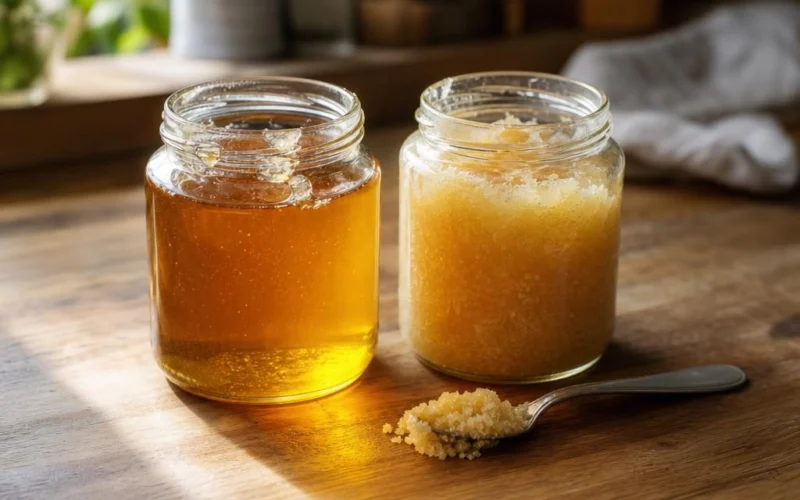
Honey does not automatically become unsafe when a date passes, and crystallized or darker honey is usually still usable if it smells normal and shows no contamination. Crystals are a texture change, not the same as fermentation. Discard honey with bubbling or foam, a sour or alcoholic smell, pressure or leaking, mold, visible debris, or suspected water contamination.
Check the Honey Before You Use It
Inspect the honey before deciding what to do. Look at its texture and color, smell it without tasting, and check the jar for leaking, bulging, pressure, mold, debris, or other signs that the container or contents have been compromised. Appearance by itself cannot confirm safety when bubbling, separation, or possible moisture exposure is involved.
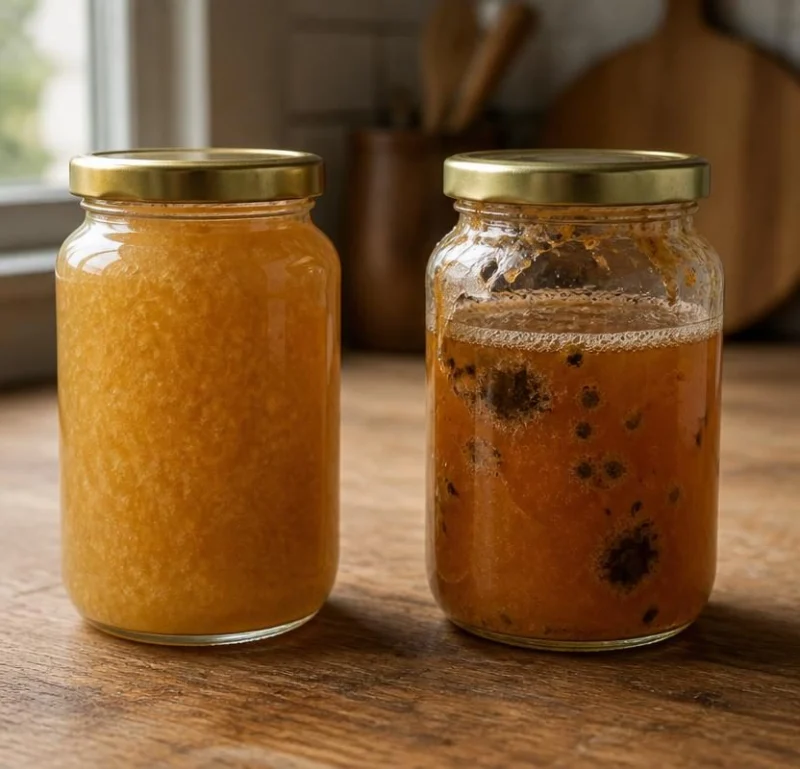
| What you see or notice | What it usually means | What to do |
|---|---|---|
| Crystals or a grainy texture | Normal crystallization | Use as-is or gently rewarm |
| Cloudiness without unusual odor or bubbling | May be crystallization | Inspect further; generally usable if otherwise normal |
| Darker color alone | Quality or age-related change | Usually use if the smell and container are normal |
| Bubbles or foam | Possible fermentation | Discard; do not taste-test |
| Sour or alcoholic smell | Likely fermentation | Discard |
| Pressure, leaking, or a bulging or compromised container | Gas buildup or a packaging problem | Do not open near your face; discard cautiously according to local waste guidance |
| Mold, visible debris, or suspected water contamination | Contamination | Do not taste-test; discard |
Crystallization Is Normal, Not the Same as Spoilage
Honey crystallizes when some of its glucose separates from the liquid and forms small sugar crystals. The result may be cloudy, grainy, thick, or partly solid. The speed and appearance of crystallization vary with the honey’s composition and storage conditions.
The USDA standards for extracted honey recognize liquid, crystallized, and partially crystallized honey as normal product forms. USDA specifications also note that natural granulation is not evidence of adulteration. In other words, crystals do not prove that honey is pure, but they also do not show that it has spoiled.
Darker honey can result from age, heat, or storage. Color change alone is usually a quality issue. Judge it alongside the odor, container condition, and presence or absence of bubbling or foreign material.
When Honey May Have Fermented or Become Contaminated
Honey’s low water activity—the amount of water available for microbes to use—helps limit microbial growth. Adding water can change that balance. Wet spoons, condensation, steam, an open container, diluted honey, and some homemade or infused products can introduce enough moisture for yeast activity and fermentation.
Fermentation is different from crystallization. Crystallization changes texture as sugar forms crystals; fermentation can produce gas and new odors as yeast acts on available sugars. Warning signs include bubbling, foam, a sour or alcoholic smell, pressure, leaking, mold, or visible foreign material. Separation accompanied by bubbles or an unusual odor is more concerning than separation alone.
Guidance from Oregon State University Extension and Penn State Extension emphasizes moisture control and caution with infused or altered honey products. Do not taste suspicious honey to decide whether it is safe. If fermentation or contamination is suspected, warming it is not a reliable rescue method.
How to Rewarm Crystallized Honey
If the honey is crystallized but smells normal and shows no contamination signs, gentle warming can restore a more liquid texture:
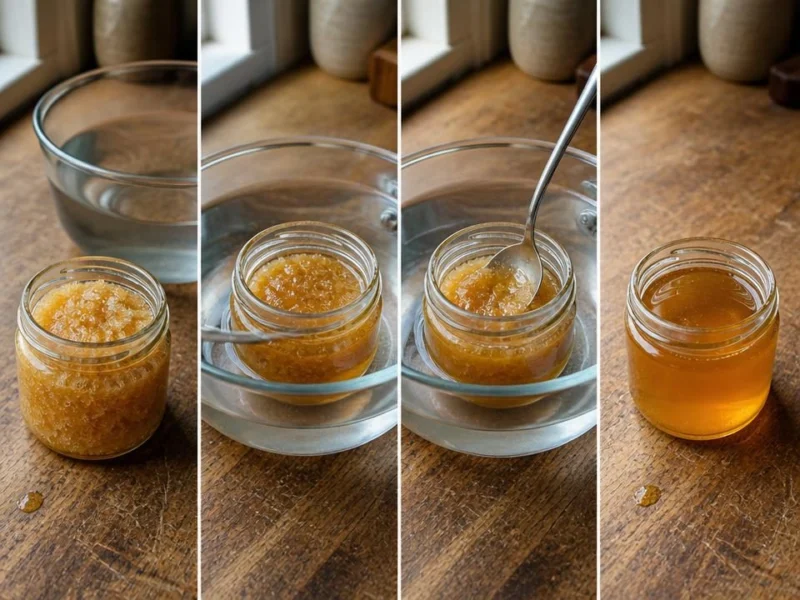
- Loosen the lid if the original container is heat-safe and suitable for gentle warming. If it is not, transfer the honey to a clean, heat-safe container. Do not warm honey in packaging that may melt, crack, or release materials when heated.
- Place the container in warm, not boiling, water. Keep the water out of the honey and do not allow steam or condensation to enter the container.
- Stir and repeat gradually until the honey reaches the texture you want. Stop once it is usable rather than continuing to heat it aggressively.
Avoid boiling the honey, excessive heating, or microwaving an entire jar when the container’s safety and the risk of hot spots are uncertain. Rewarming changes texture; it does not make fermented or otherwise spoiled honey safe. Crystallization may also return over time.
How to Store Honey for Better Quality
For ordinary household storage, keep honey in a tightly closed container in a cool, dry, dark pantry. Use a clean, completely dry spoon, and avoid introducing water, steam, wet ingredients, or prolonged open exposure.
- Keep the lid tightly closed.
- Use a clean, completely dry spoon.
- Store the container in a cool, dry, dark pantry.
- Keep water, steam, and wet ingredients out of the honey.
- Avoid refrigeration when reducing crystallization is the goal.
Refrigeration generally speeds crystallization, although refrigerating honey is not automatically a safety error. Pantry storage is usually more convenient for maintaining a pourable texture. Infused, diluted, or homemade honey may require more cautious storage, so do not automatically treat these products like ordinary commercial honey.
Mississippi State University Extension also recommends airtight storage and clean utensils to help protect honey’s quality.
What the Date on the Jar Means
A best-by or sell-by date on shelf-stable honey should not automatically be treated as a safety deadline. Federal consumer guidance explains that dates on many shelf-stable foods are generally related to quality rather than an automatic point at which the food becomes unsafe; see the USDA FSIS guidance on dating shelf-stable foods.
Over time, honey’s flavor, color, texture, and packaging condition can change. Moisture exposure and contamination matter more to the use-or-discard decision than a date printed on an otherwise intact jar. There is no single universal shelf-life number that applies equally to every honey product, container, and storage history.
If the honey is only crystallized or darker but otherwise smells normal and shows no contamination, it is generally a quality issue rather than a reason to discard it. If it is bubbling, foamy, sour-smelling, alcoholic-smelling, pressurized, leaking, moldy, or visibly contaminated, do not taste it—discard it.