
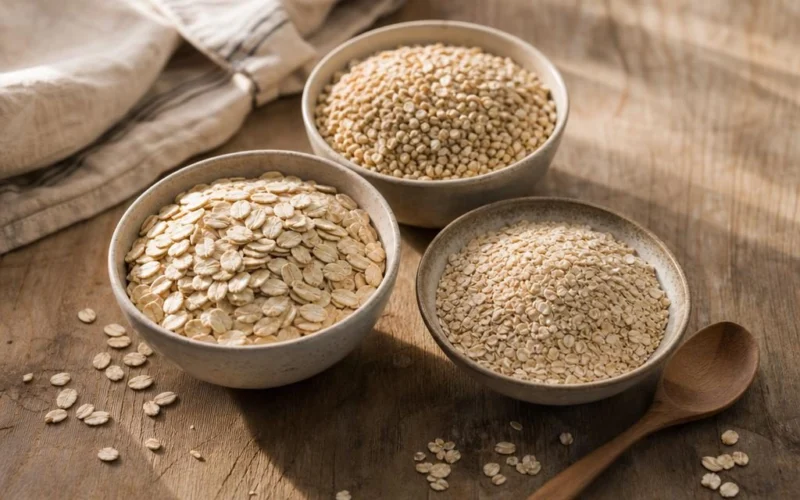
Yes—plain packaged rolled oats and quick oats can generally be eaten without stovetop cooking, especially when mixed into a moist food or soaked. Steel-cut oats can also be eaten uncooked, but they stay much firmer and chewier; rolled oats are the best default for overnight oats, while quick oats soften fastest and may become mushy. Safe to eat and pleasant to eat are different questions, and oat mixtures with milk or yogurt need refrigeration.
What “Raw” Oats Usually Means
When people ask whether they can eat raw oats, they usually mean oats that have not been cooked at home—not oats that are completely untreated.
Choose Your Oat for No-Cook Eating
- Rolled oats: The best all-purpose choice for overnight oats and other no-cook preparations.
- Quick oats: Soften fastest, making them useful for smoothies or very soft oats.
- Steel-cut oats: The chewiest option; soak longer or cook for a softer result, and follow package directions when applicable.
- Dry oats: Generally edible, but harder to chew and usually less enjoyable than soaked oats.
Most commercial oats are processed before packaging. Oat groats are typically heat-treated during processing, often through kilning. Rolled oats are commonly steamed and flattened, while quick oats are cut or rolled more finely to absorb water faster. Steel-cut oats are groats cut into smaller pieces rather than flattened, so they stay coarser and firmer. These common distinctions are described by the University of Wisconsin–Madison Extension and Harvard T.H. Chan School of Public Health.
Plain oats are different from flavored instant oatmeal packets, which may contain added sugar, salt, dried fruit, flavorings, or powdered dairy ingredients. Terms such as “quick,” “quick-cooking,” and “instant” are not perfectly standardized across brands or countries. Check the label and follow package directions for specialty, unusual, or specifically cook-only products.
Rolled, Quick and Steel-Cut Oats Compared
| Oat type | Processing | Dry texture | Overnight texture | Best use |
|---|---|---|---|---|
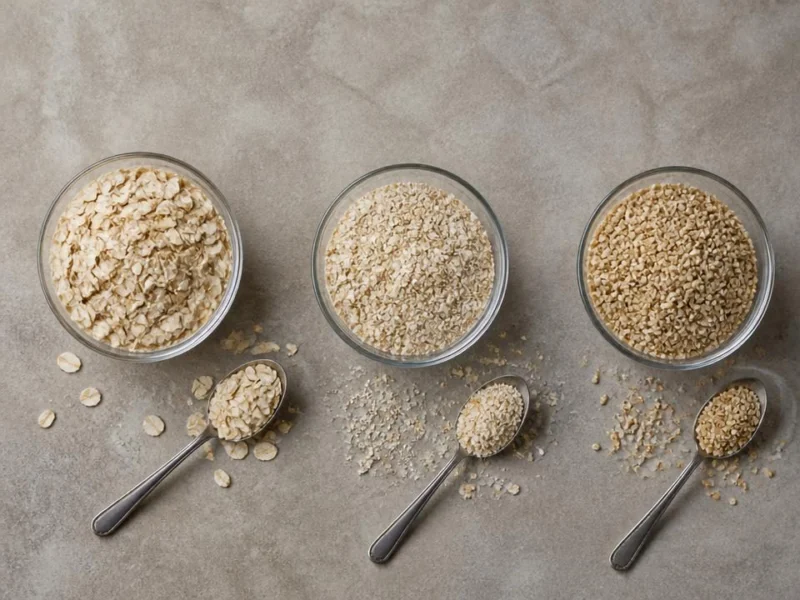
| Rolled oats | Steamed and flattened | Moderately firm flakes | Creamy, with distinct flakes | Overnight oats, yogurt bowls, general no-cook use |
| Quick oats | More finely cut or rolled for faster hydration | Thin and soft | Very soft; can become mushy | Smoothies, quickly softened oats, soft porridge |
| Steel-cut oats | Groats cut into pieces rather than flattened | Coarse and firm | Chewy and less creamy | Cooked oatmeal or extended-soak preparations |
The main difference is surface area and shape. Thin rolled flakes take up liquid readily, while quick oats hydrate even faster because they are smaller or thinner. Steel-cut oats have a denser, chunkier structure, so soaking softens them but does not produce the same texture as cooked rolled oats.
Which Type Works Best for Overnight Oats?
Regular rolled oats are the most reliable choice for overnight oats. They absorb liquid well in the refrigerator while keeping enough structure for a creamy, spoonable bowl. This is also common first-party preparation guidance from Quaker’s oat comparison guide.
Quick oats work if you want a softer result, but they can lose their texture after a long soak. They are often better for someone who prefers very soft oats or plans to blend the mixture.
Steel-cut oats can be used in an overnight preparation, but expect noticeable chewiness. A longer refrigerated soak can help, yet soaking does not make them identical to cooked oats. If you want soft, creamy steel-cut oats, cooking or partially cooking them is usually the better route.
There is no single soaking time that suits every oat product. Oat thickness, the amount of liquid, refrigerator temperature, and your preferred texture all affect the outcome.
Match the Oat to the Preparation
- Dry topping: Plain rolled or quick oats are generally edible, but expect a firm, dry bite.
- Overnight oats: Choose rolled oats for the most reliable texture.
- Yogurt bowl: Use rolled oats and refrigerate the mixture; quick oats are best if you want them to soften quickly.
- Smoothie: Choose quick oats for the easiest blending; rolled oats can also work with enough liquid and a capable blender.
- Cooked oatmeal: Cook oats when you want a soft, creamy bowl or are using steel-cut oats according to package directions.
Dry or Lightly Sprinkled on Food
Plain oats can be eaten dry, but they are harder to chew and often less pleasant than oats softened in a moist food. Stirring oats into yogurt or another wet ingredient and letting them hydrate is a different preparation from eating them by the handful.
If chewing or swallowing is difficult, choose softened oats instead. Seek appropriate professional guidance for ongoing swallowing concerns.
Yogurt, Milk and Overnight Oats
Mixtures containing milk, yogurt, or other perishable ingredients belong in the refrigerator, not on the counter overnight. The oats may be shelf-stable, but the finished mixture is not.
Smoothies
Quick oats blend most easily. Rolled oats can also produce a smooth drink when the blender and liquid are sufficient; steel-cut oats are usually too coarse unless cooked or otherwise softened first.
When Cooking Is the Better Choice
Cooking is preferable when you want a soft, creamy texture, are using regular steel-cut oats, or the package specifically directs cooking. Follow product directions for specialty or unusual oat products.
Decision rule: Choose rolled oats for reliable overnight oats, quick oats for the fastest-softening or blended preparation, and steel-cut oats when chewiness is desired and longer soaking or cooking is acceptable.
Safe Handling for No-Cook Oats
Commercial oat processing often includes heat treatment that contributes to product safety. A Canadian Food Inspection Agency review included retail steel-cut, rolled, quick, and instant oats, but safe handling still matters when oats are eaten without further cooking. See the Canadian Food Inspection Agency’s oat testing report for the testing context.
Soaking is not a sterilizing step. Use clean equipment, refrigerate mixtures containing milk, yogurt, or other perishable ingredients promptly, and keep them refrigerated until serving. Prepared mixtures should generally be used within 3 to 4 days, unless an ingredient label or package directions specify a shorter period. Refrigeration does not make soaking mixtures on the counter overnight safe.
- Use a clean container, lid, spoon, and blender.
- Refrigerate mixtures with milk, yogurt, or other perishable ingredients promptly.
- Discard food left out too long or showing an abnormal odor, appearance, or texture; do not taste questionable food.
Follow package directions for specialty, flavored, or unusual oat products.