Yes, bananas usually ripen faster in a paper bag. The bag holds some of the ethylene gas bananas naturally release while still allowing airflow; adding a ripe banana or apple may speed the process further. Expect roughly 1–3 days, not a guaranteed overnight result.
How to Ripen Bananas Faster in a Paper Bag
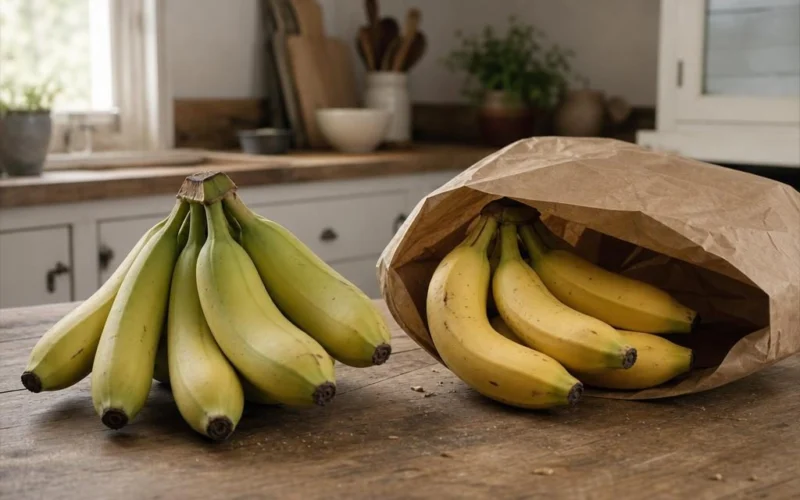
A plain paper bag is the simplest household method for speeding up naturally ripening, mature-green bananas. Use the following steps:
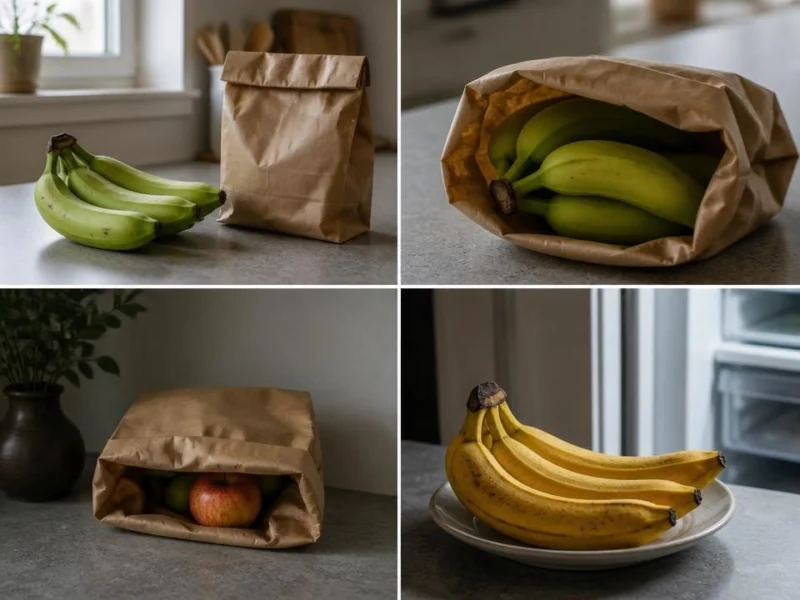
- Place the green bananas in a plain paper bag.
- Fold the top loosely rather than sealing it airtight.
- Keep the bag at room temperature, away from direct sunlight and excessive heat.
- Add one ripe banana or apple if the bananas need to ripen faster.
- Check daily and remove the bananas as soon as they reach the softness you want.
A bag should retain some of the gas released by the fruit without trapping as much moisture as a tightly sealed container. Moisture and condensation can encourage mold, so avoid airtight plastic as the default approach. USDA guidance generally places bananas in dry storage outside refrigeration, around 60–70°F.
Mature-green bananas are the best candidates. Extremely immature bananas may not respond normally, while bananas that are already beginning to yellow may need less help. Bananas previously exposed to cold can also ripen unevenly or more slowly.
Paper Bag vs. Paper Bag With a Ripe Banana or Apple
| Method | Relative speed | Best use | Important limitation |
|---|---|---|---|
| Countertop alone | Slowest | No rush; gradual ripening | May take several days |
| Paper bag | Faster | Green bananas needed soon | Timing remains variable |
| Paper bag plus ripe banana | Often fastest | Very green bananas or a baking deadline | Not guaranteed to outperform an apple |
| Paper bag plus apple | Often faster | An apple is already available | Results vary with fruit and maturity |
| Refrigerator | Slows ripening | Ripe bananas that need extra time | Not a good choice for green bananas |
Adding a ripe banana or apple may increase the ethylene exposure inside the bag. A ripe banana is a sensible choice when you have one available, but it is not reliably better than an apple in every situation. The starting maturity, temperature, banana variety and condition of the fruit can matter more than which ripe fruit you add.
Why the Paper Bag Works
Ethylene is a natural plant hormone released as a gas by ripening fruit. Bananas respond to ethylene and also release more of it as ripening progresses.
A paper bag helps retain some of that gas around the bananas while allowing more airflow than an airtight container. The bag does not create ethylene, and it does not cook the fruit. A ripe banana or apple can provide an additional source of ethylene, which may help move the process along.
This is different from placing bananas in direct sun or near a strong heat source. Excessive heat can soften or damage the fruit without producing the same changes in flavor, aroma and texture as normal ripening.
How Long Do Bananas Take to Ripen in a Paper Bag?
For mature-green bananas kept at a comfortable room temperature, a practical household expectation is about 1–3 days. A paper bag alone may take longer than a bag containing a ripe banana or apple, and no method guarantees ripe fruit within 24 hours.
Timing varies with the bananas’ starting maturity, temperature, variety, airflow and any previous cold exposure. Commercial ripening is more predictable because it uses controlled conditions; UC Davis describes commercial banana ripening commonly occurring around 59–68°F for 24–48 hours. Those conditions should not be treated as a promise for a loosely closed household bag.
Check the bananas once a day. Look for a gradual change in peel color, a noticeable sweet aroma and slight give when pressed gently. Peel color and flesh texture do not always change in perfect synchrony, particularly after cold storage or under uneven ripening conditions.
What to Do When the Bananas Are Ripe
Remove ripe bananas from the paper bag and use them promptly. If you need to slow further softening, refrigerate them. The peel may turn brown or very dark in the refrigerator, but the flesh can remain usable; judge the inside by its smell, texture and appearance rather than peel color alone.
Store bananas dry and avoid trapping moisture around them. Refrigeration is more useful after the bananas have ripened than before. Cold can slow or disrupt the normal ripening of green bananas.
- Use a paper bag, not an airtight plastic container.
- Fold the top loosely.
- Keep the bananas at room temperature.
- Keep the bag away from direct sun and excessive heat.
- Add one ripe banana or apple only if faster ripening is needed.
- Check the fruit daily.
- Remove ripe bananas promptly.
- Treat mold, leaking and off odors as spoilage signs.
Troubleshooting Green or Overripe Bananas
Still green after several days
The bananas may be extremely immature, too cool, previously chilled or ripening unevenly. Move them to a warmer room-temperature location, but do not use direct sunlight, an oven or excessive heat. Some immature-green bananas may not ripen normally even when exposed to ethylene.
The peel is dark, but the flesh looks sound
Inspect the flesh rather than judging by peel color alone. A dark peel can occur during refrigeration or normal over-ripening. If the inside smells normal and has a sound texture, it may still be suitable for eating or baking.
The banana is soft, leaking, moldy or sour-smelling
Discard it. These signs indicate deterioration rather than ordinary ripeness.
I need bananas immediately for baking
An oven or microwave can heat and soften bananas, but this is not true ripening. Those methods mainly change the texture and may not produce the same sweetness or flavor developed through natural ripening. Treat them only as an emergency recipe workaround, not as a reliable banana-ripening method.
Frequently Asked Questions
Can I put bananas in the refrigerator before they are ripe?
It is generally better to let green bananas ripen at room temperature. Refrigeration can slow or disrupt the process. Refrigerate them after they are ripe if you need to extend their usable window.
Is a ripe banana better than an apple for ripening green bananas?
Either may help by adding ethylene. A ripe banana is a practical choice, but it is not guaranteed to work better than an apple in every batch.
Can I eat a banana with a very dark peel?
Often, yes, if the flesh looks and smells normal. Discard the banana if it is moldy, leaking, visibly decomposing or has a sour or otherwise unpleasant odor.
For the simplest method, use a loosely closed paper bag at room temperature. If the bananas are very green and you need them sooner, add one ripe banana or apple and check them daily. Once they are ripe, remove them from the bag and refrigerate them if you need to slow further softening.