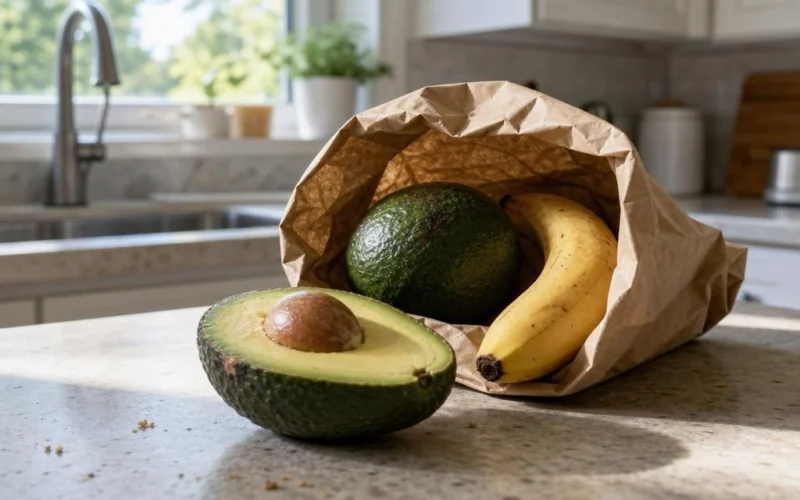
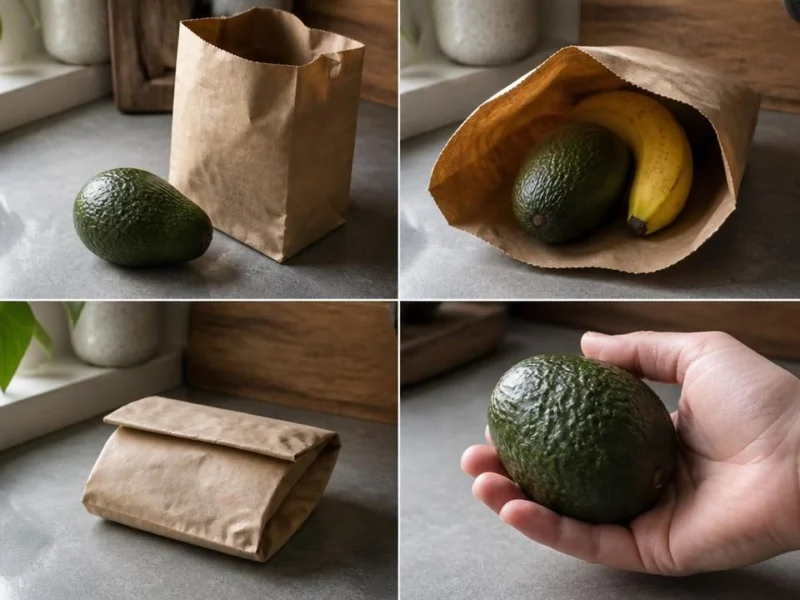
To ripen an avocado faster while keeping its naturally creamy texture, place the whole avocado in a loosely closed brown paper bag with a ripe banana or apple and leave it at room temperature. Check it daily: a slightly firm avocado may be ready in about 1–3 days, while a rock-hard one can take longer; overnight ripening is possible only when it is already close to ripe.
Oven and microwave shortcuts can make avocado flesh softer, but they do not reliably create the buttery texture and flavor of naturally ripened fruit.
How to Ripen an Avocado Faster
- Place the whole, uncut avocado in a brown paper bag.
- Add one ripe banana or apple if you want to speed things up.
- Fold the top of the bag loosely and leave it on the counter at room temperature, away from direct sunlight, radiators, and other strong heat sources.
- Check the avocado once a day by pressing it gently with your palm.
- Refrigerate it once it reaches the firmness you want.
A paper bag with a ripe banana or apple is the most practical avocado ripening trick when time matters. University of California guidance notes that ethylene-producing fruit in a paper bag can help speed avocado ripening, while tightly closed plastic bags are not recommended because the fruit needs to breathe.
Typical timing depends on the starting point:
- Nearly ripe: possibly overnight to 1 day.
- Slightly firm: commonly about 1–3 days.
- Rock-hard: several days or longer may be needed.
These are estimates, not guarantees. Variety, maturity at harvest, previous storage conditions, and room temperature all affect how quickly an avocado ripens.
Which Avocado-Ripening Method Should You Use?
| Method | Typical use | Likely timing | Texture and flavor | Main caution |
|---|---|---|---|---|
| Counter | Best quality when you have time | Often several days | Natural, even ripening | Not the fastest option |
| Paper bag alone | Modest speed boost | Often faster than the counter | Usually good texture | Fold loosely; do not seal tightly |
| Paper bag + banana or apple | Best balance of speed and quality | Often 1–3 days for a firm avocado | Best chance of creamy ripeness | Check daily to prevent over-softening |
| Refrigerator | Holding an already ripe avocado | Slows ripening | Helps preserve preferred firmness | Not a way to ripen avocado quickly |
| Oven or microwave | Emergency softening for immediate use | Minutes to hours | May be uneven, bland, or watery | Softening is not true ripening |
Why the Paper Bag Helps
Avocados are climacteric fruit, meaning they continue to ripen after harvest. Part of that process involves ethylene, a natural plant hormone and airborne signal that helps coordinate ripening.
As avocados ripen, they produce more ethylene. Ripe bananas, apples, kiwifruit, tomatoes, and similar fruits can also release ethylene into the surrounding air. A paper bag holds more of that gas around the avocado than an open counter does, which can help the process move along. UC Davis specifically notes that ethylene production increases as avocados ripen and that temperature affects the process.
The bag does not magically fix fruit that was picked too early or damaged before you bought it. It simply creates better conditions for an avocado that is mature enough to ripen normally.
Use a paper bag that is folded or loosely closed, not an airtight plastic bag. Keep it at a moderate room temperature rather than in a hot car, sunny window, or beside a radiator. Around 68°F (20°C) is often used as a useful room-temperature ripening reference in University of California extension guidance.
How to Tell When an Avocado Is Ripe
- It gives slightly when pressed gently in your palm.
- It feels supple, not mushy or hollow.
- It has no deep sunken spots, leaking areas, or widespread soft patches.
- It smells fresh near the stem end, without a sour or fermented odor.
- Its skin color supports the assessment, but does not decide it on its own.
Use your palm or several fingers rather than poking with a fingertip. Fingertip pressure can bruise the flesh and create a soft spot that makes the avocado seem riper than it really is.
Skin color can help with some varieties, especially Hass avocados, which often darken as they soften. But varieties differ, and even individual avocados can vary. Firmness is usually a more useful clue than color alone.
Brown, sunken areas, leaking liquid, or an off smell point to damage or deterioration rather than normal underripeness. An avocado that remains hard after several days may have been harvested too immature or affected by unsuitable prior storage.
Cutting the avocado open is the most definitive way to check ripeness, but it is not a practical routine test. If you cut open an avocado and find that it is still hard, cover it and refrigerate it rather than treating it like a whole avocado in a ripening bag. Its texture and browning become less predictable after cutting.
Need the Avocado Today?
The answer depends on whether the avocado is close to ripe or truly rock-hard.
If It Is Slightly Firm
Put it in a loosely folded paper bag with a ripe banana or apple before bed. It may be ready the next morning if it was already fairly close, but check it early rather than assuming it will ripen overnight.
If It Is Rock-Hard
No reliable method can guarantee a naturally ripe, creamy avocado within a few hours. A very firm avocado needs time for the normal changes in texture and flavor that happen during ethylene-driven ripening.
If you must use a hard avocado immediately, heat-softened flesh may be acceptable in a cooked sauce, blended dressing, or another preparation where ideal avocado texture matters less. It is not the best choice for sliced avocado, guacamole, or toast where creaminess is the point.
Avoid direct sun, radiators, hot cars, and prolonged high heat. Warmer is not always better: above a moderate room temperature, quality problems become more likely.
What to Do After the Avocado Ripens
Once the avocado gives slightly under gentle palm pressure, move the whole fruit to the refrigerator. Refrigeration slows further ripening and gives you more time to use it at the texture you prefer. UC Davis also recommends refrigerating fruit once it is ripe.
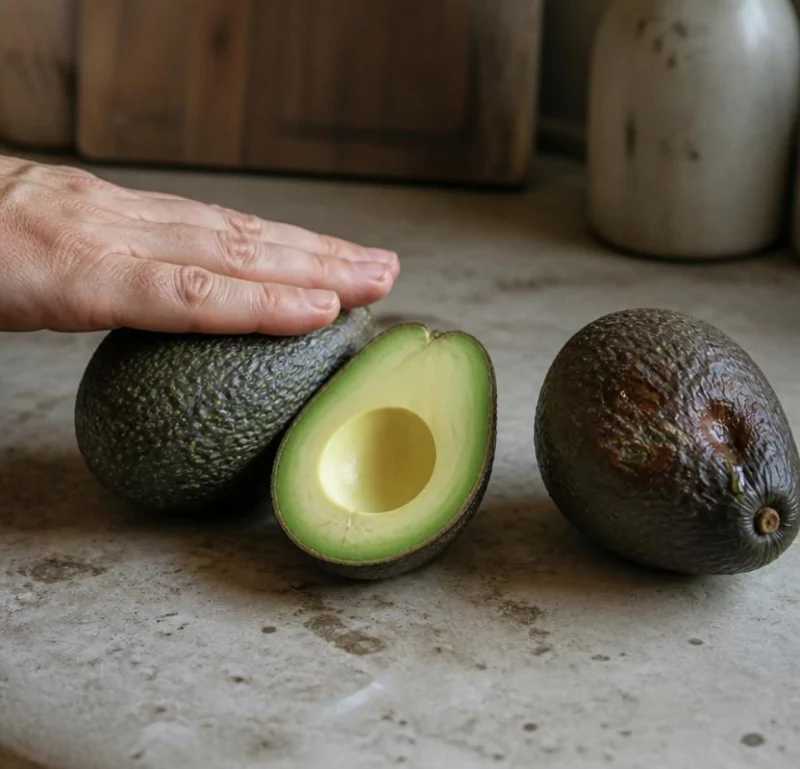
If you have already cut the avocado open, cover it and refrigerate it; do not treat it like a whole fruit or put it in a paper bag to continue ripening. After cutting, browning is more likely and texture and overall quality become less predictable. Use it soon if it still tastes and smells fresh.
For prepared avocado dishes such as guacamole, use normal refrigerated-food handling. FoodSafety.gov’s cold storage guidance supports keeping cut and prepared foods refrigerated rather than leaving them at room temperature.
If the Avocado Still Will Not Ripen
An avocado that stays unusually hard after several days in appropriate room-temperature conditions may not simply be “taking its time.” It may have been harvested before it reached sufficient maturity, exposed to unsuitable cold or heat before purchase, or damaged during transport and storage.
Some fruit softens unevenly: it may become soft in spots while the rest remains firm, or it may develop internal browning instead of a creamy texture. That is a quality problem, not a sign that it needs more intense heat.
Stop trying to rescue the avocado if it remains very hard after several days or develops brown sunken patches, leaks, mold, or an unpleasant odor. Discard it rather than continuing to heat it or leaving it out indefinitely.
Frequently Asked Questions
Can I ripen an avocado overnight?
Sometimes. Overnight ripening is most plausible when the avocado is already slightly firm or nearly ripe. Put it in a loosely closed paper bag with a ripe banana or apple, but do not expect a rock-hard avocado to become perfectly ripe by morning.
Is a banana or an apple better in the paper bag?
Either can help because both release ethylene. Neither is guaranteed to outperform the other for every avocado; the avocado’s maturity, the companion fruit’s ripeness, and room temperature matter more.
Does putting an avocado in the refrigerator stop ripening?
It slows ripening substantially. Use the refrigerator after the avocado reaches the firmness you want, not as a way to speed the process.
What should I do if I cut open an avocado and it is still hard?
Cover and refrigerate it, then use it soon if the quality is acceptable. Do not place cut avocado in a ripening bag as though it were whole; browning and texture changes are more likely, and it may not become creamy.
For the best balance of speed and texture, use a loosely closed paper bag with a ripe banana or apple at room temperature and check daily. If the avocado is already nearly ripe, it may be ready overnight; if it is rock-hard, natural ripening will likely take longer, and high-heat shortcuts are more likely to soften the flesh than improve its quality.