Yes, you can freeze avocado, but it will not keep the firm, creamy texture of fresh avocado. Mashed or puréed avocado usually freezes best; slices and cubes are useful for smoothies and sauces, while thawed pieces are generally too soft for salads or neat toast toppings.
Freezing is a practical way to save ripe avocado before it spoils, but it works best when you choose the format around how you plan to use it later.
Can You Freeze Avocado?
Yes. Ripe, sound avocados can be frozen, especially when mashed or puréed. Freezing slows spoilage, but ice crystals change the fruit’s cell structure, so thawed avocado is usually softer, sometimes watery, and may have slight browning.
The National Center for Home Food Preservation considers avocado purée the most satisfactory format for freezing. Whole and sliced avocado can be frozen, but they generally do not thaw with a texture most people would consider fresh-like.
Start with avocado that is ripe but not moldy, sour-smelling, slimy, or extensively browned inside. Freezing preserves the quality you begin with; it does not rescue poor-quality fruit.
Which Avocado Format Freezes Best?
The best format depends on convenience, the texture you can accept after thawing, and the recipe you have in mind. Home-preservation guidance favors purée, but pieces still have a useful role when they will be blended.
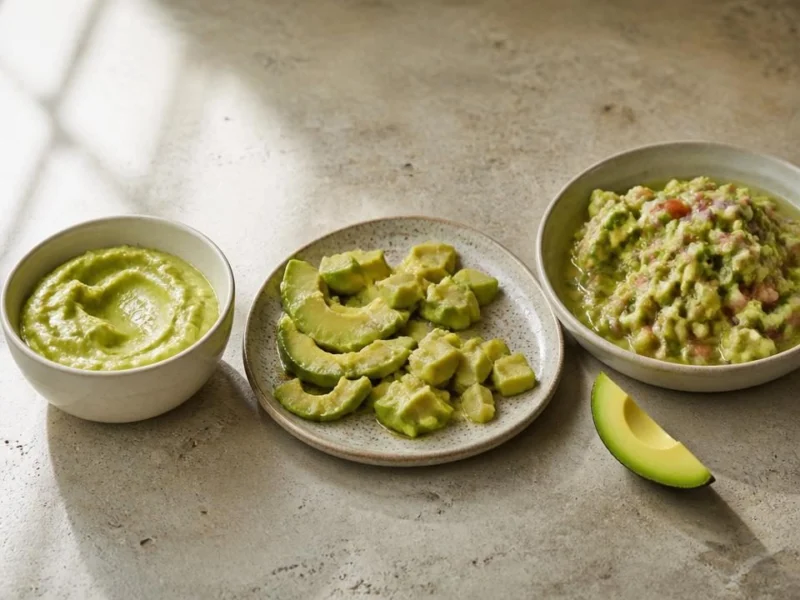
| Format | Can it be frozen? | Expected texture after thawing | Best uses | Overall recommendation |
|---|---|---|---|---|
| Whole avocado | Yes, but inconvenient | Very soft; difficult to portion | Blending, sauces | Not preferred |
| Slices or cubes | Yes | Soft, sometimes watery | Smoothies, sauces, blended recipes | Useful for specific uses |
| Mashed or puréed avocado | Yes | Soft but easily stirred smooth | Spreads, dressings, dips, guacamole bases | Best overall |
| Chunky guacamole | Yes | May separate; vegetables soften | Quick dips, fillings, cooked dishes | Convenient, but not best texture |
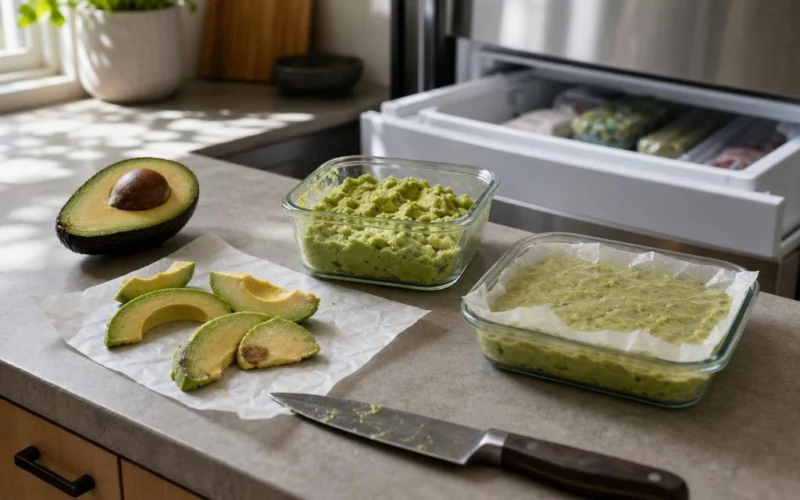
Whole avocado is possible to freeze, including in its skin, but it is rarely the most useful choice. It takes up more freezer space, is harder to portion, and thaws very soft. Some practical guides describe freezing whole avocados or vacuum-sealed halves, but vacuum sealing can reduce air exposure only—it cannot prevent texture loss.
How to Freeze Avocado Slices or Cubes
Freeze avocado slices or cubes when you want ready-to-use portions for smoothies, creamy sauces, or blending. This method is not ideal if you want attractive slices for a salad, garnish, or fresh-looking avocado toast.
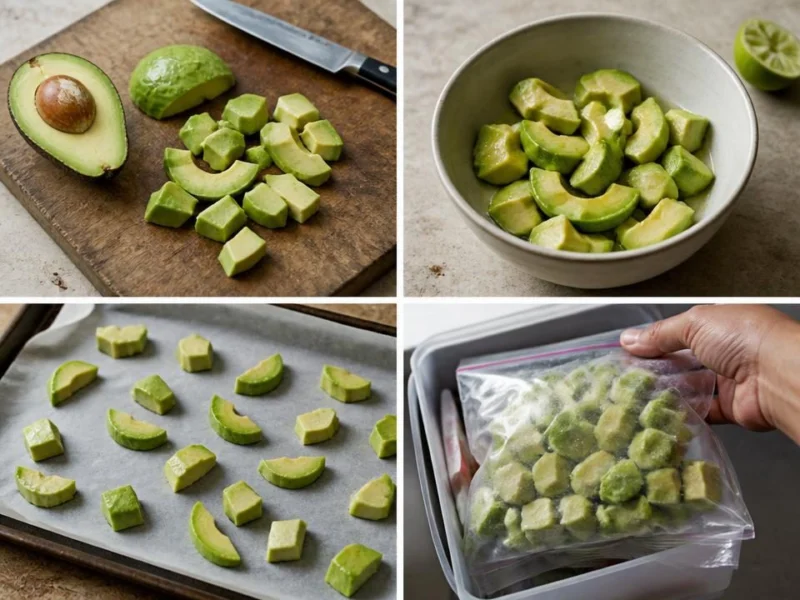
- Choose ripe, undamaged avocados.
- Wash the exterior under running water before cutting it open.
- Halve the avocado, remove the pit, and peel away the skin.
- Cut the flesh into slices or cubes.
- Lightly coat the pieces with lemon or lime juice to help slow browning.
- Arrange the pieces in a single layer on a lined tray.
- Freeze until firm, then transfer the pieces to an airtight freezer bag or container.
- Press out excess air, label with the date, and return the avocado to the freezer.
Freezing the pieces separately first prevents them from becoming one solid block. Citrus juice helps limit oxidation, but some discoloration can still happen during freezing and thawing.
Can you freeze avocado slices for smoothies? Yes. Cubes or slices are especially handy for smoothies because the blender removes most of the texture changes that would be noticeable in a salad.
How to Freeze Mashed Avocado
Mashed or puréed avocado is the best general-purpose freezer method. It is easy to portion, has less need to hold its original shape, and works well after thawing in spreads, sauces, dressings, and guacamole bases.
- Mash or purée ripe avocado until it reaches the consistency you want.
- Mix in a small amount of lemon or lime juice.
- Portion the avocado into tablespoon-sized amounts, an ice-cube tray, small containers, or a freezer bag.
- If using a bag, flatten it into a thin layer for faster thawing and easier portioning.
- Press plastic wrap or parchment directly against the avocado surface when practical.
- Remove excess air, seal tightly, label, and freeze.
Small portions mean you can thaw only what you need instead of repeatedly thawing and refreezing a large container. The National Center for Home Food Preservation recommends acidifying avocado purée with lemon juice or ascorbic acid to support better color and quality during storage.
Packaging checklist
- Remove the skin and pit.
- Add citrus juice if desired to slow browning.
- Use small, recipe-ready portions.
- Press out as much air as possible.
- Seal tightly in freezer-safe packaging.
- Label each portion with the date.
- Avoid repeated thawing and refreezing.
Can You Freeze Guacamole?
Yes, you can freeze guacamole, but fully assembled chunky guacamole usually has a less appealing texture after thawing. Tomatoes can release water, onions can soften, herbs can wilt, and the mixture may separate.
A better approach is to freeze a plain avocado mash with citrus, then turn it into guacamole after thawing. This separates freezer feasibility from eating quality: guacamole can be frozen, but that does not mean it will taste or look like freshly made guacamole.
- Freeze an avocado base made with mashed avocado and citrus juice.
- Thaw it in the refrigerator.
- Stir it well and drain a little separated liquid only if the mixture seems too loose.
- Add fresh onion, tomato, cilantro, jalapeño, salt, and other crisp ingredients before serving.
Fully prepared guacamole is still an option when convenience matters more than texture. USDA FoodKeeper data lists prepared guacamole at about 3–4 months in the freezer for best quality, as reproduced in this FoodKeeper storage guide. That is a quality guideline, not a promise that tomatoes and onions will remain crisp.
How to Thaw Frozen Avocado
For the best usable texture, thaw frozen avocado overnight in the refrigerator. Small mashed portions may soften sooner, but refrigerator thawing gives you more control than leaving avocado on the counter.
Once thawed, stir mashed avocado or guacamole well. Some liquid separation is normal; drain it only if it makes the mixture too thin, since the liquid can still contain flavor. Blending thawed avocado into a dressing, sauce, or smoothie can also restore a smoother consistency.
Add fresh seasonings and vegetables after thawing when possible, and use thawed avocado promptly. Avoid thawing, refreezing, and thawing again, since every cycle worsens texture and can increase the chance of freezer burn.
Best Uses for Thawed Avocado
Thawed avocado works best in recipes where softness is an advantage or will not be noticeable.
Best choices
- Smoothies
- Sauces and creamy dressings
- Spreads
- Guacamole bases
- Dips
- Soups or cooked recipes
- Burrito and sandwich fillings where a fresh, firm texture is not expected
Poor choices
- Salads that need firm avocado cubes
- Decorative slices
- Neat avocado toast where appearance matters
- Garnishes served without blending or mixing
How Long Does Frozen Avocado Last?
Freezer timelines are mainly about best quality, not a precise food-safety expiration date. According to the FoodSafety.gov cold storage chart, food kept continuously at 0°F (-18°C) remains safe indefinitely from microbial growth, although flavor, color, and texture decline over time.
There is no single best-quality timeline that fits whole avocado, pieces, mash, and guacamole equally well. Packaging, air exposure, freezer temperature stability, and the avocado’s original ripeness all matter. Label portions and use them while the color, aroma, and texture remain acceptable.
Freezer burn is primarily a quality problem, often showing up as dry, grayish, or tough areas. Discard avocado that is moldy, severely dried out, or has an off odor after thawing.
The Practical Decision Rule
- Freeze mash for spreads, dressings, and guacamole bases.
- Freeze pieces for smoothies, sauces, and other blended recipes.
- Freeze assembled guacamole only for convenience, not maximum freshness.
- Keep avocado fresh when firm slices, salad texture, or an attractive toast topping matters.