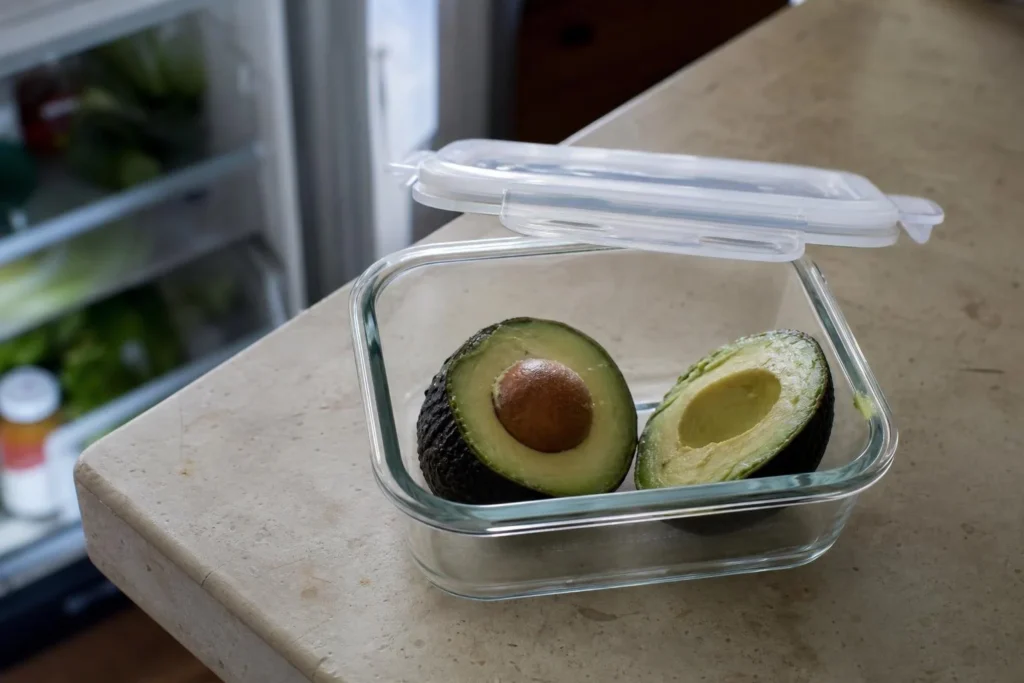
The best way to how to store cut avocado is to minimize contact with air: press plastic wrap directly against the exposed flesh, refrigerate it promptly, and use it within about 24 hours for the best quality. A snug container with the cut side facing down is the best reusable-wrap alternative; lemon or lime juice can slow browning but may change the flavor.
Refrigeration slows browning and ripening, but it does not keep cut avocado perfect for several days. Store it safely, protect the exposed surface, and judge the avocado by its smell, texture, and appearance rather than color alone.
The Best Way to Store a Cut Avocado Overnight
Direct-contact coverage is the most reliable all-purpose method because it limits oxygen without adding another ingredient. It is especially useful when you want to preserve the avocado’s natural flavor and creamy texture.
Follow These Steps
- Wash the whole avocado under running water before cutting. Use a clean produce brush if needed, but do not use soap, bleach, or produce wash. Contamination on the skin can transfer to the flesh when the knife cuts through the rind.
- Cut the avocado with a clean knife and remove the pit carefully. Avoid holding the half in your hand while striking the pit with a knife.
- Add citrus if you want extra browning protection. Brush the exposed flesh lightly with lemon or lime juice rather than soaking it.
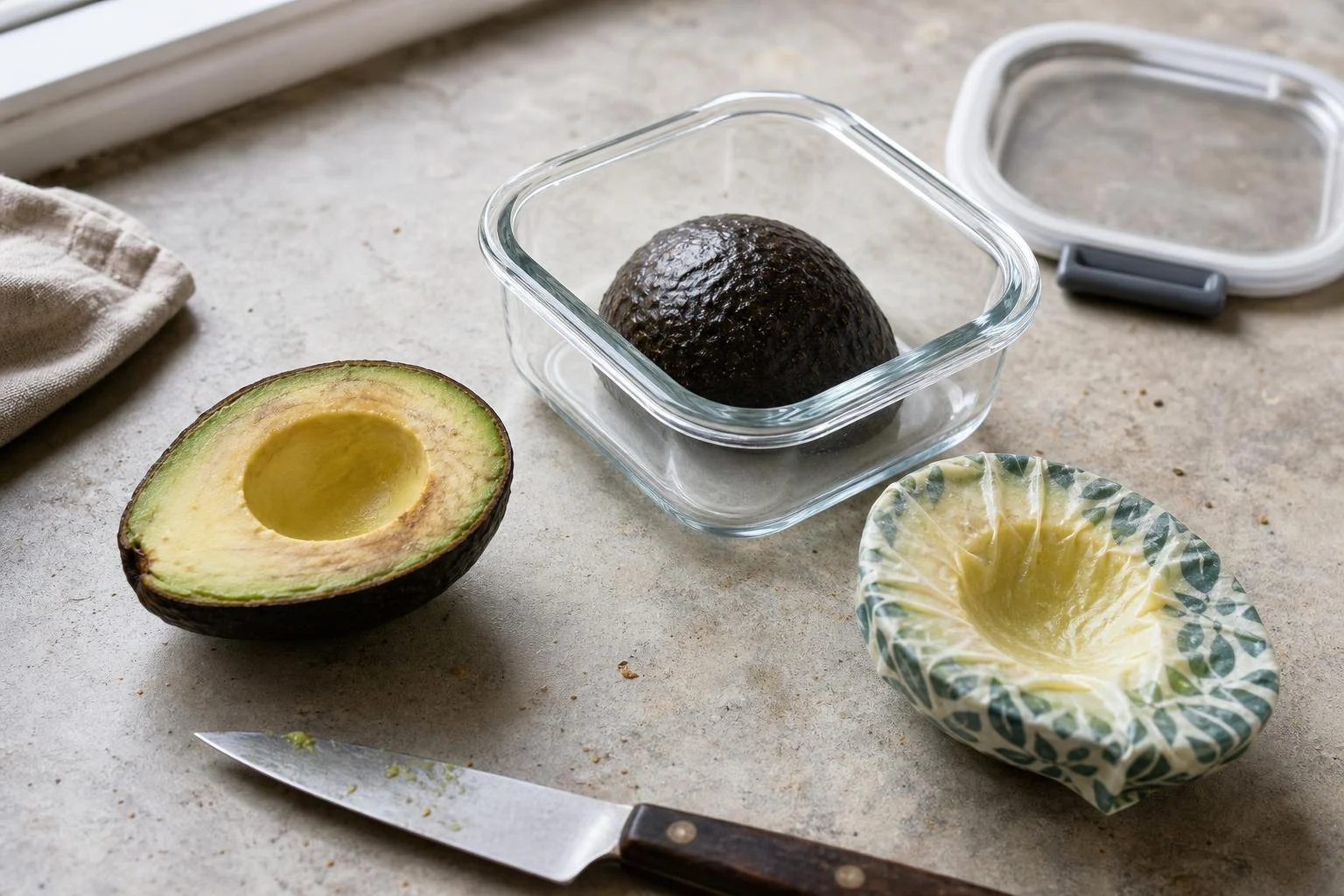
- Press plastic wrap directly against the cut surface. Smooth the wrap over the flesh so there are as few air pockets as possible.
- Refrigerate promptly at 40°F (4°C) or below. A covered container is also appropriate for cut produce, according to the USDA guidance on storing cut fruit and vegetables.
- Use the avocado within about 24 hours for the best quality. It may remain usable for longer, but color, flavor, and texture become less predictable.
The two-hour room-temperature limit is a food-safety guideline, not a promise that an avocado will remain fresh for two hours. A very ripe avocado, warm handling, an unreliable refrigerator, or a large amount of exposed flesh can shorten the best-quality window. The FDA recommends refrigerating perishable cut produce and keeping the refrigerator at 40°F or below; its produce-safety guidance also recommends washing produce under running water before cutting.
Quick Safety Checklist
- Wash the whole avocado under running water before cutting.
- Use a clean knife and a clean storage container.
- Refrigerate cut avocado promptly.
- Keep the refrigerator at 40°F (4°C) or below.
- Do not leave cut avocado at room temperature for more than two hours.
- Discard it if you find mold, an off odor, sliminess, or badly deteriorated texture.
- Never use soap, bleach, or produce wash on the avocado.
Why Cut Avocado Turns Brown
Cutting an avocado damages its cells and exposes the flesh to oxygen. This activates a series of chemical reactions involving enzymes, including polyphenol oxidase, that produce brown pigments on the surface. The process is called enzymatic browning, and research on avocado browning describes polyphenol oxidase as an important contributor.
Cold temperatures slow these reactions and also slow ripening, but refrigeration does not stop them completely. A tightly covered avocado can still develop a darker surface over time, especially if air remains between the flesh and the covering.
A brown surface is usually a quality change rather than automatic evidence of spoilage. The color may indicate oxidation while the flesh underneath remains suitable to use. Safety depends on handling and signs such as mold, unusual odor, sliminess, and severe texture breakdown.
What Actually Slows Browning?
There are two practical controls:
- Physical barriers: Direct-contact plastic wrap or a snug container reduces the amount of oxygen reaching the flesh.
- Acidity: Lemon or lime juice makes the surface more acidic and can slow browning, although it adds a tart flavor.
Refrigeration supports both approaches by slowing chemical reactions and general quality loss. The strongest simple combination is a light citrus coating when appropriate for the recipe, followed by close surface coverage and prompt refrigeration.
Cut Avocado Storage Methods Compared
| Method | Browning control | Texture/flavor effect | Best use |
|---|---|---|---|
| Direct-contact wrap + fridge | Strong | Minimal change | Best all-purpose method |
| Airtight container, cut-side down | Good if snug | Minimal | Reusable-wrap alternative |
| Citrus + wrap/container | Strong short-term | Adds acidity | Toast, salads, guacamole |
| Light oil coating | Moderate | May feel greasy | When citrus flavor is unsuitable |
| Water-submersion hack | Not recommended | Can soften flesh; safety concern | Avoid |
Direct physical coverage is the default because it protects flavor and texture without adding another ingredient. A container works best when it is small enough to minimize the air pocket. Simply putting half an avocado into a large container and closing the lid leaves substantial air around the flesh.
Citrus is useful when its flavor suits the final dish. Oil may create a surface barrier, but it is less appealing for plain avocado because it can leave a greasy mouthfeel. Water storage should not be treated as an equivalent preservation method.
How to Store Half an Avocado
To store half an avocado, protect the cut side from air. Press wrap directly onto the flesh, or place the half cut-side down in a clean, snug container. The cut-side-down position reduces the exposed air pocket, although a close-fitting layer of wrap generally provides more direct coverage.
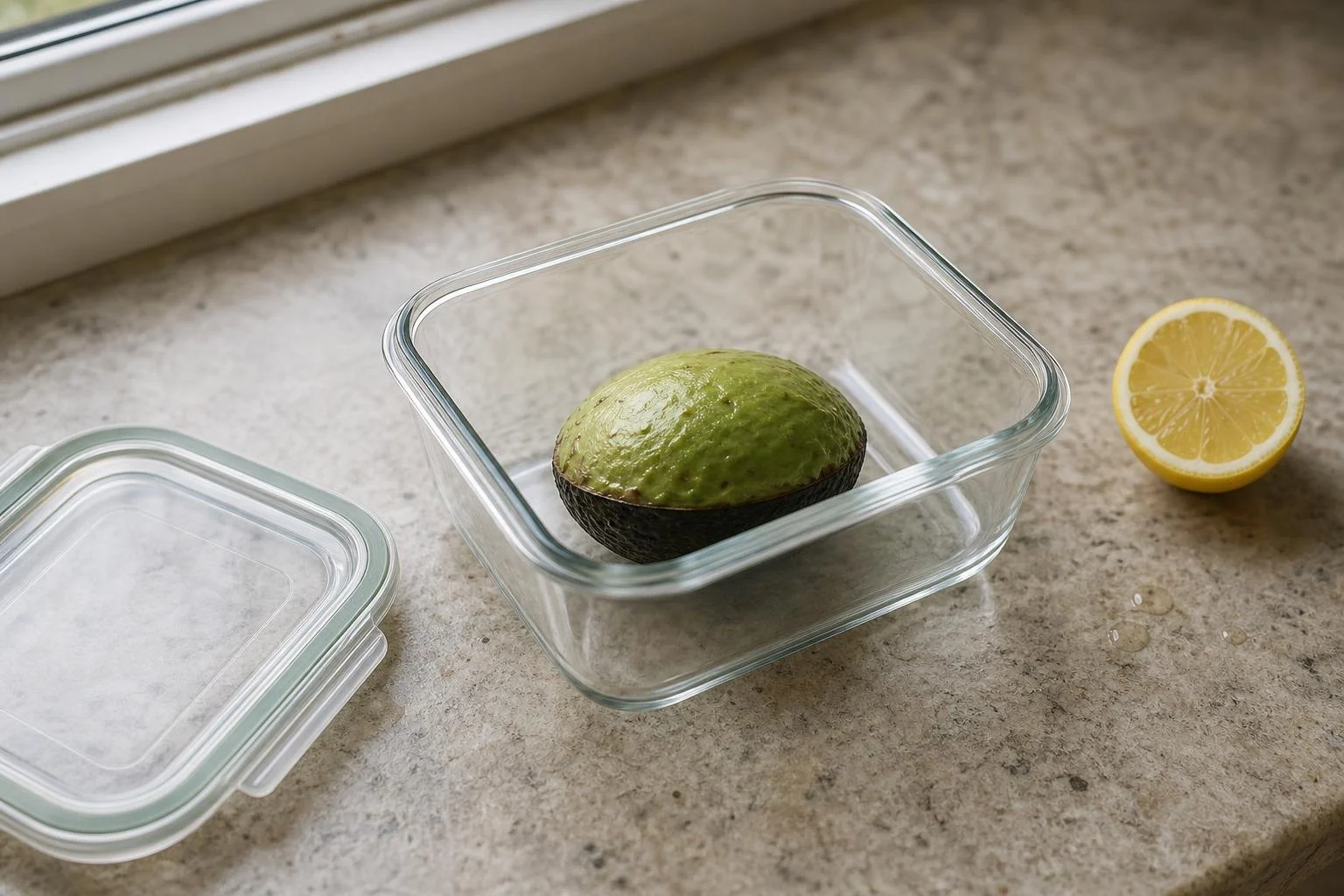
Leaving the pit in is optional. The pit protects only the small area it physically covers; it does not prevent browning across the rest of the exposed surface. Keep it in if it helps stabilize the avocado or makes handling more convenient, but do not rely on it as the storage method.
Refrigerate the half promptly and plan to use it within about a day for the best color and texture. A very ripe half or one that has been handled warm may deteriorate sooner.
Can You Store It in an Airtight Container Without Plastic Wrap?
Yes. Use a clean container that is appropriately sized and place the avocado cut-side down so the flesh makes close contact with the container surface. A small container with little empty space is more effective than a large container simply labeled “airtight.”
This is a practical alternative to disposable wrap, but it may not prevent browning as effectively as direct-contact coverage. If the container leaves a noticeable air pocket above the exposed flesh, add a layer of wrap or choose a smaller container.
Should You Add Lemon, Lime, or Oil?
Lemon or Lime Juice
A light coating of lemon or lime juice can slow enzymatic browning by making the surface more acidic. Apply a thin brush or a few drops over the exposed flesh; soaking the avocado is unnecessary and can make the flavor sharply sour.
The right amount depends on the surface area and how strongly you want the citrus flavor to come through. Citrus works particularly well for guacamole, salads, tacos, and avocado toast that already includes acidic ingredients. For plain avocado, direct-contact coverage without citrus usually preserves the most neutral flavor.
Oil
A thin layer of oil may reduce air contact at the surface, but it generally offers less dependable browning control than close physical coverage. It can also make the avocado feel greasy or alter its flavor.
Use oil as a situational kitchen option when citrus is unsuitable, not as a superior or proven long-term preservation method. If you choose it, combine the light coating with a snug container and refrigeration.
What About Leaving the Pit In?
Keep the pit only if it is convenient or helps the half sit securely. It does not meaningfully protect the exposed flesh beyond the area it covers, so the rest of the cut surface still needs wrap, a close-fitting container, or another suitable barrier.
How to Store Sliced, Diced, and Mashed Avocado
Sliced Avocado
Slices have more exposed surface area than an intact half, so they can lose quality faster. Arrange them in a single layer where possible, brush lightly with citrus if it suits the dish, and cover the surface directly with wrap. Alternatively, transfer them to a small airtight container and minimize empty space.
Diced Avocado
Transfer diced avocado to a clean, small airtight container. The pieces should be protected from excess air rather than spread across a large dish. Add citrus only if the recipe allows, and avoid repeatedly opening and closing the container because each opening introduces more air.
Mashed Avocado
Smooth the mashed avocado to remove air pockets, then press plastic wrap directly onto the entire surface. Seal the container and refrigerate it promptly. Citrus is often more acceptable in mashed avocado, particularly when it is already part of a guacamole-style recipe.
How Long Does Cut Avocado Last in the Fridge?
About 24 hours is the clearest best-quality target for cut avocado. Some properly handled avocado may remain usable for one to two days, but there is no universal guarantee that it will stay green, firm, or appealing for that long.
The time varies with ripeness, refrigerator temperature, handling, and the amount of exposed flesh. A large intact half usually holds its texture better than slices, dice, or mash because less surface is exposed. Refrigeration slows browning and ripening, but extended cold storage can still lead to texture changes.
Do not promise that wrap, citrus, oil, water, or a specialty avocado keeper will preserve cut avocado for several days. These methods affect oxygen exposure and quality; they do not replace prompt refrigeration or a check for spoilage.
Is Brown Avocado Safe to Eat?
Light or moderate surface browning is commonly an oxidation-related quality issue. If the avocado underneath looks and smells normal, you can scrape or trim away a thin browned layer, although the flavor and texture may not be as good as when it was freshly cut.
Discard the avocado if it has mold, an off or fermented odor, sliminess, leaking liquid, or a severely deteriorated texture. Color alone is not a complete safety test, and storage methods cannot guarantee that food remains safe indefinitely. When in doubt, discard it.
Why You Should Avoid Storing Avocado Under Water
Water storage may reduce visible contact with air, but it is not a dependable safety or freshness method. The avocado skin can carry bacteria that may transfer to the flesh during cutting, and a moist environment can allow contamination to spread across the cut surface.
Submersion can also soften the flesh and dilute its flavor. Guidance from the Cleveland Clinic advises against storing cut avocado in water. Do not present water, onion, oil, or specialty avocado keepers as proven ways to extend storage for several days.
A Simple Decision Guide for Leftover Avocado
- Want the least flavor change? Use direct-contact wrap and refrigerate.
- Avoiding disposable wrap? Use a clean, snug container with the cut side down and little empty air space.
- Making guacamole or a citrus-based dish? Add a light coating of lemon or lime, then cover the surface.
- Avoiding both citrus and wrap? Use a light oil coating only as a secondary option, preferably with a snug container.
- Considering water storage? Skip it because it can create safety and texture concerns.
- Have slices, dice, or mash? Use tighter surface coverage because more flesh is exposed.
For most leftovers, the practical answer is simple: cover the cut flesh closely, refrigerate it promptly, and use it the next day. That approach gives you the best balance of fresh flavor, creamy texture, reduced waste, and sensible food safety.