Yes, you can freeze cottage cheese, but its texture usually changes. After thawing, it may separate, become watery, grainy, or crumbly, so it is generally better for cooked, baked, blended, or sauced recipes than for eating plain. Freeze it only if you can accept that quality trade-off.
Freeze It or Use It Fresh?
Freezing cottage cheese is possible, but it is usually a quality decision, not a safety problem. The National Center for Home Food Preservation notes that cottage cheese does not freeze well, largely because its moist curd structure changes during freezing and thawing.
If you want cottage cheese to stay creamy and spoonable for fruit, toast, salads, or a fresh topping, use it before freezing. If you plan to stir it into lasagna, pancakes, muffins, a sauce, or a blended dip, freezing can be a reasonable way to avoid waste.
Freezing forms ice crystals in the cheese’s water content. Those crystals disrupt the curds, so thawed cottage cheese may look separated or feel less creamy. The University of Tennessee Extension specifically notes that high-water foods such as cottage cheese can become grainy after freezing, making them more useful in cooked dishes.
How to Freeze Cottage Cheese
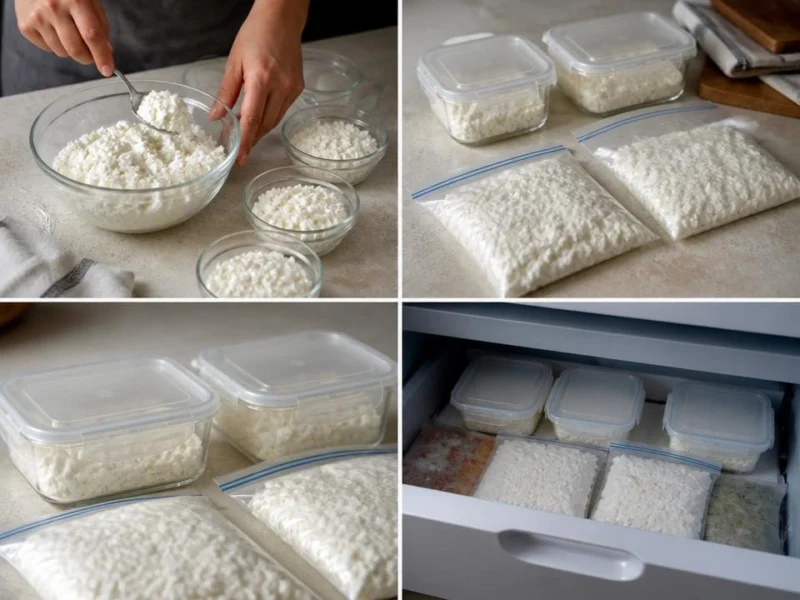
Before freezing
Start with cottage cheese that is fresh, continuously refrigerated, and still within its useful refrigerated life. Do not freeze a tub that smells off, has mold, feels unusually slimy, has damaged packaging, or has been left out under questionable conditions.
Both cream-style and dry-curd cottage cheese can be frozen, but they may thaw differently. University of California Agriculture and Natural Resources notes that cream-style cottage cheese may separate after thawing. Dry-curd versions may behave differently, but neither should be expected to return to its original fresh texture.
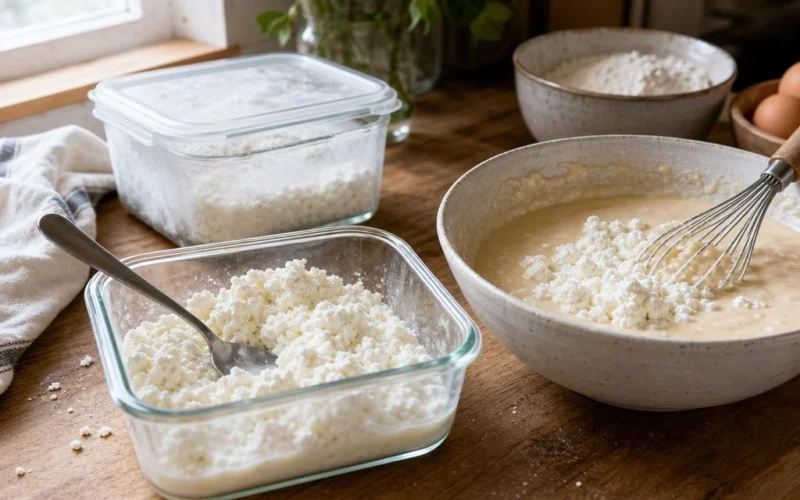
You will need a spoon, freezer-safe airtight containers or freezer bags, and a label. The original cardboard tub is suitable for refrigeration but is not ideal for longer freezer storage because it may not provide enough moisture-vapor protection on its own. Transfer the cheese to proper freezer packaging instead.
Portion, seal, label, and freeze
- Divide it into recipe-sized portions. Small portions let you thaw only what you need for pancakes, a sauce, or a casserole.
- Transfer each portion to a moisture-resistant freezer container or freezer bag.
- Seal the package. Press excess air from freezer bags. For rigid containers, do not fill to the brim; leave about 1/2 inch of space below the lid to allow for expansion during freezing.
- Label and freeze. Mark each package with “cottage cheese” and the date, then freeze at 0°F (-18°C) or below.
Well-sealed packaging helps limit freezer exposure, drying, and flavor changes. It cannot prevent texture changes in the curds, but it can help the thawed cheese work better in a recipe.
How to Thaw Cottage Cheese
Thaw cottage cheese slowly in the refrigerator, preferably in its sealed container. Do not thaw it on the counter: room-temperature thawing can allow the outside to enter an unsafe temperature range while the center remains frozen. The USDA also recognizes cold-water and microwave thawing methods, but refrigerator thawing is the best primary option for cottage cheese.
After thawing, stir the cheese to redistribute separated liquid. If a recipe needs a thicker mixture, drain excess whey through a fine sieve. These steps may improve usability, but they cannot reliably restore the original curd structure.
Blending can make thawed cottage cheese more usable in sauces, dips, smoothies, and batters by dispersing the curds and separated liquid. It will not reliably return the cheese to its original smooth, spoonable texture.
Best Uses for Thawed Cottage Cheese
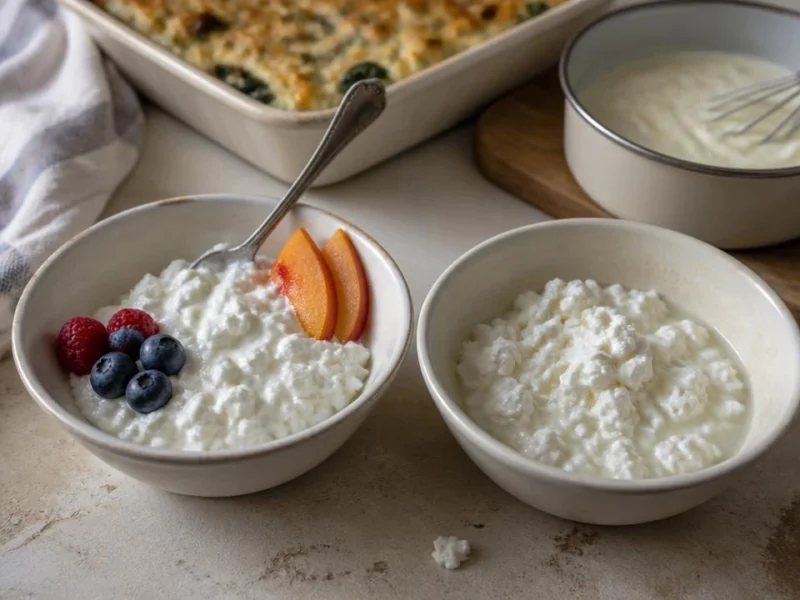
| Use after thawing | Expected result | Recommendation |
|---|---|---|
| Plain with fruit or by itself | Watery, grainy, crumbly, or separated texture may remain | Usually use fresh instead |
| Toast, salad, or fresh topping | Texture is noticeable and may be disappointing | Usually avoid freezing for this purpose |
| Lasagna, casserole, or baked pasta | Other ingredients help mask texture changes | Good use |
| Pancakes, muffins, or other baked goods | Texture is dispersed through the batter | Good use |
| Blended dip or sauce | Blending can make separation less noticeable | Often workable |
| Smoothie or blended recipe | Texture is less important after blending | Often workable |
Think of thawed cottage cheese as an ingredient rather than a ready-to-eat fresh food. In a baked pasta dish, for example, the sauce, noodles, seasoning, and heat make changed curds far less noticeable. In pancakes or muffins, the batter distributes the cheese throughout the finished food.
How Long Can Frozen Cottage Cheese Be Kept?
The University of California Agriculture and Natural Resources recommends freezing cream-style and dry cottage cheese for about one month for best quality. That is a quality-oriented recommendation: texture and flavor are likely to decline with longer storage.
FoodSafety.gov explains that food kept continuously frozen at 0°F (-18°C) can remain safe indefinitely when it has been handled properly. That does not mean cottage cheese will remain enjoyable indefinitely; freezer time limits are generally about quality, not an automatic safety cutoff.
Once thawed, keep the cottage cheese refrigerated and follow applicable package dates and storage directions. Do not rely on smell alone if you know it was mishandled or held at unsafe temperatures.
- Discard cottage cheese with an off odor, visible mold, or unusual sliminess.
- Discard it if the package was damaged in a way that exposed the food or if its handling history is uncertain.
- Watery separation by itself can result from freezing and does not necessarily mean the cheese has spoiled.
When a Cottage-Cheese Dish Freezes Better
A prepared dish often handles freezing better than loose cottage cheese. Lasagna, casseroles, baked pasta, pancakes, muffins, sauces, and blended dips can be more forgiving because other ingredients help distribute or conceal changes in the curds.
That does not mean every cottage-cheese recipe will freeze equally well. The full recipe matters: moisture level, other dairy ingredients, starches, vegetables, and how the dish is reheated can all affect the final texture. Freezing also does not preserve a prepared dish exactly as it was when fresh.
Common Questions
Can you eat thawed cottage cheese plain?
Yes, if it was safely stored and shows no spoilage signs. Still, the separated, watery, grainy, or crumbly texture may be unpleasant, so fresh cottage cheese is usually the better option for eating plain.
Why does frozen cottage cheese become watery or grainy?
Freezing creates ice crystals that disrupt the water-and-curd structure. When the cottage cheese thaws, liquid can separate and the curds may feel grainy or crumbly. Stirring can redistribute some liquid, but it cannot reliably reverse that structural change.
What if cottage cheese partially thawed during a power outage?
Treat this as a food-safety issue, not just a texture issue. Keep it cold, consider how long it was without reliable refrigeration, and follow FoodSafety.gov cold-storage guidance and USDA recommendations for perishables. Do not use smell alone to decide whether food exposed to unsafe temperatures is safe, and do not refreeze food that has been held at unsafe temperatures.
If you need cottage cheese for a fresh, spoonable topping, use it before freezing. If you are willing to blend it or add it to a cooked or baked dish, freezing can reduce waste even though the original curd texture will not return.