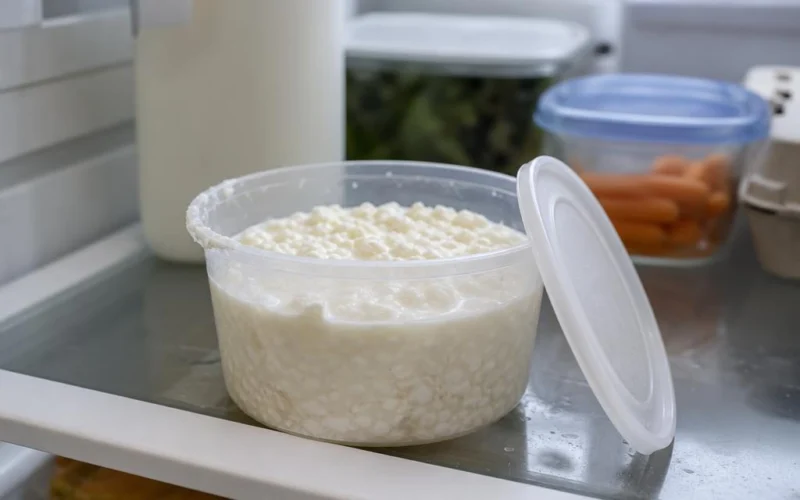
Opened cottage cheese generally lasts about 1 week in a refrigerator kept at 40°F (4°C) or below. Some storage references allow 7–10 days, but one week is the safer everyday baseline—especially if the container has been handled often or the refrigerator runs warm.
How Long Opened Cottage Cheese Lasts
Opened cottage cheese generally keeps for about 1 week when refrigerated at 40°F (4°C) or below. Count from the day you open the container, not only from the printed date.
The USDA Food Safety and Inspection Service and the University of Nebraska–Lincoln use approximately one week as the practical guideline. Some references, including an older dairy-storage chart from the Indiana State Board of Animal Health, allow about 7–10 days under careful refrigeration.
Use one week as the safer everyday baseline. The range is approximate, not a guarantee: storage temperature, handling, product formulation, packaging, and manufacturer instructions can shorten the practical window. Follow any stricter package directions.
Cottage Cheese Storage Times at a Glance
| Condition | Practical guidance | Main concern |
|---|---|---|
| Opened and refrigerated at 40°F (4°C) or below | Use within about 1 week. | Quality and safety decline with time, warm storage, and contamination. |
| Unopened and refrigerated | About 2 weeks is a general storage reference; follow the package date and instructions. | The date does not account for poor temperature control. |
| At room temperature | Discard after more than 2 hours, or more than 1 hour above 90°F (32°C). | Bacteria can grow quickly in perishable dairy foods. |
| Frozen | Not recommended if you want normal cottage-cheese texture. | Thawing commonly causes watery, grainy separation. |
How to Tell Whether Cottage Cheese Has Gone Bad
Signs That Mean Discard It
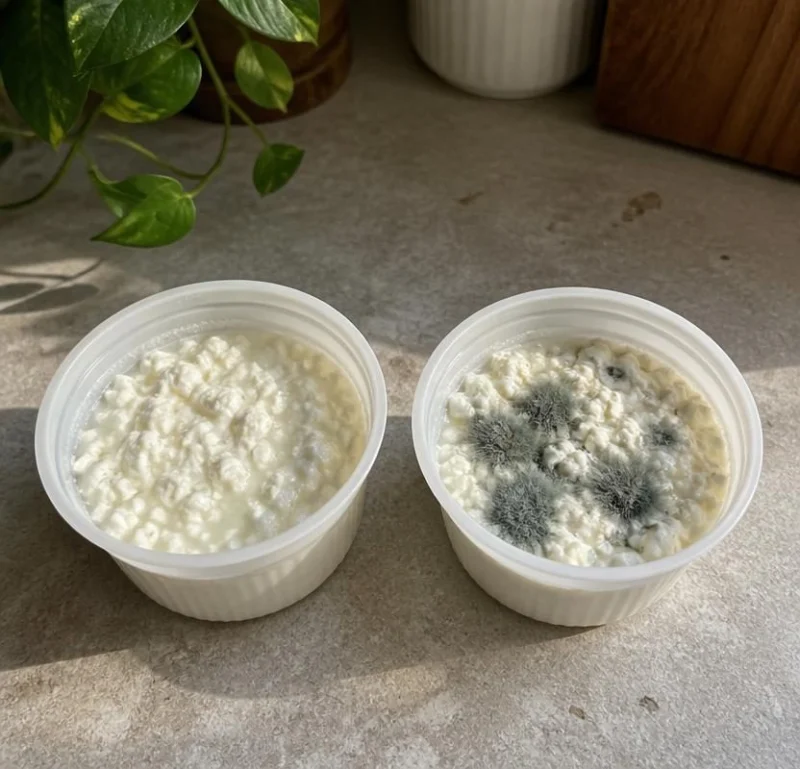
Discard cottage cheese if you see mold, fuzzy growth, or unusual colors such as pink, orange, green, or black. A strong sour, yeasty, rotten, or otherwise clearly abnormal odor is also a reason to throw it away. Other warning signs include pronounced discoloration, a swollen or bloated container, or a major texture change that is not simple liquid separation.
Known temperature abuse is another discard situation. If the container sat out overnight, was left in a hot car, or spent a prolonged period in a refrigerator above 40°F, do not use appearance or smell as proof that it is safe. The FDA advises refrigerating perishables promptly and keeping the refrigerator at or below 40°F.
When Liquid Separation May Be Normal
Watery liquid on top is often separated whey, and it can happen during normal storage. Stir the cottage cheese gently and then assess its overall appearance, odor, and texture.
Extra liquid by itself does not mean cottage cheese is spoiled. Still, normal-looking cottage cheese is not automatically safe after it has been stored too warm or left out too long, so temperature history matters as much as sensory checks.
The Safest Way to Store Opened Cottage Cheese
- Refrigerate it promptly after serving, rather than leaving the tub on the counter during a meal.
- Keep the original container tightly closed. If the lid no longer seals well, move the cottage cheese to a clean, covered container.
- Use a clean spoon every time. Avoid eating from the tub or putting a used utensil back into it, which can introduce food particles and microorganisms.
- Write the opening date on the lid and store it in a stable interior area of the refrigerator, not the frequently warmed door shelf.
A refrigerator thermometer can help confirm that the appliance is cold enough. The FDA recommends keeping refrigerators at 40°F or below. If your package gives a shorter after-opening timeframe, follow the manufacturer’s instruction.
What to Do in Common Borderline Situations
Use this decision tree when you are unsure whether to keep an opened container.
- Was it left warm? If it was at room temperature for more than 2 hours, or more than 1 hour above 90°F (32°C), discard it. If the refrigerator was warm for an extended period or the temperature history is uncertain after a power outage, discard it.
- Is there mold, unusual colored growth, a strong abnormal odor, or a major texture change? Discard the entire container.
- Has it been open for about a week or less? If it was kept cold and has no spoilage signs, use it promptly. If it has been open longer, discard it when storage or handling is uncertain.
- Is the only change ordinary liquid separation? Stir it and assess the rest of the product; separation alone is not proof of spoilage or safety.
If cottage cheese has mold, abnormal colored growth, known prolonged temperature abuse, or an uncertain storage history, discard it. If it has been continuously refrigerated for about a week or less and only has ordinary liquid separation, use the storage and sensory guidance above while following the package instructions.
Can You Freeze Cottage Cheese?
You can freeze cottage cheese, but it usually will not thaw with the same texture. The curds may become grainy, watery, separated, or somewhat curdled-looking. The USDA and University of Nebraska–Lincoln both note that cottage cheese does not freeze well.
For that reason, freezing is generally a poor choice for cottage cheese you want to eat plain, spoon onto fruit, or use as a creamy topping. If it was frozen safely while still fresh, thawed cottage cheese may be more usable in a cooked dish where texture matters less, such as pancakes, baked pasta, or a casserole.
Freezing is not a way to rescue cottage cheese that is already old, warm, moldy, or questionable. When the storage history is uncertain, discard it instead.