
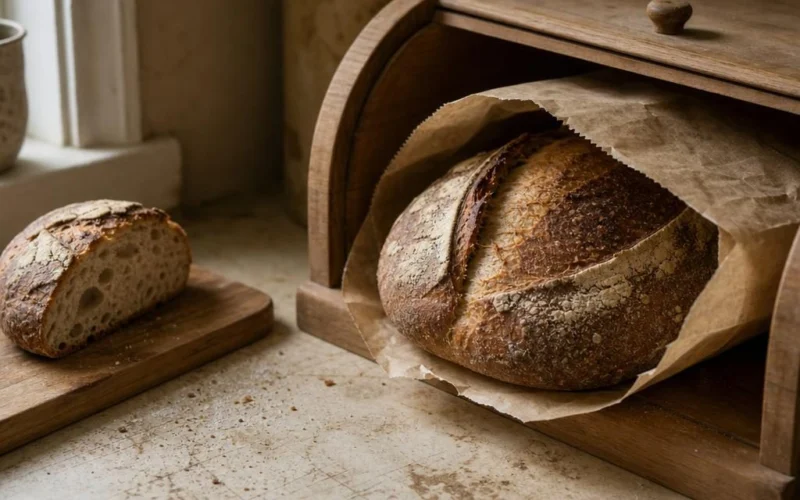
Sourdough is usually best kept at room temperature when you plan to eat it soon—not in the refrigerator. Use a breathable bag or bread box if a crisp crust matters most, choose loose plastic if you prefer a softer crumb, and freeze tightly wrapped bread for longer storage. Cut loaves need a little extra protection, and exact room-temperature longevity varies with humidity, ingredients, handling, and mold exposure.
Choose Storage by Timing and Texture
“Fresh” sourdough can mean two different things: a crackly crust or a moist, tender interior. Those qualities pull in opposite directions. More airflow helps preserve the crust but can dry the crumb; more moisture retention protects the crumb but softens the crust.
Start by asking whether the loaf is whole or cut, then consider when you expect to eat the rest. No storage method keeps both crust and crumb at their just-baked best indefinitely.
| Method | Best for | Crust | Crumb | Main drawback |
|---|---|---|---|---|
| Counter / cut-side down | Same day or very short-term use | Best initially | Good for a short period | Cut surface can dry over time |
| Paper bag | Short-term crust retention | Fairly crisp | Can dry faster | Limited moisture protection |
| Linen or cloth bag | Short-term balance of crust and moisture | Better preserved than in plastic | May dry more slowly than paper | Not airtight |
| Bread box | Counter storage over the next few days | Moderate to good | Moderate | Results depend on airflow and kitchen humidity |
| Plastic bag | Keeping the crumb soft | Softens quickly | Moistest | Can create a damp or leathery crust |
| Refrigerator | Special circumstances, such as perishable fillings | Poor | Often firmer and drier | Usually speeds staling in plain bread |
| Freezer | Longer storage | Can improve after reheating | Best preserved when wrapped well | Requires freezer-grade packaging and thawing or reheating |
- Eating today or very soon? Keep it on the counter; after cutting, use cut-side-down storage for a short period.
- Eating over the next few days? Choose paper, linen, cloth, or a ventilated bread box—or plastic if softness matters more than crunch.
- Eating later? Freeze early in tight, freezer-grade packaging.
How to Store Sourdough at Room Temperature
Let sourdough cool completely before placing it in any bag, box, or wrap. Warm bread releases steam; trapping it can create condensation, soften the crust, and leave the surface damp.
For a whole loaf you will finish the same day, keep it in a dry spot away from direct sunlight, warm appliances, and kitchen steam. When crust matters, use paper or cloth for a whole loaf; use a bread box if its ventilation suits your kitchen; once the loaf is cut, protect the cut face by placing it cut-side down or wrapping it.
For short-term storage, paper, cloth, and bread boxes offer different balances of airflow and moisture protection. The University of Illinois Extension lists room-temperature storage, paper bags, linen bags, and bread bins as practical options for sourdough quality.
Climate matters. A high-hydration loaf in a humid kitchen can behave differently from a drier loaf in an air-conditioned home, and frequent handling can increase moisture loss or mold exposure. Inspect bread more often during hot or humid weather.
Paper, Linen, or Cloth?
Paper is relatively breathable, which can help preserve a firmer crust but may allow the interior to dry sooner. A linen or cotton bag is also breathable and may slow interior drying better than paper in some situations while avoiding the rapid crust softening associated with airtight storage.
Neither option is airtight or universally better. King Arthur Baking’s comparison of sourdough storage methods identifies cloth as a useful middle ground, but loaf size, crust thickness, humidity, and how soon you will eat the bread affect the result.
Is a Bread Box Better?
A bread box moderates exposure to open kitchen air without sealing in as much moisture as plastic. Depending on its ventilation and your kitchen climate, it can provide a workable balance between crust retention and crumb moisture.
It is not automatically better than a bag. Bread boxes vary widely in airflow, and one that works in a dry kitchen may retain too much moisture in a humid one. Check the loaf regularly in warm or humid conditions, and do not treat a bread box as a guarantee of a particular humidity level or shelf life.
What Changes After You Cut the Loaf?
Once sliced, the exposed crumb loses moisture faster than the crust. For short-term use, place the loaf cut-side down on a clean, dry board or countertop. The board protects the cut face while allowing more of the crust to stay exposed to air.
This is a short-term texture choice, not a multi-day preservation method. It can leave the outer crust progressively firmer, and it is a poor option in humid conditions, when the loaf will sit unattended for a long time, or when mold is a concern.
For longer counter storage, cover the cut face with paper or cloth if preserving crust is the priority. Use a loose plastic bag when you would rather keep the crumb soft and accept a softened crust. If you will not finish the bread soon, freezing individual slices is usually the most flexible option.
When Plastic Helps—and When It Hurts
Plastic is useful when you want the softest possible crumb. It holds in moisture that would otherwise escape through paper, cloth, or an open counter. That can be especially appealing for toast, sandwiches, or people who prefer a less crunchy crust.
The trade-off is immediate: trapped moisture softens a crisp artisan crust and can make it feel leathery or damp. Airtight storage is therefore a deliberate texture choice, not a universally superior way to keep sourdough fresh.
Only bag bread after it has cooled completely. Sealing warm bread in plastic traps condensation, which worsens the crust and can create a more favorable environment for spoilage.
Why the Refrigerator Usually Makes Bread Stale Faster
For plain sourdough, refrigeration is usually not a food-safety problem; it is mainly a quality problem. Bread tends to become firm and stale faster in the refrigerator than at room temperature.
A major reason is starch retrogradation. After bread bakes, its starches gradually reorganize and recrystallize as the loaf cools and sits. In practical terms, the crumb becomes firmer and less fresh-tasting. Refrigerated temperatures can speed that process, as explained by the American Society of Baking’s overview of bread staling.
The exception is bread with ingredients that need refrigeration, such as a perishable filling, dairy-based topping, or meat-based topping. In that case, the filling’s food-safety needs take priority over the texture of the bread. Plain sourdough, however, is generally better stored at room temperature for short-term eating or frozen for later use.
Freeze Sourdough for Longer Storage
Freeze sourdough while it is still at good quality, not after it has gone stale. Freezing pauses quality decline but does not reverse dryness or restore a loaf that was past its best before it went into the freezer.
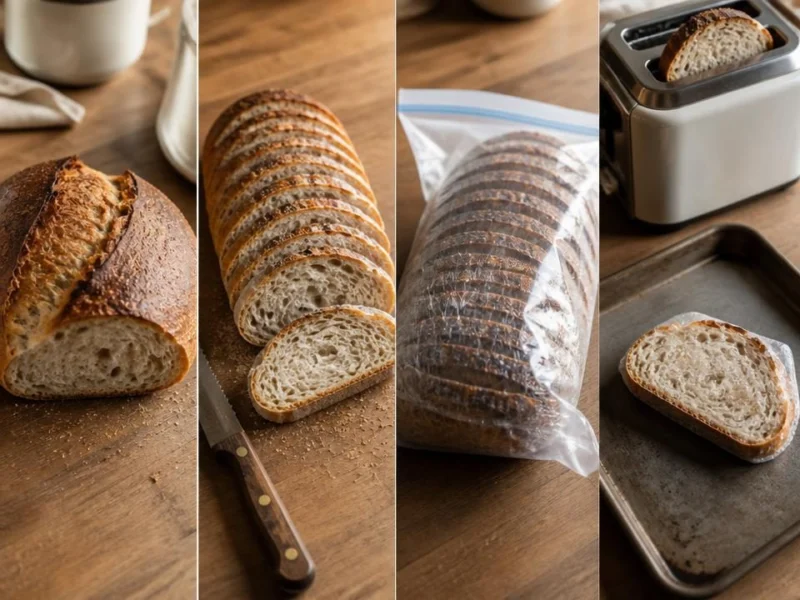
Slice the loaf first for individual portions, easy toasting, and less repeated thawing. Freeze it whole when keeping the loaf intact for a later meal or serving matters more than quick access to individual pieces.
- Cool the bread completely.
- Slice it if that will make serving easier.
- Separate slices if you need to remove them individually.
- Enclose the bread in tight freezer-grade packaging, leaving as little exposed air as practical.
- Use a freezer-grade bag or other moisture-vapor-resistant packaging.
- Label it with the date.
- Freeze promptly at 0°F (-18°C).
Ordinary bread wrappers are not designed for long freezer storage. The National Center for Home Food Preservation recommends moisture-vapor-resistant packaging to limit freezer burn and moisture loss.
The USDA gives about three months for good freezer quality for bread products. That is a quality guideline, not a universal expiration date: tightly packaged bread can remain safe longer at a steady 0°F, but its flavor and texture may gradually decline.
How to Thaw and Recrisp Sourdough
Frozen slices can often go straight into a toaster. For larger pieces or a whole loaf, thaw only what you need, then warm it in an oven or toaster oven to help dry and crisp the exterior.
Use moderate heat and check often; the right time depends on loaf size, how frozen it is, and the appliance. Reheating can noticeably improve a softened crust, but it cannot fully restore bread that was stale before freezing.
Quality Versus Safety: When to Discard Bread
A softened crust, dry crumb, or slightly stale flavor is a quality issue, not automatically a safety issue. Exact room-temperature life is not universal, and hot, humid kitchens call for more frequent inspection.
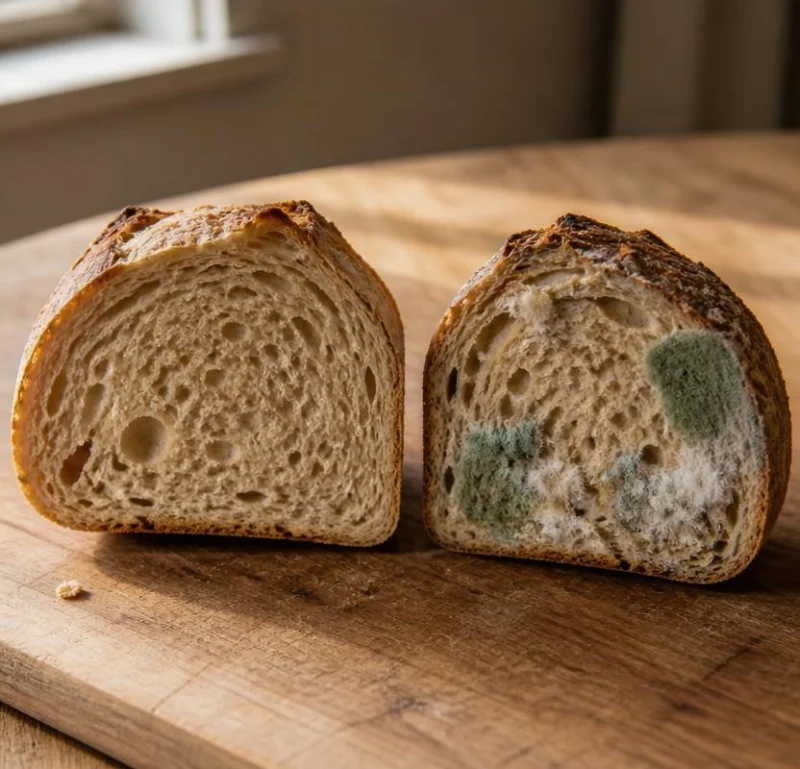
Plain sourdough should not be assumed to resist mold simply because it is sour. If you see mold, notice an off odor, or find an unusually damp surface that raises concern, discard it. Bread with perishable fillings or toppings follows different storage rules and may need refrigeration even though chilling hurts the texture of plain sourdough.
For a loaf you will eat soon, keep it cool and breathable at room temperature; for a softer crumb, accept plastic’s softer crust; for later use, freeze fully cooled bread while it is still at peak quality.