
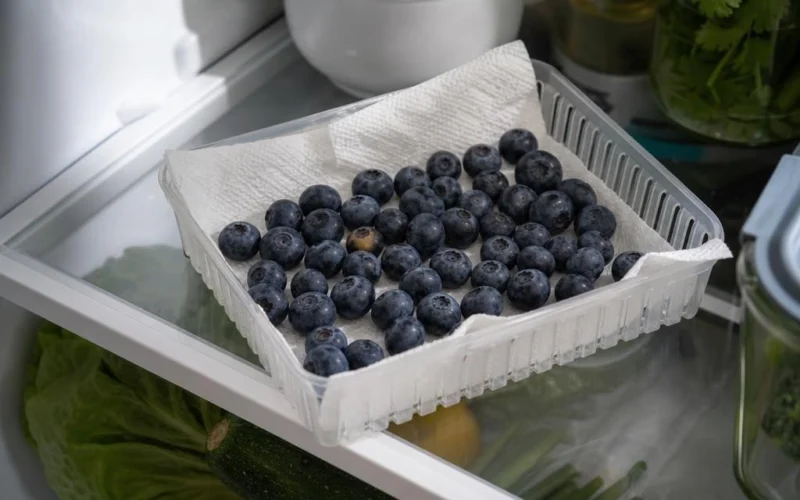
Refrigerate blueberries promptly, keep them unwashed until just before eating, and store them dry in their clean, ventilated clamshell. Remove crushed, leaking, very soft, or visibly moldy berries first; a vinegar wash is not necessary and has not been proven to reliably extend freshness.
Store Blueberries This Way After You Buy Them
Blueberries keep their quality best when they stay cool, dry, and protected from crushing. Moisture trapped around the berries—whether from rinsing, a wet package, or refrigerator condensation—can speed softening and spoilage.
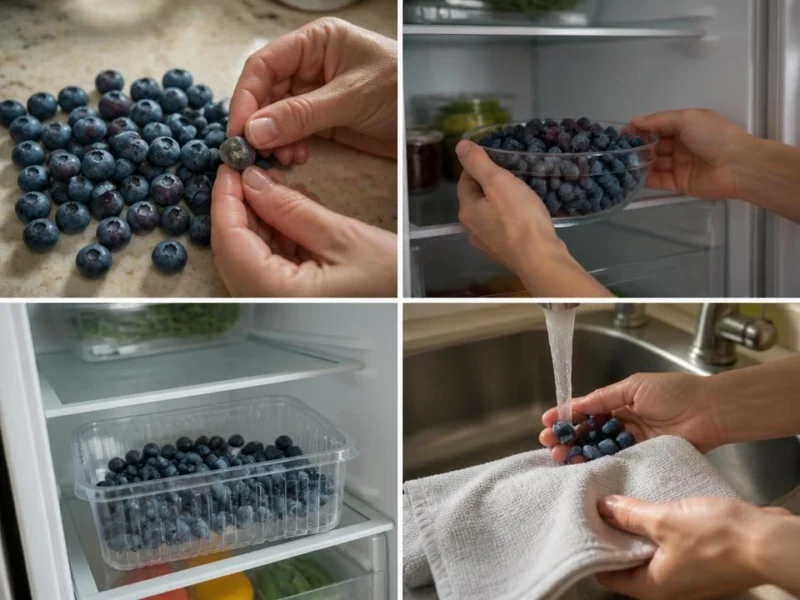
1. Inspect the berries and package
Open the package and look for berries that are leaking, crushed, very soft, or visibly moldy. Discard those berries rather than trying to rinse or rescue them. Removing damaged fruit reduces contact with moisture and spoilage, although it does not guarantee that berries touching it are unaffected.
Also check the clamshell itself. If it is dry, clean, and not overcrowded, it is usually the best container to keep. If the package is wet, cracked, leaking, or packed so tightly that berries are being crushed, move the sound berries to another clean container.
A pale white, powdery-looking coating on blueberry skins is usually the fruit’s natural waxy bloom. It is normal and does not mean the berries are moldy. At the same time, bloom alone is not proof that berries are fresh or safe; check for visible mold, leaking juice, and softness.
2. Refrigerate them unwashed
Put blueberries in the refrigerator soon after shopping. The North American Blueberry Council recommends prompt refrigeration and rinsing berries immediately before eating.
For food safety, the FDA advises keeping perishable produce refrigerated at 40°F (4°C) or below. Keeping berries unwashed is mainly a quality decision: the USDA/NIFA produce-washing guide notes that washing before storage can add moisture and contribute to faster spoilage.
There is no reliable universal “fresh for X days” rule. Blueberry quality depends on ripeness at purchase, handling damage, condensation, cultivar, and how cold and steady your refrigerator runs.
3. Keep them in the right container
Keep sound, dry blueberries in their original clamshell when it is clean and ventilated. The holes in a typical berry clamshell allow some air circulation while the shallow shape helps limit crushing.
If you need to transfer them, use a clean, shallow container with ventilation, such as a produce container with vents or a loosely covered container that does not trap moisture. “Breathable” means the berries are not sealed into a damp, airtight environment. Spread them in a reasonably shallow layer instead of piling them deeply.
An airtight glass jar is not automatically better. The important factors are dryness, space, and airflow—not whether the container is glass or plastic. Do not tightly seal damp berries in any container.
4. Wash and dry them just before eating
When you are ready to eat or prepare blueberries, rinse the portion you need under cool running water with clean hands. The FDA’s produce-safety guidance recommends rinsing produce under running water before eating or preparing it, then drying it with a clean cloth or paper towel.
For berries you will eat right away, a gentle drain may be enough. If you need to refrigerate a washed portion briefly, dry it carefully and thoroughly first. This rinse is for normal food handling; it is not a proven freshness-extending treatment.
Do not use soap, detergent, bleach, or unapproved commercial produce washes. These products are not recommended for produce and may leave residues behind. The University of Minnesota Extension likewise advises washing produce under running water rather than with soap or detergent.
Which Blueberry Storage Method Should You Choose?
| Method | Best use | Main benefit | Main limitation | Recommendation |
|---|---|---|---|---|
| Original clamshell | Package is clean, dry, and ventilated | Protects berries while allowing airflow | Not suitable if cracked, wet, or overcrowded | Preferred for most purchases |
| Clean breathable container | Original packaging is compromised | Helps prevent crowding and trapped moisture | Should be shallow, clean, and ventilated | Good replacement option |
| Paper towel | Visible moisture or condensation needs managing | Absorbs moisture when placed beneath the berries | Does not have proven independent shelf-life benefits | Optional; replace if damp and do not tightly wrap damp berries |
| Washing before storage | Small ready-to-eat portion | Convenience | Added moisture can shorten quality life | Only if dried completely and used sooner |
| Vinegar wash | No routine need | May affect some surface microbes in some situations | Reliable storage-life benefit is unverified | Not needed for routine storage |
What to Do If You Already Washed the Blueberries
If you washed the whole package, drain the berries well and dry them as completely as possible. Gently blot them with clean paper towels or a clean kitchen towel, taking care not to crush them.
Then move them to a clean, shallow, ventilated container and refrigerate them without crowding. Avoid a tight lid if moisture remains inside. Use this batch sooner than an unwashed one because the extra water can reduce fresh quality.
For future batches, wash only the small portion you expect to eat or add to a meal. That gives you ready-to-eat berries without wetting the entire supply.
When to Discard Blueberries
Discard blueberries that are visibly moldy, rotten, leaking, extensively softened, or strongly off-smelling. Do not rely on rinsing, vinegar, or trimming to make a moldy berry acceptable.
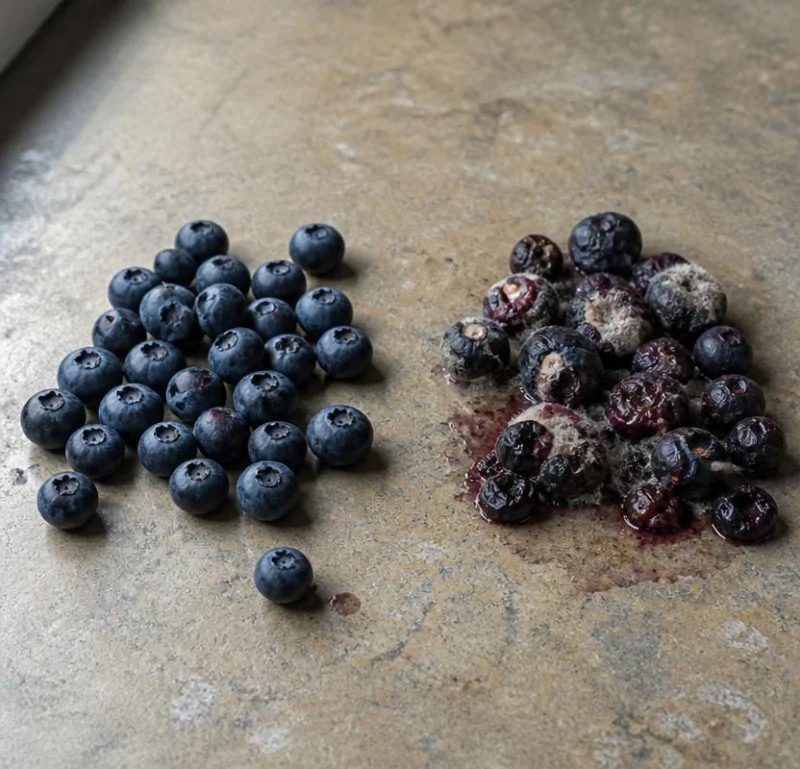
A few wrinkled but dry blueberries may simply be losing moisture. Their quality may be lower, but they are different from berries that are leaking, slimy, or moldy. When in doubt, discard fruit with clear spoilage signs.
Freeze Sound Blueberries You Will Not Eat Soon
If you are unlikely to finish the berries while they are still in good condition, freeze them while they are sound. Freezing is a practical way to prevent waste and works well for smoothies, oatmeal, baking, and sauces. Thawed blueberries will be softer than fresh berries, so they are usually best used in cooked dishes or blended recipes.