
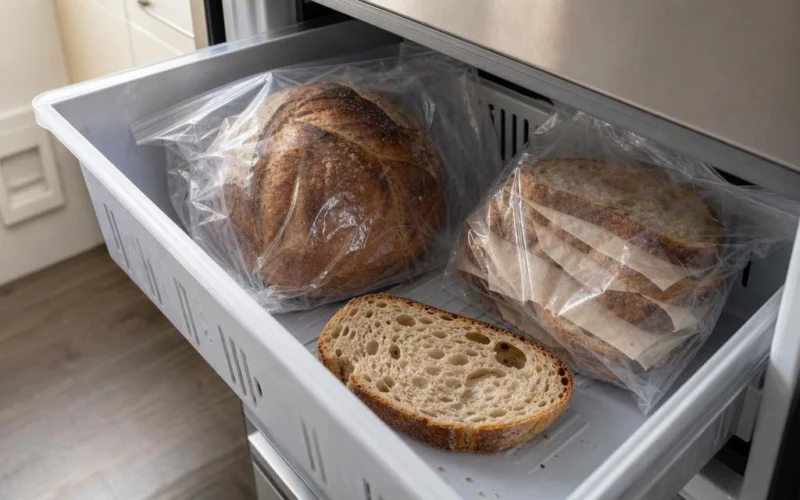
Yes, you can freeze sourdough bread successfully. Freeze slices if you want everyday portions and toast straight from the freezer; freeze a whole loaf if you want to serve it intact or keep the option to slice it later. In either case, freeze bread when it is at its best and fully cooled, then package it tightly.
Whole Loaf or Slices: Which Freezing Method Fits You?
The better choice depends less on the bread itself than on how you expect to eat it after freezing. A half loaf is also a useful middle ground when a full loaf is too much but you still want larger pieces than individual slices.
| Consideration | Whole loaf | Slices |
|---|---|---|
| Best use | Serving as a loaf or slicing later | Daily toast, sandwiches, and small portions |
| Preparation | Freeze after cooling | Cool, then slice to your preferred thickness |
| Wrapping | Wrap, then place in a freezer bag or container | Bag in portions; use parchment separators if needed |
| Thawing | Thaw while wrapped at room temperature | Usually no thawing needed for toast |
| Reheating | Refresh in the oven after thawing | Toast directly from frozen |
| Convenience | Lower for small servings | High; take only what you need |
| Main limitation | You must thaw more bread at once | Less suited to presenting an intact loaf |
Choose slices for a small household, varied portions, or toast on demand. Choose a whole loaf when its appearance matters at the table, when you plan to slice it later, or when the bread is already unsliced.
Before You Freeze Sourdough
Freezing holds bread at roughly the quality it has when it enters the freezer. The USDA notes that frozen foods keep their best quality when frozen at peak quality, so don’t wait until a loaf is dry or noticeably stale before storing it.
- Cool completely. A warm loaf releases steam inside its wrapping, which can leave the crust damp.
- Wrap tightly and limit air exposure. Use a freezer-safe bag or airtight container; for whole loaves, add foil, freezer paper, or plastic wrap around the bread first.
- Label with the freezing date. This makes it easier to use older bread first.
Keep parchment paper on hand if you are freezing slices, along with a marker and freezer-safe bags. The specific wrap matters less than making a snug, protective package with few exposed areas.
How to Freeze a Whole Sourdough Loaf
- Let the loaf cool completely on a rack.
- Wrap it tightly in foil, freezer paper, or plastic wrap. Cover the loaf fully, especially cut surfaces if it has already been opened.
- Put the wrapped loaf into a freezer bag or airtight container. Press out as much excess air as practical before sealing.
- Label it with the date and place it in the freezer where it will not be crushed.
This double layer helps protect the loaf from freezer air, which can dry the surface and cause freezer burn. It cannot make frozen bread taste exactly like a fresh-baked loaf, but good packaging helps preserve the crust and crumb as well as possible.
A whole loaf is usually better thawed before serving or reheating. Microwaving a full frozen loaf tends to create uneven texture: parts may become tough while the center remains cold.
How to Freeze Sourdough Bread Slices
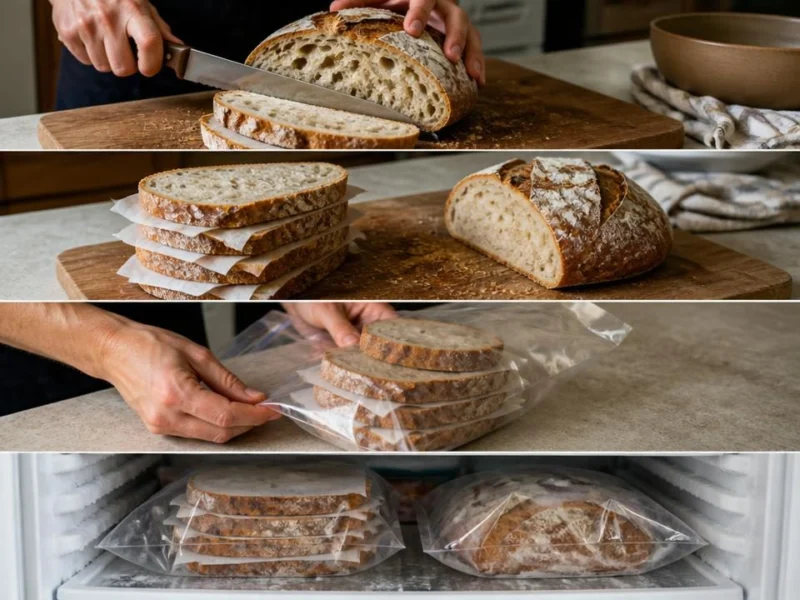
- Cool the bread completely, then slice it to the thickness you normally use.
- Place parchment between slices if you want them to separate easily one at a time.
- Pack slices directly into a tightly sealed freezer bag, or briefly freeze them in a single layer first if they are likely to stick together.
- Press out excess air, label the bag, and freeze slices in portions you will realistically use.
Freezing slices in pairs, small stacks, or meal-sized portions can be useful for sandwiches. More importantly, portioning keeps you from thawing and refreezing the entire loaf whenever you want one piece.
Keep the bag tightly closed after removing slices. Repeated exposure to freezer air gradually dries the bread and makes the texture less appealing.
How to Thaw and Reheat Frozen Sourdough
Slices
Frozen sourdough slices can generally go directly into the toaster. Start with your usual setting, then add another cycle or choose a darker setting if the bread is still cool or pale after the first pass.
For softer bread, thaw the portion at room temperature while it is still packaged, then warm it briefly if desired. Use a microwave only in a pinch: sourdough can become tough, chewy, or dry as it cools.
Whole Loaf
Thaw a whole loaf at room temperature while it is still wrapped. The timing varies with loaf size, room temperature, and how deeply frozen the bread is, so do not rely on a single thawing time. Wait until the center no longer feels frozen.
Unwrap the thawed loaf, then refresh it in a 350°F (175°C) oven. Start checking after about 10 to 15 minutes, allowing more time for a larger loaf if needed. The goal is an improved crisp crust and a warmed interior, not a guaranteed reheating duration. Oven warming can restore some crispness, though it will not fully recreate the original crumb.
After Thawing
Avoid repeatedly thawing and refreezing bread because its texture generally declines each time. If you regularly need only a few slices, freeze future loaves in smaller portions from the start.
Dry freezer-burned areas are a quality issue and may be trimmed only when the bread has no visible mold, unusual odor, or signs of contamination. Discard porous bread with visible mold rather than cutting away one spot.
These directions are for plain sourdough bread. Loaves or sandwiches with meat, eggs, cheese, cream-based spreads, or other perishable fillings need prompt refrigeration and different storage handling; do not rely on ordinary bread-storage guidance for those foods.
How Long Does Frozen Sourdough Keep Its Best Quality?
Best quality: about two to three months. The USDA Food Safety and Inspection Service gives about three months as a freezer-quality guideline for bread. The University of Illinois Extension sourdough guidance suggests about two months for best quality.
Those are not conflicting safety deadlines. They are useful quality ranges, and results vary with freezer temperature, loaf size, hydration, added ingredients, packaging, and the amount of air trapped in the package. Use the oldest package first and keep it well sealed.
Safety: Do not treat the two-to-three-month range as an expiration date. Bread that has stayed continuously frozen and been handled properly may remain usable longer, but its flavor and texture can decline. Freezer burn is mainly a quality issue: dry, pale, or leathery areas may be unpleasant, but they are different from mold or contamination.
When to Discard Frozen or Thawed Bread
Discard bread with visible mold; do not cut away the moldy spot. Bread is porous, and mold or contamination can extend below the visible surface.
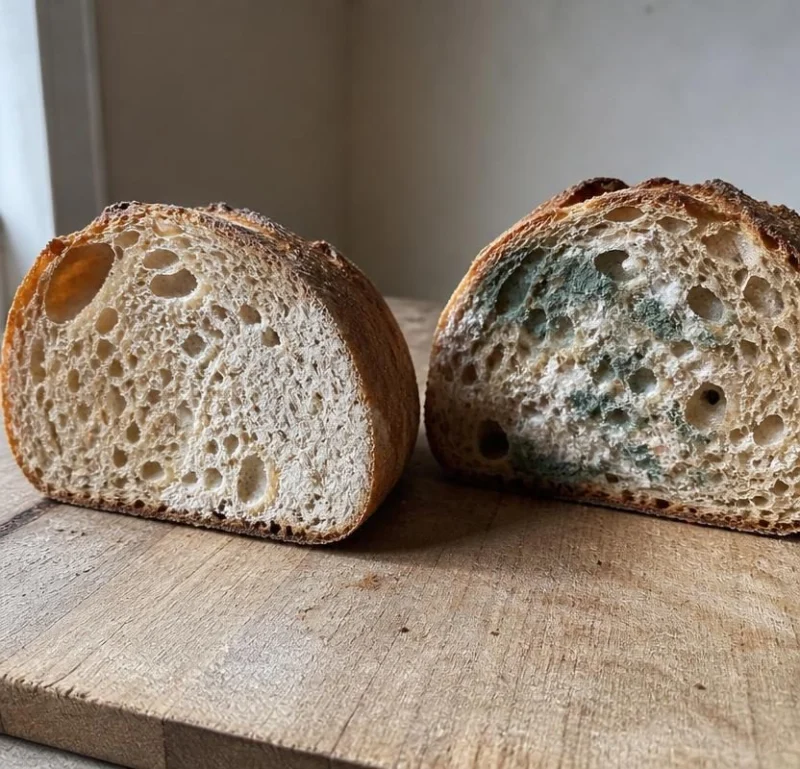
Also discard bread with an unusual odor or other signs of contamination. Freezer burn is a quality problem rather than a safety issue: if the bread has no mold, unusual odor, or contamination, you may remove only dry, freezer-burned areas. Do not apply this guidance to bread with meat, eggs, or other perishable fillings.