
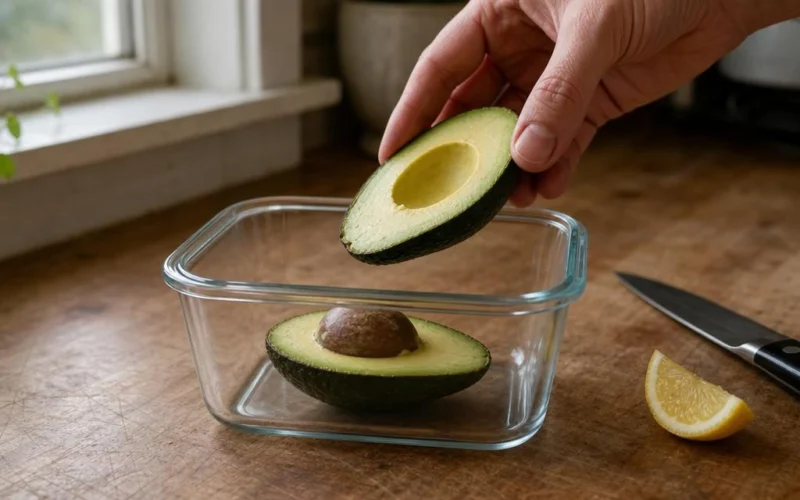
For the best results, lightly coat the cut avocado with lemon or lime juice, press plastic wrap directly onto the exposed flesh, and refrigerate it in a sealed container. This combination slows browning far better than leaving the pit in, but it will not keep avocado perfectly green forever.
The Best Way to Store an Avocado Half
You will need half an avocado, lemon or lime juice, a clean spoon or pastry brush, plastic wrap, and a small airtight container or covered dish.
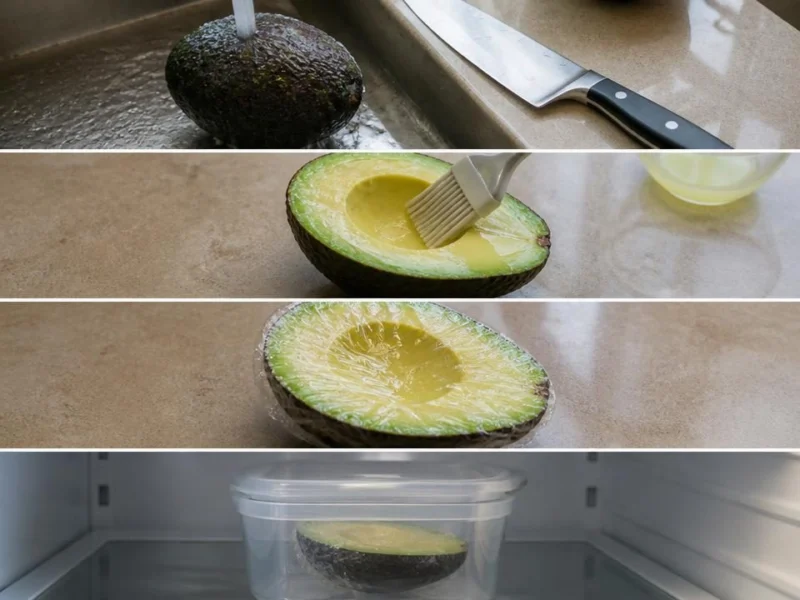
- Wash the whole avocado before cutting it. Rinsing the skin helps keep surface dirt and bacteria from transferring to the flesh when the knife passes through it. Iowa State University Extension also recommends washing avocados before preparation.
- Cut the avocado and remove any bruised, very soft, or discolored flesh with a clean spoon.
- Use a spoon or brush to apply just enough lemon or lime juice to leave a light coating over the cut surface. Do not pour on enough juice to pool in the cavity; too much can make the avocado noticeably sour.
- Press plastic wrap directly against the flesh, smoothing out as many air pockets as possible. Alternatively, place the avocado cut-side down in a tightly sealed container, though direct-contact wrap usually gives more reliable coverage.
- Refrigerate promptly at 40°F (4°C) or below. USDA food-safety guidance recommends refrigerating cut produce in covered storage.
Lemon and lime are the most practical choices because their acidity helps delay discoloration. White vinegar can also help retain green color, according to Iowa State University Extension, but its flavor is usually more obvious than citrus.
Expect slower browning, not permanent preservation. A firm avocado that was covered quickly may look good for longer than a very ripe one, but ripeness, refrigerator temperature, and how completely the surface is sealed all affect the result.
Which Browning-Prevention Methods Work Best?
Methods that limit oxygen across the whole exposed surface are generally more useful than tricks that protect only one small area.
| Method | Browning control | Flavor or texture effect | Best use or recommendation |
|---|---|---|---|
| Lemon or lime juice | ✓ Useful | Adds tang; excess can taste sour | Best everyday choice for a half, slices, or mash |
| Direct-contact wrap or airtight covering | ✓ Very useful | No meaningful flavor change | Use with citrus for the most dependable result |
| Thin layer of oil | May help | Can taste oily or feel greasy | Optional, but usually less appealing than citrus |
| Avocado pit | ❌ Limited | No major effect on flavor | Protects only the small patch it touches |
| Onion | Limited and inconsistent | Can add onion aroma or flavor | Optional for guacamole, not a reliable avocado-half method |
| Water | May reduce air contact | Can dilute flavor and affect texture | Not the default choice for household storage |
Use the method that fits the avocado’s form: a half does best with citrus and full-surface coverage; slices are best used promptly; and mashed avocado benefits from a smooth surface covered directly with wrap. Skip pit-only storage and do not treat water immersion as the standard solution.
How to Store Avocado Slices and Mashed Avocado
Slices
Avocado slices brown and soften faster than a half because more flesh is exposed to air. Arrange them in a single layer when possible, lightly coat the cut surfaces with lemon or lime juice, then press wrap against the slices or seal them in a small container.
For sandwiches, salads, or toast, it is usually better to cut avocado shortly before serving. Stored slices can still be usable, but they lose their fresh appearance and firm texture sooner than a covered half.
Mashed Avocado or Guacamole
For mashed avocado, use a spoon to smooth the surface flat before covering it. This removes trapped air pockets that can leave brown streaks throughout the mash. Press plastic wrap directly onto the entire surface, then close the container with its lid and refrigerate it.
If you are making guacamole ahead, consider adding fresh tomato, herbs, and other watery toppings just before serving. They can become dull or watery during storage. Onion is fine when it belongs in the recipe, but it should not be relied on as the preservation method.
Why Cut Avocado Turns Brown
When you cut an avocado, you damage its cells and expose the flesh to oxygen in the air. That starts an oxidation reaction that creates the familiar brown or gray-green surface.
A naturally occurring enzyme called polyphenol oxidase helps trigger this reaction. In plain terms, it is part of the avocado’s natural chemistry: once the cut flesh meets oxygen, the enzyme helps compounds in the flesh darken.
Citrus slows the reaction because its acid makes conditions less favorable for browning. Plastic wrap pressed against the avocado limits the oxygen reaching the flesh. Refrigeration slows overall quality changes. None of these methods reverses browning that has already happened, but they can keep a freshly cut avocado green longer.
A little browning is usually a quality issue first: it can look unappetizing and taste slightly stale, but color alone does not tell you whether the avocado is spoiled.
Is a Brown Avocado Still Safe to Eat?
A thin brown surface layer can sometimes be scraped away if the avocado was handled cleanly, refrigerated promptly, and has no questionable storage history. The flesh underneath should smell fresh and have its usual creamy texture. The browned area may taste slightly bitter, so removing it can improve quality.
Refrigerate cut avocado promptly in a covered container, and do not leave it at room temperature for more than two hours. If you do not know how long it was left out, or if it exceeded that limit, discard it regardless of how it looks or smells. The USDA advises storing cut fruits and vegetables covered in a refrigerator kept at 40°F (4°C) or below. See the USDA guidance on storing cut fruit and vegetables and safe refrigerator temperatures.
Michigan State University Extension notes that prepared avocado may retain acceptable quality for three to four refrigerated days under favorable conditions. That range is a quality guideline, not a safety guarantee: ripeness, clean handling, surface coverage, refrigerator temperature, and how quickly it was chilled can all shorten it. When those conditions are uncertain, discard the avocado rather than relying on its appearance.
Does the Avocado Pit Prevent Browning?
No. The avocado pit does not chemically stop browning, and it does not protect the entire exposed half.
It blocks air only where it physically touches the flesh. The rest of the cut surface remains exposed to oxygen and can still turn brown. The California Avocado Commission also notes this limited physical effect.
When to Avoid Water, Oil or Onion
Water: Submerging avocado may limit air contact, but it can dilute flavor and leave the surface watery or affect its texture. Because practical guidance and results are mixed, it is not the default choice for a plain avocado half.
Oil: A very thin film can reduce air contact, but it may alter the flavor and create a greasy mouthfeel. It is less suitable when you want a plain avocado half with its original taste and texture.
Onion: Treat onion as an optional, limited experiment for guacamole, not as a reliable way to preserve a cut half. Its flavor can intensify during storage, and it does not replace direct surface coverage.
Use citrus with direct-contact covering and refrigeration instead.