
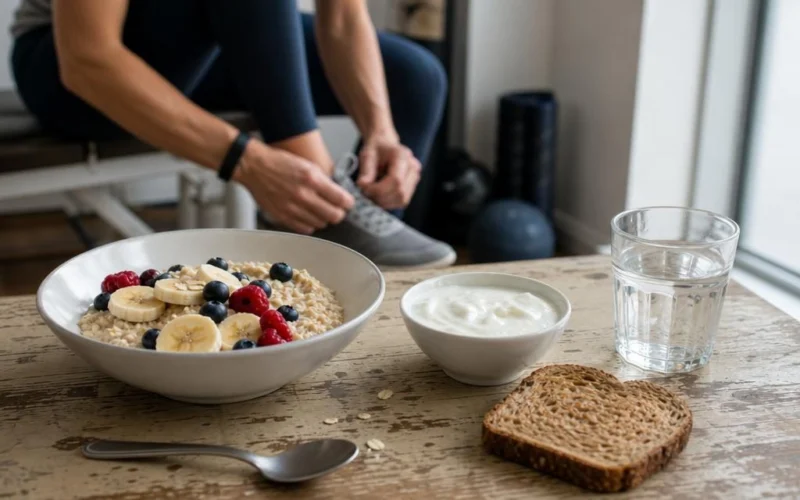
Eat a carbohydrate-centered meal or snack before a hard, long, or fasted workout; include protein when there is enough time to digest it. As exercise gets closer, make the food portion smaller, lower in fat and fiber, and easier on your stomach. A brief, easy workout may require no extra food if you have eaten normally that day.
Match your food to the workout countdown
The most useful question is not “What is the perfect pre-workout food?” It is “How long until I start?” Time affects how much you can comfortably digest, while workout demand, your last meal, and stomach tolerance determine whether you need to eat.
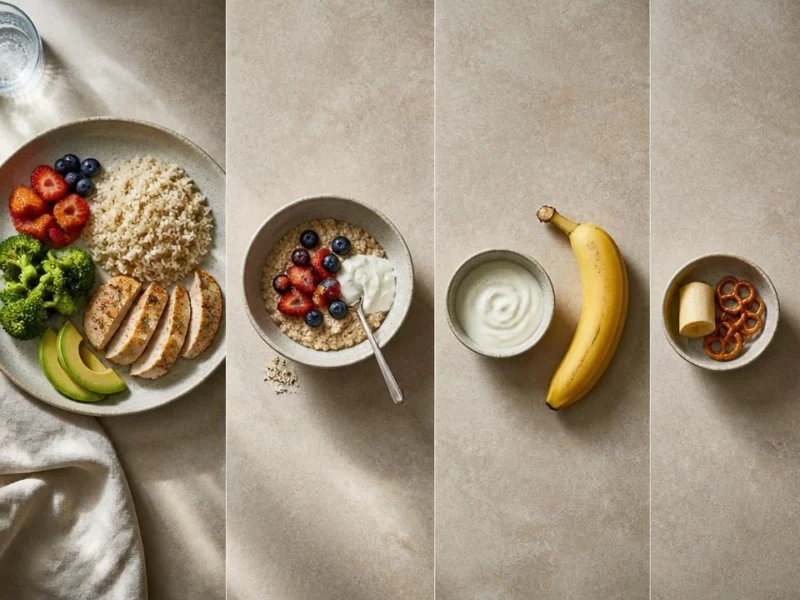
Use a Time–Demand–Meal–Gut check:
- Time: How long until the workout begins?
- Demand: Will it be easy and brief or hard, high-volume, or longer than an hour?
- Meal: When did you last eat?
- Gut: Do you tolerate solid food close to strenuous exercise?
| Time available | Workout demand and last meal | Portion and composition | Examples |
|---|---|---|---|
| 3–4 hours | A demanding or long session; it is time for a regular meal | Normal mixed meal centered on carbohydrate, with lean protein, vegetables, and some fat | Rice bowl with chicken, cooked vegetables, and fruit |
| 1–2 hours | Moderate-to-hard training or several hours since the last meal | Small meal or substantial snack with carbohydrate and optional protein; keep fat and fiber moderate if sensitive | Oatmeal with Greek yogurt and berries |
| 30–60 minutes | Harder, longer, or fasted training; hunger before an ordinary workout | Small, carbohydrate-focused snack with little fat or fiber; a small amount of protein is optional | Banana with a small yogurt, or toast with jam |
| Under 30 minutes | Easy, brief activity may require nothing; consider food if fasted or starting a demanding session | Very small portion of easy-to-digest carbohydrate | Applesauce pouch, pretzels, or half a banana |
As the workout gets closer, make the food smaller, simpler, and more carbohydrate-focused. Near strenuous exercise, high-fat, high-fiber, large-volume, or individually poorly tolerated foods can worsen fullness, reflux, nausea, or cramping because digestion competes with the demands of exercise. Tolerance varies, so test foods during normal training rather than on an event day. Protein can fit when there is enough time to digest it, but it does not need to be forced into every pre-workout snack.
Sport nutrition guidance sometimes uses 1–4 grams of carbohydrate per kilogram of body weight during the one to four hours before exercise. This broad range is intended for performance settings and depends on body size, event length, and training load. It is not a requirement for an ordinary gym visit or a 30-minute walk.
Troubleshoot common timing problems
Early morning: If solid food causes nausea, use the smallest option you tolerate or skip food before an easy, brief session if you feel well. Carbohydrate is more likely to help before hard intervals, higher-volume lifting, or training after an overnight fast. A systematic review of carbohydrate and resistance exercise found the clearest benefit for training volume when sessions exceeded 45 minutes or followed at least eight hours without food.
Long gap since the last meal: An evening workout may need a snack even when lunch was substantial. Follow the 1–2-hour route when possible, then reduce the portion if less time remains.
Hydration: For a brief, routine workout, water is generally sufficient. Prolonged activity—particularly in hot conditions or for people who sweat heavily—requires a more deliberate fluid and fueling plan. The International Society of Sports Nutrition position stand discusses approximately 30–60 grams of carbohydrate per hour during extended exercise; this during-workout range does not apply to every recreational session.
Why carbs feel different from protein during training
Carbohydrate supports higher-output muscle work
Your muscles store carbohydrate as glycogen. During intervals, demanding resistance training, and sustained endurance exercise, glycogen and circulating glucose provide accessible energy for repeated contractions. Eating carbohydrate beforehand can be especially useful when liver glycogen is lower after an overnight fast or when several hours have passed since your last meal.
This does not mean carbohydrate is mandatory before light movement. Walking, mobility work, or an easy 30-minute cycling session can usually draw on available energy without a special snack. Eating extra simply because a workout is scheduled can also add calories that the session did not require.
Protein is useful, but its timing is often oversold
Protein in a pre-workout meal can contribute to your daily protein intake and provide amino acids around training. It is not the primary fuel for hard exercise, however, and taking it immediately before lifting is not a prerequisite for gaining muscle.
A systematic review comparing protein timing found no meaningful difference in lean-mass gains based on consuming protein before versus after training, although direct-comparison evidence remains limited. Your total daily intake, training quality, and consistent meal pattern matter more than hitting a supposed 30-minute “anabolic window.”
If you ate a protein-containing meal two or three hours ago, you do not need to force down another shake before starting. If breakfast was six hours ago and dinner is still distant, a snack such as yogurt with fruit can close the gap without making protein timing unnecessarily rigid.
Your digestive tract gets less blood flow during hard exercise
Exercise shifts blood flow toward working muscles and away from the digestive tract. Large amounts of fat, fiber, or protein take longer to leave the stomach and may aggravate fullness, reflux, cramping, or nausea in susceptible people. This is why a bean bowl can be an excellent lunch yet a poor choice 20 minutes before running.
The gut-comfort rule is simple: closer workout, lower volume, lower fat, lower fiber. A 6 a.m. exerciser who feels sick after chia pudding with nut butter may tolerate half a banana or an applesauce pouch because it has less volume and fewer digestion-slowing ingredients.
A review of digestion and gastrointestinal blood flow during exercise supports limiting heavy, high-fat, high-fiber, or high-protein food near strenuous activity when symptoms are a concern.
The feared carbohydrate “crash” is not inevitable
Carbohydrate eaten shortly before exercise can produce a temporary glucose dip during the opening stage of activity in some people. Evidence does not show that this consistently impairs performance. A review of pre-exercise carbohydrate feeding found that early glucose changes do not reliably translate into poorer results.
There is also no clear reason to insist on low-glycemic foods before every workout. A systematic review and meta-analysis found no clear endurance advantage for low- versus high-glycemic-index pre-exercise meals. Food tolerance, timing, and the demands of the session are more useful decision points.
Build a pre-workout meal that your stomach can handle
When an early breakfast causes nausea
Do not force a full breakfast before a 6 a.m. workout. If the session is hard or follows an overnight fast, test a small, low-volume option such as half a banana or an applesauce pouch 15–30 minutes beforehand, then eat breakfast after training. Keep the workout similar while changing one variable at a time—food, portion, or timing—to learn what you tolerate.
When work leaves a long gap before the gym
If lunch is at noon and a hard workout starts at 6:30 p.m., plan a snack around 4:30 or 5 p.m. Greek yogurt with a banana or crackers with a small amount of turkey can bridge the gap. If you eat a heavy dinner shortly before training instead, delay the workout or reduce its intensity rather than adding another snack.
Troubleshoot specific symptoms
- Nausea or fullness: Reduce the portion, eat earlier, or choose foods lower in fat and fiber.
- Mid-session hunger: Add some carbohydrate before longer or more demanding training.
- Early energy drop: Consider whether the gap since your last meal was too long, particularly after an overnight fast.
- Reflux: Avoid large or high-fat meals close to exercise and track your personal triggers.
Test adjustments during ordinary training, not for the first time on event day. This is especially important for runners and people prone to reflux, irritable bowel symptoms, or exercise-related nausea.
Stop exercising and seek medical assessment for chest pain, fainting, repeated unexplained dizziness, or persistent gastrointestinal symptoms. Do not try to manage these symptoms solely by changing pre-workout snacks.
Specific pre-workout questions people still get stuck on
Do I need to eat before a 30-minute workout?
Usually not if the workout is easy to moderate and you have eaten within the previous few hours. A snack becomes more useful when the workout is intense, follows an overnight fast, or begins after a long gap between meals. Hunger and declining workout quality are better reasons to add food than the workout label alone.
Is a banana enough before lifting weights?
A banana can be enough when you need a light carbohydrate source 15–60 minutes before a typical lifting session. It is less likely to cover the demands of a long, high-volume workout after an overnight fast. In that case, add a small yogurt if digestion time allows, or plan a more substantial meal earlier.
Should protein come before or after a workout?
Either can fit. Include protein in regular meals across the day rather than treating one side of the workout as a strict deadline. If your last protein-containing meal was several hours ago, eating some before or after training is reasonable; you do not need both a pre-workout shake and an immediate post-workout shake by default.
Are fasted workouts better for fat loss?
Fasted exercise may increase fat use during that particular session, but that does not establish greater long-term body-fat loss. Sustainable calorie intake, diet quality, and consistent training remain more relevant. If fasting reduces training output or causes intense rebound hunger, a modest snack may support the overall plan better.
Which foods are most likely to feel heavy before running or HIIT?
Large salads, beans, fried foods, high-fiber cereals, heavy nut-butter portions, and oversized protein shakes commonly create problems when eaten close to vigorous movement. These foods are not unhealthy; their volume, fiber, fat, or protein content can simply make them poorly timed. Use smaller, simpler carbohydrate sources near training and save the heavier meal for later.
This content is based on lifestyle science, behavioral nutrition, and performance coaching research. It is for informational purposes only and does not constitute medical advice. Consult a healthcare provider before making significant changes to your sleep, diet, or fluid intake routines.