
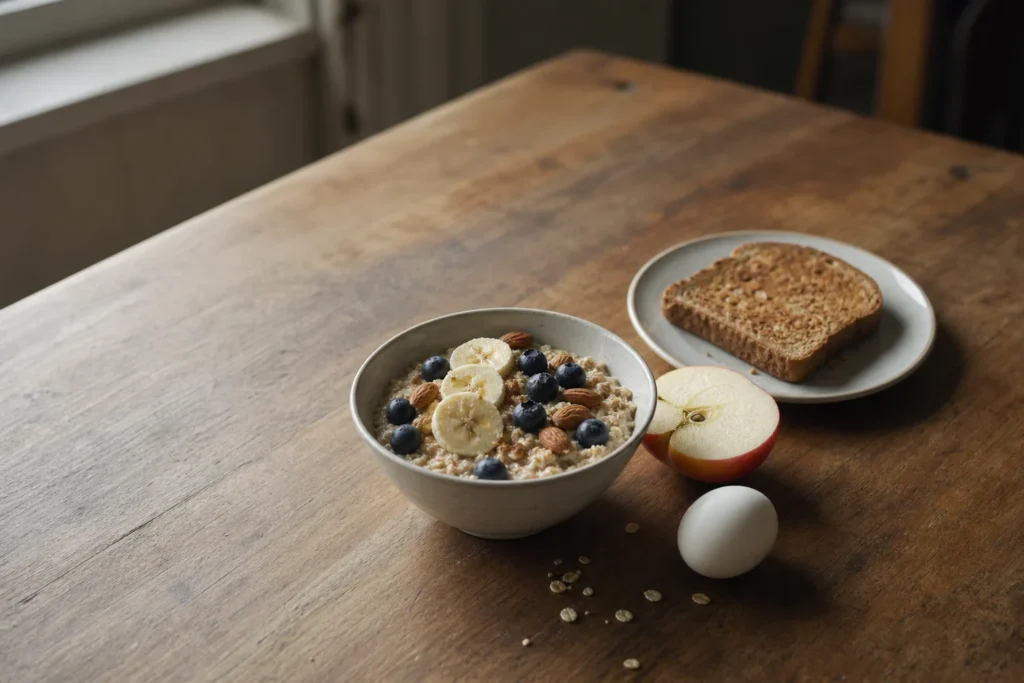
The most reliable foods that boost energy combine a slower-digesting carbohydrate with protein and produce or another fiber-rich food. Oats, eggs, Greek yogurt, lentils, beans, sweet potatoes, fruit, nuts, seeds, and leafy greens can support steadier fuel, while sugary drinks, pastries, candy, and coffee-only breakfasts often provide a brief lift without replacing sleep or adequate food.
Food does not create instant energy in the same way a stimulant changes alertness. Carbohydrates supply glucose, protein improves meal staying power, fiber slows digestion, iron supports oxygen transport, and B vitamins participate in the pathways that turn food into usable energy.
Which foods give energy without a sugar crash?
A useful energy meal has three parts: a slow carbohydrate, a protein source, and produce or another fiber-rich food. This combination is more useful than labeling every carbohydrate as “good” or “bad.” Processing, portion size, cooking method, sleep, activity, and individual glucose regulation all affect how a meal feels afterward.
The foods below are natural energy boosting foods because they supply fuel and nutrients without relying on a concentrated sugar or caffeine hit. No single food guarantees stable energy for every person, and fruit or carbohydrates do not automatically cause a crash.
Oats for a slower morning release
Plain oats provide digestible carbohydrate along with soluble fiber, including beta-glucan. Their texture and fiber can slow the pace of digestion and make breakfast more filling than a sweet pastry eaten alone.
Build oats with Greek yogurt, milk, chia seeds, pumpkin seeds, walnuts, berries, or nut butter. A practical breakfast is plain oats with Greek yogurt, berries, and pumpkin seeds. Flavored instant oatmeal with substantial added sugar is a different choice from plain oats; check the label rather than treating all oatmeal as equivalent.
Eggs when breakfast needs staying power
Eggs provide protein and several micronutrients. Protein can make a carbohydrate-containing breakfast more satisfying, which may reduce the urge to search for candy or another coffee soon afterward.
Eggs do not need to be eaten alone. Try boiled eggs with whole-grain toast and an orange, or scrambled eggs with spinach and a small roasted potato. Breakfast is useful for many people, but it is not mandatory if another eating schedule supports adequate nutrition and concentration.
Greek yogurt for protein, calcium, and convenience
Plain Greek yogurt is a convenient protein food for a desk breakfast or portable snack. Choose plain or lower-added-sugar options when possible, then add berries, oats, chia seeds, walnuts, or sliced banana.
Lactose-free Greek yogurt can suit people who experience digestive symptoms with lactose. Yogurt alone may not last through a long workday, so adding fruit and seeds creates a more complete combination of carbohydrate, fiber, protein, and unsaturated fat.
Lentils and beans for complex carbohydrates and iron
Lentils and beans combine carbohydrate, fiber, plant protein, and useful minerals. They are often digested more gradually than refined carbohydrate foods, especially when served as part of a meal rather than blended into a large, rapidly eaten portion.
Iron supports hemoglobin and oxygen transport, but fatigue alone does not prove iron deficiency. Pair plant iron with vitamin C foods such as red peppers, tomatoes, citrus, or broccoli. A lentil bowl with brown rice and red peppers is a strong work-lunch option.
Do not start iron supplements just because you feel tired. Iron deficiency can occur with or without anemia and needs appropriate clinical assessment and blood testing.
Sweet potatoes for carbohydrate-rich fuel
Sweet potatoes provide carbohydrate, fiber, and potassium. They can fit before activity or into lunch or dinner, particularly when a meal needs a satisfying carbohydrate source.
Pair a roasted sweet potato with black beans, eggs, tofu, chicken, or fish. Preparation and portion affect the complete meal response: a whole roasted sweet potato with protein and vegetables is different from a large serving of sweetened fries.
Brown rice, quinoa, and other whole grains
Whole grains provide carbohydrate for glucose availability and fiber for meal structure. Brown rice, quinoa, barley, and whole-grain pasta can support workday or exercise meals when combined with protein and vegetables.
“Whole grain” does not automatically mean low glycemic index. The 2021 international glycemic index tables show wide variation among foods and food forms, so the same broad category can produce different responses depending on processing, cooking, and serving size. A quinoa bowl with tofu and leafy greens is more sustaining than a large grain-only portion.
Nuts and seeds for energy between meals
Nuts and seeds provide unsaturated fat, some protein, fiber, magnesium, and concentrated calories in a small package. They are useful when a commute or meeting makes refrigeration difficult.
Because they are energy-dense, a small handful may be more practical than eating directly from a large bag. Pair an apple with peanut butter, or add walnuts to yogurt and berries. Peanut butter and seed butter packets can be useful shelf-stable options.
Bananas and berries for practical fruit-based energy
Bananas provide carbohydrate and potassium, making them convenient before exercise or alongside a protein-containing snack. Berries provide carbohydrate, fiber, water, and polyphenols; a typical serving is often less concentrated in sugar than candy or a sweetened drink.
Whole fruit is not nutritionally equivalent to candy because fruit comes with water, fiber, and micronutrients. Fruit alone may not last as long for some people, so combine a banana with peanut butter before activity or berries with Greek yogurt at breakfast.
Leafy greens and iron-supporting meal combinations
Spinach, kale, and other leafy greens contribute folate, magnesium, and, depending on the variety, vitamin C and plant-based iron. Plant iron is less readily absorbed than heme iron, so the rest of the meal matters.
Combine greens, beans, or lentils with peppers, tomatoes, citrus, or broccoli. A spinach and lentil salad with tomatoes and lemon dressing is more useful than treating a few leaves as a complete energy strategy.
Meat, seafood, eggs, tofu, beans, lentils, and fortified foods can all fit different eating patterns. Persistent tiredness should not be addressed by adding one iron-containing food alone.
Fatty fish or lean meat when low intake may be part of the problem
Fatty fish provides protein and nutrients such as vitamin B12. Lean meat provides protein and highly absorbable heme iron. Salmon with sweet potato and broccoli is one example of a carbohydrate-protein-produce meal.
These foods are not required for everyone. Tofu, beans, lentils, eggs, and fortified foods can support vegetarian or vegan patterns, although individual nutrient needs and intake patterns differ. Persistent fatigue may reflect sleep problems, medication effects, thyroid disease, depression, infection, or another issue rather than a missing food.
What is actually happening in your body after an energy-focused meal?

Carbohydrates supply glucose, but processing changes the pace
Digestible carbohydrates are broken down into glucose, which tissues can use for fuel. Fiber, intact food structure, protein, fat, cooking method, and portion size influence how quickly that process occurs.
Glycemic index is not a universal ranking of healthy and unhealthy foods. Fruit, legumes, dairy, pasta, and whole-grain products can produce different responses, and even two whole-grain products may differ. A large portion eaten quickly can feel very different from a moderate portion served with protein and vegetables.
This is why avoiding all carbohydrates is a poor answer to afternoon fatigue. The practical target is usually a suitable portion of carbohydrate with protein and fiber, not fear of fruit, oats, rice, or potatoes.
Protein and fat slow the meal’s exit from the stomach
Protein and unsaturated fat can slow gastric emptying and improve satiety. That extra staying power explains why an apple with peanut butter often carries someone farther than an apple juice drink.
Protein and energy levels are related through meal fullness and tissue maintenance, not through a caffeine-like surge. Protein does not eliminate post-meal tiredness if the meal is very large, sleep was poor, alcohol was consumed, stress is high, or the afternoon is sedentary.
Iron carries oxygen; it does not act like a stimulant
Iron is needed to make hemoglobin, the protein that transports oxygen in red blood cells. Iron deficiency may contribute to tiredness, weakness, headaches, or low energy, with or without anemia. Heavy menstrual bleeding, pregnancy, restrictive diets, gastrointestinal blood loss, and absorption problems can increase risk.
The NIH Office of Dietary Supplements iron fact sheet explains iron’s connection with hemoglobin and oxygen transport. Food choices can support intake, but suspected deficiency requires evaluation rather than casual supplementation.
B vitamins support metabolism without creating a caffeine-like lift
B vitamins participate in metabolic pathways that help convert food into usable energy. A varied pattern containing legumes, whole grains, eggs, dairy, meat, fish, leafy greens, nuts, and fortified foods can provide several B vitamins.
A supplement does not automatically improve energy when a deficiency is absent. Feeling a sudden lift after taking a product may reflect caffeine, expectation, or another ingredient rather than a dramatic change in cellular energy production.
Caffeine changes alertness through adenosine signaling
Caffeine mainly reduces perceived sleepiness by blocking adenosine receptors. The review of adenosine, caffeine, and sleep-wake regulation describes this alertness mechanism. Caffeine does not provide carbohydrate, protein, iron, sleep, or treatment for a nutrient deficiency.
The FDA cites up to 400 milligrams of caffeine daily as a general reference for most healthy adults, not as a target. The FDA caffeine guidance also reflects the importance of individual sensitivity.
Use more caution with pregnancy, anxiety, reflux, arrhythmias, medication use, and sleep problems. Coffee may mask fatigue rather than resolve its cause, especially if it is replacing breakfast or shortening sleep.
How to build meals and snacks that last through the afternoon

Use the three-part energy pairing rule
Use this simple formula: slow carbohydrate + protein + produce or fiber. It is flexible enough for a workday, exercise schedule, or late shift.
| Situation | Pairing | Why it fits |
|---|---|---|
| Breakfast | Oats, yogurt, berries | Fuel plus staying power |
| Work lunch | Lentils, rice, peppers | Fiber and vitamin C |
| 3 p.m. snack | Apple, peanut butter | Portable and filling |
| Exercise snack | Banana, yogurt | Carbohydrate plus protein |
For breakfast, try oats with Greek yogurt, berries, and seeds. For work lunch, choose lentils with brown rice, peppers, and leafy greens. For a 3 p.m. snack, use an apple with peanut butter or hummus with whole-grain pita and carrots.
The goal is a more complete eating pattern, not perfect blood sugar control. Portions should reflect appetite, activity, medical needs, and total intake.
Foods to avoid energy crash patterns
Foods are not forbidden, and sugar does not guarantee a measurable crash for every person. The concern is that highly refined, low-fiber choices may be less filling and easier to overconsume, particularly when they replace a balanced meal.
- Pastry and coffee only: a short lift with little protein or fiber.
- Candy or cookies alone: concentrated sweetness without much meal structure.
- Sweetened cereal: check whether protein and fiber are minimal.
- Soda or energy drinks: liquid calories or stimulant exposure instead of food.
- Large white-bread meal: less staying power when protein and produce are missing.
A pastry can fit an occasional meal. The more useful change is adding food with protein and fiber rather than trying to create a rigid list of forbidden items.
The 3 p.m. slump may not be hunger
Use the SLEEP check before reaching for another stimulant:
- S — Sleepy: Did you sleep enough, or was sleep poor quality?
- L — Low fluids: Have you had water recently?
- E — Empty stomach: When and what did you last eat?
- E — Effort: Did you exercise, work physically, or underfuel?
- P — Pressure: Is stress or mental overload driving the craving?
If hunger is the likely answer, choose a carbohydrate-protein snack. If thirst is more likely, drink normally rather than forcing a large volume. If severe sleepiness continues despite adequate food and sleep, escalating caffeine is not a useful diagnosis.
A work dinner, late shift, or rushed commute
Keep shelf-stable options such as unsalted nuts, whole-grain crackers, roasted chickpeas, or a nut butter packet in a bag or desk drawer. At a work dinner, choose a protein source, a carbohydrate side, and a vegetable instead of skipping food and relying on late-night sweets.
For late-shift workers, use the same pairing principle according to the work period rather than clock time. A meal before the shift and a planned snack midway through it may work better than waiting until the commute home.
Rigid food rules can create anxiety and disordered patterns. The goal is a repeatable structure, not perfect eating at every meal or fear of a restaurant dessert.
A simple day plan for sustained energy
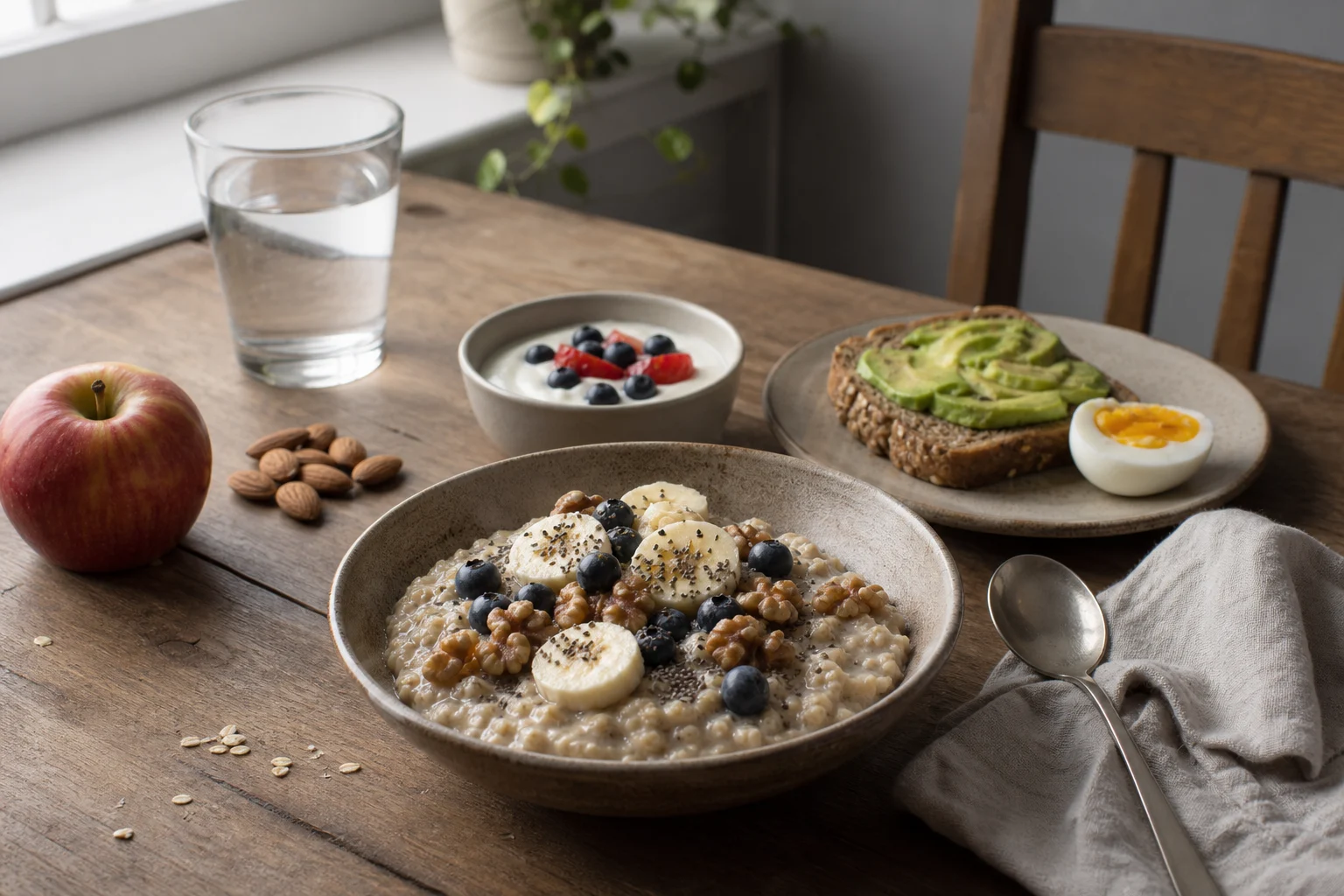
| Time | Meal or snack | Energy pairing |
|---|---|---|
| 7:30 a.m. | Oats, yogurt, berries, seeds | Carbohydrate, protein, fiber |
| 10:30 a.m. | Banana and peanut butter | Fruit, fat, protein |
| 12:30 p.m. | Lentil bowl, rice, peppers | Legume, grain, vitamin C |
| 3:00 p.m. | Hummus, pita, carrots | Carbohydrate, protein, produce |
| 6:30 p.m. | Salmon, sweet potato, greens | Protein, carbohydrate, vegetables |
- The 10:30 snack is optional; use hunger, activity, and meal size as guides.
- Adjust portions to appetite, exercise, medical needs, and total daily intake.
- Water belongs alongside meals, but do not force excessive amounts.
Drinking very large volumes of water quickly can dilute blood sodium and contribute to hyponatremia. There is no benefit in turning water intake into a competition; drink to thirst and account for heat, exercise, illness, and clinician-specific instructions.
What changes after replacing a pastry-and-coffee breakfast?
Consider this example scenario: a person who usually eats a sweet pastry and coffee at 7:00 a.m. replaces the meal with oats, Greek yogurt, berries, and seeds for 7–14 days. This is not a guaranteed treatment or a clinical result, but it illustrates what may need adjusting.
- Days 1–3: a sudden caffeine reduction may bring headache, irritability, or stronger coffee cravings. Hunger may still appear if the new portion is too small.
- Days 4–7: the midmorning hunger pattern may become easier to predict, while lunch portions may need adjustment.
- Week 2: the 3 p.m. pastry or candy habit may occur less often if breakfast and lunch contain enough food. Sleep and workload still matter.
The hardest point is often day three or four, when the old convenience habit returns and caffeine withdrawal feels like low energy. A concrete workaround is to keep the coffee quantity stable initially, change the food first, then reduce caffeine gradually if desired.
This change cannot correct sleep deprivation, anemia, depression, or another medical condition. It also cannot guarantee that every afternoon crash disappears. It is a practical test of meal structure, not proof that one breakfast controls the whole day.
When food is not the answer to persistent fatigue
Seek medical evaluation when fatigue lasts several weeks without a clear explanation or when it is severe enough to affect normal activity. Food can support energy intake, but it should not delay assessment of a possible health problem.
- Shortness of breath, chest pain, fainting, or a racing heartbeat
- Unusual weakness, pale skin, or frequent headaches
- Heavy menstrual bleeding or possible gastrointestinal blood loss
- Unintentional weight change, fever, persistent thirst, or frequent urination
- Loud snoring, witnessed breathing pauses, or severe daytime sleepiness
- Depression symptoms or a major medication change
Possible contributors include iron deficiency, thyroid disease, sleep apnea, infection, medication effects, depression, inadequate total food intake, or other conditions. A clinician can decide whether blood tests or another assessment is appropriate.
Questions readers ask about natural energy foods
What is the best breakfast for all-day energy?
There is no mandatory breakfast for everyone, but a useful option is oats with Greek yogurt, berries, and seeds. It combines carbohydrate, protein, and fiber. Eggs with whole-grain toast and fruit offer a similar structure. If breakfast causes digestive discomfort or does not fit your schedule, use the same pairing at the first meal you eat.
Are bananas good for sustained energy?
Bananas provide convenient carbohydrate and potassium and can work well before activity. For longer staying power, pair one with peanut butter, Greek yogurt, nuts, or seeds. A banana alone may be sufficient for short exercise but may not carry someone through a long work period.
Which foods are high in iron for energy?
Lentils, beans, leafy greens, lean meat, seafood, eggs, tofu, and fortified foods can contribute iron. Pair plant sources with vitamin C foods such as peppers, tomatoes, citrus, or broccoli. Fatigue does not confirm iron deficiency, so supplements should follow appropriate evaluation rather than guesswork.
Is natural food-based energy better than caffeine?
Food and caffeine do different jobs. Food supplies carbohydrate, protein, fat, vitamins, and minerals; caffeine mainly changes perceived alertness through adenosine signaling. Use food to address hunger and underfueling, and treat caffeine as a stimulant with limits, not as a replacement for sleep or meals.
Why do I feel tired after eating carbohydrates?
A large portion, a low-protein meal, poor sleep, alcohol, stress, inactivity, or an individual glucose response may contribute. All carbohydrates are not interchangeable, and all fruit or grains do not cause the same response. Try a moderate carbohydrate portion with protein and produce, then seek medical advice if fatigue is persistent, severe, or accompanied by other symptoms.
This content is based on lifestyle science, behavioral nutrition, and performance coaching research. It is for informational purposes only and does not constitute medical advice. Consult a healthcare provider before making significant changes to your sleep, diet, or fluid intake routines.