For most people, eating oatmeal every day is a healthy choice when the portion is about ½ cup dry oats and the bowl includes protein, unsweetened toppings, and enough fluid—but sugary packets, oversized portions, and rapid fiber increases can turn its benefits into drawbacks. Oats provide viscous beta-glucan fiber, and a daily bowl can fit well into a heart-conscious or diabetes-aware eating pattern without being a cure-all.
The practical target is one standard serving most days, then adjust for hunger, activity, total calorie needs, and digestive tolerance. A bowl made from plain oats behaves very differently from a dessert-like packet with syrup, dried sweeteners, and a small amount of actual oat grain.
What’s in oatmeal—and does the oat type really matter?
Oatmeal nutrition facts depend on whether numbers refer to dry oats, cooked porridge, or a packaged product. The label can look confusing because water expands the volume dramatically: ½ cup dry rolled oats becomes roughly 1 cup cooked oatmeal, while its calories and nutrients remain those of the dry grain.
Plain oats are a whole grain with carbohydrate, plant protein, unsaturated fat, minerals, and a distinctive soluble fiber called beta-glucan. A standard ½-cup dry serving of old-fashioned rolled oats generally supplies about 150 calories, 5 grams of protein, 4 grams of fiber, and roughly 2 grams of beta-glucan, though brands vary slightly.
| Nutrient/Metric | Amount per 100g | %DV or metric | Primary role |
|---|---|---|---|
| Energy, dry oats | 379 kcal | Food energy | Fuel for daily activity |
| Protein | 13.2 g | 26% DV | Satiety and tissue repair |
| Total fiber | 10.1 g | 36% DV | Stool bulk and viscosity |
| Total carbohydrate | 67.7 g | 25% DV | Primary energy substrate |
| Total fat | 6.5 g | 8% DV | Flavor and energy density |
| Magnesium | 138 mg | 33% DV | Muscle and enzyme activity |
| Iron | 4.7 mg | 26% DV | Oxygen transport |
| Phosphorus | 410 mg | 33% DV | Bone and cell structure |
Those figures describe 100 grams of dry plain oats, which is far more than a usual single bowl. Use them to compare products, not as a suggested serving. Cooked oatmeal looks nutritionally diluted per 100 grams because much of that weight is water.
Steel-cut, rolled, instant, and overnight oats compared
Steel-cut oats are oat groats chopped into small pieces. They stay pleasantly chewy after cooking, usually take 20 to 30 minutes on the stove, and have a more visible grain structure. Their nutrition is very close to rolled oats because both begin as the same whole oat groat.
Rolled oats are steamed and flattened, so water penetrates faster. They create the classic creamy bowl in about five minutes. In my test kitchen, rolled oats reached a thick, spoon-coating gel after seven minutes at a low simmer; vigorous boiling broke the surface structure down further and produced a softer, almost paste-like bowl by minute ten.
Plain instant oats are rolled oats cut thinner or processed to rehydrate rapidly. They are not automatically unhealthy. Their faster hydration and smaller particle size can produce a quicker glucose rise for some people than intact steel-cut oats, but serving size and what is eaten alongside them often matter more than the format alone.
- Steel-cut oats: longest chew, stove-top texture, least processed appearance.
- Rolled oats: practical daily default, creamy and versatile.
- Plain instant oats: fast, inexpensive, useful for busy mornings.
- Flavored instant packets: check sugar, sodium, and serving size.
- Overnight oats: rolled oats softened by refrigeration, not a separate grain.
Flavored packets are the real shopping trap. Some contain several teaspoons of added sugar, while plain instant oatmeal may contain only oats and perhaps a little salt. Read the ingredient list rather than judging the word “instant.”
Why 3 grams of oat beta-glucan matters for cholesterol
Beta-glucan is a soluble, gel-forming fiber concentrated in the oat endosperm. Once hydrated, it increases the viscosity of intestinal contents. That thicker mixture can reduce reabsorption of bile acids; the liver then draws on circulating cholesterol to make replacement bile acids.
The cholesterol evidence is linked to an intake of at least 3 grams daily of oat beta-glucan. A ½-cup serving often supplies around 2 grams, so reaching the amount used in many trials may require a larger oat intake or another oat-food serving during the day. A meta-analysis of 28 randomized trials found reductions in LDL and total cholesterol at this dose range.
Expert tip: Cholesterol evidence is tied to at least 3 g/day oat beta-glucan; oatmeal supports treatment plans but does not replace prescribed LDL-lowering medication.
What happens to your body when you eat oatmeal every day?
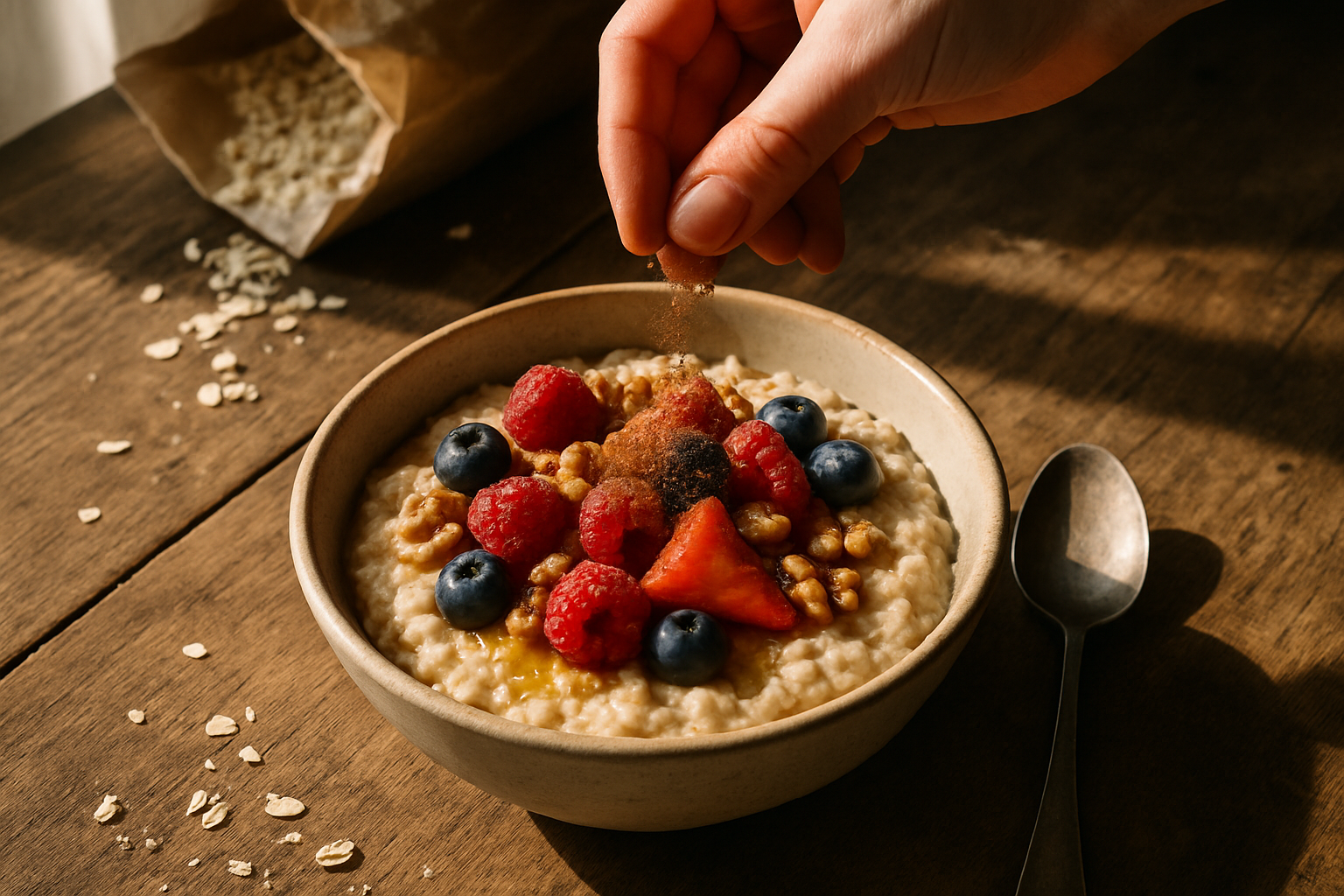
Daily oatmeal can affect fullness, bowel habits, post-meal glucose, and LDL cholesterol, but the result depends on the complete meal. A bowl with oats, berries, Greek yogurt, and walnuts behaves differently from oats cooked in water and topped with brown sugar, sweetened dried fruit, and a large pour of cream.
Oatmeal pros and cons are therefore less about declaring oats “good” or “bad” and more about dose, preparation, baseline health, and tolerance. The strongest evidence concerns viscous fiber and cholesterol; microbiome claims are plausible but should be described with more restraint.
Beta-glucan slows digestion and supports fullness
Hydrated beta-glucan forms a viscous matrix in the stomach and small intestine. It slows the movement of food through the upper digestive tract and can moderate the rate at which digestive enzymes reach starch. That physical gelling effect is why oatmeal often feels more sustaining than an equal-calorie refined breakfast cereal.
For oatmeal for weight loss, the useful feature is satiety, not fat burning. Oats do not create a metabolic shortcut. They may make it easier to eat fewer calories later if the breakfast is satisfying enough to prevent mid-morning grazing.
Protein is the frequent missing piece. A plain 150-calorie oat bowl can leave a physically active person hungry within two hours. Mixing in ¾ cup plain Greek yogurt after cooking, or serving eggs alongside savory oats, changes the meal’s protein load and slows appetite rebound more reliably than adding an extra spoonful of oats.
- For a creamy bowl: simmer gently until the oat starch and beta-glucan hydrate.
- For longer fullness: add 15 to 25 grams protein at breakfast.
- For calorie awareness: measure nut butter and granola separately.
- For fruit volume: use berries, grated apple, or diced pear.
One client who switched from a pastry breakfast to ½ cup oats with yogurt reported less 10:30 a.m. hunger after four mornings. On day five, she doubled the oats and added two tablespoons of peanut butter without measuring; the breakfast became closer to 500 calories. The lesson was not to fear oatmeal daily calories, but to notice that healthy toppings still carry energy.
Oatmeal cholesterol benefits are useful, but modest
Oatmeal cholesterol benefits are most relevant for people with elevated LDL cholesterol, particularly when oats replace a breakfast high in saturated fat or refined carbohydrate. The expected change is usually modest rather than dramatic, and baseline LDL, dose consistency, genetics, body weight, and the rest of the diet all influence the result.
A systematic review of randomized trials in adults with high cholesterol likewise found lower total and LDL cholesterol with oat beta-glucan. HDL cholesterol and triglycerides did not show the same consistent response in the earlier meta-analysis, so oatmeal should not be marketed as an all-purpose lipid treatment.
Food chemistry explains why oat preparation still matters. A thick porridge that retains its beta-glucan-rich liquid delivers the fiber matrix. Straining cooked oats, replacing most of the oats with oat-flavored drinks, or relying on a tiny garnish of oat bran does not provide the same predictable dose.
Oatmeal and diabetes: portion, toppings, and personal glucose response
Oatmeal and diabetes can work well together, but “low glycemic” is not a permission slip for unlimited portions. Glycemic load rises with the amount of available carbohydrate eaten. A large bowl, a banana, maple syrup, raisins, and sweetened milk can produce a very different glucose response from a measured bowl with protein and seeds.
Steel-cut oats often produce a gentler post-meal curve because the pieces remain more intact, but there is overlap between individuals. Sleep loss, illness, exercise, medication timing, and usual carbohydrate intake can shift a person’s response. Someone using a continuous glucose monitor can test a consistent breakfast on two or three separate mornings rather than drawing a conclusion from one unusual day.
A practical home experiment is to keep the oat amount, cooking liquid, and toppings identical, then note hunger and glucose trends at the time points recommended by the person’s diabetes clinician. If glucose rises more than expected, reduce the dry oat portion before assuming oats must be eliminated. Replacing syrup with cinnamon does not remove carbohydrate, but swapping part of the fruit-and-syrup topping for yogurt or eggs changes the meal’s balance.
People taking insulin or sulfonylureas should not make large breakfast carbohydrate changes casually. A recurring bowl of oatmeal can alter medication needs, especially if it replaces a higher-carbohydrate pastry or cereal breakfast.
Fermentable fiber can help—or cause gas
Some oat fiber reaches the colon, where resident microbes ferment it into short-chain fatty acids such as acetate, propionate, and butyrate. These compounds are active metabolites, not magic substances; they are part of normal fiber fermentation and may influence the colonic environment.
A small 45-day randomized oatmeal trial reported changes in lipids, gut bacteria, and short-chain-fatty-acid measures. That is interesting, but it does not prove that every person will obtain the same microbiome shift or that a particular bacterial profile predicts better health.
Gas is often the immediate sign that fermentation outpaced adaptation. In clinic, the common pattern is a person moving from low-fiber breakfasts to a large oat bowl plus chia seeds and fruit overnight. The abdomen feels tight by late afternoon, not because oats are toxic, but because several fermentable ingredients arrived at once.
How much oatmeal is too much, and who should be careful?
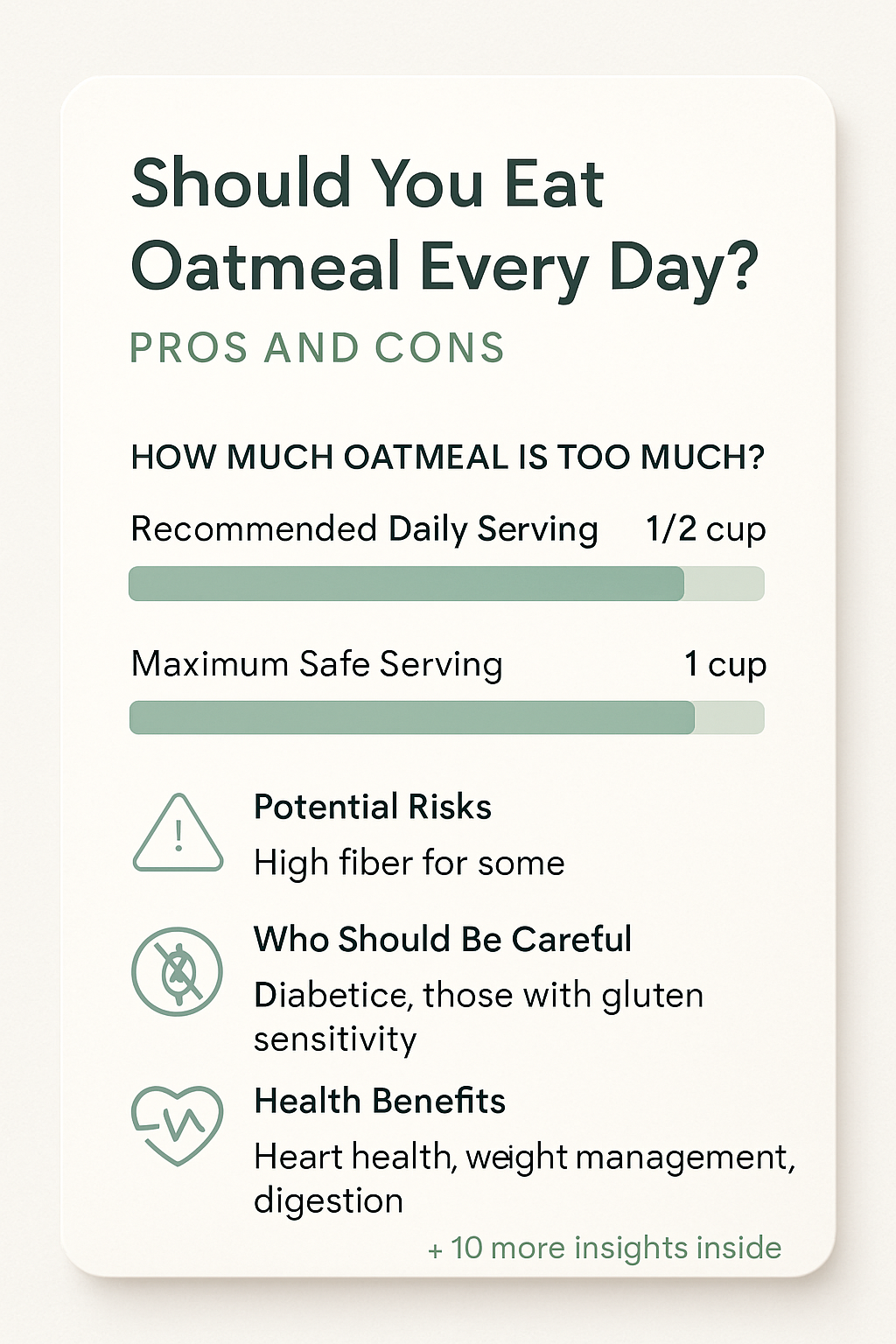
For most adults, ½ cup dry oats daily is a sensible starting portion. One cup dry oats can fit an athlete or someone with high calorie needs, but it is roughly 300 calories before milk, nuts, fruit, or sweeteners. More is not automatically better just because oats have oatmeal fiber benefits.
Expert tip: Start with ¼ cup dry oats for several days if your usual diet is low in fiber, then move toward ½ cup while increasing fluids.
The ½-cup dry-oats self-check
Measure the dry oats at least once with the actual cup you use. A ½-cup dry serving is about the size of a rounded cupped hand for many adults, but measuring is more accurate because oats vary in thickness and settle differently. Cooked volume is a poor guide: water can make a modest dry portion look enormous.
Use a quick three-part tally before calling oatmeal a daily habit:
- Dry oats: ¼, ½, or 1 cup?
- Added sweetener: teaspoons, packets, or none?
- Energy-dense toppings: measured spoonfuls or free-poured?
A daily serving becomes excessive when it crowds out protein-rich foods, vegetables, legumes, varied grains, or foods needed for a specific medical diet. Dietary monotony is a quieter downside than bloating. Oats offer useful nutrients, yet they do not supply vitamin B12, vitamin C, or enough lysine-rich protein to carry breakfast alone for everyone.
When oats trigger bloating, constipation, or discomfort
The honest difficulty is that people often increase oatmeal without increasing fluid. Soluble fiber holds water; if someone eats a dense bowl and drinks very little through the morning, stool can become harder rather than easier to pass. Aim to have a full glass of water or unsweetened beverage with the meal, then maintain normal fluid intake throughout the day.
For gas or distension, reduce the dose to ¼ cup dry oats for three to five days and avoid stacking several fiber boosters in the same bowl. Leave out chia, large amounts of bran, sugar alcohols, and oversized dried-fruit portions during the adjustment period. Add one item back at a time so the trigger is identifiable.
People with IBS may tolerate oats well, yet portion and co-ingredients matter. A bowl heavy in apples, pears, honey, inulin-fortified protein powder, or certain sugar alcohols can raise fermentable carbohydrate exposure beyond what the person tolerates. Oats themselves are often less problematic than the “healthy” toppings.
Oats contain phytic acid, a natural phosphorus-containing compound that can bind minerals such as iron and zinc in the digestive tract. In a varied diet, this is rarely a reason to avoid oats. People with iron deficiency, very restricted diets, or high daily bran intake can improve mineral exposure by rotating grains, soaking overnight oats, using fermented dairy or vitamin-C-rich berries, and avoiding tea or coffee with the meal if iron absorption is a priority.
Celiac disease and certified gluten-free oats
Oats do not contain wheat gluten, but ordinary oats can be contaminated with wheat, barley, or rye during growing, milling, transport, and packaging. For celiac disease, choose products specifically labeled certified gluten-free oats rather than assuming plain oats are safe.
The NIH explains that oats may be affected by gluten cross-contact and that people with celiac disease should discuss oat inclusion with their clinician; see its guidance on eating with celiac disease. A smaller subset of people may react to oat protein even when cross-contact is controlled, so symptoms and follow-up testing matter.
Anyone with swallowing difficulty, a known bowel narrowing, gastroparesis, or a medically prescribed low-fiber diet needs individualized advice before suddenly adding large servings of oats or oat bran. Keep oats and oral medications separated if a clinician or pharmacist recommends it; viscous fiber can alter the timing of absorption for some medicines.
How can you make daily oatmeal healthier without making it boring?
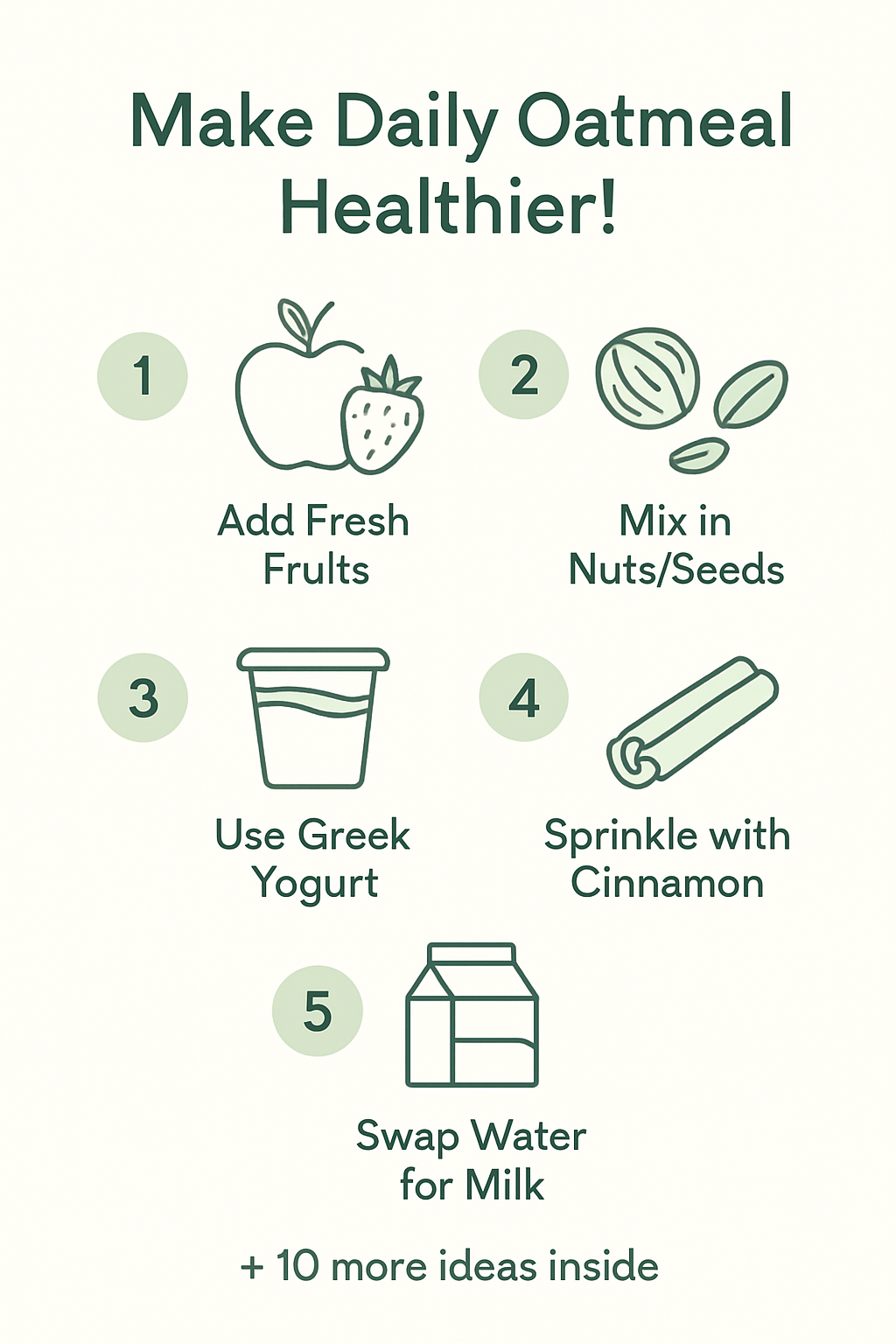
The best daily oatmeal is built as a meal rather than treated as a blank canvas for sugar. Start with plain oats, then choose one protein source, one fruit or vegetable element, and a measured fat source. Savory oats are especially useful for people who are tired of sweet breakfasts but still want the same grain base.
My favorite savory test-kitchen ratio is ½ cup rolled oats cooked in water or low-sodium broth, finished with a beaten egg stirred in during the final 90 seconds. The egg forms soft ribbons instead of a rubbery scramble. Top with sautéed mushrooms, spinach, black pepper, and a teaspoon of olive oil for a bowl with no need for syrup.
| Goal | Best option |
|---|---|
| Lower added sugar | Plain oats, berries |
| Longer chew | Steel-cut oats |
| Fast weekday bowl | Plain instant oats |
| Higher-protein breakfast | Greek yogurt or eggs |
| Overnight prep | Rolled oats, yogurt |
The table is a starting point, not a rigid rule. Steel-cut oats can be batch-cooked and reheated quickly; plain instant oats can be made more satisfying with the same toppings used for rolled oats. Texture preference matters because a breakfast you genuinely enjoy is more likely to be repeated without resorting to sugary additions.
Build a bowl that keeps you full
A protein target of roughly 15 to 25 grams at breakfast is practical for many adults, though individual needs vary. Oats provide some protein, but usually not enough to reach that range alone. Greek yogurt, cottage cheese, soy milk, soy yogurt, eggs, or a tested protein powder are workable choices.
- Frozen berries: add after cooking for vitamin C and volume.
- Greek yogurt: stir in after cooling slightly for protein.
- Walnuts: use one tablespoon for texture and ALA fat.
- Peanut butter: measure one tablespoon; it is calorie-dense.
- Cinnamon and vanilla: increase perceived sweetness without sugar.
- Grated zucchini: disappears into savory or sweet oats.
Pairing berries with oats is more than a flavor choice: vitamin C from berries can support absorption of the non-heme iron in the meal. Pairing oats with walnuts, peanut butter, or tahini adds fat and changes mouthfeel, but it does not meaningfully improve absorption of oat minerals in the way vitamin C can.
Plain instant oatmeal can still be healthy
Plain instant oatmeal is a credible option for travel, office drawers, and mornings with no cooking time. Choose packets or cups listing oats first and ideally little beyond oats and salt. Pouring hot water over plain instant oats, then adding a single-serve unsweetened yogurt and fruit, is nutritionally different from buying a brown-sugar-flavored product.
Watch “protein oatmeal” products closely. Some contain useful added protein; others achieve a dessert-like flavor with sugar, syrups, or large amounts of saturated fat. Compare the added sugar line, sodium, and ingredient list rather than relying on front-label claims.
A 12-hour overnight-oats texture and digestion check
Overnight oats are healthy when the base is proportioned sensibly. Combine ½ cup rolled oats with about ½ cup milk or fortified soy milk, then refrigerate in a covered container. At four hours, the center can remain chewy; at 12 hours, rolled oats are usually fully hydrated with a cool, pudding-like texture.
Soaking softens the grain and can reduce some phytic acid activity, though it does not erase every antinutrient concern or make oats “detoxifying.” If you are prone to bloating, begin with oats and milk alone for the first few overnight batches. Add chia only after you know the base recipe is comfortable; one tablespoon absorbs substantial water and makes the mixture much thicker by morning.
For food safety, refrigerate overnight oats promptly and discard portions that have sat at room temperature for extended periods. Use pasteurized dairy or a refrigerated plant milk, especially for make-ahead jars prepared several days in advance.
Daily oatmeal questions people ask before making it a habit
Is it okay to eat oatmeal every single day? Yes, for most people. Rotate toppings and occasionally rotate the grain itself—such as using quinoa, buckwheat, or whole-grain toast on other mornings—so breakfast supplies a wider nutrient range. Choose certified gluten-free oats if you have celiac disease or medically confirmed gluten sensitivity related to cross-contact.
How much oatmeal should you eat a day? Start with ¼ cup dry oats if your usual fiber intake is low. For many adults, ½ cup dry oats is a comfortable everyday serving. Larger portions may suit higher calorie needs, but assess the whole bowl rather than treating oats as calorie-free.
Is oatmeal good for weight loss? It can support a calorie-controlled eating pattern because its hydrated fiber structure can make breakfast more filling. Weight loss still requires an overall energy deficit, and calorie-heavy toppings can erase the advantage of a measured oat serving.
Does oatmeal lower cholesterol? Oat beta-glucan can produce a modest LDL-lowering effect when consumed consistently at adequate doses. It is most useful beside prescribed medication, adequate physical activity, and a dietary pattern lower in saturated fat—not as a replacement for treatment.
Is instant oatmeal healthy, and are overnight oats healthy? Plain instant oatmeal can be healthy; flavored packets are the version most likely to add unnecessary sugar. Overnight oats are also a nutritious option when refrigerated, made with a measured oat portion, and balanced with protein rather than loaded with sweeteners.
This content is based on food chemistry and clinical nutrition research. It is for informational purposes only and does not constitute medical advice. Consult a qualified healthcare professional before making significant changes to your dietary routine.