
I coach most adults to keep saturated fat below 10% of calories and deliberately spend the rest of their fat budget on unsaturated sources. For a 2,000-calorie intake, that means no more than 22 g saturated fat per day; if LDL cholesterol is elevated, the American Heart Association-style target is closer to 13 g per day. There is no required standalone gram target for unsaturated fats: use them to replace saturated fat while keeping total fat and calories appropriate for your body size, training, and goals.
The practical answer to saturated vs unsaturated fats daily intake is not “avoid all saturated fat.” It is to stop treating butter, cream, cheese, fatty processed meat, and coconut oil as interchangeable with olive oil, nuts, seeds, avocado, and oily fish. The replacement matters more than perfection: replacing saturated fat with polyunsaturated fat has the strongest evidence-based recommendation in the WHO guideline on dietary fats.
Calories, fat types, and the food matrix that changes the math
Every dietary fat supplies 9 calories per gram, so olive oil and butter are equally energy-dense even though their fatty-acid profiles differ. The useful distinction is chemical: saturated fatty acids contain no carbon-carbon double bonds; monounsaturated fats contain one; polyunsaturated fats contain two or more. That molecular structure affects membrane behavior, lipoprotein handling, and the way a food fits into a meal.
Food quality still matters beyond a “good fats vs bad fats chart.” Cheese contains protein and calcium but can deliver a large saturated-fat load in a small serving. Walnuts are calorie-dense too, yet they provide polyunsaturated fats, fiber, magnesium, and a texture that generally slows eating. A tablespoon of oil can disappear into a pan without much fullness; 30 g of pistachios gives a visible portion and requires chewing.
| Food/category | Per 100 g | Satiety metric | Clinical use |
|---|---|---|---|
| Olive oil | 884 kcal, 14 g sat | No fiber | Butter replacement |
| Avocado | 160 kcal, 2.1 g sat | 6.7 g fiber | High-volume fat |
| Almonds | 579 kcal, 3.8 g sat | 12.5 g fiber | Portable snack |
| Salmon | 208 kcal, 3.1 g sat | 20 g protein | Protein-fat meal |
| Cheddar | 403 kcal, 21 g sat | 25 g protein | Portion-sensitive food |
| Butter | 717 kcal, 51 g sat | No protein | Use sparingly |
Unsaturated fats benefits are clearest when the substitution is real. Swapping 10 g of saturated fat from butter or fatty meat for 10 g of polyunsaturated fat from seeds, walnuts, soybean oil, or fish changes the fatty-acid mix without changing calories. Replacing that butter with sweetened white toast, pastries, or refined starch is a different intervention; it does not deliver the same LDL-cholesterol advantage.
Your saturated fat cap is based on calories, not a universal number

The current U.S. Dietary Guidelines for Americans 2025–2030 retain the population target of saturated fat below 10% of total calories. The calculation is simple: daily calories × 0.10 ÷ 9. The division by nine converts calories from fat into grams of fat.
A person eating 1,600 calories has a very different saturated fat limit than a person maintaining weight on 2,700 calories. That is why “20 g per day” can be a reasonable ceiling for one person and too high for another. The FDA label Daily Value of 20 g is a labeling reference, not a personalized saturated fat recommended daily allowance.
| Daily calories | 10% cap | 6% AHA target |
|---|---|---|
| 1,600 kcal | 17.8 g | 10.7 g |
| 1,800 kcal | 20.0 g | 12.0 g |
| 2,000 kcal | 22.2 g | 13.3 g |
| 2,500 kcal | 27.8 g | 16.7 g |
The stricter target is relevant for people actively trying to reduce LDL cholesterol, people with established cardiovascular disease, diabetes plus other cardiovascular risk factors, familial hypercholesterolemia, or a clinician-directed lipid plan. The AHA saturated fat guidelines use less than 6% of calories, roughly 13 g at 2,000 calories. That is not a magic threshold where 14 g causes harm, but it is a useful operating target when blood lipids are a priority.
Try this self-check before changing your groceries:
- Find your usual calories: use a two-week average, not one unusually active day.
- Calculate the ceiling: calories × 0.10 ÷ 9.
- Audit three repeat foods: check coffee additions, cheese portions, and restaurant meals first.
If your calculated cap is 18 g and your breakfast alone contains 9 g from sausage, cheese, and creamer, the rest of the day becomes unnecessarily restrictive. Change the breakfast pattern rather than spending the afternoon hunting for “fat-free” snacks.
Monounsaturated and polyunsaturated fats are not identical
Monounsaturated fat, or MUFA, is abundant in olive oil, canola oil, avocado, peanuts, almonds, and many olives. Polyunsaturated fat, or PUFA, includes omega-6 linoleic acid and omega-3 fats such as alpha-linolenic acid, EPA, and DHA. Both categories generally improve the fat profile of a meal when they replace saturated fat.
PUFAs deserve special attention because the body cannot make enough of the essential fatty acids linoleic acid and alpha-linolenic acid. EPA and DHA from salmon, sardines, trout, herring, and mackerel are structurally distinct from plant omega-3s; conversion from alpha-linolenic acid to EPA and DHA is limited. Two fish meals per week is a more reliable food-based pattern than assuming flax alone covers every omega-3 need.
- MUFA sources: olive oil, avocado, almonds, peanuts.
- Omega-6 PUFA: seeds, walnuts, soybean oil, tahini.
- Marine omega-3: salmon, sardines, trout, herring.
- Plant omega-3: chia, flax, hemp, walnuts.
The “omega-6 is inflammatory” claim oversimplifies human nutrition. Linoleic acid is an essential fatty acid, and replacing saturated fat with unsaturated oils is generally preferable to replacing it with refined carbohydrate. A mixed dietary pattern with nuts, legumes, vegetables, fish, and minimally processed oils gives far more useful context than chasing a single omega ratio.
Why butter and olive oil can produce different LDL results
LDL particles transport cholesterol through the bloodstream. Saturated fats—particularly palmitic acid, common in fatty meats, dairy fat, and palm oil—can reduce LDL receptor activity in the liver. Fewer functioning receptors means less LDL clearance from circulation, leaving more LDL particles available to enter artery walls.
Replacing palmitic acid with unsaturated fats lowers LDL cholesterol in controlled dietary comparisons; the effect is described in this randomized-trial meta-analysis of fatty-acid replacement. The relevant word is replacement. Adding olive oil to a diet already high in butter, cheese, pastries, and processed meat may increase calories without reducing the original saturated-fat exposure.
A 2020 Cochrane review covering 12 trials and 53,758 participants found that reducing saturated fat lowered combined cardiovascular events by 17%, as summarized in the long-term randomized-trial review. That finding does not make one restaurant burger an emergency. It supports the everyday pattern: choose a meal architecture that repeatedly lowers saturated fat while preserving protein, fiber, and enjoyment.
Fat does not become belly fat because it is dietary fat
“Is saturated fat belly fat?” confuses dietary intake with adipose tissue storage. Body-fat gain requires a sustained energy surplus. Dietary fat is easy to overconsume because it contains 9 kcal per gram and many high-fat foods are compact, but carbohydrate, protein, and alcohol can all contribute energy to storage when intake exceeds expenditure.
Saturated fat still deserves its own limit because the saturated fat heart health risk is about lipoproteins and dietary replacement, not because it uniquely teleports to the abdomen. Waist circumference, sleep debt, alcohol intake, low activity, menopause status, genetics, insulin resistance, and total calorie intake all influence central fat accumulation.
For weight loss, I usually set total fat before worrying about fashionable “high-fat” claims. A workable starting range is 0.6–1.0 g fat per kg body weight daily for most adults in a calorie deficit, then adjust according to hunger, food preference, menstrual regularity, training recovery, and calorie allowance. A 70 kg person might start around 50–70 g total fat daily, with the saturated component kept inside their calorie-based cap.
What fat does during hunger, digestion, and training

Fat slows gastric emptying more than a very low-fat meal, which can make meals feel more durable. The effect is strongest when fat appears alongside protein, fiber, and substantial food volume. A coffee blended with oil provides fat calories but little chewing, volume, or protein; it rarely controls appetite as well as eggs, fruit, and whole-grain toast with avocado.
CCK, GLP-1, and the meal that holds you until lunch
Fat entering the small intestine stimulates cholecystokinin, or CCK, while protein and fermentable carbohydrates influence gut-derived appetite signals including GLP-1 and PYY. These signals communicate with the brain and slow digestive transit. The practical lesson is not to pour more oil over food. Build mixed meals that contain a measured fat source, protein, and fiber.
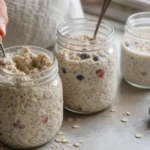
- Breakfast: Greek yogurt, berries, chia, walnuts.
- Lunch: lentils, vegetables, tuna, olive-oil dressing.
- Dinner: salmon, potatoes, broccoli, tahini.
- Snack: apple with measured peanut butter.
One client kept reporting a 3 p.m. hunger score of 9 out of 10 while “eating healthy.” Her breakfast was a banana, black coffee, and 2 tablespoons of coconut oil. We changed it to oats, skyr, berries, and 15 g peanut butter. By day 10, her afternoon hunger log averaged 5 out of 10, despite roughly the same breakfast calories. The protein and fiber changed the meal’s structure; the saturated fat dropped from the coconut oil.
Fiber fermentation is not a reason to fear fats
Gut bacteria ferment certain fibers into short-chain fatty acids, including acetate, propionate, and butyrate. Those compounds interact with the gut environment and help explain why an avocado-and-bean bowl behaves differently from a plate of buttered refined pasta, even if total grams of dietary fat look similar. Aim for roughly 14 g fiber per 1,000 kcal, increasing gradually rather than jumping from 12 g to 35 g overnight.
Fat has a low thermic effect, so protein still anchors a cut
The thermic effect of food is the energy used to digest, absorb, and process nutrients. Protein has the highest typical thermic effect, roughly 20–30% of its calories; carbohydrate is often around 5–10%; fat is roughly 0–3%. This does not make dietary fat “bad,” but it explains why a calorie deficit built around adequate protein and bulky fiber-rich foods is often easier to hold than one built around oils, cheese, and snack foods.
Resistance-trained adults cutting weight commonly benefit from protein around 1.6–2.2 g/kg/day, with the upper end often useful during aggressive deficits or leanness. Distribute it across three to five meals, generally supplying about 0.3–0.4 g/kg per meal. Fat can sit around those meals without displacing the protein dose needed to support muscle protein synthesis.
Unsaturated fats help, but portions still decide the calorie deficit
Olive oil, nuts, tahini, pesto, avocado, and nut butter are healthy fats daily intake options, not free foods. A “healthy salad” can quietly reach 900 calories when it contains 3 tablespoons of oil, half an avocado, feta, croutons, and a large handful of nuts. The issue is not that the foods are unhealthy; the issue is that several concentrated fat sources were stacked into one bowl.
For how much fat per day for weight loss, start with the lower end of the 0.6–1.0 g/kg range if your calorie budget is tight and hunger is manageable. Use more whole-food fat sources when you need satiety, and reserve oils for measured cooking or dressing. Measuring oil for two weeks is usually more informative than eliminating it.
| Goal | Best fat format | Meal cue |
|---|---|---|
| Fat loss | Avocado, nuts | Measure portions |
| LDL reduction | Olive oil, fish | Replace butter | Muscle gain | Nut butter, oils | Add calorie density | Low appetite | Tahini, olive oil | Fortify meals |
A 30 g serving of nuts is usually a practical daily portion, not the overflowing handful that weighs 65 g after you return to the bag twice. Oil is even easier to underestimate: one “free pour” around a skillet can be 20 g, or 180 calories. A digital scale and a teaspoon set make this visible without forcing an austere diet.
Affordable unsaturated fat sources beat expensive perfection
Extra-virgin olive oil, salmon, macadamias, and avocado can be expensive depending on location and season. You do not need boutique foods to improve daily fat intake guidelines. Peanut butter, roasted peanuts, canola oil, sunflower seeds, ground flaxseed, canned sardines, canned salmon, and soy foods often cost less per serving and are widely available.
Canned sardines are a useful example: they provide protein, marine omega-3 fats, and often calcium when bones are included. Their sodium content can be substantial, so compare labels if hypertension or sodium restriction is relevant. Rinsed canned beans paired with a modest amount of oil-based dressing can give a less expensive lunch than a large cheese-and-deli-meat sandwich.
- Lowest-cost swap: canola oil for butter.
- Portable option: peanuts or sunflower seeds.
- Pantry protein: sardines, salmon, canned beans.
- Fiber boost: ground flax in oats.
- Restaurant fallback: vinaigrette, not creamy dressing.
Coconut oil is often marketed as a wellness food, but it is high in saturated fat. It can fit occasionally for flavor, particularly in cuisines where it is traditional, yet it is a poor default choice for someone trying to lower LDL. Olive, canola, soybean, peanut, or avocado oil are more useful routine cooking fats.
The hidden saturated-fat budget in a normal workday

Most saturated-fat overshoots happen through small repeat items rather than a single obvious food. A flavored coffee creamer, cheese at lunch, creamy restaurant sauce, and dessert can each look minor. Together they can exceed a 13–18 g target before dinner.
On a 1,800-calorie plan, a client logged “under 20 g saturated fat” for months because she entered her chicken bowl as homemade. The actual order included cheese, sour cream, and a creamy chipotle dressing. Once we separated those components, the meal contained 14 g saturated fat rather than the 5 g in her app entry. Over six weeks, she changed the order to beans, salsa, avocado, and vinaigrette; her average saturated fat fell from 24 g to 15 g daily without reducing restaurant meals.
A one-day example without a fake “clean eating” menu
A person targeting 13 g saturated fat might have oatmeal with berries, yogurt, and chia at breakfast; a turkey-and-hummus wrap with fruit at lunch; salmon, rice, roasted vegetables, and olive oil at dinner; then popcorn and an apple with peanut butter. The pattern leaves room for some dairy or dark chocolate because the day was not built on cream, cheese, and processed meat at every meal.
The difficult adjustment is the first seven to ten days of measuring fats. People tend to compensate for less cheese or butter by adding several “healthy” extras—nuts, oil, avocado, and nut butter—in the same meal. Use a one-concentrated-fat rule for a week: choose one main fat source at a meal, then add vegetables, protein, starch, and fruit around it.
Raw weights, labels, and restaurant portions create the biggest errors
Raw-versus-cooked tracking causes confusion most often with meat, rice, pasta, and ground beef. Water loss makes cooked meat weigh less than raw meat, while rice and pasta absorb water and weigh more. The fat grams in a food do not vanish because its water content changes. Match your entry to the state you weighed: raw database entry for raw weight, cooked entry for cooked weight.
A 170 g raw 80/20 ground-beef patty may weigh around 125 g after cooking, depending on moisture and rendered fat. Logging 125 g as raw beef can undercount the original amount. Logging cooked beef with a raw entry can overcount or distort the estimate. Package labels and restaurant nutrition pages are imperfect, but they are better than assigning every meal the lowest possible database value.
| Common mistake | What happens | Better method |
|---|---|---|
| Free-pouring oil | Calories disappear | Weigh bottle first |
| “One handful” nuts | Portion doubles | Use 30 g bowl |
| Logging cooked as raw | Macro mismatch | Match database state |
| Ignoring creamer | Sat fat accumulates | Log each pour |
| Restaurant salad guess | Dressing omitted | Request on side |
Save that table as a two-week audit, not a lifelong punishment. The aim is to identify your own highest-impact mistake. For one person it is a 60 g cheese portion labeled as 30 g; for another it is cooking oil; for another it is weekend brunch with bacon, buttered toast, and creamy coffee.
Distribute fat so it supports meals instead of crowding them out
Fat timing is less important than total intake for lipid health, yet meal distribution changes adherence. A practical pattern is to spread fat across two to four eating occasions instead of using most of it at night. This leaves room for protein-rich meals and avoids the feeling that dinner must be dry because breakfast used the entire saturated-fat budget.
Pair unsaturated fats with foods that solve another nutritional problem. Olive oil improves the absorption of fat-soluble carotenoids from tomatoes, leafy greens, peppers, and carrots. Nuts or yogurt with fruit can blunt the urge to keep grazing after a carbohydrate-only snack. Tahini in a chickpea bowl supplies fat while the chickpeas provide fiber and protein.
People with reflux sometimes find high-fat meals, especially late meals, worsen symptoms because fat can slow gastric emptying. Those with gallbladder disease, pancreatic insufficiency, or a history of fat malabsorption need individualized guidance; suddenly increasing oil, nuts, or fried foods can trigger pain, diarrhea, or greasy stools. Under-eating fat is also a problem: very low intakes can make it hard to obtain essential fatty acids and can disrupt menstrual function or steroid-hormone production in people already under-fueling.
Questions people ask while counting grams on the label

Should I limit saturated fat to 10 grams per day?
Ten grams is not the universal saturated fat limit per day. It equals about 4.5% of calories on a 2,000-calorie intake and may be a sensible personal target for someone managing high LDL, but it is stricter than the general 10% guideline. Calculate your own cap first, then consider the lower 6% target if cardiovascular risk or LDL reduction is a major concern.
How much unsaturated fat should I eat each day?
There is no official unsaturated fats daily recommendation expressed as one universal gram number. Set total fat from your calorie needs, then obtain most of it from olive or canola oil, nuts, seeds, avocado, and fish rather than saturated-fat-heavy choices. A person eating 60 g total fat might have 45–50 g from predominantly unsaturated sources and still eat some saturated fat from yogurt, eggs, or lean meat.
Why does the nutrition label say 20 g saturated fat when 10% of 2,000 calories equals 22 g?
The 20 g figure is the FDA Daily Value used for label percentages. The mathematical saturated fat 10 percent daily calories calculation is 22.2 g at 2,000 calories. Use the label as a comparison tool, but use your calorie calculation or clinician-set lipid target for personal planning.
Are unsaturated fats good for weight loss if they contain so many calories?
Unsaturated fats can fit weight loss well because they improve meal satisfaction and replace less favorable saturated-fat sources, but they do not override calorie balance. A measured tablespoon of olive oil, 30 g nuts, or one-quarter avocado is easier to budget than repeatedly adding several dense fat foods to the same meal.
Is cheese always worse than nuts for saturated fat versus unsaturated fat health?
No single food decides health, and cheese provides protein and calcium. The practical difference is that many cheeses contribute substantial saturated fat quickly, while nuts are predominantly unsaturated and usually contain fiber. Use cheese as a flavor ingredient—20 to 30 g crumbled into a meal—rather than the default protein source in a large portion.
This content is based on nutritional physiology and energy metabolism research. It is for informational purposes only and does not constitute medical advice. Consult a qualified healthcare professional before making significant alterations to your caloric or macronutrient intake.