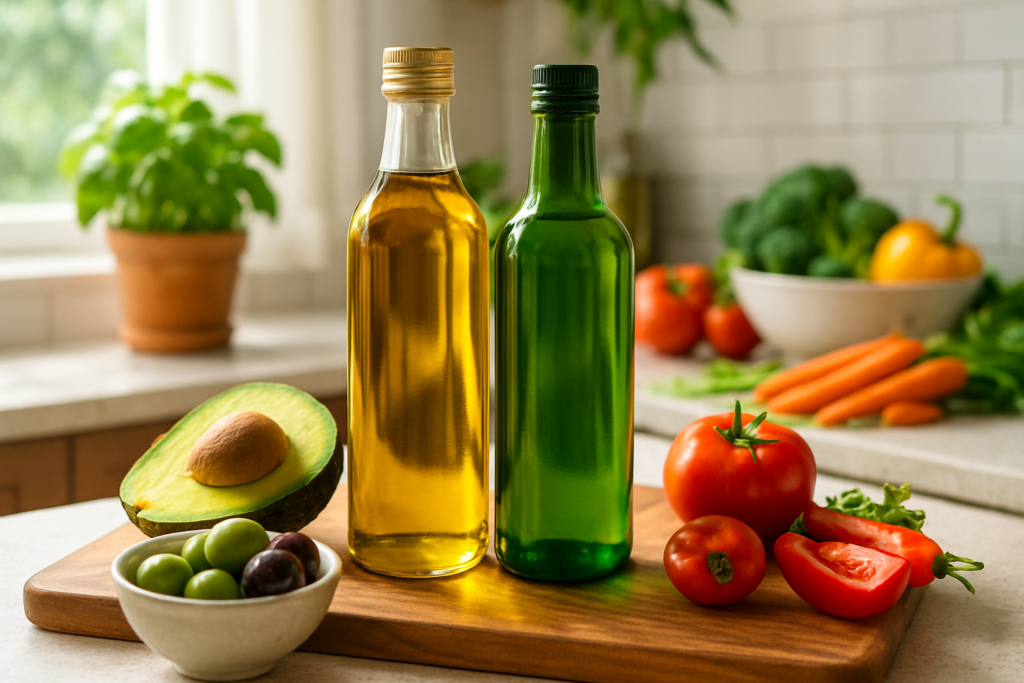
If you’ve ever set off your smoke alarm trying to get a hard sear on a ribeye, you already know that not all cooking oils behave the same when heat hits the pan. I spent years using Extra Virgin Olive Oil for literally everything—until I ruined a expensive cast-iron skillet and realized that high heat demands a completely different tool: Refined Avocado Oil.
“This content is based on culinary testing and nutritional research. It is for informational purposes only and does not constitute medical advice. Consult a healthcare provider before making major dietary shifts.”
What Actually Happens on the Stove: Smoke Points Tested
On paper, numbers look simple. In a real, working kitchen, the boundary between a perfect sear and a kitchen filled with bitter blue smoke comes down to free fatty acids. Here is how these oils actually compare when you turn up the burner:
| Oil Type | Real Smoke Limit | Flavor Profile in Dishes | Best Everyday Kitchen Role |
|---|---|---|---|
| Extra Virgin Olive Oil | ~375°F (191°C) | Grassy, peppery, distinct bite | Drizzling raw, dressings, low-heat pasta prep |
| Refined Avocado Oil | ~520°F (271°C) | Completely neutral, clear | Searing steaks, high-temp air frying, wok frying |
| Unrefined (Virgin) Avocado Oil | ~400°F (204°C) | Slightly nutty, avocado aroma | Medium roasting, baking, savory dips |
Lessons from My Skillet: When to Use Which
I used to think olive oil made everything taste better. But after running a few head-to-head tests in my kitchen, the boundaries became obvious:
1. Searing Meat & Cast Iron Cooking: If you are burning a steak at high heat, reach exclusively for refined avocado oil. Last month, I tested searing two identical New York strips—one in olive oil, one in avocado oil. The olive oil began smoking before the steak even touched the steel, leaving a scorched, acrid crust. Avocado oil hit 500°F quietly, creating a deep golden crust without triggering the fire detector.
2. The Air Fryer Test: Air fryers circulate aggressive, dry heat at 400°F+. When I sprayed EVOO on homemade french fries, the oil scorched and left a sticky, brownish varnish on the basket that took twenty minutes to scrub off. Refined avocado oil spray produces crispy edges with zero sticky buildup.
3. Cold Prep & Finishes: This is where Extra Virgin Olive Oil is untouchable. Pouring raw EVOO over warm roasted tomatoes or mixing it into a simple lemon vinaigrette brings out a peppery kick (that gentle burn in the back of your throat is actually oleocanthal, a powerful antioxidant working for you). Heating EVOO completely destroys those fragrant notes.
Behind the Label: Rancidity and Food Fraud
Here is something most recipe books don’t mention: a lot of avocado oil sold in supermarkets isn’t actually pure avocado oil. A UC Davis study tested store-bought brands and found that over 80% were either oxidized (rancid) before opening or cut with cheap soybean oil.
Here is how to protect your kitchen and your wallet:
- Check the Color: Refined avocado oil should be pale yellow-green and totally clear. If it smells like play-dough or stale cardboard, it has gone rancid—throw it out.
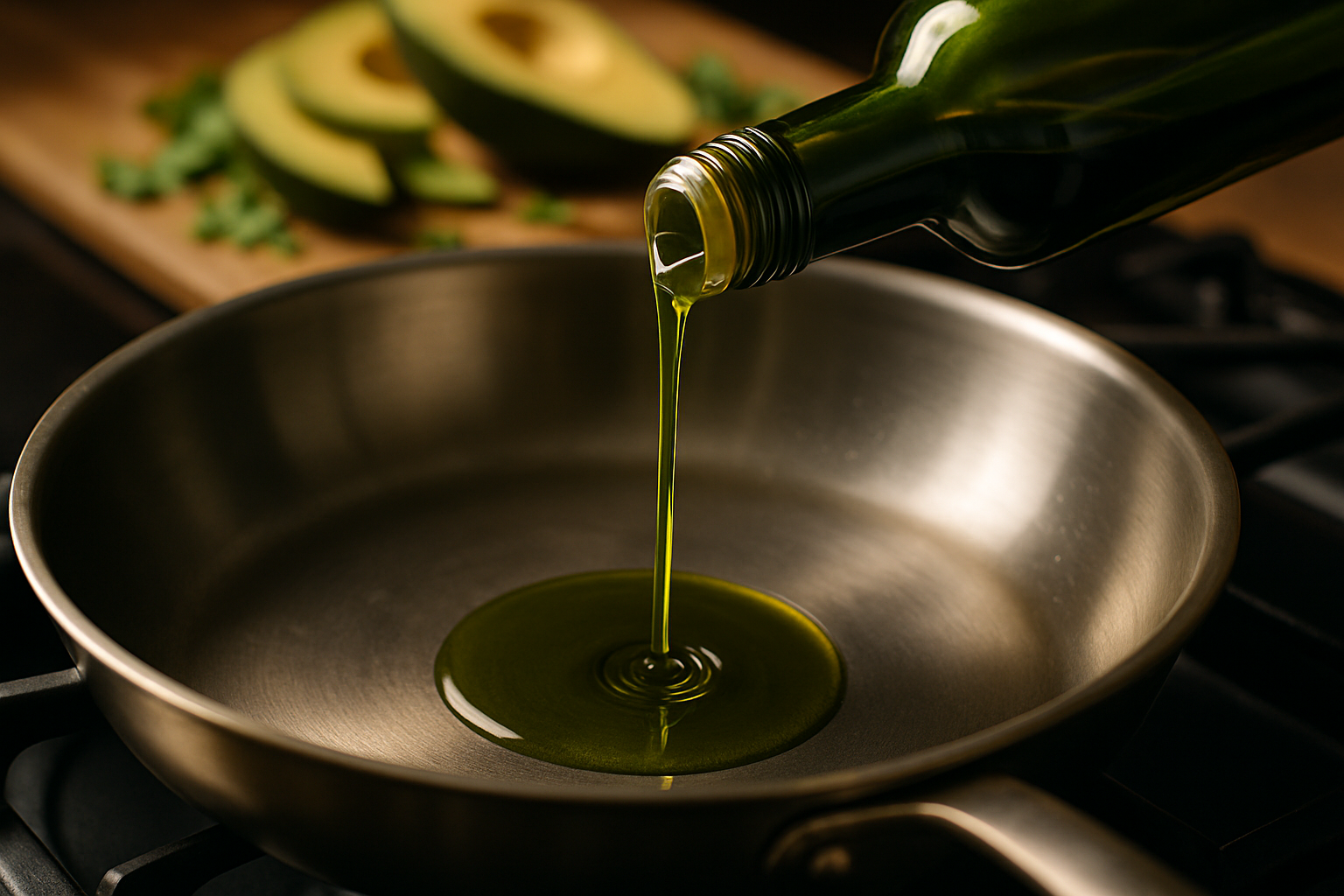
- Buy Dark Glass: Light breaks down fatty acids. Avoid transparent plastic bottles sitting under bright supermarket fluorescent lights.
- The 6-Month Rule: Unlike wine, cooking oils don’t get better with age. Once opened, try to use your bottle within 90 to 180 days.

Real Questions From Our Test Kitchen
Can I mix both oils together in the same pan?
You can, but there is rarely a good reason to. Adding olive oil to avocado oil lowers the smoke threshold of the whole mixture, meaning the olive oil components will still burn at high heat. Use avocado oil to cook, then drizzle olive oil over the dish right before serving.
Is it okay to bake with olive oil?
Yes, for savory baked goods like focaccia, cornbread, or olive oil cakes where you want that fruity flavor to shine through. For neutral baking (like chocolate brownies or vanilla sponge), stick to refined avocado oil so your dessert doesn’t taste like salad dressing.
Does heating olive oil make it toxic?
Not toxic in small amounts, but it degrades the flavor and burns away up to 80% of the health-promoting antioxidants you paid for. It’s simply a waste of good oil.