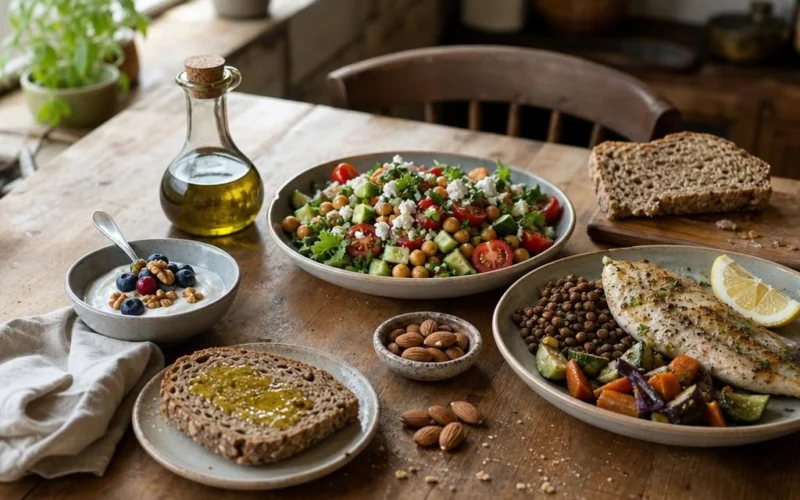
A Mediterranean diet centers meals on vegetables, fruit, beans, whole grains, nuts, unsaturated oils, and minimally processed protein—not on strict rules or exclusively Greek and Italian recipes. For beginners, the most practical approach is to improve one meal at a time, using olive oil in place of saturated fats and choosing beans, fish, eggs, poultry, or tofu more often than processed meat.
Bread, pasta, potatoes, dairy, and occasional sweets can still fit. Portions and overall calorie intake remain relevant, especially when weight management is the goal.
What counts as Mediterranean-style eating?
There is no single standardized Mediterranean diet. Food traditions and research protocols vary, but the common pattern is plant-forward, rich in unsaturated fats, and relatively low in processed meats, refined carbohydrates, and heavily processed foods.
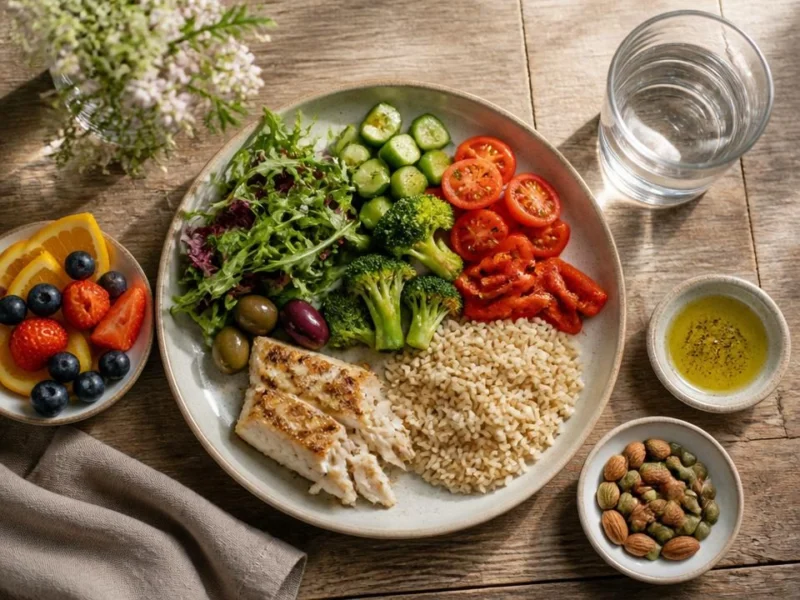
The American Heart Association’s description of Mediterranean-style eating emphasizes vegetables, fruit, beans, whole grains, nuts, olive oil, fish, and smaller amounts of meat and highly processed food.
| Build meals around | Choose regularly | Choose less often |
|---|---|---|
| Vegetables and fruit | Fish or seafood | Processed meats |
| Beans and lentils | Eggs and poultry | Sugary drinks |
| Whole grains | Plain yogurt | Refined sweets |
| Nuts and seeds | Cheese | Butter-heavy meals |
| Olive or vegetable oil | Potatoes | Oversized red-meat portions |
Use this default plate instead of counting every serving
For lunch and dinner, use a simple starting formula: half vegetables, one-quarter protein, and one-quarter high-fiber starch. Add a moderate amount of olive-oil-based dressing, nuts, seeds, or another unsaturated-fat source.
- Half the plate: salad, roasted vegetables, sautéed greens, tomatoes, peppers, fruit, or a mixture.
- Protein quarter: beans, lentils, fish, eggs, poultry, tofu, or plain yogurt.
- Starch quarter: brown rice, barley, potatoes, oats, corn, whole-wheat pasta, or whole-grain bread.
- Flavor and fat: olive oil, tahini, nuts, seeds, herbs, garlic, vinegar, or lemon.
This formula works with more than Mediterranean cuisine. A black-bean and corn bowl, Indian lentil dal with brown rice, tofu and vegetable stir-fry, or American-style baked potato with beans and vegetables can all follow Mediterranean principles.
How the main nutrients fit together
| Nutrient | Common sources | Practical purpose |
|---|---|---|
| Carbohydrate | Fruit, grains, beans | Energy and fiber |
| Protein | Beans, fish, eggs | Fullness and tissue repair |
| Unsaturated fat | Oils, nuts, fish | Replaces saturated fat |
| Soluble fiber | Oats, barley, legumes | Supports LDL reduction |
| Micronutrients | Varied plant foods | Broad nutrient coverage |
The diet is not inherently low-carbohydrate. Beans, fruit, potatoes, pasta, and bread are compatible with the pattern; the emphasis is on higher-fiber choices, reasonable portions, and meals that also contain protein and produce.
| Goal | Useful adjustment |
|---|---|
| Weight management | Measure oils and nuts |
| Heart-health focus | Replace saturated fats |
| Higher protein | Add legumes or fish |
| Blood-sugar awareness | Pair carbs with protein |
What changes inside your body—and what the evidence can support
One established mechanism is dietary replacement. Replacing butter, fatty processed meat, and cream-based sauces with olive oil, nuts, seeds, or fish changes the balance from saturated toward unsaturated fat, which can reduce LDL cholesterol. Replacing saturated fat with refined starches or added sugar does not offer the same advantage, as explained in the American Heart Association advisory on dietary fats.
Soluble fiber from oats, barley, beans, lentils, and some fruits can make a smaller additional contribution to lowering LDL. It forms a gel-like material in the digestive tract and can increase the loss of bile acids, prompting the liver to use more circulating cholesterol to replace them. A 2023 meta-analysis of randomized trials supports a measured LDL-lowering effect from soluble fiber.
Cardiovascular evidence is meaningful but should not be overstated. The PREDIMED trial found fewer major cardiovascular events among older Spanish adults at high cardiovascular risk assigned to Mediterranean diets supplemented with extra-virgin olive oil or nuts. Those findings do not prove that every Mediterranean-style meal prevents heart attacks in every population; the trial involved a defined population, dietary education, and supplied foods.
Healthy fats still contain substantial calories
Olive oil, nuts, seeds, cheese, and avocado are nutritious, but eating them without regard to quantity can raise calorie intake quickly. The useful move is to use olive oil instead of butter or creamy sauce, rather than pouring it over an otherwise unchanged meal.
A Mediterranean diet does not guarantee weight loss. Weight reduction still requires an average calorie deficit over time. A 2025 systematic review of randomized trials found modest average improvements in several weight-related measures among adults with overweight or obesity, but much of the evidence was rated low or very low certainty.
Gas and bloating can appear during the first week
A sudden jump from low-fiber convenience meals to large servings of beans, bran cereal, whole grains, and cruciferous vegetables may cause gas or bloating. Gut bacteria ferment some carbohydrates that are not fully digested in the small intestine, producing gas in the process.
Increase fiber in stages rather than changing every meal at once. The National Institute of Diabetes and Digestive and Kidney Diseases notes that people with IBS may tolerate increases of roughly 2–3 grams of fiber per day better than abrupt increases.
Consider this example transition: on days 1–3, replace one refined-grain or processed-meat meal with oats, whole grains, or a half-cup serving of beans. If digestion remains comfortable through days 4–7, add a second fiber-rich meal. Smaller bean portions, well-rinsed canned beans, adequate fluids, and cooked vegetables may be easier than a large raw salad and full bowl of lentils on the same day.
Who needs an adapted version?
This is a flexible pattern, but some people need individualized food choices, portions, or monitoring:
- Diabetes medication: changing carbohydrate intake may affect glucose levels and medication needs. Meal timing and portions should be coordinated with a qualified clinician.
- Kidney disease: potassium, phosphorus, sodium, protein, and fluid limits can conflict with a generic high-produce, high-legume menu.
- IBS or significant bloating: beans, wheat, garlic, onions, and some fruits may need gradual introduction or substitution.
- Celiac disease or food allergies: choose verified gluten-free grains or allergen-safe alternatives.
- Pregnancy or breastfeeding: adequate energy, iron, iodine, protein, and safe seafood choices need attention; this should not become a restrictive weight-loss plan.
- Eating-disorder history: avoid turning a flexible pattern into rigid “good food versus bad food” rules.
How to start the Mediterranean diet over seven days
Do not replace your entire kitchen on the first day. Make one concrete change daily, then keep the changes that fit your schedule, budget, culture, and digestion. The examples below are prompts, not a mandatory menu.
| Day | Starter action | Low-effort example | Budget-staple fallback |
|---|---|---|---|
| 1 | Stock basic staples | Buy oats, canned beans, frozen vegetables, and olive or vegetable oil. | Start with one store-brand grain, one can of beans, and one bag of frozen vegetables. |
| 2 | Upgrade one breakfast | Make oats with plain yogurt and frozen berries. | Use oatmeal with seasonal fruit and a spoonful of peanut butter. |
| 3 | Make one bean-centered meal | Combine rinsed canned beans, canned tomatoes, and frozen vegetables over brown rice. | If beans are not comfortable, top rice and vegetables with an egg and try a smaller bean portion later. |
| 4 | Add produce to each meal | Add frozen berries to breakfast, carrots to lunch, and frozen spinach to dinner. | Use one seasonal fruit and one bag of frozen mixed vegetables across the day. |
| 5 | Try fish or tofu | Serve canned salmon or tuna with potatoes and cabbage. | Use tofu or eggs with brown rice and frozen vegetables. |
| 6 | Practice a restaurant order | Choose a grain or salad bowl with vegetables, beans or fish, and dressing on the side. | Skip takeout and assemble brown rice, canned beans, frozen vegetables, and measured oil at home. |
| 7 | Batch-cook four components | Prepare brown rice, lentils, roasted or frozen vegetables, and lemon-yogurt dressing. | Use ready-cooked oats or rice, rinsed canned beans, microwaved frozen vegetables, and plain yogurt. |
A low-cost starter basket
Specialty products are unnecessary. Store brands, canned foods, and frozen produce can make Mediterranean diet foods more affordable and reduce spoilage.
- Pantry: oats, brown rice, whole-wheat pasta, canned beans, canned tomatoes, peanut butter, olive or another unsaturated vegetable oil.
- Freezer: mixed vegetables, spinach, berries, and frozen fish when affordable.
- Refrigerator: eggs, plain yogurt, seasonal fruit, carrots, cabbage, onions, and garlic.
- Protein backups: canned tuna, salmon, or sardines; dried lentils; tofu; and no-salt-added beans.
Rinsing regular canned beans can remove some surface sodium. Check labels on bread, sauces, olives, cheese, canned fish, and prepared meals because Mediterranean-style eating is not automatically low in sodium.
Prepare four components, not seven separate dinners
Cook one grain, one legume or protein, one tray of vegetables, and one sauce. For example, prepare brown rice, lentils, roasted peppers and zucchini, and a lemon-herb yogurt dressing. Refrigerate promptly in shallow containers and use within the safe storage period appropriate to each ingredient.
Those components can become a grain bowl, wrap filling, side dish for eggs or fish, or soup addition. Keeping canned beans, frozen vegetables, and canned seafood available provides a backup when batch-cooked food runs out.
A realistic one-day Mediterranean diet meal plan
| Time | Meal components |
|---|---|
| 7:30 a.m. | Breakfast: ½ cup dry oats; ¾ cup plain yogurt; ½ cup berries; 1 tablespoon chopped walnuts. |
| 12:30 p.m. | Lunch: ½–1 cup beans; ½–1 cup cooked brown rice; 2 cups mixed vegetables; 2 teaspoons olive oil with lemon or vinegar. |
| 3:30 p.m. | Snack: 1 apple; ½ cup plain yogurt; 1 whole-grain crispbread; 1 teaspoon peanut butter. |
| 7:00 p.m. | Dinner: 3–4 ounces salmon; 1 medium potato; 1 cup green beans; 1 teaspoon olive oil for cooking or dressing. |
Each main meal combines produce, a protein or legume, a starch, and a measured unsaturated-fat source. At breakfast, berries provide produce, yogurt supplies protein, oats provide the starch, and walnuts add unsaturated fat. At lunch, the components are vegetables, beans, brown rice, and olive oil. Dinner uses green beans, salmon, potato, and olive oil.
These portions are estimates and starting points, not universal targets. Energy and nutrient needs differ according to body size, age, activity, health conditions, appetite, and goals. Tofu, eggs, chicken, or another serving of beans can replace salmon; seasonal fruit can replace berries; and whole-wheat pasta or bread can replace rice or potatoes.
Meal times can move with work and training schedules. An early riser might eat at 6 a.m., while a shift worker may use the same sequence later in the day. Someone training in the afternoon could move the fruit snack before exercise and include yogurt, eggs, fish, or legumes in the meal afterward.
Common swaps that preserve familiar meals
| Instead of | Try |
|---|---|
| Butter toast | Tomato and olive-oil toast |
| Deli-meat sandwich | Tuna-bean wrap |
| Creamy pasta | Vegetable-bean pasta |
| Chips alone | Fruit with yogurt |
| Meat-heavy pizza | Vegetable grain bowl |
The most common substitution mistake is adding Mediterranean foods without replacing anything. Adding nuts, oil, cheese, and hummus to a meal already high in calories may work against a weight-management goal. Replace first, then add only what the meal needs.
A weekly check that takes two minutes
At the end of each week, review these signals rather than judging meals as perfect or failed:
- Did beans or lentils appear at least two or three times?
- Was fruit or a vegetable included at most meals?
- Did fish, tofu, eggs, or poultry replace some processed meat?
- Were sugary drinks and processed meats less frequent?
- Is digestion comfortable, or did fiber rise too quickly?
- Do portions of oil, nuts, cheese, and restaurant food match the goal?
For weight management, assess the trend over several weeks rather than reacting to one weigh-in. Persistent hunger suggests meals may need more protein, vegetables, beans, or whole grains; little progress toward a calorie-related goal may call for measuring energy-dense fats and reviewing beverages or restaurant portions.
Beginner questions about foods, portions, and wine
Can I eat pasta, bread, and potatoes?
Yes. Choose whole-grain versions often, keep portions proportionate to the meal, and pair them with vegetables and protein. A large bowl of refined pasta with creamy sauce is different from a moderate serving of whole-wheat pasta with beans, tomatoes, greens, and olive oil.
How much fish, red meat, and dairy should I eat?
No universal schedule defines every Mediterranean diet. Eat fish or seafood regularly if accessible, use beans and other plant proteins often, and choose red or processed meat less frequently. Plain yogurt and modest portions of cheese can fit, but sodium, saturated fat, allergies, preferences, and budget should guide the details.
Why do beans make me bloated?
Beans contain fermentable carbohydrates and fiber that gut bacteria break down. Start with ¼–½ cup, rinse canned beans, increase gradually, and avoid introducing several large high-fiber servings on the same day. Persistent pain or severe gastrointestinal symptoms warrant professional assessment.
Are canned and frozen foods allowed?
Yes. Plain frozen vegetables, canned tomatoes, beans, and canned fish are practical minimally prepared foods. Compare sodium and added-sugar labels rather than rejecting every processed item as incompatible.
Do I need red wine for the diet to work?
No. Wine is not required, and starting to drink is not recommended as a health strategy. Water, sparkling water, coffee, and unsweetened tea are more suitable everyday beverages for most adults.
This content is based on clinical nutrition research and practical meal planning. It is for informational purposes only and does not constitute medical advice. Consult a qualified healthcare provider before making major changes to your dietary routine.