
When constructing your Mediterranean diet grocery list, focus on maximizing whole, plant-based foods, lean proteins, and healthy fats. This approach not only supports cardiovascular health but can also enhance metabolic function and weight management. Expect to fill your shopping cart with vibrant produce, nuts, whole grains, and fish. The Mediterranean diet, recognized for its health benefits, emphasizes foods that are grown locally and consumed fresh, reducing the intake of processed foods. By focusing on these foods, you not only support personal health but also contribute to a more sustainable food system. This diet is known for its role in reducing the risk of chronic diseases such as heart disease and stroke, due to its rich composition of heart-healthy fats and fibers. Furthermore, the diet encourages a slower, more mindful approach to eating, which can enhance digestion and nutrient absorption. The cultural aspect of the Mediterranean diet, which often includes communal meals and sharing dishes, also plays a significant role in its health benefits, fostering social connections and reducing stress.
Core Methodology & Nutritional Matrix
Understanding the core principles of the Mediterranean diet is crucial to creating an effective grocery list. The diet emphasizes a balance of macronutrients and micronutrients, primarily derived from plant sources. Focus on the quality of each food item to ensure nutrient density. This diet is rich in monounsaturated fats from sources like olive oil, which are known to reduce bad cholesterol levels. Moreover, the inclusion of antioxidants from fruits and vegetables helps combat oxidative stress in the body. Whole grains provide essential fibers that aid in digestion, regulate blood sugar levels, and provide sustained energy throughout the day. The diet’s emphasis on fish and seafood ensures a steady intake of omega-3 fatty acids, which are crucial for brain health and reducing inflammation. Additionally, the reliance on herbs and spices for flavor instead of salt contributes to maintaining healthy blood pressure levels. The Mediterranean diet also encourages the consumption of red wine in moderation, which contains resveratrol, a compound that has been linked to improved heart health. It’s important to note that the diet’s flexibility allows for personalization, making it adaptable to various dietary needs and preferences.
| Category | Staples | Nutritional Benefits |
|---|---|---|
| Fruits | Oranges, Berries, Apples | High in vitamins, antioxidants |
| Vegetables | Spinach, Tomatoes, Broccoli | Rich in fiber, vitamins A and C |
| Whole Grains | Quinoa, Brown Rice, Whole Wheat | Complex carbs, fiber |
| Proteins | Chickpeas, Lentils, Fish | Essential amino acids, omega-3s |
| Healthy Fats | Olive Oil, Nuts, Avocado | Monounsaturated fats, vitamin E |
| Dairy | Greek Yogurt, Feta Cheese | Calcium, probiotics |
What Actually Happens in Your Body

Embarking on a Mediterranean diet can lead to significant physiological changes. A common initial experience is improved digestion due to high fiber intake from fruits and vegetables, which aids in maintaining a healthy gut microbiome. This diet also fosters a metabolic shift towards utilizing fat as an energy source, supported by healthy fats like olive oil. As you continue with this diet, you may notice a decrease in inflammation markers due to the high intake of omega-3 fatty acids, which can alleviate joint pain and other inflammatory conditions. The diet’s emphasis on whole foods helps improve insulin sensitivity, reducing the risk of type 2 diabetes. Additionally, the antioxidants present in the diet can enhance skin health and provide protection against age-related damages. The incorporation of a wide variety of fruits and vegetables not only supplies essential nutrients but also supports detoxification processes in the liver. Over time, individuals may experience improved heart health, as the diet’s components work synergistically to lower blood pressure and cholesterol levels. It’s also interesting to note that the diet’s low sodium content helps in preventing hypertension, further aiding cardiovascular health.
For individuals with conditions like Type 1 diabetes or digestive disorders, the high fiber and carbohydrate content could pose challenges. It’s essential to consult healthcare providers to tailor the diet to individual needs. Those with lactose intolerance might need to replace traditional Greek yogurt with a lactose-free alternative or explore plant-based options that still provide the necessary probiotics. Similarly, individuals allergic to nuts must seek alternative sources of healthy fats, such as seeds or specific oils. Moreover, people with celiac disease or gluten sensitivity should opt for gluten-free grains such as quinoa and amaranth, ensuring they still receive adequate fiber and nutrients. Adjustments like these help maintain the diet’s integrity while accommodating personal health requirements, ensuring that nutritional benefits are reaped without adverse effects. These adaptations can also include experimenting with various herbs and spices to enhance flavors and ensure dietary satisfaction without relying on common allergens.
Step-by-Step Protocol
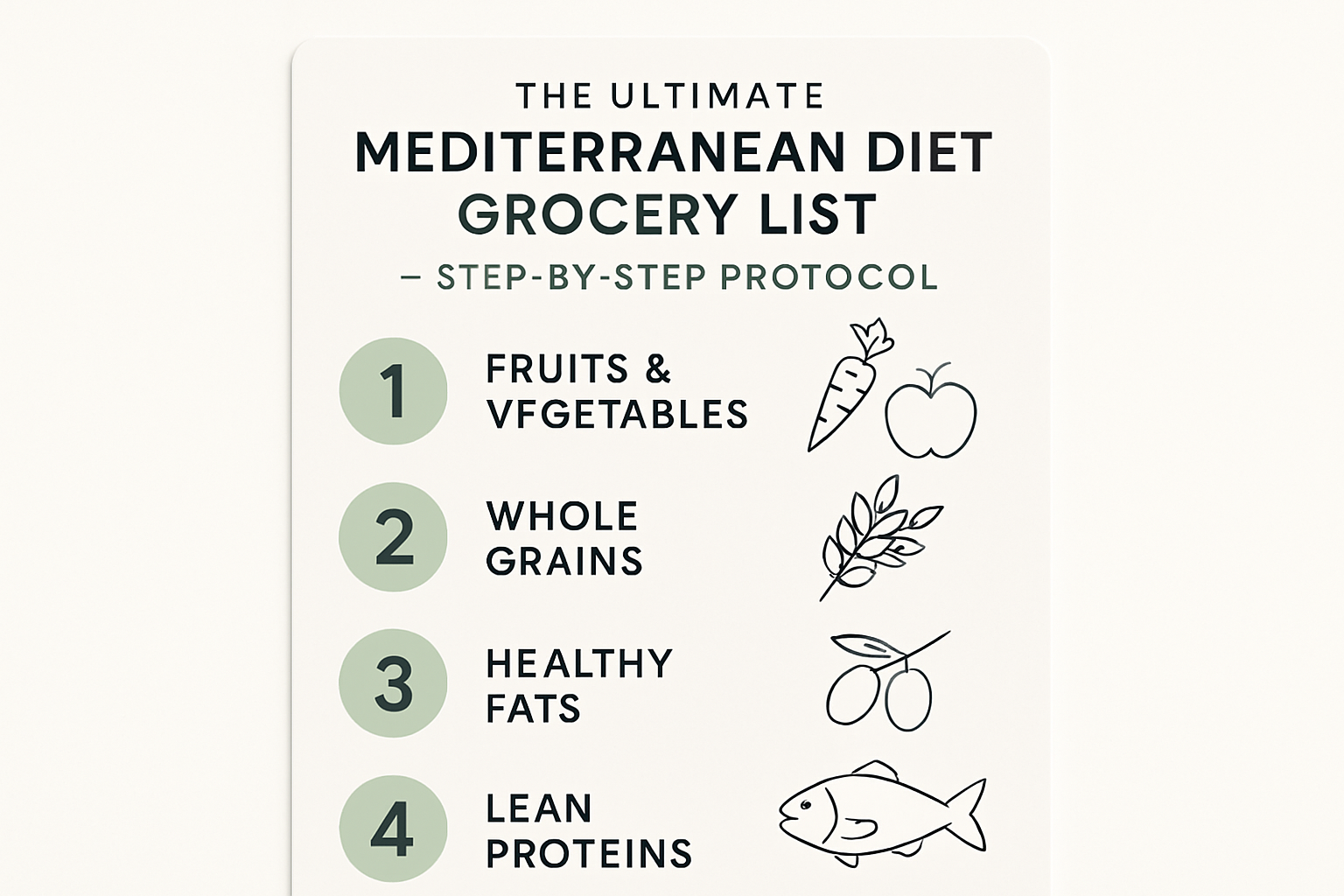
To effectively implement the Mediterranean diet, plan your meals and shopping to include a diverse range of foods. Here’s a seven-day framework to guide your grocery purchases:
- Day 1: Focus on fresh fruits and vegetables like kale and strawberries. Include whole grains such as quinoa. Consider preparing a hearty salad incorporating these ingredients, adding a sprinkle of nuts for extra crunch and nutrition. This day emphasizes detoxification and setting a solid foundation for the week. Adding a serving of olives can provide additional healthy fats, while a squeeze of lemon over the salad enhances flavor and aids in the absorption of iron from the greens. Consider adding a light vinaigrette made from olive oil and balsamic vinegar to bring out the natural flavors of the produce.
- Day 2: Add lean proteins, including fish like salmon, and legumes such as lentils. Salmon can be grilled with a squeeze of lemon and a dash of herbs, while lentils can be used in soups or stews, providing warmth and comfort, especially during cooler days. Incorporating a side of steamed vegetables like broccoli or asparagus not only adds color but also boosts fiber and vitamin intake. Consider using low-sodium vegetable broth for cooking lentils to enhance their flavor without adding excess salt. Pairing these dishes with a slice of whole-grain bread can complete the meal, adding texture and additional nutrients.
- Day 3: Integrate healthy fats, utilizing olive oil in cooking and nuts for snacks. Try making a homemade vinaigrette with olive oil, lemon juice, and herbs to drizzle over salads. Nuts like almonds or walnuts can be roasted with a pinch of sea salt for a satisfying snack. Including avocado in your meals can further enrich your diet with potassium and vitamin E, supporting heart health and skin vitality. Ensure you store nuts in an airtight container to maintain their freshness and nutritional value. You might also try blending avocados into smoothies for a creamy texture and added nutritional benefits.
- Day 4: Choose dairy wisely; opt for Greek yogurt and small amounts of feta cheese. Greek yogurt can serve as a base for breakfast parfaits, layered with berries and a sprinkle of granola. Feta cheese, with its tangy flavor, can elevate the taste of any vegetable dish. For those who prefer non-dairy options, coconut yogurt can be a suitable substitute that still provides a creamy texture and can be enriched with probiotics. Adding a handful of seeds like chia or flax to your yogurt can increase its omega-3 content and provide additional fiber. Experiment with different fruit combinations in your parfaits for variety and enhanced flavor profiles.
- Day 5: Prepare meals that integrate all components, ensuring balance. A classic Mediterranean dish like ratatouille can be a perfect example, combining eggplants, zucchini, and tomatoes, simmered in olive oil and herbs, providing a flavorful and nutritious meal. To enhance protein intake, consider serving it with a side of grilled chicken or a chickpea salad. The slow cooking process in ratatouille allows the flavors to meld beautifully, offering a hearty dish that can be enjoyed hot or cold. Adding a sprinkle of fresh basil or parsley just before serving can add a burst of freshness and elevate the dish’s aroma.
- Day 6: Focus on hydration and include herbal teas. Hydration is often overlooked, but it’s crucial. Herbal teas like chamomile or mint can aid digestion and provide calming effects, while infused water with slices of cucumber or lemon can be refreshing and hydrating. Drinking green tea can add antioxidants to your diet, which supports metabolic health and can enhance fat oxidation during exercise. Experimenting with different herbal blends can keep your hydration routine interesting and flavorful. Consider preparing a pitcher of herbal iced tea to have a refreshing, healthy beverage readily available.
- Day 7: Review and adjust your meal prep based on hunger cues and satisfaction levels. Reflecting on your body’s responses throughout the week can help fine-tune your diet, ensuring it meets your nutritional needs and personal preferences. Consider keeping a food diary to track what works best for you and identify any patterns in energy levels or cravings. This self-awareness can guide future grocery shopping and meal planning, leading to more personalized and satisfying dietary habits. Adjust portion sizes and meal combinations based on your findings to optimize your diet further.
While shopping, consider budget-friendly options like frozen produce, which retains nutritional value and can prevent food waste. Explore different grocery stores such as Trader Joe’s and Walmart for diverse product options and pricing. These stores often offer unique Mediterranean products, like marinated olives or sun-dried tomatoes, that can add variety to your meals without breaking the bank. Additionally, engaging with local farmers’ markets can provide fresher options and support community agriculture. Bulk purchases of grains and legumes can also be economical, allowing you to prepare meals in advance and reduce the frequency of shopping trips. Opting for store brands over name brands can further decrease costs while still providing quality ingredients. Consider planning meals around weekly sales and discounts to take advantage of cost savings while ensuring a variety of fresh, nutrient-dense foods.
FAQs About Mediterranean Diet Grocery Shopping
- What are essential pantry items for a Mediterranean diet? Stock up on olive oil, whole grains, canned beans, and dried herbs. These staples form the backbone of Mediterranean cooking, allowing for versatile meal preparation. Olive oil is not just a cooking medium but a flavor enhancer in dressings and marinades. Dried herbs such as oregano and thyme infuse dishes with aromatic flavors. Additionally, canned tomatoes and garlic are fundamental for creating classic Mediterranean sauces and stews, providing depth and richness to your cooking. Keeping a variety of vinegars, such as balsamic and red wine vinegar, can also enhance your pantry, offering additional flavor profiles for salads and marinades.
- How do I manage a Mediterranean diet on a budget? Focus on local and seasonal produce, and buy whole grains and legumes in bulk. Seasonal produce tends to be cheaper and fresher, while bulk purchases of grains like brown rice or whole wheat pasta can reduce costs over time. Learning to cook simple meals with these ingredients can also minimize dining out expenses. Preserving seasonal fruits and vegetables through freezing or canning can extend their availability throughout the year, ensuring you have nutritious options even when certain items are out of season. Consider joining a local food co-op to gain access to community-supported agriculture and potentially lower prices on fresh produce.
- Can I follow this diet if I have dietary restrictions? Yes, adapt the diet by choosing gluten-free grains or dairy alternatives as needed. Gluten-free grains such as quinoa or buckwheat can serve as excellent substitutes for traditional wheat-based products. Dairy alternatives, like almond milk or coconut yogurt, can provide similar textures and flavors without compromising the diet’s integrity. For those with nut allergies, sunflower seeds or pumpkin seeds can offer similar nutritional benefits, such as healthy fats and protein, ensuring that dietary restrictions do not limit nutrient intake. Additionally, experimenting with different plant-based proteins, such as tofu or tempeh, can help diversify your diet while accommodating specific dietary needs.
- Are there specific Mediterranean diet products I should buy at Trader Joe’s? Look for their range of hummus, olive oils, and frozen fish options. Trader Joe’s offers an array of flavored hummus varieties, which can serve as both a snack and a meal component. Their selection of olive oils, including extra virgin and flavored options, allows for culinary experimentation. Additionally, their assortment of frozen seafood, such as shrimp and scallops, provides convenient and quick options for adding lean protein to your meals, maintaining the diet’s emphasis on fresh and diverse ingredients. Their range of marinated artichokes and roasted red peppers can also add depth and flavor to salads and pasta dishes.
To embrace the Mediterranean lifestyle, focus on whole, minimally processed foods, and ensure your weekly shopping list reflects a balance of nutrients. By planning meals and diversifying your grocery list, you can enjoy the health benefits of this heart-friendly diet. This approach encourages mindful eating, where attention is given to food quality and preparation methods, promoting overall wellbeing. The Mediterranean diet is not just a dietary choice but a lifestyle that fosters social connections, as meals are often shared with family and friends, enhancing emotional health and community bonds. Emphasizing quality over quantity, this diet enables individuals to savor their food and develop a deeper appreciation for its origins and preparation. The integration of physical activity, such as walking or cycling, commonly associated with the Mediterranean lifestyle, further complements the diet and contributes to overall health and longevity.
"This content is based on clinical nutrition research and practical meal planning. It is for informational purposes only and does not constitute medical advice. Consult a qualified healthcare provider before making major changes to your dietary routine."