Weekly meal prep works best when you prepare flexible components for the days you will actually eat at home, then freeze the servings that would otherwise sit too long in the refrigerator. A healthy meal prep routine is not seven identical chicken-and-rice boxes; it is a short calendar, a realistic grocery list, and enough ready food to make the 6:40 p.m. “I’ll just order something” moment less likely.
For most beginners, the practical target is two proteins, one starch, two vegetables, and two sauces. That small system creates variety without turning Sunday meal prep into a second job.
Build your weekly meal prep around energy, appetite, and time
Prepared food changes the decision point. Instead of choosing lunch when you are hungry, rushed, and surrounded by delivery apps, you make the choice while calm on Saturday or Sunday. A large observational analysis of 40,554 adults found that meal planning was associated with higher diet-quality and food-variety scores, though an association cannot prove that planning itself caused those outcomes. Read the meal-planning research as support for a useful pattern, not as a promise.
Balanced containers are particularly helpful for the familiar 3 p.m. slump: a light breakfast, coffee, a pastry grabbed between meetings, then urgent hunger before dinner. Protein, fiber-rich carbohydrate, and produce slow the rate at which a meal leaves the stomach and soften the sharp rise-and-fall pattern that follows a refined-carb-only lunch.
| Strategy/Food Source | Biological Mechanism | Ideal Timing/Target | Expected Result |
|---|---|---|---|
| 30 g protein meal | Greater satiety signaling | Lunch or breakfast | Fewer afternoon snacks |
| Beans and whole grains | Slower glucose release | Workday lunches | Steadier energy |
| Frozen vegetables | Fiber and meal volume | Any batch meal | Lower waste risk |
| Olive oil sauce | Improves fat-soluble absorption | After reheating | Better flavor adherence |
| Pre-portioned snacks | Reduces reactive choices | Commute window | Less vending-machine use |
Your calorie needs, medical conditions, training load, and medications still matter. A person training for a half-marathon needs a larger carbohydrate allocation than someone sitting through back-to-back video calls, while a person with kidney disease may need individualized protein, potassium, sodium, or fluid guidance.
Match the prep style to the week you really have
Count meals from your calendar backward. If Tuesday includes a client dinner, Thursday is your partner’s cooking night, and Friday is takeout after the children’s activity, preparing five dinners creates waste rather than discipline. Write those events down before you choose recipes.
I often see a refrigerator full of aspirational meals that become disappointing by Wednesday because the owner planned for a version of life with no late trains, no social plans, and no exhaustion. Prep for the available nights, not all seven nights. Four home dinners, four lunches, and a freezer backup is a much stronger beginner system than fourteen fragile promises.
| Situation | Recommended approach |
|---|---|
| Late-office week | Freeze two dinners |
| Shared household | Prep meal components |
| Night-shift worker | Pack main meal |
| Weight-loss focus | Portion lunches first |
Shift workers can treat their first substantial meal after waking as their “lunch,” regardless of what the clock says. Pack a protein-centered meal before leaving home, and keep shelf-stable options such as tuna packets, roasted chickpeas, or plain nuts at work. Caffeine can mask fatigue, but it cannot replace food; a large coffee on an empty stomach can also worsen jitters, reflux, and the urge to raid sugary snacks later.
Why a ready lunch changes the 3 p.m. decision
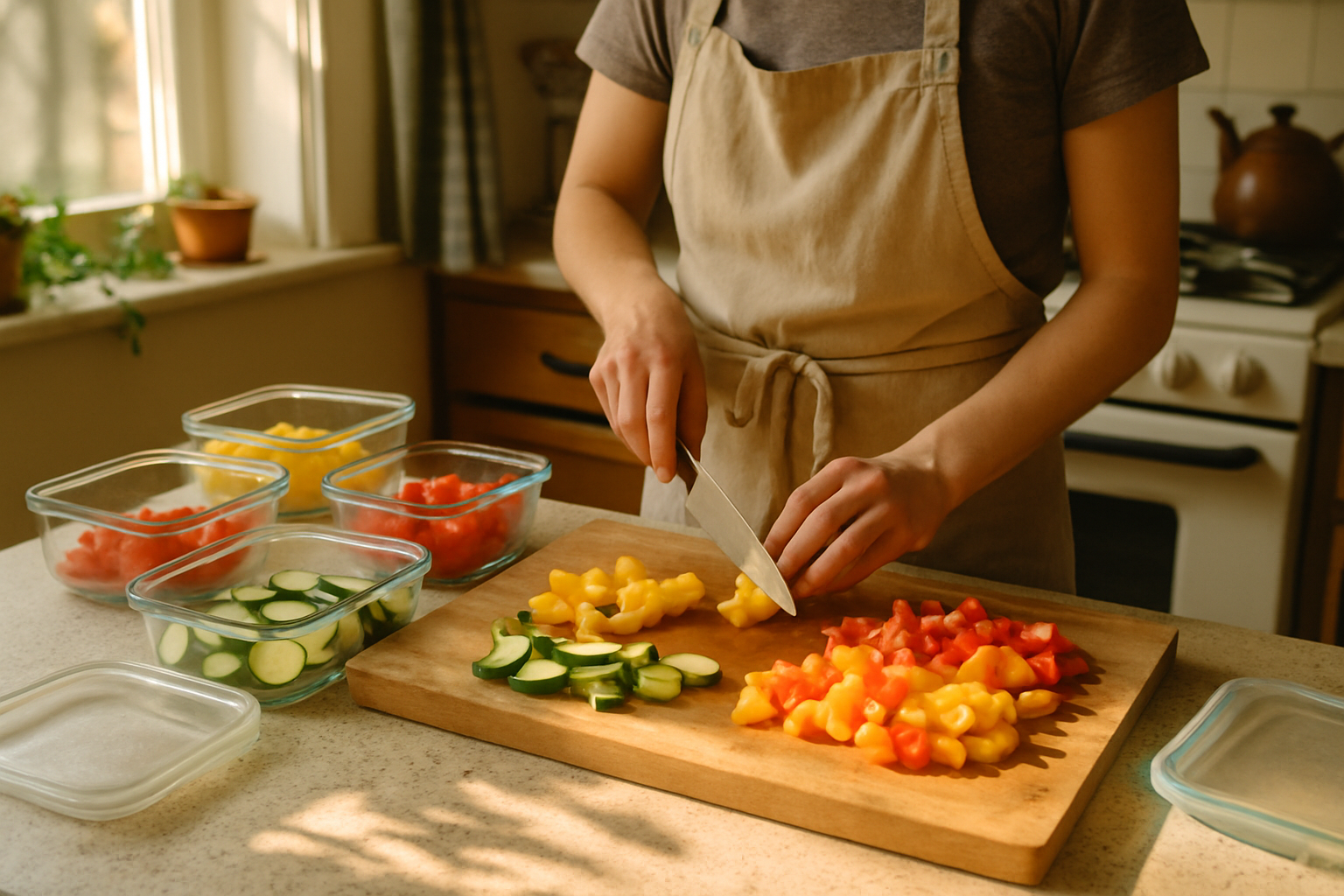
Meal prep is behavioral nutrition with a refrigerator door. Hunger increases the appeal of quick, salty, high-reward foods because the brain’s dopamine system responds strongly to immediate payoff. A reheatable lunch removes several tiny barriers at once: deciding, chopping, waiting, paying, and cleaning.
The named physiology here is the cephalic phase insulin response: seeing, smelling, and anticipating food can begin digestive signaling before the first bite. That is one reason an attractive, clearly labeled container is more useful than a vague bag of raw ingredients. Food that looks like a meal is easier to choose than food that still feels like work.
One client’s pattern was strikingly consistent: at 9 p.m., she would stand in front of the refrigerator eating shredded cheese directly from the bag after skipping a real lunch. She replaced her coffee-and-cracker lunch with a container holding roughly 30 grams of protein, roasted potatoes, and vegetables. The first week still included a 4 p.m. snack most days; by the end of week two, the nightly cheese habit had dropped from five nights to one because dinner was no longer preceded by extreme hunger.
The plate formula that avoids low-energy meal prep
A useful starting point is a container built from protein, carbohydrate, produce, and a flavor source. The carbohydrate is not a mistake in meal prep for weight loss. It can make meals satisfying enough that you do not compensate later with a large snack or restaurant portion.
- Protein: chicken thighs, tofu, eggs, lentils, salmon, turkey, Greek yogurt, or beans.
- Carbohydrate: potatoes, oats, brown rice, quinoa, whole-grain pasta, corn, or beans.
- Vegetables: broccoli, peppers, cabbage, carrots, green beans, spinach, tomatoes, or frozen blends.
- Flavor and fat: pesto, tahini-lemon sauce, salsa, yogurt-herb dressing, olive oil, or peanut-lime sauce.
High protein meal prep does not require forcing enormous portions of meat into every container. Spread protein across meals, use legumes where they fit, and aim for a portion that keeps you comfortably full for several hours. People with chronic kidney disease should not adopt a high-protein target without their clinician or renal dietitian.
Saturday: make a calendar before you make a meal prep grocery list
Start with a ten-minute inventory. Open the refrigerator, freezer, and pantry before browsing recipes. A half bag of frozen spinach, canned tomatoes, rice, and an unopened jar of curry paste may already cover the base of two dinners.
Then mark each meal opportunity from Monday through Sunday. Put an “H” beside meals eaten at home, an “O” beside meals out, and an “L” beside lunches you must carry. Only the H and L slots need food from your prep session. This is the simplest way to avoid buying ingredients for meals that were never going to happen.
A sample template for Monday through Friday
Use this as a format rather than a rigid prescription. Repeat components, then change the meal’s temperature, sauce, or format so the same groceries do not feel repetitive.
| Day | Lunch | Dinner |
|---|---|---|
| Monday | Chicken grain bowl | Turkey chili |
| Tuesday | Chili-stuffed potato | Restaurant dinner |
| Wednesday | Tofu noodle salad | Chicken tacos |
| Thursday | Chicken grain bowl | Freezer chili |
| Friday | Egg-and-veg wrap | Flexible leftovers |
The table intentionally uses one cooked chicken batch in more than one form. A grain bowl with tahini dressing, a warm taco with salsa, and a chopped salad with yogurt-herb sauce can begin with the same protein and still feel distinct.
Shop once without buying food that spoils by Wednesday
Build the grocery list from overlapping ingredients. Choose vegetables that can serve more than one recipe: peppers can go into sheet-pan chicken, chili, wraps, and salads; cabbage holds up better than delicate greens and works raw or cooked. USDA guidance supports using overlapping ingredients, preparing components ahead, and labeling food with contents and dates to reduce waste; its planning and prepping resource offers the same practical direction.
- Choose one sale protein: buy what is discounted and fits your menu.
- Use frozen produce: reserve it for soups, stir-fries, and sheet pans.
- Keep canned backups: beans, tomatoes, tuna, and lentils prevent emergency shopping.
- Buy sauces strategically: two contrasting sauces beat five new recipes.
- Set a produce order: use delicate greens first and carrots later.
Meal prep on a budget improves when you stop shopping for novelty. A short list can include one fresh leafy vegetable for early-week meals, two sturdy vegetables, one frozen vegetable, one canned item, and one fruit that travels well. Avoid buying a “health food” ingredient that appears in a single recipe and then sits untouched for six months.
Sunday meal prep: run the kitchen in the order that saves time
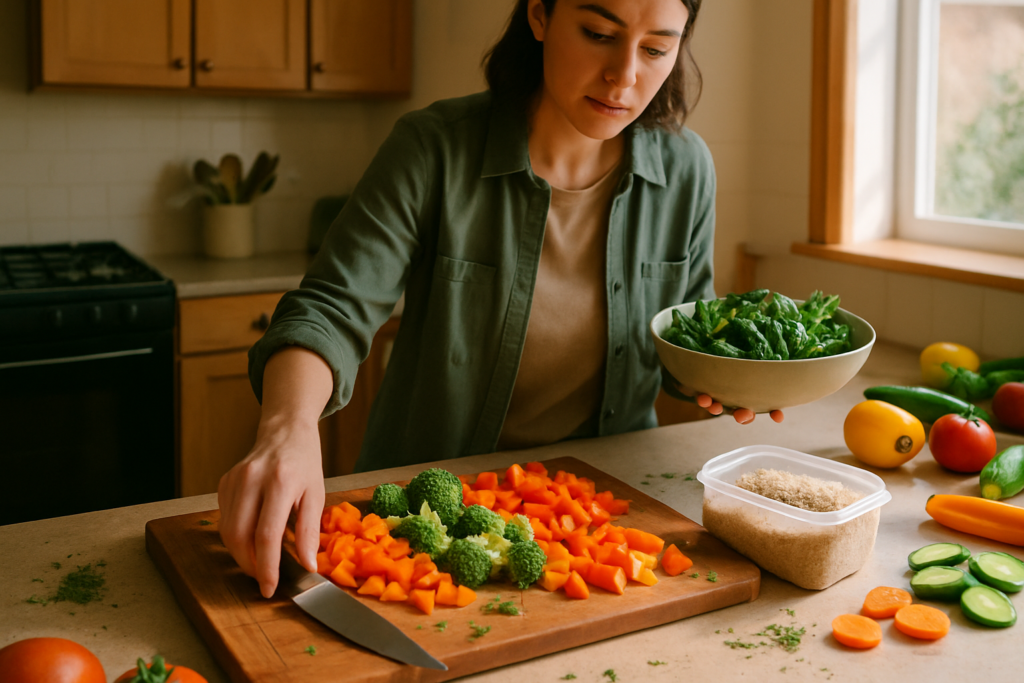
Your first Sunday should feel controlled, not cinematic. The mistake is starting several chopping tasks with no cooking underway. Heat is the bottleneck, so start the longest hands-off items first: oven, grains, and slow simmering food.
A 90-minute first-session run sheet
| Time | Action |
|---|---|
| 0:00 | Heat oven; wash hands |
| 0:05 | Start rice or quinoa |
| 0:10 | Season proteins |
| 0:20 | Roast vegetables and protein |
| 0:40 | Simmer chili or lentils |
| 1:05 | Make sauces; wash tools |
| 1:25 | Cool, portion, label |
While the oven works, chop raw vegetables for snack boxes, mix a sauce, rinse containers, and clear the sink. Those tasks take active attention; roasting does not. Keep raw poultry tools separate from ready-to-eat produce, and wash hands after touching raw meat, eggs, or their packaging.
Batch cooking tips are about shared effort, not massive quantity. Roast two sheet pans at once, cook enough grain for several meals, and make one wet dish such as chili, curry, lentil soup, or shredded chicken. Wet dishes freeze well and rescue the week when a planned meal is missed.
Use component prep so Thursday does not taste like Monday
Fully assembled meals are useful for commute lunches and days with no break. Components are better for dinners, shared households, and anyone who gets bored easily. Store the protein, grain, vegetables, and sauce separately; combine only what you plan to eat.
One ingredient set, four different meals
- Warm bowl: rice, chicken, roasted broccoli, tahini-lemon sauce.
- Taco plate: chicken, peppers, corn tortillas, salsa, avocado.
- Chopped salad: chicken, cabbage, carrots, yogurt-herb dressing.
- Soup shortcut: chicken, grain, frozen vegetables, broth.
Sauces are the anti-monotony tool most people underuse. Keep watery dressings away from greens, pack crunchy toppings separately, and add fresh herbs or citrus at serving time. A container of plain rice and chicken becomes dull because it lacks contrast, not because meal prep itself is dull.
The honest difficulty usually arrives on day three or four. Food may look less appealing, the novelty is gone, and a stressful afternoon makes restaurant food sound more rewarding. Do not respond by cooking five entirely new recipes next week. Add one “rescue flavor” such as hot sauce, kimchi, pesto, jarred salsa, or peanut sauce, and schedule a flexible leftovers night before you become tired of the food.
Cool, store, freeze, and transport meals without taking food-safety shortcuts
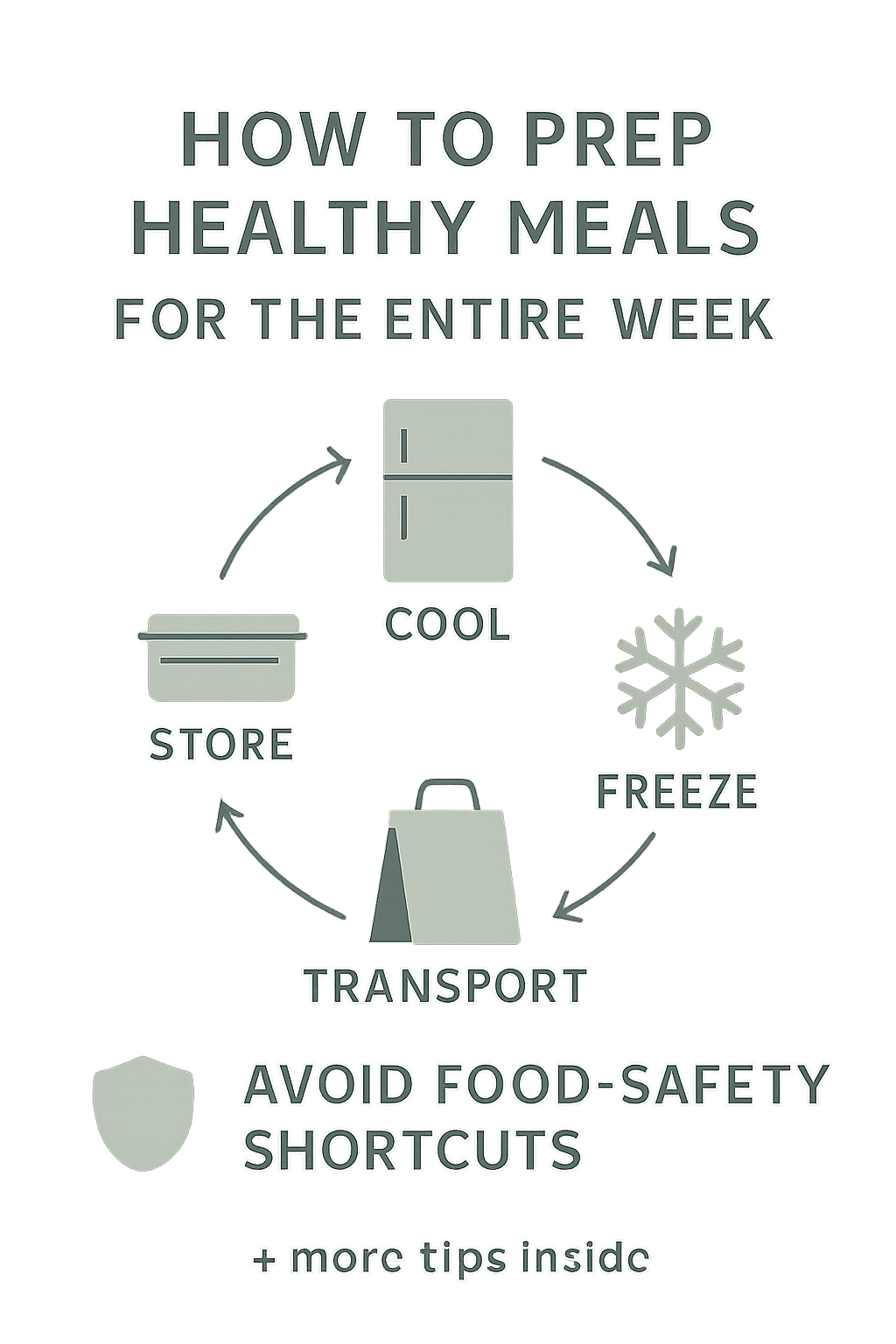
Cooked meals should not remain on the counter for hours while you clean, watch television, or wait for them to “fully cool.” Divide hot food into shallow containers so heat can escape, then refrigerate promptly. Your refrigerator should be at or below 40°F/4°C.
FoodSafety.gov lists cooked meat, poultry, soups, and stews at generally three to four refrigerator days; see its cold-storage guidance for the relevant ranges. A Sunday batch intended for Thursday or Friday should be frozen early, not held in the refrigerator until it looks questionable.
- Monday to Wednesday: refrigerate labeled portions.
- Thursday and Friday: freeze portions on prep day.
- Thaw safely: move freezer food to the refrigerator overnight.
- Reheat thoroughly: heat leftovers until steaming hot throughout.
- Commute lunches: use an insulated bag and two ice packs.
Glass meal prep containers resist stains, reheat well, and make leftovers visible; they are heavier and can break. BPA-free plastic is light for commuting but can stain with tomato sauces and should be replaced if cracked or warped. Use tightly sealed small containers for sauces so a leaking dressing does not ruin the entire lunch.
Do not rely on smell alone to judge safety. Some harmful bacteria do not create an obvious odor or visible change. When food has spent too long at room temperature, has been poorly chilled, or you cannot remember when it was cooked, discard it rather than trying to “save” it with extra reheating.
What to do when the week breaks your plan
Healthy meal prep for busy people needs decision rules. A missed Tuesday dinner is not failure; it is an instruction to change where the food lives. If the meal is still within its safe refrigerator window, make it Wednesday lunch. If it will not be eaten in time, freeze it that night.
The 3-2-1 rescue check
Before ordering food or letting a container languish, ask three questions: Is it still safe, will I eat it within two days, and can I change its format? If the answer is no to the second question, freeze it. If the answer is yes to the third, turn bowl ingredients into a wrap, soup, omelet, or salad.
Keep one backup meal that requires almost no thinking: frozen chili, lentil soup, cooked turkey meatballs, or a grain-and-bean bowl. A backup is not a punishment meal. Choose something you would genuinely want after a hard day, then keep it portioned and labeled.
Work dinners create another predictable problem: people try to “make up for” restaurant food by skipping lunch, then arrive ravenous and eat past comfort. Eat your prepared lunch as planned, have a protein-and-produce snack if dinner will be late, and choose the restaurant meal without turning it into a moral test. Weekly meal prep should reduce stress around food, not become a rigid rule system.
Meal prep for weight loss without turning food into a punishment
Portioning before you are hungry can be useful for people working toward weight loss, especially with calorie-dense foods such as cheese, oils, nuts, sauces, and granola. The goal is not tiny containers. It is a meal substantial enough to reduce the rebound hunger that drives evening grazing.
Build lunch around a visible protein portion, a high-volume vegetable portion, and a measured carbohydrate that matches your activity. A physically active person may prefer potatoes, rice, oats, or beans at lunch; an inactive office day still does not require removing carbohydrate entirely. Fiber-rich foods and protein generally keep a meal satisfying longer than a meal built mainly from refined snack foods.
Rigid tracking can become risky when it creates fear of unplanned meals, anxiety around social eating, or refusal to eat food prepared by someone else. Those can be warning signs of orthorexic behavior. Loosen the plan, include convenience meals deliberately, and seek support from a registered dietitian or mental-health professional if food rules are becoming controlling or distressing.
Questions people ask after their first prep week
Do I need to prep seven dinners?
No. Prep the dinners your calendar supports, then leave room for eating out, leftovers, family meals, and one freezer option. Four planned home dinners often creates less waste than seven.
How many recipes should I meal prep for a week?
Start with two cooked recipes plus a component set. For example, make chili and sheet-pan chicken, then pair the chicken with rice, tortillas, salads, or potatoes. More recipes usually mean more shopping, chopping, cleanup, and abandoned ingredients.
Should every meal be fully cooked in advance?
Cook complete lunches if you need a grab-and-go solution. Keep dinner ingredients as components when texture, freshness, and choice matter more. Raw chopped vegetables, washed salad greens, sauces, cooked grains, and proteins can be assembled close to eating time.
Is it okay to meal prep for a week?
Yes, provided you use a refrigerator at 40°F/4°C or below, cool and store food promptly, and freeze the later-week portions. Refrigerate only the servings you will eat within the appropriate storage window.
How do I meal prep without getting bored?
Repeat the ingredients, not the finished meal. Change the sauce, serving format, temperature, and crunch factor. A small container of salsa, pickled onions, toasted seeds, pesto, or yogurt sauce can shift the experience more than a complicated new recipe.
This content is based on lifestyle science, behavioral nutrition, and performance coaching research. It is for informational purposes only and does not constitute medical advice. Consult a healthcare provider before making significant changes to your sleep, diet, or fluid intake routines.