
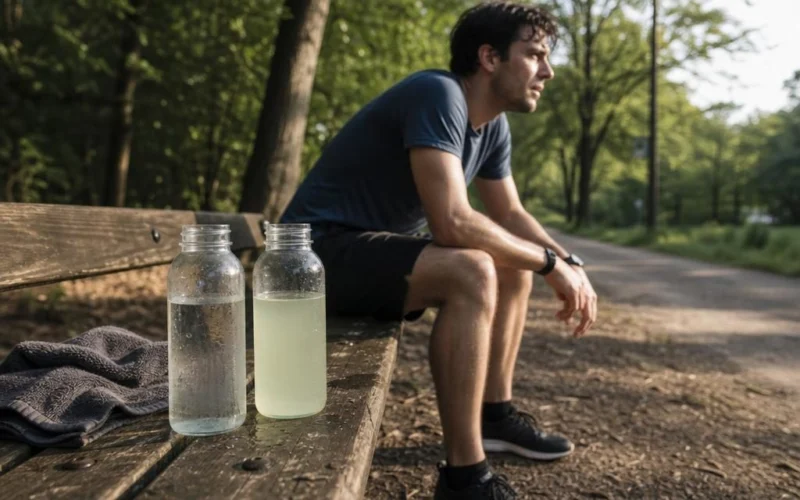
Plain water is the best default for everyday hydration and most short or moderate workouts. A normal meal can usually replace the electrolytes lost during routine activity. Electrolyte drinks become more reasonable when sweating is prolonged or substantial, conditions are hot or humid, physical work continues for hours, or recovery time before another hard session is short.
Water, electrolytes, or medical help? Ask three questions
- Was fluid loss ordinary or substantial? For a normal day or a short to moderate workout, choose water and eat normally. Consider electrolytes after hours of activity, heavy sweating, soaked clothing, major fluid loss, or continued sweating that cannot soon be offset by meals.
- Are heat, hard work, or rapid recovery involved? Electrolytes may be useful during prolonged activity in heat or humidity, demanding work in protective clothing, endurance exercise, or recovery before another hard session within hours. Choose a carbohydrate-containing sports drink only when exercise fuel is also useful.
- Are there warning signs? Confusion, fainting, seizures, chest symptoms, repeated vomiting, a severe or worsening headache, inability to keep fluids down, collapse, or worsening symptoms requires urgent medical assessment—not repeated water or electrolyte packets.
Duration is a screening cue, not a universal cutoff. A hard 45-minute run in humid weather may produce more sweat loss than a relaxed 90-minute walk. Intensity, climate, clothing, sweat volume, access to food, and recovery time all affect the choice.
| Situation | Best default | Why | Watch out for |
|---|---|---|---|
| Normal day or short/moderate workout | Plain water | Replaces routine fluid without added sugar | Forced drinking beyond thirst |
| Ordinary post-workout recovery | Water plus a meal | Food replaces sodium, potassium, and energy | Treating every workout as a supplement need |
| Prolonged or heavy sweating | Electrolyte drink | Provides fluid and minerals, especially sodium | Unnecessary sugar or excessive sodium |
| Long, hard activity requiring fuel | Carbohydrate-electrolyte sports drink | Supplies fluid, electrolytes, and exercise fuel | Overly concentrated drinks and stomach upset |
| Diarrheal fluid loss | Oral rehydration solution | Uses a clinical glucose-electrolyte formulation | Severe dehydration or inability to drink |
How water, electrolyte drinks, sports drinks, and ORS differ
A zero-sugar electrolyte drink and a sports drink are not the same product. Electrolyte water or tablets generally provide water and minerals with little or no carbohydrate. A sports drink adds carbohydrate that can fuel prolonged exercise, but it also adds sugar and calories that most ordinary days and short workouts do not require.

Oral rehydration solution, or ORS, is different from both. It uses a specific balance of glucose and electrolytes to support fluid absorption during dehydration caused by diarrhea. A typical sports drink is designed around exercise hydration and fuel, not clinical management of diarrheal illness.
The NIH Office of Dietary Supplements notes that healthy people generally replace routine electrolyte losses through food and water. Electrolyte products become more relevant after extended exercise or physical work and during prolonged exposure to heat or humidity.
When choosing a product, match the label to its purpose. For heavy sweat loss, check sodium per serving and follow the mixing directions. For prolonged exercise fuel, check carbohydrate content and choose a concentration you tolerate. Count the whole bottle rather than assuming that one bottle equals one serving. People with prescribed sodium, potassium, or fluid restrictions should discuss the product with a healthcare professional.
The CDC’s beverage guidance emphasizes water as a normal hydration choice and notes that sugary drinks, including many sports drinks, can add calories. The word “electrolyte” on a label does not establish that a product is necessary or well matched to your activity.
What sweating changes inside your body
Sodium is the main electrolyte lost in sweat
Electrolytes are electrically charged minerals involved in fluid balance, nerve signaling, and muscle contraction. Sweat contains several electrolytes, but sodium is the primary one lost in meaningful quantities during exercise. Sweat rate and sweat sodium concentration vary considerably among people and can change with environmental conditions and heat acclimatization.
A damp shirt after a gym session does not prove that you need a supplement. For many recreational workouts, water and a normal meal replace what was lost. Soup and a sandwich, eggs and toast with fruit, rice and beans, or another regular meal can provide fluid, sodium, potassium, carbohydrate, and protein.
Targeted electrolyte replacement becomes more useful when losses accumulate faster than food and ordinary drinking can replace them. Examples include endurance events, several hours of outdoor work, repeated practices on the same day, or strenuous activity in clothing that limits heat loss.
Carbohydrate turns a hydration drink into exercise fuel
A sports drink is more than mineralized water. Its carbohydrate can supply working muscles during prolonged exercise, particularly when eating solid food is inconvenient. Someone in the second hour of a hard endurance event therefore has different needs from someone finishing a 40-minute strength session before dinner.
Concentration matters. The National Athletic Trainers’ Association position statement describes approximately 3% to 8% carbohydrate as a range commonly used to balance fluid delivery and exercise fuel. More concentrated drinks may slow stomach emptying and worsen fullness, nausea, or other gastrointestinal symptoms during activity.
Follow the product’s mixing directions. Adding extra powder can make a drink more concentrated and harder to tolerate, while excessive dilution changes its intended carbohydrate and electrolyte content.
“More hydrating” depends on the situation
Sodium can support fluid retention after substantial sweat loss, but that does not make an electrolyte drink inherently better than water in every setting. On an ordinary day, the body regulates water and electrolyte balance through thirst, the kidneys, hormones, food, and beverages.
The National Academies’ reference values—about 3.7 liters of total water for young men and 2.7 liters for young women—include water from both food and beverages. These are population-level adequate intakes, not mandatory water-bottle targets or individualized prescriptions. Climate, body size, pregnancy, lactation, illness, activity, and diet can change fluid needs.
Overdrinking can dilute blood sodium
Exercise-associated hyponatremia is defined as a blood sodium concentration below 135 mmol/L during or within 24 hours after physical activity. A central cause is drinking more fluid than the body is losing, sometimes combined with activity-related release of vasopressin, a hormone that reduces water excretion.
Adding sodium does not prevent the danger of excessive intake. Avoid forced drinking and avoid gaining weight during exercise from fluid consumption. Reviews of exercise-associated hyponatremia support drinking according to thirst as a practical individualized approach for many recreational exercisers rather than following an aggressive universal schedule.
Estimate sweat loss during one familiar session
A one-session estimate can help you plan fluid availability for a similar workout, race practice, or work period. Use the same scale, weigh yourself dry in minimal or similar clothing before and after, and repeat the check under comparable conditions.
The practical approximation is:
Sweat loss ≈ pre-exercise weight − post-exercise weight + fluids consumed − urine output.
For this calculation, 1 kilogram of acute body-mass change is treated as approximately 1 liter of fluid. Include water and other drinks, as well as fluid-containing foods or items such as gels, when possible.
For example, suppose a person completes a familiar 60-minute workout with these measurements:
- Pre-exercise weight: 75.0 kilograms
- Post-exercise weight: 74.2 kilograms
- Fluids consumed: 0.6 liters
- Urine passed: 0.1 liters
The body-mass decrease is 0.8 kilograms, so the estimated sweat loss is:
0.8 liters + 0.6 liters − 0.1 liters = approximately 1.3 liters.
Because the session lasted one hour, the estimated sweat rate is about 1.3 liters per hour for that activity and those conditions. Weather, pace, acclimatization, food intake, unmeasured fluids, retained sweat, wet clothing, and changing clothes can all reduce accuracy.
Use the estimate to plan what fluids should be available—not as a target to replace 100% of losses during exercise. Avoid drinking enough to gain weight during the session, which can indicate overdrinking. Rather than rigidly matching the calculated rate, generally use thirst and follow individualized clinical or sports-medicine guidance when applicable.
This calculation is not a diagnostic test or a universal drinking prescription. Use a marked bottle and record refills if you try it, and stop tracking if weighing or measuring feels intrusive or encourages obsessive behavior. Most people do not need precise sweat-rate calculations for daily hydration.
Special situations
Hot jobs, humidity, and protective clothing
Construction, landscaping, warehouse work, emergency response, and similar jobs may involve hours of intermittent sweating rather than one defined workout. Heat, humidity, heavy uniforms, protective equipment, limited breaks, and repeated fluid losses can make electrolytes more relevant. Water remains the baseline; meals or salty foods may cover mineral losses when regular breaks are available, while a sports drink may be useful when sustained work also requires carbohydrate energy.
Hydration cannot reliably prevent or treat every heat illness. New confusion, collapse, severe weakness, fainting, or worsening symptoms in the heat requires prompt cooling and urgent medical assessment.
Vomiting and diarrhea
A sports drink and ORS are not interchangeable. The World Health Organization recommends ORS for fluid and electrolyte losses caused by diarrhea. Severe dehydration or shock may require intravenous treatment.
Repeated vomiting, inability to keep fluids down, reduced responsiveness, fainting, or signs of severe dehydration warrants medical care. Do not rely on homemade sports beverages or repeated electrolyte packets to manage serious illness.
Medical conditions and medications
Ask a healthcare professional before routinely using high-sodium or high-potassium drinks if you have kidney disease, heart failure, uncontrolled hypertension, or a prescribed fluid, sodium, or potassium restriction. Diuretics and other medications can also alter fluid or electrolyte handling.
Generic exercise guidance cannot account for these conditions safely. Bring the product label, serving size, medication list, and a description of your activity to the discussion so the clinician can evaluate the actual mineral amounts and your medical context.
Questions about water vs electrolyte drinks
Do I need electrolytes after a 30-, 60-, or 90-minute workout?
After a typical 30-minute workout, water and a normal meal are usually enough. At 60 minutes, consider intensity, temperature, sweat volume, food availability, and how soon you will exercise again rather than treating the clock as an automatic trigger.
An electrolyte or sports drink becomes more reasonable during a hard 90-minute session, particularly in heat or with heavy sweating. A gentle 90-minute walk in cool weather may still require only water. Published guidance uses different duration thresholds, so time should remain one factor rather than a prescription.
Can food replace an electrolyte drink after exercise?
Yes. For ordinary recovery, water plus a meal can replace fluid, sodium, potassium, and energy. A targeted drink is mainly more convenient when appetite is low, food is unavailable, losses were substantial, activity is continuing, or another demanding session begins soon.
Do salt stains or muscle cramps prove I need more sodium?
No. Salt marks on clothing indicate that sweat left visible residue, but they do not determine an exact sodium requirement. Consider them alongside heat exposure, activity duration, measured sweat loss, and repeated performance demands.
Muscle cramps are not a reliable test of sodium depletion. Workload, fatigue, conditioning, and neuromuscular factors can contribute. Recurrent or severe cramps deserve broader assessment rather than automatic escalation of electrolyte supplements.
Can drinking too much water be dangerous?
Yes. Drinking beyond fluid losses can contribute to exercise-associated hyponatremia, a potentially serious reduction in blood sodium. Avoid forced drinking, do not aim to gain weight during activity, and seek urgent care for confusion, seizures, fainting, repeated vomiting, or a severe or worsening headache.
Are electrolyte drinks necessary every day?
Usually not. Most healthy people can replace routine fluid and electrolyte losses through water and a varied diet. Daily electrolyte products may add unnecessary sodium, sugar, calories, or cost when substantial losses are not occurring.
This content is based on lifestyle science, behavioral nutrition, and performance research. It is for informational purposes only and does not constitute medical advice. Consult a healthcare provider before making significant changes to your diet or fluid intake, particularly if you have a medical condition, take medication that affects fluid balance, or follow a prescribed sodium, potassium, or fluid restriction.