
A protein bar is healthy only if it replaces a less nourishing snack or covers a real meal or workout gap. For most people, a useful everyday bar provides 15–20 g protein, at least 3 g fiber, and no more than 5 g added sugar; a coated bar with candy-level sugar can still be candy wearing a protein halo.
One bar is usually plenty on a given day. Treat it as portable food with a job to do, not as an automatic “healthy” add-on after lunch, before dinner, and during every errand.
Are Protein Bars Healthy? Start With a Three-Label Autopsy
The wrapper tells a more reliable story than the front-of-pack protein claim. A bar can contain 20 g protein and still deliver enough syrup, coating, saturated fat, and calories to resemble a candy bar more closely than a balanced snack.
The comparison below uses hypothetical but realistic labels. Serving weight varies widely, so the “per bar” number matters for fullness, while protein per 100 calories shows how much of the energy budget is actually going toward protein.
| Bar type | Serving calories | Protein | Fiber | Added sugar | Saturated fat | Sodium | Healthy or candy-like? |
|---|---|---|---|---|---|---|---|
| Candy-like coated bar | 250 kcal | 10 g | 2 g | 16 g | 7 g | 210 mg | Candy-like |
| Balanced snack bar | 190 kcal | 18 g | 5 g | 3 g | 2 g | 140 mg | Strong snack choice |
| Meal-replacement bar | 360 kcal | 20 g | 8 g | 5 g | 3 g | 390 mg | Useful meal bridge |
The first bar supplies 4 g protein per 100 calories. The balanced option supplies almost 9.5 g, while the meal bar supplies about 5.6 g but brings enough calories and fiber to stand in for a delayed meal. Context decides the verdict: a 360-calorie bar makes little sense beside a normal lunch, yet can be practical during a six-hour airport delay.
Candy-like coated bar
The telltale pattern is a long sweetener system: sugar, glucose syrup, tapioca syrup, rice syrup, chocolate coating, caramel layer, or cookie inclusions. None of these ingredients is morally “bad”; they supply sweetness, chew, shelf stability, and a less chalky protein texture. The problem is their dose relative to the bar’s protein.
A 16 g added-sugar bar uses nearly one-third of the FDA Daily Value of 50 g. If it also contains 7 g saturated fat, it takes up 35% of the saturated-fat Daily Value before the rest of the day’s food is considered. That is why some of the worst protein bars for you are not low-protein products; they are simply dessert-format products marketed around a modest protein number.
Balanced snack bar
A balanced snack bar tends to use protein isolate or concentrate, nuts or nut butter, oats, seeds, and a modest binder. The texture is usually denser and less candy-like: slightly chewy at room temperature, firmer after refrigeration, and sometimes a little dry because protein powders bind water aggressively.
During recipe testing, bars made with whey isolate and oats became noticeably tougher after 48 hours in the refrigerator. Adding a small amount of nut butter or date paste improved chew without requiring a thick confectionery coating. That texture trade-off explains why a smoother, candy-style bar is often more sugar- or fat-heavy.
Meal-replacement bar
A meal-replacement bar should be judged differently from a desk-drawer snack. Its larger calorie count may be appropriate if it includes meaningful protein, fiber, carbohydrate, and unsaturated fat, rather than merely scaling up a candy-style formula.
Look for a reason to use it: a missed breakfast before a long commute, a delayed clinical shift, or a travel day without reliable food. A meal-replacement bar is not automatically superior because it is bigger. If it leaves you hungry within an hour, the formula may be heavy in rapidly digested starches or sweeteners and light on the food structure that makes a meal satisfying.
What Protein Bars Actually Do in Your Body
Protein bars do not have a special metabolic status. Their usefulness comes from delivering amino acids, energy, and sometimes fermentable fiber in a portable format. The body responds to the nutrients and the eating context, not the word “protein” printed in large type.
Protein and muscle repair
Dietary protein provides essential amino acids for muscle protein synthesis. Whey is rapidly digested and naturally rich in leucine, the amino acid that helps trigger the muscle-protein-synthesis signal. Casein forms a slower-curdling structure in the stomach, while soy and pea protein are effective plant options with somewhat different amino-acid profiles.
For protein bars for muscle gain, the training stimulus matters first. A bar eaten after resistance training can be a convenient way to contribute toward daily protein intake, but it cannot build muscle in the absence of progressive loading. A meta-analysis of resistance-training trials found that protein supplementation produced modest improvements in lean mass and strength alongside training.
A practical post-training bar contains roughly 20–30 g protein and some carbohydrate if another meal is not coming soon. A 10 g protein candy-like bar may taste satisfying, but it is a weak recovery tool compared with Greek yogurt and fruit, a turkey sandwich, tofu with rice, or a higher-protein bar.
Fiber, fullness, and appetite
Fiber changes the experience of a bar more than many shoppers expect. Viscous fibers such as oat beta-glucan can slow gastric emptying, while fermentable fibers such as inulin and resistant starch reach the colon and are metabolized by microbes into short-chain fatty acids, including acetate, propionate, and butyrate.
That fermentation can support fullness for some people, but the same process creates gas in sensitive guts. A premeal bar built with higher protein and fiber reduced short-term energy intake and increased fullness in a randomized crossover trial; that finding applies to that specific kind of bar and does not prove every “high-protein” wrapper suppresses appetite.
One client switched from a 2 g-fiber bar to a 12 g-fiber bar and reported audible abdominal bubbling by the second afternoon. We changed to a 5 g-fiber option and gave the adjustment ten days rather than forcing the higher dose. Her symptoms settled because the issue was the sudden fermentable-fiber jump, not a lack of discipline.
Why replacement matters more than the bar
Protein bars for weight loss work only if they displace calories you would otherwise eat. Replacing a vending-machine pastry with a 190-calorie, 18 g-protein bar may make the afternoon easier to manage. Eating that same bar after a full lunch because it feels “healthy” raises daily energy intake.
Use one question before opening it: What food is this replacing? “Nothing” is a valid answer after an unusually long workout or during an interrupted workday, but it should make you reconsider the portion. Appetite is influenced by sleep, stress, medication, menstrual-cycle phase, and the size of the meal before the bar; no single product overrides those inputs.
Protein Bar Side Effects: Bloating, Sugar Alcohols, and Hidden Calorie Creep
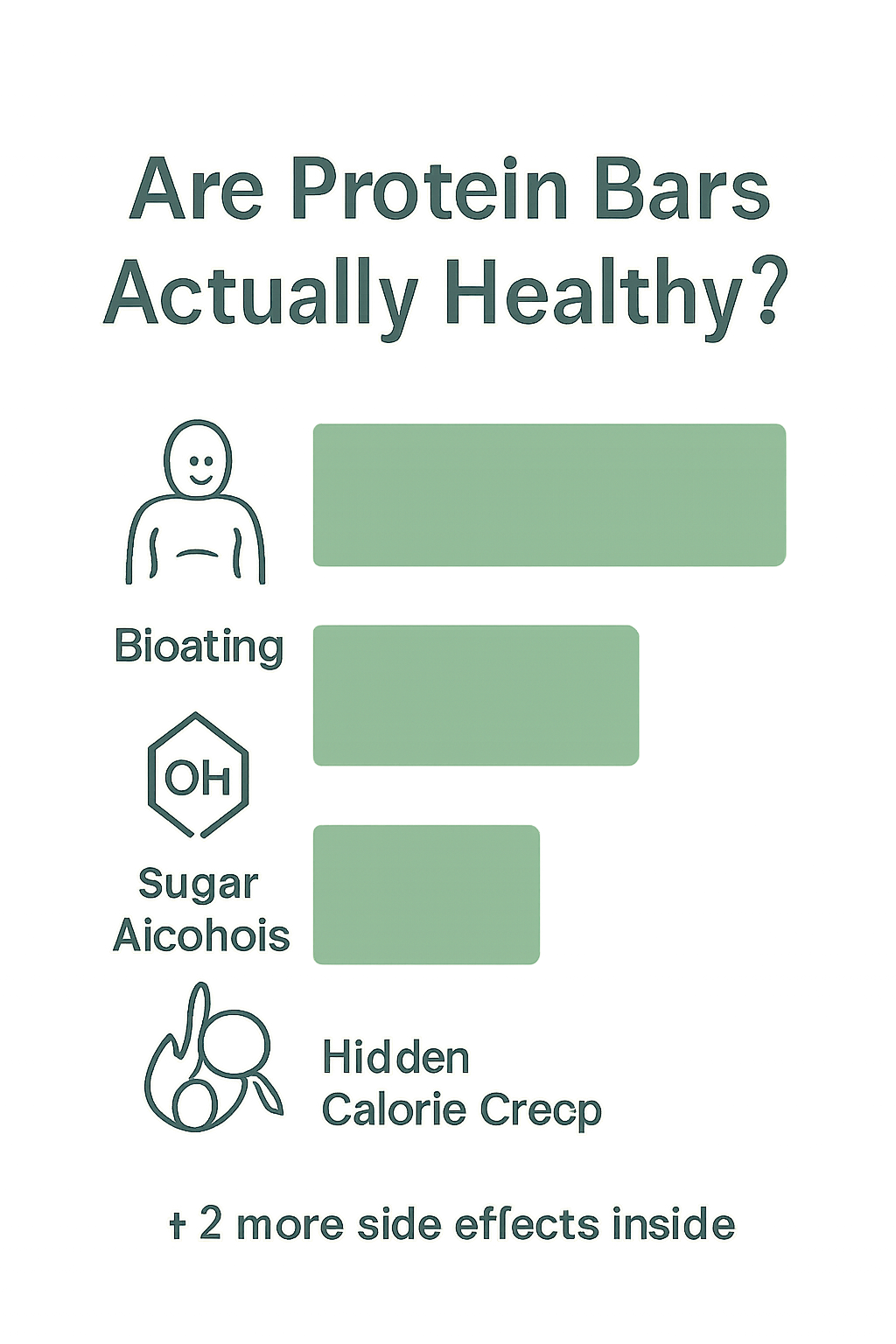
Protein bar side effects usually come from the sweetener blend, added fibers, dairy ingredients, or repeated portions rather than protein itself. The most common complaint I hear is not “protein upset my stomach,” but “I ate a bar, chewed sugar-free gum all afternoon, and drank a protein shake.” The combined dose matters.
Expert tip: Stacking one bar, sugar-free gum, and a protein drink can push sugar alcohol intake high enough to trigger gas or diarrhea.
Maltitol, erythritol, sorbitol, and chicory root
Sugar alcohols, also called polyols, include maltitol, sorbitol, xylitol, erythritol, and isomalt. They are used because they taste sweet with fewer digestible calories than sugar. Absorption varies by compound and person; unabsorbed polyols pull water into the intestine and can be fermented by colonic bacteria.
Maltitol and sorbitol are frequent troublemakers because larger doses can produce cramping, loose stools, and urgency. Erythritol is absorbed differently and is often better tolerated, though a sensitive person can still react to a heavily sweetened bar. A detailed review of polyol digestion and tolerance describes these dose-dependent gastrointestinal effects.
Chicory root fiber is usually inulin or fructooligosaccharides. It adds fiber with little bulk, which is attractive to manufacturers, but it is high-FODMAP and commonly aggravates bloating in people with IBS. “No added sugar” does not automatically mean “easy on the gut.”
When two bars become an extra meal
The honest difficulty is that bars are easy to eat quickly and easy to forget. Two 220-calorie bars, a latte, and a handful of trail mix can become a 650- to 800-calorie afternoon without feeling like a meal because each item arrived in a separate wrapper or cup.
Use a simple daily tally: write down every bar, shake, and “sugar-free” sweet product for seven days. Circle days with more than one bar, then compare those days with hunger, bowel symptoms, and meal timing. If bars appear on three or more days as an addition rather than a replacement, the product is functioning as extra food.
A reasonable starting frequency is one bar per day for a healthy adult who tolerates it and has a genuine convenience need. There is no universal medical upper limit, because protein needs and ingredients differ, but two bars daily deserves label math: calories, sodium, added sugar, fiber, and sugar alcohol exposure all double.
Who needs a different snack
- IBS or low-FODMAP diets: Avoid or limit chicory root, inulin, FOS, sorbitol, and large polyol blends during symptom control.
- Lactose intolerance: Whey concentrate and milk-protein bars may trigger symptoms; whey isolate often contains less lactose, but labels vary.
- Milk, soy, peanut, tree-nut allergy: Check both allergen statements and “may contain” language, especially in multi-flavor boxes.
- Chronic kidney disease: Protein targets may be medically individualized; do not use bars to push intake higher without renal guidance.
- Reflux: Chocolate coatings, peppermint flavors, and high-fat nut-based bars can aggravate symptoms in some people.
- Diabetes using insulin: Count total carbohydrate and dose timing; “low sugar” does not mean carbohydrate-free.
Protein bar ingredients to avoid are personal, not universal. For one reader, a whey-and-oat bar is convenient food. For another, the same bar is a lactose trigger. The right response is a label-based substitution, not a blanket ban on processed foods.
How to Choose a Healthy Protein Bar for Your Actual Goal
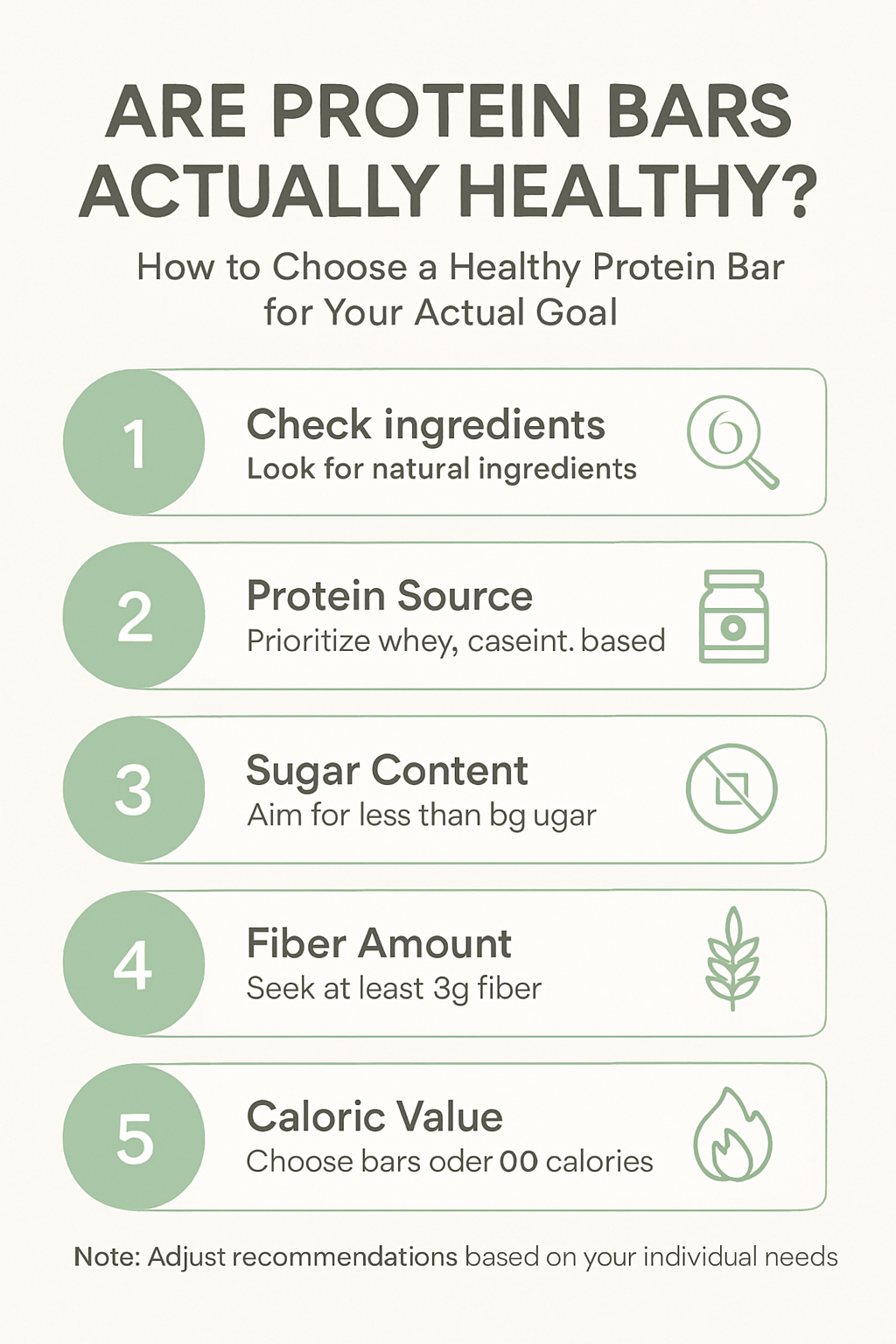
Start with the Nutrition Facts panel, not the influencer review or front label. Check serving size first because some oversized bars look like one snack but provide the calories of a small meal. Then scan protein, fiber, added sugar, saturated fat, sodium, and the first several ingredients.
Quick decision: Read added sugar as %DV: 5% or less is low; 20% or more is high.
The FDA bases added-sugar Daily Value on 50 g per day, and its added-sugar label guidance makes the percentage easier to interpret than total sugar alone. Fruit, milk, and some ingredients contribute naturally occurring sugars; added sugar is the number that reveals how much sweetening was built into the formula.
Snack, meal replacement, or workout fuel?
Choose the bar’s category before comparing brands. A snack bar needs enough protein and fiber to bridge hunger without crowding out dinner. Pre-workout fuel benefits from digestible carbohydrate and lower fat. A meal-replacement bar needs enough energy to cover an actual missed meal, ideally paired with produce or milk if available.
| Goal | Best bar profile |
|---|---|
| Replace candy/chips | 15 g protein, low sugar |
| Pre-workout | Carbs, low fat |
| Post-workout | 20 g protein minimum |
| Busy meal gap | 300+ calories, 5 g fiber |
| IBS-sensitive stomach | No inulin or polyols |
| Weight-loss snack | Protein plus fiber |
A useful price comparison is cost per 10 g protein. Divide the bar price by its protein grams, then multiply by 10. A $3 bar with 20 g protein costs $1.50 per 10 g; a $2 bar with 10 g protein costs $2 per 10 g. The cheaper wrapper is not always the cheaper protein.
Whey, soy, and pea protein compared
Whey isolate is generally lower in lactose than whey concentrate and mixes into a lighter texture. Whey concentrate can be creamier and less expensive, but its extra lactose is relevant for people who react to dairy. Milk protein blends often contain both whey and casein, creating a slower, thicker digestion profile.
Soy protein is a complete plant protein, meaning it supplies all essential amino acids. It is a solid option for vegetarians and people avoiding dairy, though soy allergy remains a concern. Pea protein is usually paired with rice protein because pea is relatively lower in methionine while rice protein complements that amino-acid pattern.
“Clean” is not a scientific quality marker. A short ingredient list can be useful, but a longer list may include vitamin-mineral fortification, emulsifiers for texture, or mixed proteins for amino-acid balance. Ask what each ingredient does: protein source, binder, fat source, fiber, sweetener, coating, or preservative.
Better Than a Wrapper: Homemade Protein Bars and Whole-Food Alternatives
Homemade protein bars give you direct control over sweetness, fiber type, allergens, and texture. They are especially useful for people who cannot tolerate chicory root fiber or who are tired of paying premium prices for individually wrapped bars.
A no-bake bar that does not turn chalky
For eight small bars, combine 1 cup rolled oats, ½ cup peanut or sunflower-seed butter, ⅓ cup mashed dates, ½ cup plain whey or pea protein powder, 2 tablespoons ground flaxseed, a pinch of salt, and 3–6 tablespoons milk or unsweetened soy milk. Press into a lined loaf pan and chill for 60–90 minutes before cutting.
The texture fix is hydration. Protein powder continues to absorb moisture after mixing, so a dough that feels slightly sticky at minute five becomes sliceable after an hour. In one test batch, 4 tablespoons milk produced a crumbly bar by the next morning; 6 tablespoons produced a soft chew after 90 minutes of chilling without becoming sticky.
Use rolled oats rather than instant oats for more chew. Instant oats make a smoother, softer bar but can become pasty after several days. Steel-cut oats remain too hard in a no-bake mixture unless they are soaked or cooked first, which changes the formula and refrigerator life.
Portable alternatives to packaged bars
A protein bar is a convenience tool, not a requirement. Whole-food combinations often provide a better eating experience and more volume for the same calories, especially if you are sitting down long enough to chew rather than eating between appointments.
| Portable food | Pair it with | Why it works |
|---|---|---|
| Greek yogurt | Banana and walnuts | Protein, carbs, crunch |
| Roasted edamame | Mandarin orange | Fiber with vitamin C |
| Turkey roll-ups | Whole-grain crackers | Protein with starch |
| Cottage cheese cup | Berries and chia | Protein, fiber, volume |
| Hummus pouch | Carrots and pita | Legumes plus carbohydrate |
| Hard-boiled eggs | Apple and almonds | Protein with produce |
Pairing matters because each item solves a different practical problem. Fruit supplies water and carbohydrate; nuts add fat and texture; crackers or pita provide usable training fuel. For fat-soluble nutrients, the walnuts in the yogurt pairing also improve absorption of carotenoids from fruit or vegetables eaten alongside them.
Store homemade bars in a sealed container in the refrigerator for up to five days. Freeze individually wrapped portions for up to two months, then thaw overnight in the refrigerator. A date-and-nut bar left in a hot car can soften dramatically because nut butter liquefies and date sugars become tacky; use an insulated lunch bag in warm weather.
Protein Bar Questions People Ask Before Buying Another Box
Are protein bars really just candy bars in disguise? Some are. A bar with high added sugar, a thick coating, little fiber, and modest protein has a candy-like nutrition profile. A bar with substantial protein and fiber, limited added sugar, and a clear snack or meal purpose is different, even if it still tastes sweet.
Can protein bars help with weight loss, or do they add calories? They can help only when they replace a more calorie-dense snack or prevent an unplanned fast-food stop. They add calories when eaten on top of adequate meals. Track the replacement for a week rather than relying on the package’s diet language.
Is it OK to eat a protein bar every day? Daily use can fit a healthy diet if the bar is tolerated, the label is reasonable, and it fills a genuine food gap. Rotate in less processed portable foods so one product does not become your main source of fiber, sweeteners, or protein.
Are whey-based protein bars better than plant-based bars? Neither is automatically better. Whey is convenient for its leucine content and rapid digestion; soy is a complete plant protein; pea-and-rice blends can provide a robust amino-acid profile. The better option is the one that fits your digestive tolerance, dietary pattern, allergy needs, and protein target.
Why do protein bars make me bloated or give me diarrhea? Check for maltitol, sorbitol, xylitol, chicory root, inulin, and very high fiber first. Then consider lactose from whey concentrate or milk ingredients. Stop stacking multiple sweetened products in the same few hours, choose a simpler bar, and seek clinical advice for persistent symptoms, blood in stool, unexplained weight loss, or severe abdominal pain.
This content is based on food chemistry and clinical nutrition research. It is for informational purposes only and does not constitute medical advice. Consult a qualified healthcare professional before making significant changes to your dietary routine.