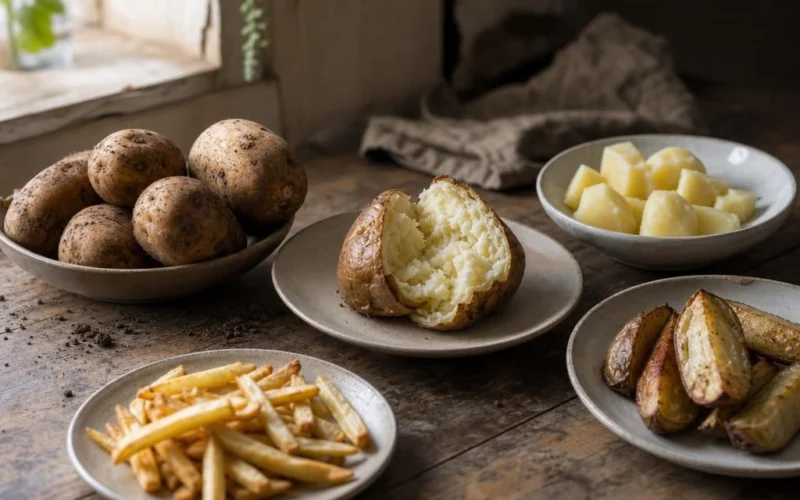
Plain potatoes can fit a healthy diet. They provide carbohydrate, potassium, vitamin C, vitamin B6, and some fiber with very little natural fat; a useful starting portion is one fist-sized potato or about ¾–1 cup cooked. The potato itself is rarely the main calorie issue—frying, oversized servings, butter, cheese, creamy sauces, and oils can change the meal substantially.
Potato nutrition: calories, carbs, fiber and protein
Potatoes are carbohydrate-rich vegetables, not nutritional equivalents of leafy greens or beans. They provide starch, potassium, vitamin C, vitamin B6, and some fiber, although they provide less protein and fiber than beans, lentils, and many whole grains.
The table uses a consistent 100-gram (3.5-ounce) basis and two USDA FoodData Central entries for edible potato flesh without added salt: “Potatoes, boiled, cooked in skin, flesh, without salt” and “Potatoes, baked, flesh, without salt.” The boiled entry means the potato was cooked in its skin, but the skin is not included in the reported food. A fist-sized potato or roughly ¾–1 cup cooked potato is a practical starting portion, although actual weight varies by variety and preparation.
| Nutrient/metric | Boiled potato skinless flesh, per 100 g |
Baked potato skinless flesh, per 100 g |
%DV basis | Primary role |
|---|---|---|---|---|
| Calories | 87 kcal | 93 kcal | Energy metric | Provides energy |
| Carbohydrate | 20.1 g | 21.2 g | 7%–8% DV (275 g) |
Main energy source |
| Fiber | 1.8 g | 1.5 g | 5%–6% DV (28 g) |
Supports digestion |
| Protein | 1.9 g | 2.5 g | 4%–5% DV (50 g) |
Supports body tissues |
| Total fat | 0.1 g | 0.1 g | <1% DV (78 g) |
Very little naturally |
| Potassium | 379 mg | 391 mg | 8% DV (4,700 mg) |
Fluid and nerve function |
| Vitamin C | 13 mg | 9.6 mg | 11%–14% DV (90 mg) |
Supports immune function |
| Vitamin B6 | 0.30 mg | 0.31 mg | 18% DV (1.7 mg) |
Supports metabolism |
| Sodium | 6 mg | 10 mg | <1% DV (2,300 mg) |
Naturally very low |
Daily Values are FDA reference values for adults and children age 4 and older. Exact nutrient values vary with potato variety, skin status, water content, and cooking method. Plain potatoes contain very little natural fat; most added fat and sodium come from oil, butter, salt, sauces, cheese, and other toppings. USDA FoodData Central also lists separate entries for baked potatoes with skin, which generally provide more fiber than the skinless baked entry used here.
See the relevant USDA FoodData Central potato entries for form-specific values.
Why baked potatoes show more calories per 100 grams
Baking does not create calories. A potato loses water as it bakes, so 100 grams of baked potato contains slightly more potato solids than 100 grams of boiled potato. That makes baked potato somewhat more calorie-dense by weight without increasing the calories in the original plain potato.
The water difference also affects texture: baked potatoes are drier and fluffier, while boiled potatoes are moister and softer. Both can fit a healthy diet when served plain and compared in similar portions.
Russet, red and gold potatoes: what changes
Russets are generally starchier and become fluffy when baked, making them common choices for baking and mashing. Red potatoes are often firmer and waxier, so they tend to hold their shape in soups and salads. Gold potatoes usually have a creamy texture and moderate starch level that works well for roasting or mashing.
USDA FoodData Central includes entries for several potato forms and varieties, but water content, starch behavior, skin thickness, and micronutrients can differ among individual potatoes. Those differences are usually smaller in practice than the effects of frying, portion size, added oil, and toppings. No variety is universally healthiest.
Which potato preparation fits your goal?
Preparation often determines how much added oil, sodium, and topping-related energy a potato dish contains. The estimates below use an approximate 150 g cooked serving—a practical starting point roughly equal to one medium potato or about 1 cup of pieces. Recipes, product formulations, restaurant portions, and cooking-fat amounts can change these values substantially.
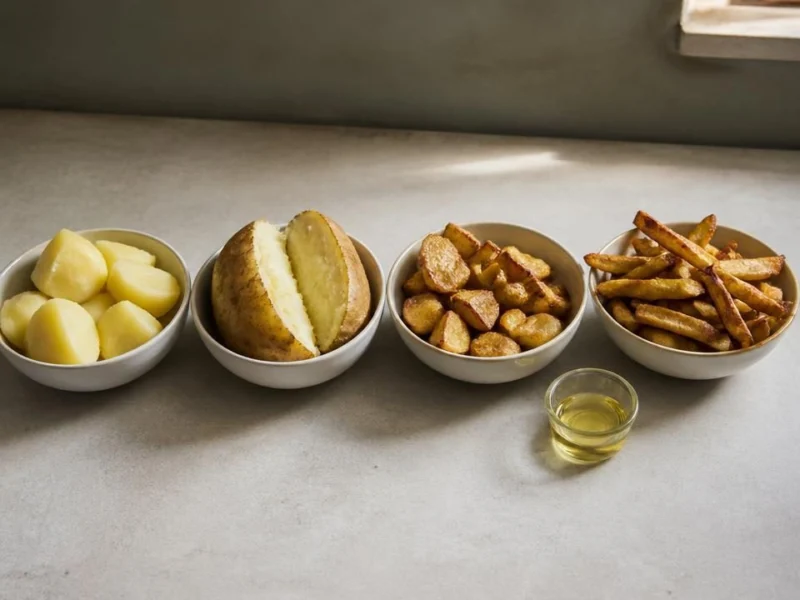
| Method | Typical calories* | Added fat | Sodium risk | Best use |
|---|---|---|---|---|
| Boiled, plain | About 130 | None | Low | Salads or simple sides |
| Baked, plain | About 140–150 | None | Low | Whole, portable potato |
| Mashed, plain | About 130–150 | None | Low | Soft-textured side |
| Roasted | Varies with oil | Oil-dependent | Variable | Crisp edges |
| Fried products | Varies widely | Usually high | Often high | Occasional side or snack |
*Estimated, recipe-dependent values for an approximate 150 g cooked serving. The mashed-potato estimate applies only to potatoes mashed without butter, cream, or cheese. For roasted potatoes, the oil amount drives much of the calorie difference: a measured teaspoon or tablespoon is not nutritionally equivalent to freely pouring oil. Fried foods such as fries and chips vary by product, portion size, oil absorption, and cooking method; packaged and restaurant versions may also contain substantially more sodium.
| Goal | Recommended approach |
|---|---|
| Lower added calories | Choose boiled or steamed potatoes; season with herbs. |
| Crisp texture | Bake or air-fry with measured oil. |
| Meal prep | Boil, chill, and portion for salads or reheated meals. |
| More filling meal | Serve with protein and non-starchy vegetables. |
Boiled versus baked potatoes
Plain boiled and baked potatoes can both fit a healthy diet. Boiled potatoes retain more water, while baking removes some water; this can make baked potato appear higher in calories per 100 grams without creating calories in the original potato.
Texture and convenience are the practical differences. Boiled potatoes are moist and easy to use in salads or side dishes. Baked potatoes are fluffy, portable, and convenient to serve whole. Either method can work depending on the meal and preferred texture.
What frying changes
Frying removes water and adds oil, increasing energy density. French fries and potato chips are therefore nutritionally different from plain whole potatoes, with fat, sodium, and serving size often playing a larger role.
Research on fried potatoes and chronic disease outcomes is largely observational. Some studies find less favorable associations for French fries than for plain potatoes, but those findings do not prove that ordinary potato intake causes diabetes, cardiovascular disease, or weight gain. Overall dietary pattern, restaurant meals, sugary drinks, and lifestyle factors may influence the results. A systematic review of potato intake and chronic disease outcomes highlights these limits.
Can potatoes help with weight loss?
Potatoes do not burn fat or create a unique weight-loss effect. Plain potatoes can fit a weight-management eating pattern because they are relatively low in calorie density compared with fried potato products and heavily topped versions. Weight change still depends on total food intake, portion size, meal composition, and long-term eating habits.
Consider two meals: a plain baked potato with Greek yogurt, grilled chicken, and broccoli may provide a satisfying plate with moderate calories. Fries with creamy dipping sauce and a sugary drink can provide far more calories, sodium, and added fat before the main dish is counted. The potato is not the whole calculation.
A simple potato portion self-check
- Start with one fist-sized potato: roughly ¾–1 cup cooked for many adults.
- Count toppings separately: oil, butter, cheese, bacon, sour cream, and sauces have their own calories.
- Choose one major starch: if the meal already includes rice, pasta, bread, or a large dessert, consider reducing one starch serving instead of automatically removing potatoes.
- Build the rest of the plate: add a protein food and non-starchy vegetables.
A common measurement problem is free-pouring oil onto a roasting pan. One tablespoon of oil adds about 120 calories, while a teaspoon adds about 40 calories. Measuring oil before roasting makes the difference visible.
Skin, cooling and blood-sugar questions
Does eating the skin matter?
Potato skin can add fiber and contains nutrients found close to the surface. Wash and scrub potatoes well before cooking, especially if you plan to eat the skin. Leaving the skin on is helpful, but it is optional; peeled potatoes can still contribute potassium, vitamin C, and carbohydrate.
Skin does not offset deep-frying, heavy toppings, or a very large portion. It is one small nutrition detail within the full meal.
Does cooling potatoes increase resistant starch?
Yes, cooling cooked potatoes can increase resistant starch under tested conditions. Resistant starch is starch that escapes digestion in the small intestine and can be fermented by gut bacteria in the colon. As cooked potato cools, some starch molecules reorganize in a process called starch retrogradation.
After overnight refrigeration, boiled potato pieces become firmer and slightly waxier. Reheating softens them, but does not completely restore the texture of freshly boiled potatoes. That visible texture change reflects altered starch structure.
Cooling does not remove most of the potato’s carbohydrate or make potatoes low-carb. The amount of resistant starch can vary with the variety, cooking method, cooling duration, storage temperature, and reheating. One study found more resistant starch in chilled than hot potatoes under its tested conditions, but this is a limited food-chemistry finding rather than a universal clinical rule. See the resistant starch analysis of commonly consumed potatoes for the study details.
What if you are watching blood glucose?
A single glycemic-index number cannot describe every potato meal. Cultivar, cooking method, cooling, mashing, portion size, and foods eaten alongside the potato can all affect blood-glucose response. Protein, fat, fiber-rich foods, and meal size also change the overall meal pattern.
People who use glucose-lowering medication or have diabetes should rely on their healthcare team for individualized carbohydrate guidance. Chilling potatoes may be an interesting meal-prep option, but it should not replace a personal diabetes-management plan. A review of potato cooking and starch digestibility explains why glycemic responses differ across preparations.
When should you avoid a potato?
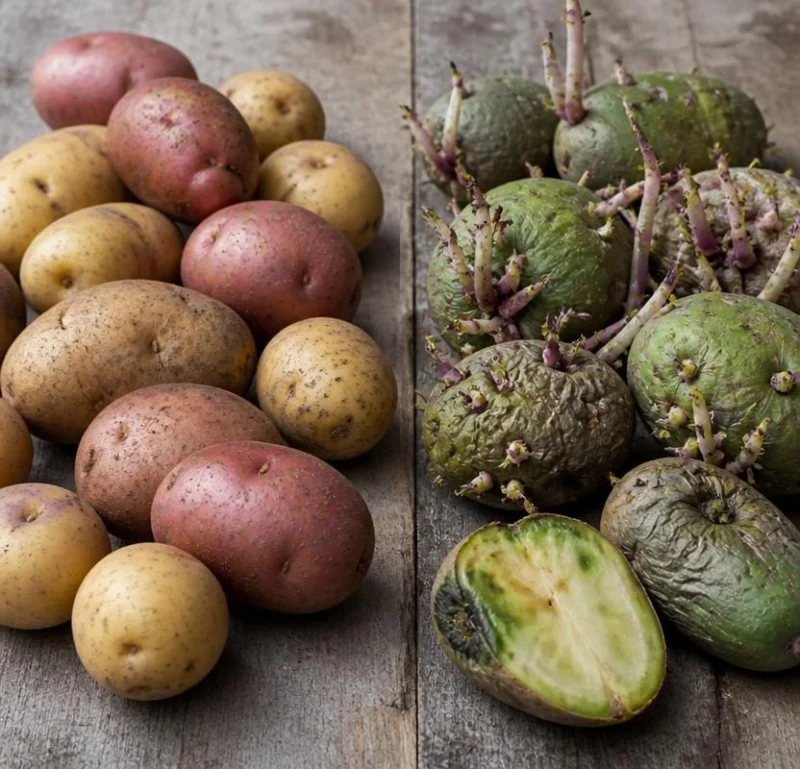
Green, bitter or heavily sprouted potatoes
Potatoes naturally contain glycoalkaloids, including solanine and α-chaconine. Higher concentrations can occur in sprouts, green areas, and peels exposed to light. Normal brown, cream, red, or yellow potatoes without extensive greening can be inspected, scrubbed, and prepared normally.
Reject potatoes with extensive green discoloration, many sprouts, shriveling plus heavy sprouting, or a pronounced bitter taste. The FDA’s potato safety material discusses glycoalkaloids and why severely affected potatoes should not be eaten.
The honest preparation mistake: treating toppings as free
The most common mistake is carefully estimating the potato while ignoring the butter, cooking oil, cheese, sour cream, bacon, gravy, or creamy sauce. A plain potato and a loaded restaurant potato are separate calorie calculations.
Use measuring spoons for oil, check nutrition labels on sauces, and add toppings to your estimate before deciding on the portion. This approach is more useful than labeling potatoes as inherently “good” or “bad.”
Who may need individualized guidance
- Diabetes or glucose-lowering medication: carbohydrate needs and medication timing can be individualized.
- Kidney disease: potassium restrictions may affect potato portions and preparation choices.
- Kidney stone history: follow any specific dietary limits already provided by a clinician.
- Digestive symptoms: large portions or high-fat potato meals may trigger discomfort for some people.
Easy potato pairings and prep choices
| Food or prep | Pair or method | Why it helps |
|---|---|---|
| Baked potato | Greek yogurt, herbs | Protein, less saturated fat |
| Boiled potato | Beans, greens | Fiber and protein |
| Roasted potato | Measured olive oil | Controlled added fat |
| Chilled potato | Vinegar dressing | Less creamy dressing |
| Mashed potato | Broth, garlic, yogurt | Less butter needed |
| Any potato | Lean protein, vegetables | Balanced meal structure |
- Scrub skins thoroughly and cut potato pieces to similar sizes for more even boiling.
- For roasting, toss potatoes with a measured teaspoon or tablespoon of oil instead of pouring from the bottle.
- Chill boiled potatoes overnight for a firmer potato salad texture; resistant starch is a limited food-chemistry effect, not permission for unlimited portions.
- Use herbs, garlic, lemon, vinegar, Greek yogurt, beans, and vegetables to add flavor and substance without relying only on butter, cheese, or cream sauces.
Potato questions readers still ask
Is a baked potato healthier than a boiled potato?
Neither is universally healthier. Plain boiled potatoes often have slightly fewer calories per 100 grams because they contain more water, while baked potatoes are convenient and nutrient-rich when served without heavy toppings. The better choice depends on your portion, cooking fat, and meal.
Do potatoes have too many carbohydrates?
Potatoes are carbohydrate-rich, but carbohydrate content alone does not make them unhealthy. A plain 100-gram boiled potato has about 20 grams of carbohydrate. Portion size and the rest of the meal matter, especially for people who have individualized glucose-management needs.
Are mashed potatoes healthy without butter?
Plain mashed potatoes can fit a balanced meal. Butter, cream, cheese, and large portions raise the calorie content quickly. Broth, garlic, herbs, and Greek yogurt can add flavor and creaminess with less added fat.
Are red, yellow and russet potatoes nutritionally different?
Yes, but the differences are usually modest. Russets are commonly starchier, red potatoes tend to hold their shape, and yellow potatoes often have a creamier texture. Preparation method and toppings generally create the larger real-world nutrition difference.
Does cooling potatoes lower their glycemic impact?
Cooling can increase resistant starch, but it does not make potatoes low-carb or guarantee a lower glucose response for every person. Cooking method, cooling time, reheating, serving size, potato variety, and the rest of the meal all matter. Refrigerate cooked potatoes promptly and follow standard food-safety guidance for leftovers.
This content is based on food chemistry and clinical nutrition research. It is for informational purposes only and does not constitute medical advice. Consult a qualified healthcare professional before making significant changes to your dietary routine.