
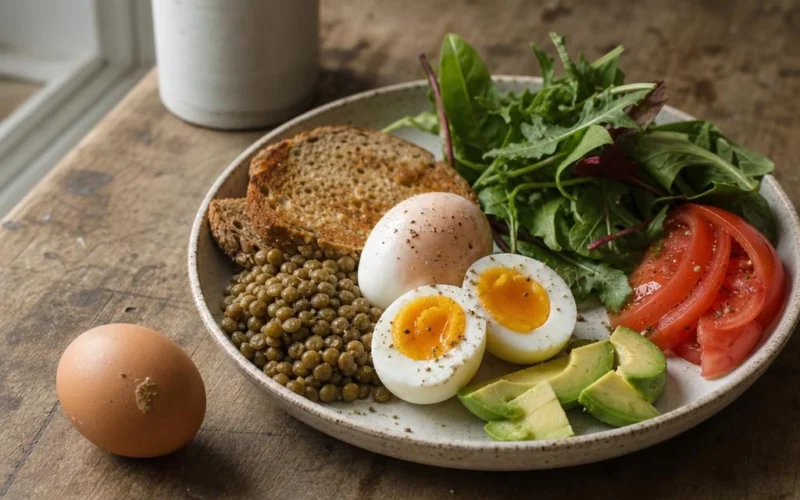
Eggs can be part of a healthy diet for most adults: they provide complete protein, choline, vitamin B12, selenium, and several fat-soluble nutrients in a compact serving. For many healthy people, one whole egg a day is a reasonable population-level guide rather than a universal limit; people with elevated LDL cholesterol or established cardiovascular risk may need a more individualized yolk target.
The meal around the egg matters. Eggs with vegetables, beans, fruit, or whole grains create a different nutritional package from eggs routinely paired with bacon, sausage, butter, and refined pastries.
Egg nutrition: what is in a whole egg?
The values below use the USDA FoodData Central entry for “Egg, whole, cooked, hard-boiled”, based on 100 grams of edible egg with no added cooking fat. Exact amounts vary with egg size and enriched feed. Percent Daily Values are rounded calculations using current FDA Daily Values for adults and children age 4 and older: protein 50 g, total fat 78 g, saturated fat 20 g, carbohydrate 275 g, cholesterol 300 mg, choline 550 mg, vitamin B12 2.4 mcg, selenium 55 mcg, and vitamin D 20 mcg.
| Nutrient or metric | Amount per 100 g | Daily Value | Primary role |
|---|---|---|---|
| Calories | 155 kcal | — | Food energy |
| Protein | 12.6 g | 25% | Tissue maintenance |
| Total fat | 10.6 g | 14% | Energy and absorption |
| Saturated fat | 3.3 g | 16% | Limit within pattern |
| Carbohydrate | 1.1 g | Under 1% | Minimal contribution |
| Cholesterol | 373 mg | 124% | Cell and hormone precursor |
| Choline | 294 mg | 53% | Cell membranes |
| Vitamin B12 | 1.1 mcg | 46% | Blood and nerves |
| Selenium | 30.8 mcg | 56% | Antioxidant enzymes |
| Vitamin D | 2.2 mcg | 11% | Calcium regulation |
On the same USDA basis, one large hard-boiled egg—a 50-gram edible portion—provides about 78 calories and 6.3 grams of protein. It also supplies about 147 milligrams of choline, according to the NIH Office of Dietary Supplements.
Egg protein contains all nine essential amino acids. The protein is split between the white and yolk, while the yolk contains nearly all the cholesterol, choline, fat, vitamin B12, vitamin D, lutein, and zeaxanthin.
Cooking improves the digestibility of egg protein. Added cooking fat is a separate choice: boiling or poaching requires none, while scrambled or fried eggs can be prepared with a measured amount. The vegetables, beans, fruit, or whole grains served alongside the eggs also shape the meal’s overall nutrition.
Whole eggs, whites, or a mixture?
| Choice | Calories | Protein | Cholesterol | Best use |
|---|---|---|---|---|
| One whole egg | 78 | 6.3 g | About 187 mg | Full nutrient range |
| Two egg whites | 34 | 7.2 g | 0 mg | Lower-cholesterol protein |
| One whole egg plus two whites | 112 | 13.5 g | About 187 mg | Protein with yolk nutrients |
| Two whole eggs | 156 | 12.6 g | About 374 mg | Larger balanced meal |
A whole egg offers broader nutrition than a white alone. A mixed scramble—one whole egg with two whites—is a practical middle option for someone who wants more protein and meal volume without adding several yolks.
| Goal | Egg choice | Build with |
|---|---|---|
| Lower dietary cholesterol | Egg plus whites | Vegetables, whole grains |
| Fast protein breakfast | Two eggs | Fruit and beans |
| Higher meal volume | Whites plus one yolk | Peppers and spinach |
| Portable snack | One hard-boiled egg | Fruit or vegetables |
How eggs affect protein intake, cholesterol, and nutrient absorption
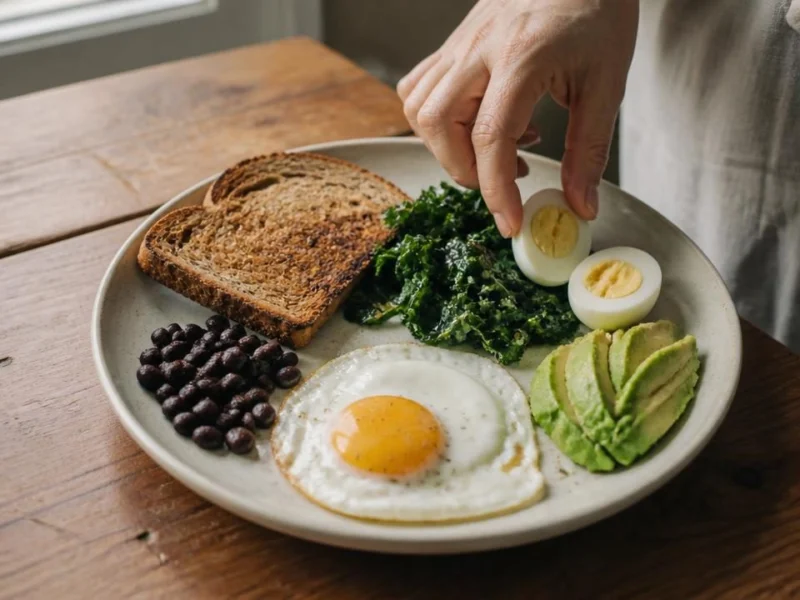
Six grams of protein helps, but may not make a full meal
According to USDA FoodData Central, one large, whole, hard-boiled egg—a 50-gram edible portion—provides approximately 6.3 grams of protein. That is useful, but one egg alone is a modest protein serving compared with a full meal containing two eggs, a mixed whole-egg-and-white scramble, Greek yogurt, beans, fish, or poultry.
Cooking unfolds and links egg proteins, a process called denaturation, and makes egg protein more digestible than it is in raw eggs. Added oil, butter, or other cooking fat is a separate choice, so consider both the preparation method and the rest of the meal.
Egg cholesterol does not become blood cholesterol one-for-one
The body makes cholesterol and adjusts its production and clearance in response to diet, but that compensation differs among individuals. Dietary cholesterol is therefore neither identical to blood cholesterol nor irrelevant to it.
Controlled feeding evidence indicates that adding dietary cholesterol can raise LDL cholesterol modestly on average. The American Heart Association’s evidence summary places that response within the broader dietary pattern, particularly saturated-fat intake and the foods replacing or accompanying eggs.
Long-term cardiovascular evidence is less tidy. A 2020 analysis of three large U.S. cohorts and an updated meta-analysis found no association between one additional egg per day and cardiovascular disease in the pooled U.S. cohorts. A separate updated systematic review and meta-analysis reported a small positive association with cardiovascular risk and substantial variation between studies.
This disagreement may reflect differences in study populations, egg intake, cooking methods, and accompanying foods. Observational studies also cannot fully separate eggs from behaviors such as processed-meat intake, smoking, physical activity, and overall dietary quality. The evidence does not support saying either that eggs are harmless for everyone or that they are inherently harmful.
The comparison food changes the answer
Replacing a pastry or processed-meat breakfast with eggs, vegetables, and whole-grain toast can improve protein intake and reduce refined carbohydrate or processed meat. Replacing oats, nuts, beans, or fruit with multiple eggs may reduce fiber and displace foods associated with a more favorable cardiovascular dietary pattern.
- Instead of sausage: eggs generally provide less processed meat and sodium.
- Instead of a sweet pastry: eggs provide more protein and less added sugar.
- Instead of oatmeal: eggs provide more protein but no fiber.
- Instead of beans: eggs are quicker, while beans add fiber.
That is why “Are eggs healthy?” is partly a replacement question. The most useful comparison is the food that would otherwise occupy the plate.
Yolk fat can improve carotenoid absorption from vegetables
Lutein, zeaxanthin, beta-carotene, and related carotenoids are fat-soluble compounds. Fat in an egg yolk helps incorporate these compounds into mixed micelles in the intestine, allowing them to move toward the intestinal wall for absorption.
In a small randomized crossover trial in healthy young men, eating scrambled whole eggs with a raw vegetable salad increased absorption of several carotenoids compared with eating the salad without eggs. That is a useful meal-design finding, not evidence that an egg-and-salad meal prevents a specific disease.
How many eggs can you eat, and who should be careful?
There is no single yolk limit for every adult
One whole egg daily is a common, reasonable shorthand for many healthy adults. It is not a clinical guarantee or a mandatory target. Total dietary pattern, LDL response, cardiovascular history, energy needs, and the frequency of multi-yolk meals all matter.
People who routinely eat two or more whole eggs every day can use a one-week yolk tally rather than guessing. Count yolks from omelets, breakfast sandwiches, baked goods, restaurant meals, mayonnaise-based dishes, and snacks. On the same sheet, note common saturated-fat companions such as sausage, bacon, butter, cheese, and cream.
If LDL cholesterol is elevated or cardiovascular disease is already present, take that tally to a physician or registered dietitian and fit it to the existing lipid-management plan. The American Heart Association specifically advises caveats for people with dyslipidemia, diabetes, or elevated heart-failure risk rather than treating the one-egg guideline as universal.
Egg allergy requires avoidance, not portion adjustment
Egg is a major food allergen recognized by the FDA. Reactions can involve hives, swelling, vomiting, breathing difficulty, or anaphylaxis. Someone with a diagnosed egg allergy should follow their allergy-management plan and check ingredient labels rather than experimenting with smaller servings.
Some people tolerate egg baked into foods but react to lightly cooked egg. That pattern requires assessment by a qualified allergy professional; it cannot be confirmed safely through an unsupervised home test.
Raw and runny eggs need a food-safety plan
Fresh-looking, organic, pasture-raised, or backyard eggs can still carry Salmonella. The FDA recommends refrigerating eggs, cooking whites and yolks until firm, and cooking egg dishes to 160°F (71°C).
Pregnant people, older adults, young children, and immunocompromised people face a higher risk of serious foodborne illness. Pasteurized shell eggs or pasteurized liquid products are the safer choice when a recipe leaves the egg raw or undercooked.
Shell color and yolk color do not prove better nutrition
Brown shells reflect the breed of the hen, not a built-in nutritional advantage. A deep orange yolk mainly reflects pigments in the hen’s feed and does not independently establish that the egg contains more protein, choline, or omega-3 fat.
Terms such as “cage-free,” “free-range,” “organic,” and “pasture-raised” describe production practices under defined or varying standards. They should not be treated as interchangeable nutrient claims. For omega-3- or vitamin D-enriched eggs, check the carton’s Nutrition Facts panel and specific nutrient statement because amounts can differ by producer.
Easy ways to cook eggs and build a balanced meal
Use moderate heat for tender eggs
High heat quickly tightens egg proteins, squeezing out moisture and producing dry, rubbery curds. For scrambled eggs, use low to medium heat and remove the pan while the eggs still look slightly moist; residual heat continues firming them.
For a repeatable hard-cooked method, place large eggs in boiling water for about 11 minutes, then move them to ice water for at least 5 minutes. Exact timing varies with egg size, starting temperature, elevation, and the desired yolk texture.
Choose cooking fat deliberately
Boiling, poaching, and dry nonstick scrambling add little or no fat. Frying is not automatically unhealthy, but the cooking fat changes the meal: one tablespoon of butter adds roughly 100 calories and 7 grams of saturated fat to the pan, especially relevant if it is used for a single serving.
A small amount of olive or canola oil keeps added saturated fat lower. Measure the oil rather than pouring freely if calorie intake is a concern.
| Pair eggs with | Simple preparation | Why it works |
|---|---|---|
| Spinach and peppers | Fold into scramble | Vegetables plus carotenoids |
| Tomato salad | Add sliced boiled egg | Yolk aids carotenoid absorption |
| Black beans | Serve beside eggs | Adds fiber and volume |
| Whole-grain toast | Top with poached egg | Adds fiber-rich carbohydrate |
| Oats and fruit | Serve as sides | Balances protein and fiber |
| Avocado and salsa | Use in egg tacos | Unsaturated fat and produce |
Build breakfast around what eggs lack
Eggs contain virtually no fiber and little carbohydrate. Vegetables, beans, fruit, oats, or whole-grain bread fill those gaps more effectively than adding another yolk.
A simple plate might contain one whole egg plus two whites scrambled with peppers, one slice of whole-grain toast, and a piece of fruit. Another option is two eggs with black beans, tomato salsa, and a corn tortilla. Both provide a broader nutrient mix than eggs served alone.
Common questions about choosing and eating eggs
Are eggs healthy if I have high cholesterol?
They may still fit, but frequency and yolk count should reflect your LDL level, cardiovascular history, saturated-fat intake, and clinical plan. Using one whole egg with extra whites lowers dietary cholesterol while preserving some yolk nutrients. Do not stop prescribed medication or replace professional advice with a universal egg rule.
Is the yolk unhealthy?
No single part of the egg deserves that label. The yolk contains the cholesterol, but it also supplies choline, fat-soluble vitamins, lutein, zeaxanthin, and part of the protein. Choosing whites alone is useful for lowering calories and dietary cholesterol, while whole eggs offer a wider nutrient profile.
Can eggs be eaten every day?
Many healthy adults can include an egg daily within a varied diet. Daily intake deserves closer review if it means several yolks each day, if eggs consistently come with processed meat and butter, or if a clinician has recommended limiting dietary cholesterol because of elevated LDL or cardiovascular risk.
What is the healthiest way to cook eggs?
Boiling, poaching, or scrambling with vegetables and little added fat are practical choices. The healthiest method depends less on tiny differences between poaching and boiling than on added butter, cheese, processed meat, sodium, and the rest of the meal.
Are omega-3 eggs worth buying?
Omega-3-enriched eggs can contain more omega-3 fat because hens receive modified feed, but the amount is product-specific. Compare the carton’s nutrient claim, serving size, price, and Nutrition Facts panel. Standard eggs remain a nutritious option, and oily fish generally provides substantially more of the long-chain omega-3 fats EPA and DHA.
This content is based on food chemistry and clinical nutrition research. It is for informational purposes only and does not constitute medical advice. Consult a qualified healthcare professional before making significant changes to your dietary routine.