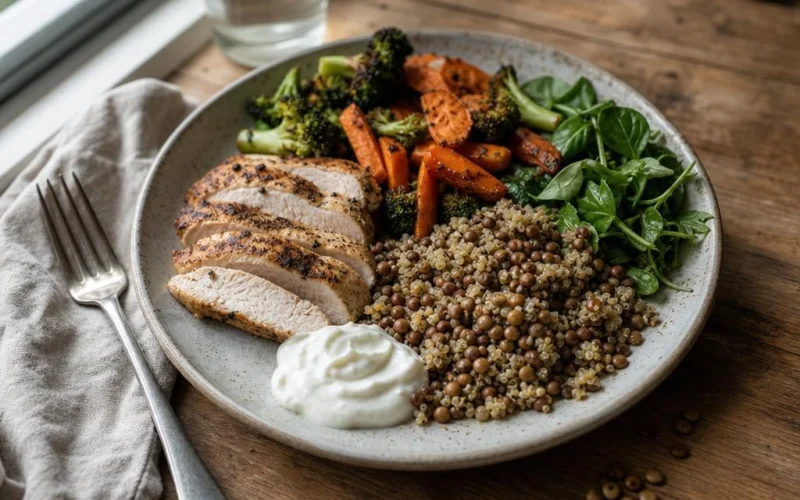
Build each meal from one protein anchor, one deliberate fiber anchor, produce, and a modest flavor or fat source. For many adults, roughly 25–35 grams of protein and 8–12 grams of fiber is a useful planning range, but it is a meal-building heuristic—not an official requirement or individualized prescription.
The four-part formula for protein and fiber meals
Build a high protein high fiber meal around two separate anchors. About 25–35 grams of protein and 8–12 grams of fiber is a practical adult planning range, adjustable for appetite, activity, total intake, and medical needs. It is a heuristic, not an official definition or clinical prescription.
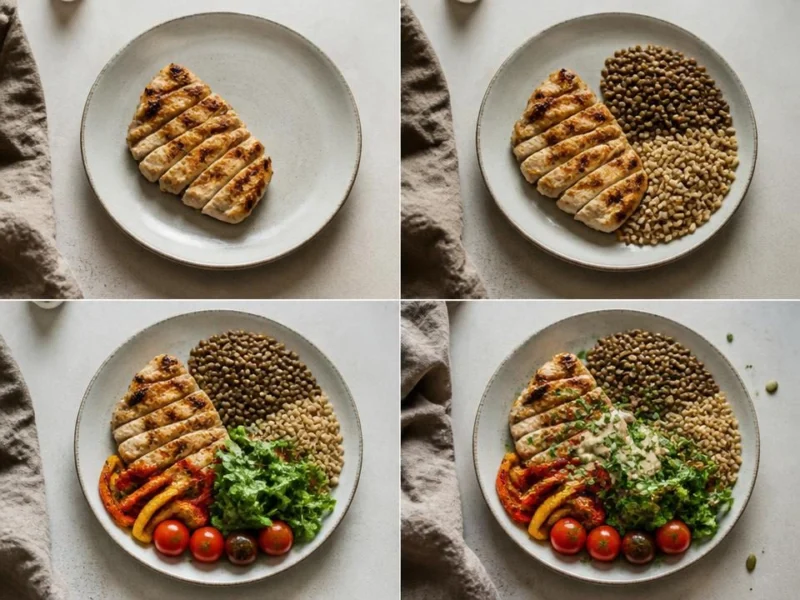
- Choose a protein anchor: start with a substantial portion of poultry, fish, lean meat, eggs, Greek yogurt, cottage cheese, tofu, tempeh, or seitan.
- Add a fiber anchor: include beans, lentils, peas, a whole grain, berries, seeds, or another concentrated whole-food fiber source.
- Add one or two produce portions: use fruit or vegetables for volume, texture, and micronutrients. A small serving of vegetables is usually a supporting produce component—not the sole fiber anchor when aiming for 8–12 grams of fiber.
- Finish with flavor and fat: add herbs, spices, salsa, tahini, nuts, seeds, avocado, or a measured amount of oil according to your energy needs.
Some foods perform one main job, while others contribute meaningful amounts of both nutrients. Use this matrix to decide what still needs to be added:
| Food type | Examples and approximate portions | Typical contribution | How to use it |
|---|---|---|---|
| Mostly protein | Chicken breast, 3 ounces cooked | About 26 g protein; 0 g fiber | Pair with a deliberate fiber anchor. |
| Mostly protein | Plain Greek yogurt, 1 cup | About 20–23 g protein; 0 g fiber | Add oats, berries, or seeds. |
| Mostly protein | Firm tofu, 6 ounces | About 18–22 g protein; 2–3 g fiber | Add legumes, whole grains, or another fiber anchor. |
| Mostly fiber | Raspberries, 1 cup | About 1–2 g protein; 8 g fiber | Pair with yogurt, cottage cheese, or another protein anchor. |
| Mostly fiber | Rolled oats, ½ cup dry; chia seeds, 1 tablespoon | Oats: about 5 g protein and 4 g fiber; chia: about 2 g protein and 4–5 g fiber | Useful for breakfast or a compact fiber boost. |
| Dual duty | Lentils, ½ cup cooked; black beans, ½ cup cooked or drained | Lentils: about 9 g protein and 8 g fiber; beans: about 7–8 g of each | Provide a strong fiber base but may need extra protein. |
| Dual duty | Edamame, ½ cup cooked and shelled | About 9 g protein and 4 g fiber | A compact addition to bowls, salads, and stir-fries. |
Legumes, edamame, tempeh, and some whole grains can fill more than one role. However, legumes alone may require a large portion to reach the protein planning range. When appropriate, pair them with tofu, dairy, eggs, seafood, poultry, or another concentrated protein source.
These estimates reflect typical cooked or ready-to-eat portions and vary by variety, brand, draining, and preparation. Check USDA FoodData Central or the product label for a specific ingredient.
For label reading, the FDA Daily Values are 50 grams of protein and 28 grams of fiber per day, and 20% Daily Value or more per serving is considered “high.” These are Nutrition Facts labeling references, not individualized requirements or per-meal targets.
Adjust the formula to match your goal
| Goal | Emphasize | Watch | Example |
|---|---|---|---|
| Lower-calorie fullness | Lean protein and high-volume produce | Large portions of oil, cheese, creamy sauces, nuts, and seeds | Chicken, lentils, cabbage, tomatoes, and salsa |
| Muscle support | A substantial protein anchor and enough carbohydrate for energy needs | Very high fiber immediately before exercise if it causes GI discomfort | Salmon, quinoa, peas, and roasted vegetables |
| Vegetarian eating | A dedicated plant protein plus a dual-duty food | Using vegetables or a small serving of beans as the only protein | Tofu, edamame, brown rice, and broccoli |
| Small appetite | Compact protein and fiber sources | Huge raw salads or several unfamiliar fiber sources at once | Greek yogurt with oats, raspberries, and chia |
If your current diet is low in fiber, increase one fiber component at a time instead of immediately combining large portions of beans, bran, seeds, and raw vegetables. Spread fiber across meals, drink fluids as appropriate, and adjust portions if you develop persistent bloating, pain, constipation, diarrhea, or uncomfortable fullness.
What protein and fiber do after the meal
Protein supplies amino acids used to maintain and build body proteins. Dietary amino acids stimulate muscle protein synthesis, the process by which muscle tissue builds new proteins; resistance exercise strengthens that signal. No single per-meal threshold is required for every person, but distributing adequate protein across meals can be more practical than trying to consume most of it at dinner.
Protein can also affect short-term appetite signals. A systematic review and meta-analysis of randomized trials found modest reductions in hunger and increases in fullness after higher-protein intake, alongside changes in signals such as ghrelin, cholecystokinin, and GLP-1. Evidence for longer-term appetite outcomes was inconclusive.
Fiber changes the meal in several ways depending on its type and food source. Some fibers absorb water and increase viscosity, while others are fermented by intestinal microbes or add stool bulk. A systematic review of fiber and satiety found highly variable results based on fiber type, dose, food form, and study design.
This is why satiety is a possible benefit rather than a guaranteed response. A high-protein, high-fiber meal can still leave someone hungry if it is too small, lacks enjoyable flavors, or does not provide enough energy for their activity level. It also does not cause weight loss by itself; body-weight change depends on energy intake and the broader dietary pattern.
Why a sudden fiber jump can backfire
Consider an illustrative scenario: someone eating around 12 grams of fiber daily replaces breakfast with bran cereal and chia, then eats bean chili and a large raw salad on the same day. During days two through four, gas, abdominal pressure, or urgent bowel changes may appear because several fermentable and water-holding foods were added at once.
A better first week changes one meal at a time. Add oats or berries at breakfast for several days, assess tolerance, and then introduce a moderate bean or lentil portion. The NIDDK advises increasing fiber gradually and drinking enough liquids so fiber can work as intended.
By days five through seven, the person in this example may find that a half-cup portion is easier to tolerate than stacking beans, bran, chia, and raw cruciferous vegetables. Adaptation varies, and worsening pain, vomiting, persistent constipation, diarrhea, or significant abdominal swelling warrants medical advice rather than another fiber increase.
More protein and fiber can still make a poor meal
Nutrient totals do not reveal everything about meal quality. A meal can exceed both targets while supplying excessive sodium, saturated fat, calories, or highly concentrated fiber additives.
- Processed meats: sausages and deli meats may bring substantial sodium and saturated fat.
- Oversized toppings: large portions of nuts, cheese, oil, and dressing can raise calories quickly.
- Fiber-added products: bars and wraps may use isolated fibers that affect digestion differently from intact foods.
- Sugary protein foods: flavored yogurt, shakes, and granola can contain considerable added sugar.
Who needs an individualized version
People with chronic kidney disease may have personalized limits for protein, sodium, potassium, phosphorus, or fluids. They should not adopt a high-protein plan from a general meal guide; the NIDDK recommends individual nutrition guidance for chronic kidney disease.
People with IBS, inflammatory bowel disease, delayed stomach emptying, previous gastrointestinal surgery, or a medically prescribed diet may need different fiber types and portions. Someone using an appetite-suppressing medicine, including a GLP-1 medication, may tolerate smaller meals better and should discuss persistent nausea, vomiting, or inability to meet nutrition needs with the prescribing clinician.
Older adults with low appetite may benefit from compact protein sources rather than enormous plates of vegetables. Endurance athletes and people prone to exercise-related GI symptoms may need less fiber in the meal immediately before training, moving beans, bran, and large raw salads to a later meal.
A seven-day method for building meals that fit real life
You do not need a fixed seven-day schedule. Use the same four-part formula whenever you plan, order, or prep a meal, then adjust one component at a time based on appetite, goals, and digestive tolerance.
The four-part meal-building formula
- Choose a protein anchor: for example, 3–5 ounces of cooked poultry, fish, lean meat, or tofu; about 1 cup of Greek yogurt; or another portion that moves the meal toward the practical planning range of 25–35 grams of protein.
- Add a fiber anchor: choose beans, lentils, peas, edamame, oats, a fiber-rich whole grain, fruit, seeds, or a substantial vegetable portion. A useful meal-planning range is about 8–12 grams of fiber.
- Add produce or whole-food volume: include one or two portions of vegetables or fruit, adjusted for appetite and tolerance.
- Finish with flavor or fat: use options such as olive oil, nuts, seeds, avocado, cheese, salsa, herbs, or dressing in an amount that fits the meal.
These protein and fiber ranges are planning heuristics, not official per-meal requirements. Individual needs vary with total food intake, activity, appetite, and medical considerations.
| Goal | Increase | Moderate | Example |
|---|---|---|---|
| More fullness on a calorie budget | Lean protein, vegetables, legumes, and fruit | Large portions of oils, cheese, creamy dressings, and calorie-dense toppings | Chicken-lentil salad with mixed vegetables and measured dressing |
| Muscle-supporting meal | The protein anchor and enough total food to support training needs | Very high fiber immediately before exercise if it causes GI discomfort | Chicken, lentils, quinoa, and cooked vegetables |
| Vegetarian meal | Tofu, tempeh, Greek yogurt, eggs, edamame, or another concentrated protein alongside legumes or whole grains | Relying on vegetables and grains alone for protein | Tofu-edamame bowl with brown rice and broccoli |
| Small appetite | Compact protein and modest portions of fiber-rich foods | Huge raw salads or several large fiber additions at once | Greek yogurt with oats, berries, and chia |
Fix combinations that miss one anchor
| Common meal | What is missing | Practical fix |
|---|---|---|
| Chicken, lettuce, and dressing | A meaningful fiber source | Add lentils, chickpeas, or a fiber-rich whole grain |
| Protein shake and crackers | Whole-food fiber | Blend in oats and berries or add fruit on the side |
| Vegetable grain bowl | A concentrated protein source | Add tofu, edamame, eggs, poultry, fish, or Greek yogurt dressing |
| Protein bar used as a meal | Enough variety and whole-food volume | Pair it with fruit and yogurt, or replace it with oats, yogurt, and berries |
A realistic one-day example
This is a rough illustration, not a prescription. Portions refer to cooked foods unless noted otherwise. Estimates use typical food-composition values and will vary by brand, preparation, sauces, and produce size.
| Time | Meal and assumed portions | Calories | Protein | Fiber |
|---|---|---|---|---|
| 7:30 a.m. | 1 cup plain nonfat Greek yogurt, ⅓ cup dry oats, ½ cup blueberries, 1 tablespoon peanut butter, and 1 teaspoon chia seeds | About 390 | About 31 g | About 7 g |
| 12:30 p.m. | 3 ounces skinless chicken breast, ⅓ cup lentils, ½ cup quinoa, 1 cup mixed vegetables, and 2 tablespoons vinaigrette | About 520 | About 39 g | About 13 g |
| 4:00 p.m. | ½ cup low-fat cottage cheese and 1 medium pear | About 190 | About 13 g | About 6 g |
| 7:00 p.m. | 4 ounces firm tofu, ½ cup shelled edamame, 1 cup brown rice, 1 cup broccoli, and 1 teaspoon cooking oil | About 560 | About 34 g | About 15 g |
| Daily total | Estimated base menu | About 1,660 | About 117 g | About 41 g |
Meal timing can follow your waking, work, and training schedule. If a high-fiber meal causes discomfort before exercise, choose a lower-fiber option beforehand and eat legumes, whole grains, or larger vegetable portions later.
Meal prep without expensive specialty foods
Dry lentils, canned beans, oats, frozen vegetables, brown rice, eggs, and store-brand yogurt are practical staples. Drain and rinse canned beans if you want to reduce some of the sodium from the packing liquid.
Prepare interchangeable components rather than seven identical meals: one or two proteins, a cooked grain or legume, and vegetables. Store them safely in separate containers, then vary the finished meal with salsa, curry seasoning, lemon and herbs, or a measured dressing.
Increase fiber gradually and check what works
If your current diet is low in fiber, add one fiber-rich component at a time rather than combining large portions of beans, bran, seeds, whole grains, and raw vegetables in one meal. Keep the change for several days, spread fiber across meals, and drink fluids as appropriate. This gradual approach can make gas, bloating, constipation, or urgency easier to identify and manage.
Review these signals periodically:
- Hunger two to four hours later: frequent intense hunger may indicate that the meal is too small or lacks enough overall energy.
- Bowel tolerance: note constipation, urgency, gas, pain, or bloating after introducing a new fiber source.
- Comfort and satisfaction: reduce excessive volume or adjust textures if the meal feels difficult to finish.
- Overall fiber pattern: aim for a tolerable increase across the day rather than one exceptionally high-fiber meal.
If symptoms appear, reduce the newest fiber addition and retry a smaller portion. People with chronic kidney disease, gastrointestinal conditions, prescribed fluid limits, or other medically directed diets should seek individualized guidance before substantially changing protein, fiber, potassium, phosphorus, sodium, or fluid intake.
Questions that come up while building the plate
Can I make a high-protein, high-fiber meal without beans?
Yes. Pair a protein such as fish, chicken, eggs, Greek yogurt, cottage cheese, tofu, tempeh, or seitan with oats, whole grains, berries, seeds, peas, or fiber-rich vegetables. A Greek yogurt bowl with oats, raspberries, and chia is one compact example that needs neither beans nor protein powder.
What works when I cannot eat a large portion?
Use compact protein sources and add fiber in controlled amounts. Greek yogurt with berries and chia, cottage cheese with pear, or tofu with edamame and cooked vegetables can deliver both nutrients in less volume than a large salad. Increase seeds and concentrated fiber cautiously because small portions can still cause digestive symptoms.
Can this type of meal fit a weight-loss calorie budget?
Yes, if portions and calorie-dense extras fit the person’s overall energy intake. Lean protein, legumes, berries, and non-starchy vegetables can provide substantial volume, while oils, cheese, nuts, seeds, avocado, and creamy dressings need measured portions. Protein and fiber may support fullness, but their presence does not create a calorie deficit.
Should I eat a high-fiber meal before exercise?
That depends on timing and gastrointestinal tolerance. A meal several hours before activity may be comfortable, while beans, bran, or a large raw salad shortly before running can cause cramping or urgency in susceptible people. Use a lower-fiber pre-workout meal when needed and place the fiber-rich meal later.
What should I change if I have kidney disease or a prescribed diet?
Do not raise protein, legumes, whole grains, potassium-rich produce, or fluids without checking the prescribed plan. Kidney function, laboratory results, medications, and dialysis status can change the appropriate amounts. A renal dietitian or treating clinician can adapt the meal formula to the required protein, sodium, potassium, phosphorus, and fluid limits.
This content is based on clinical nutrition research and practical meal planning. It is for informational purposes only and does not constitute medical advice. Consult a qualified healthcare provider before making major changes to your dietary routine.